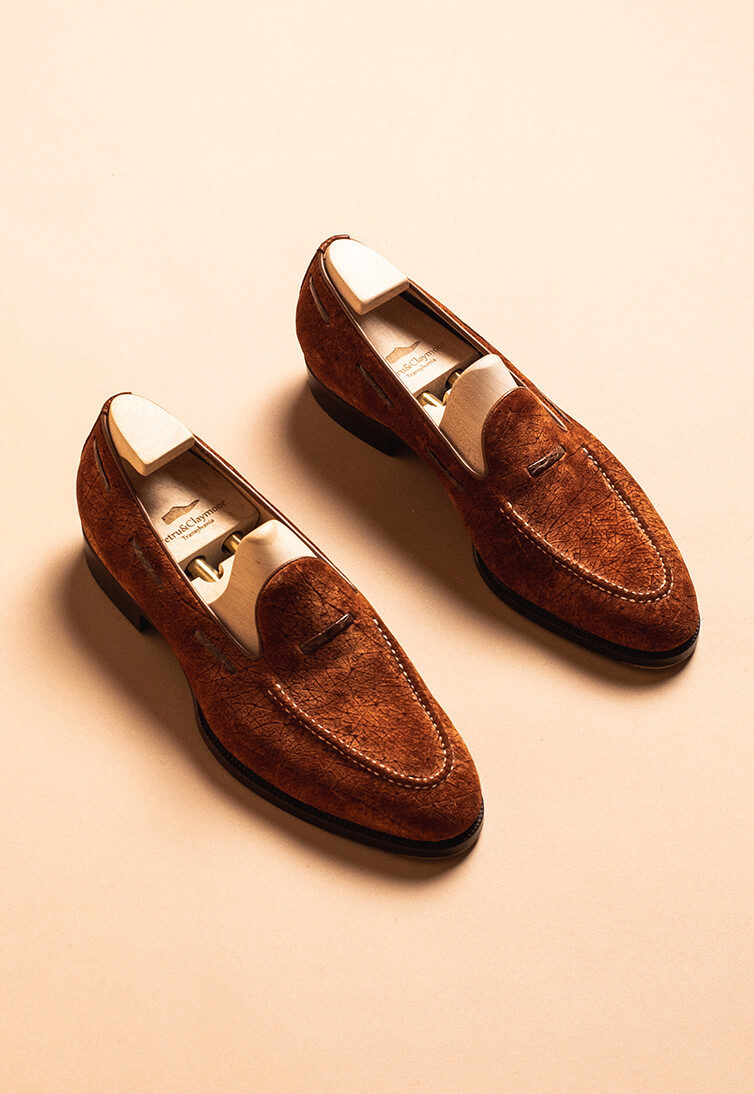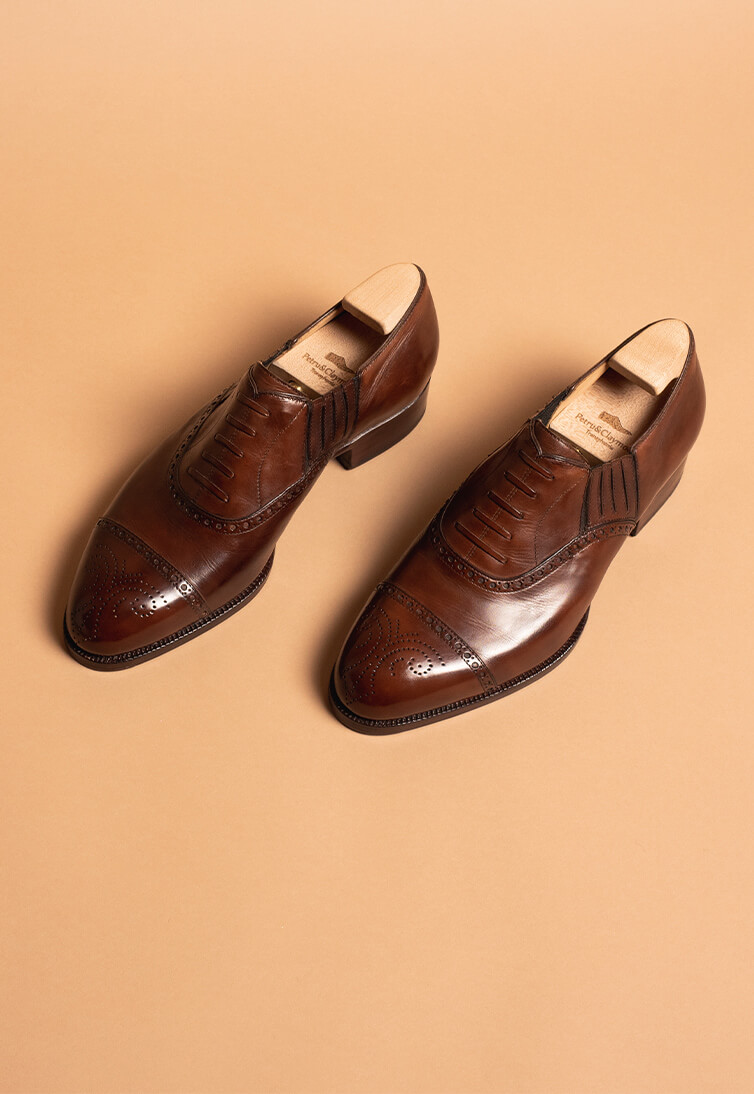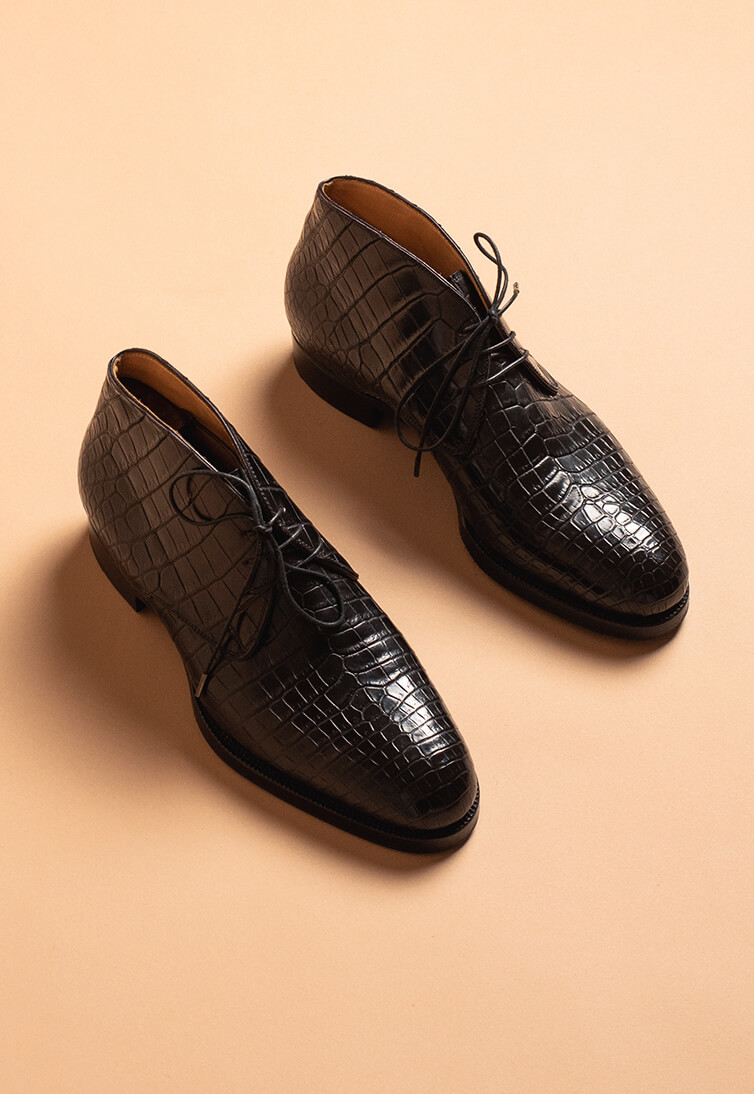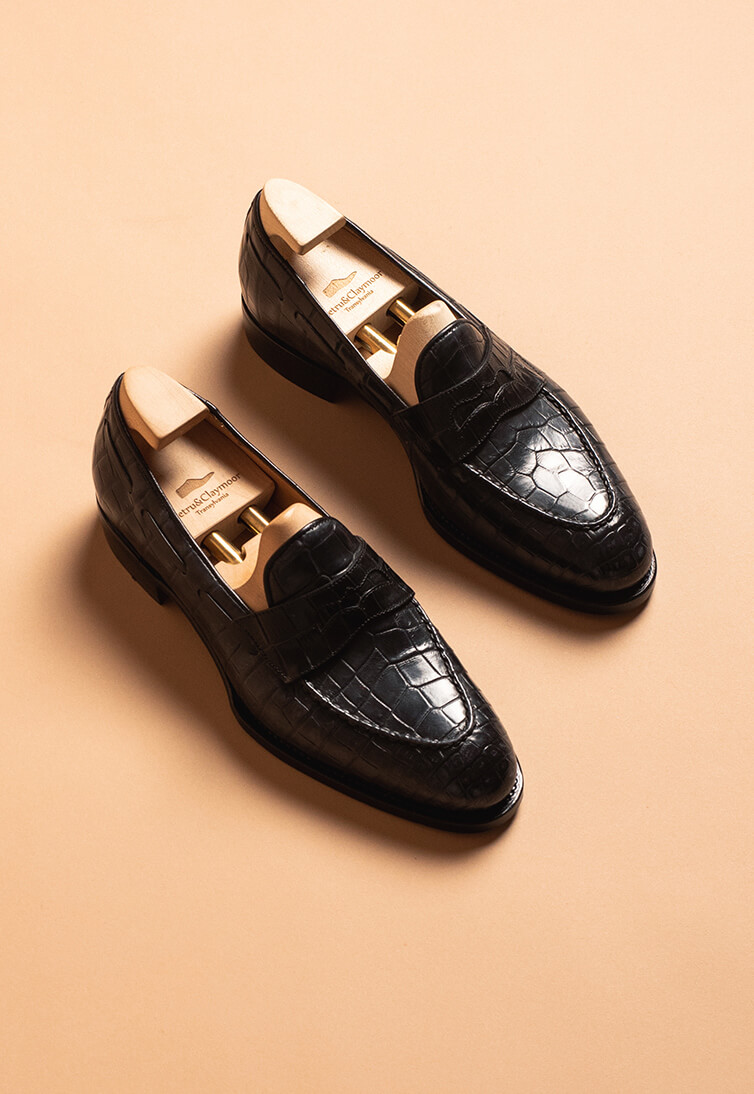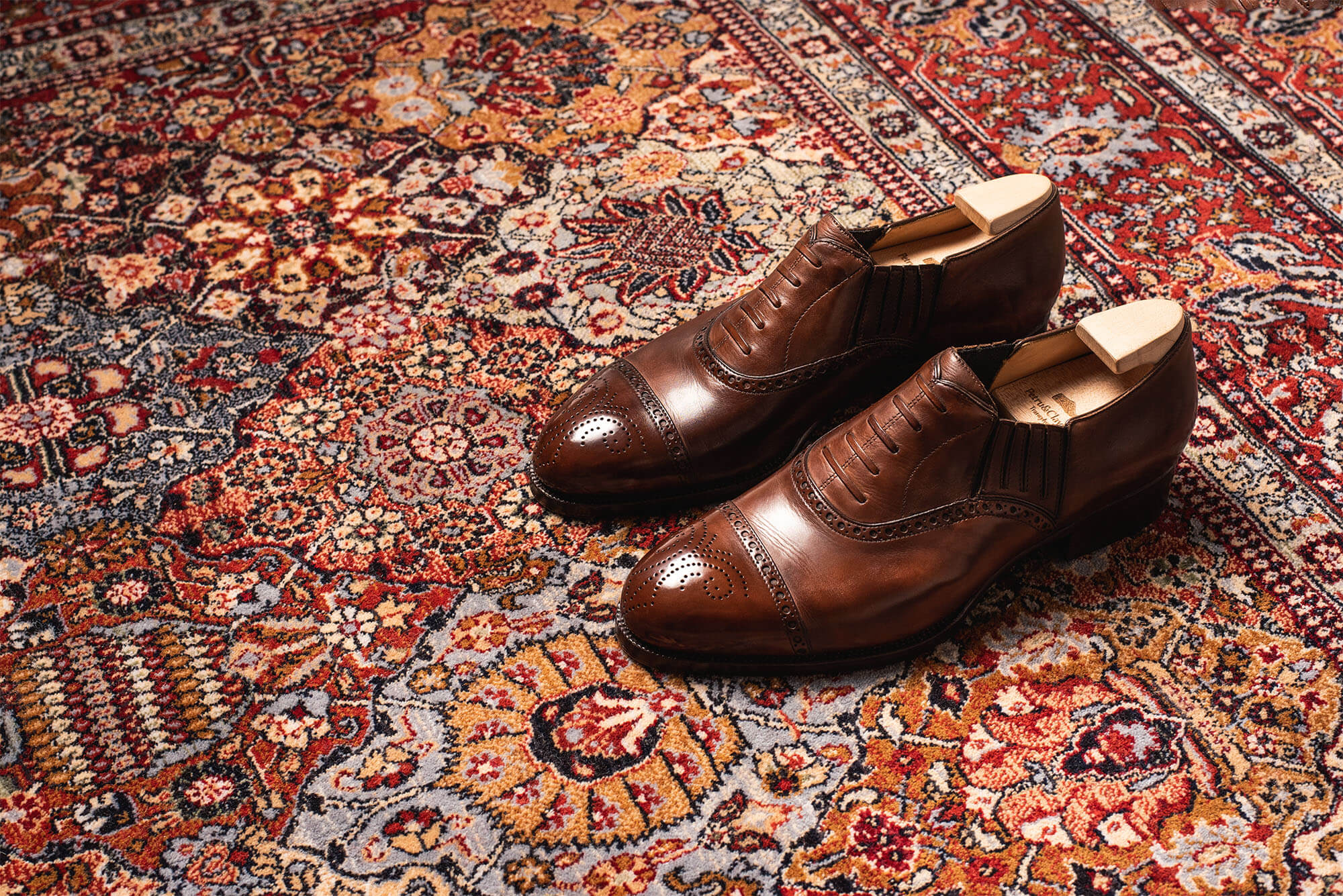
I have actually been to Transylvania (Romania). Many years ago, I flew into Bucharest and drove north to Brașov to visit a shoemaking factory. I remember that trip quite vividly, not only because of the shoes but because of the drive itself. Leaving Bucharest and heading toward Brașov takes you up through the Carpathian Mountains, through this incredibly beautiful part of Romania that, for someone who has never been there, probably exists more in mythology than reality.
You hear “Transylvania” and naturally think of Dracula, castles, dark forests, and all of the imagery that has surrounded the region for centuries. And there is certainly something alluring about it. But in reality, it is simply a very beautiful part of the world that likely gets less recognition than it deserves.
For me, though, one of the most interesting things about the trip was seeing another side of Transylvania: its tradition of shoemaking.
There is an old-world craftsmanship that still survives there, something that has become increasingly difficult to find in Western Europe. I was able to see that firsthand on my visit to Brașov, watching shoes being made in a manner that feels increasingly removed from the modern footwear industry.
And that brings me back to Petru & Claymoor, a brand I first introduced on The Shoe Snob back in 2020 and one that has evolved considerably in the six years since.
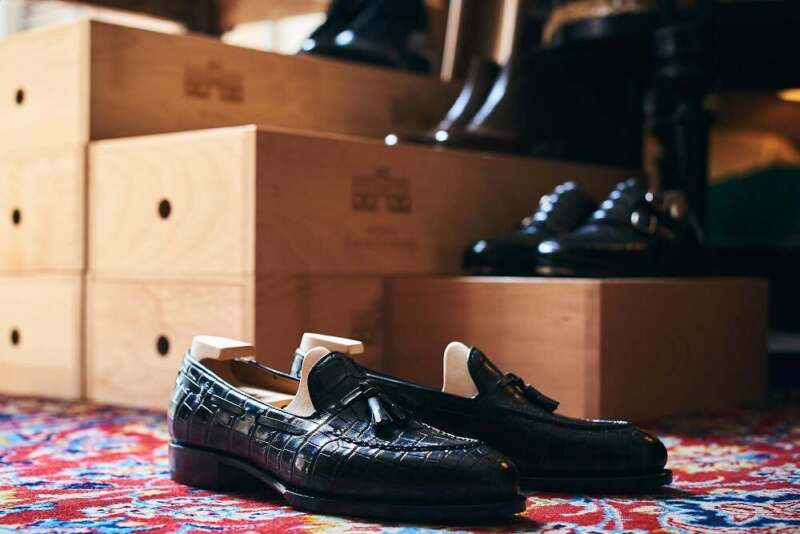
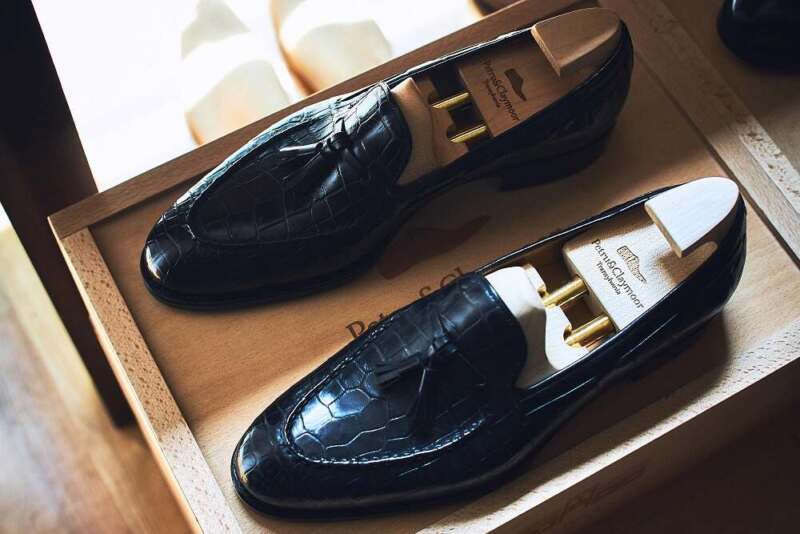
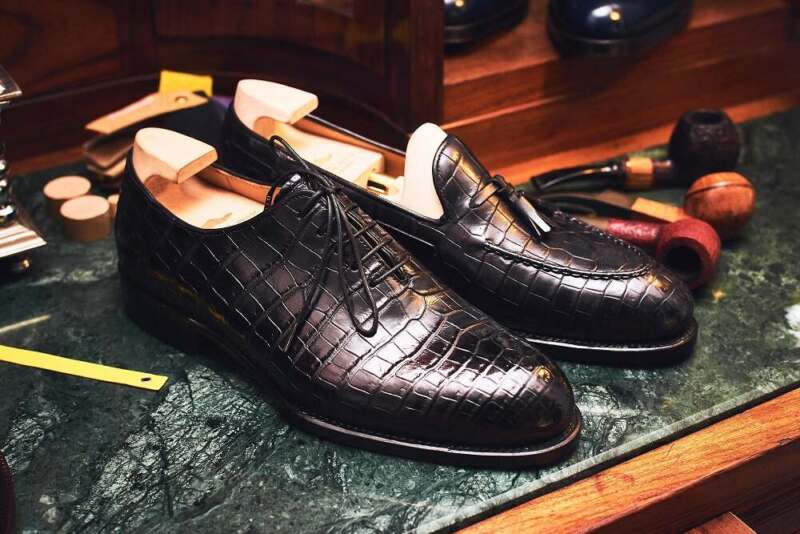
From Shoe Enthusiast to Shoe Brand
Some longtime readers of The Shoe Snob might recognize the name Claymoor. Before Petru & Claymoor existed, Mircea Cioponea ran Claymoor’s List, a very well-made shoe blog that covered many of the great shoemakers and brands of the classic footwear world.
Mircea was, first and foremost, a shoe enthusiast. And one that I regularly referenced many years back.
Eventually, however, writing about shoes turned into wanting to create them. I know that story all too well 😉
Together with Petru Coca, who brought his own experience in the footwear business, Mircea founded Petru & Claymoor in 2018 with the idea of creating genuinely handmade footwear in Romania and helping preserve a shoemaking tradition that has existed there for generations.
Their workshop is fittingly located in Brașov, Transylvania. And they are quite proud of that fact.

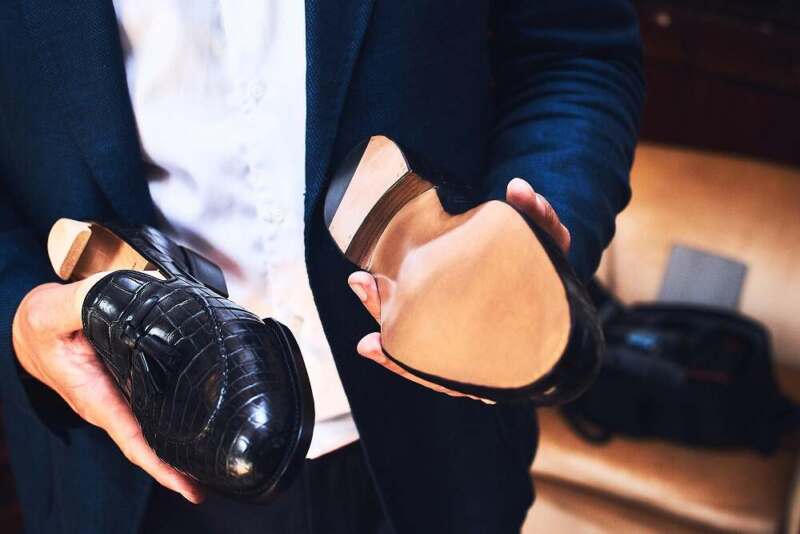
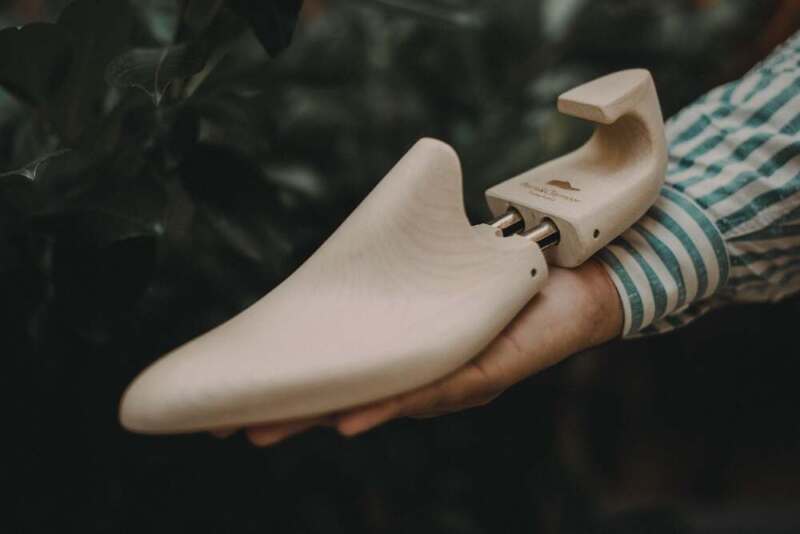
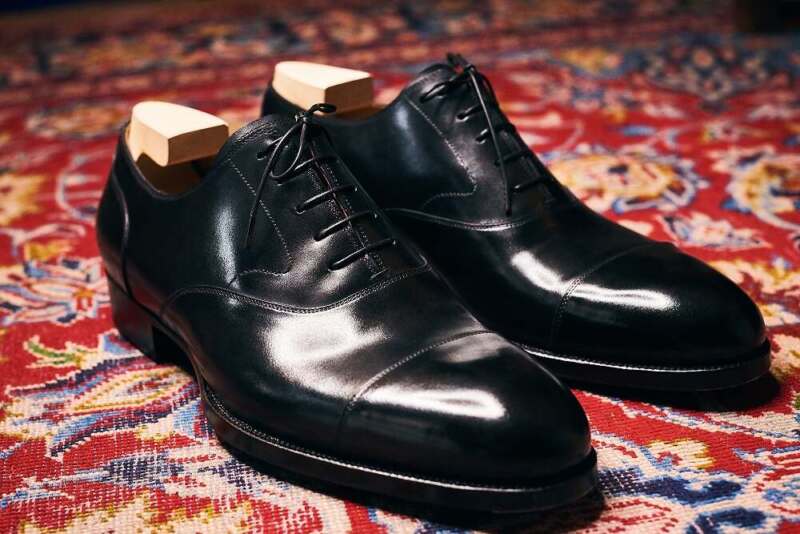
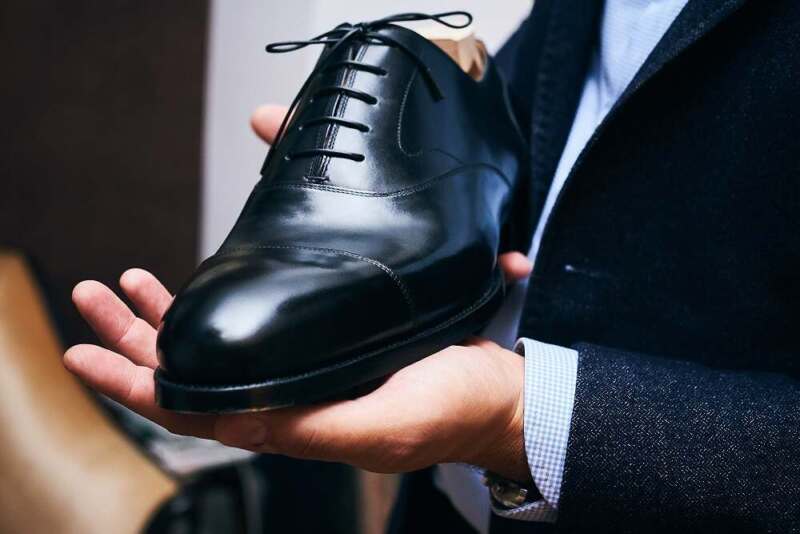
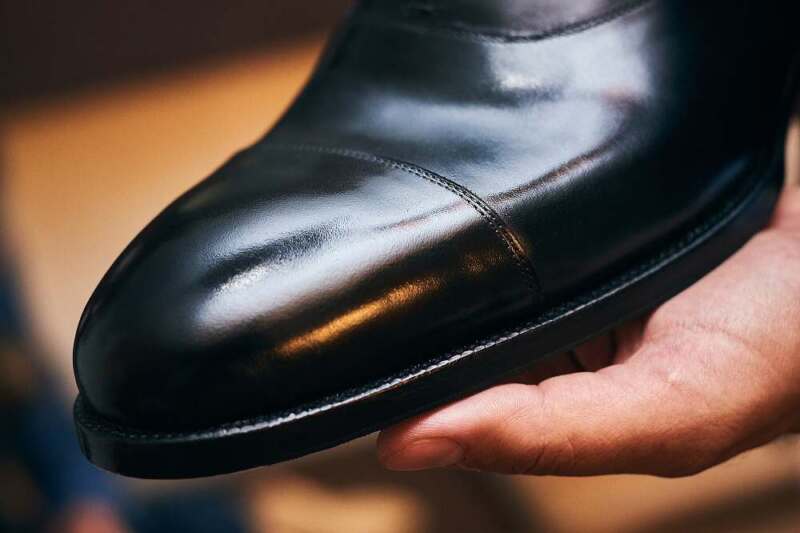
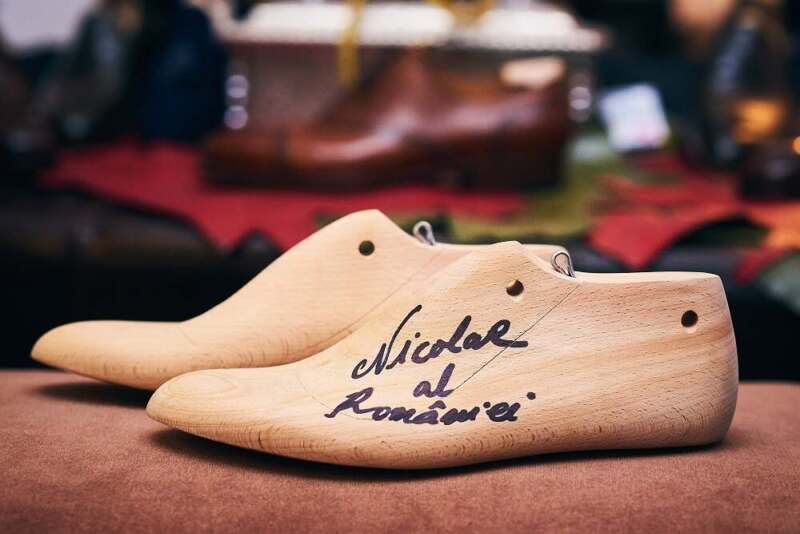
Handmade in Transylvania
“Handmade” is probably one of the most abused words in the footwear industry.
A factory can have someone touch a shoe with his hands at three points during production, and suddenly the marketing department wants to call it handmade.
That is not what we are talking about here.
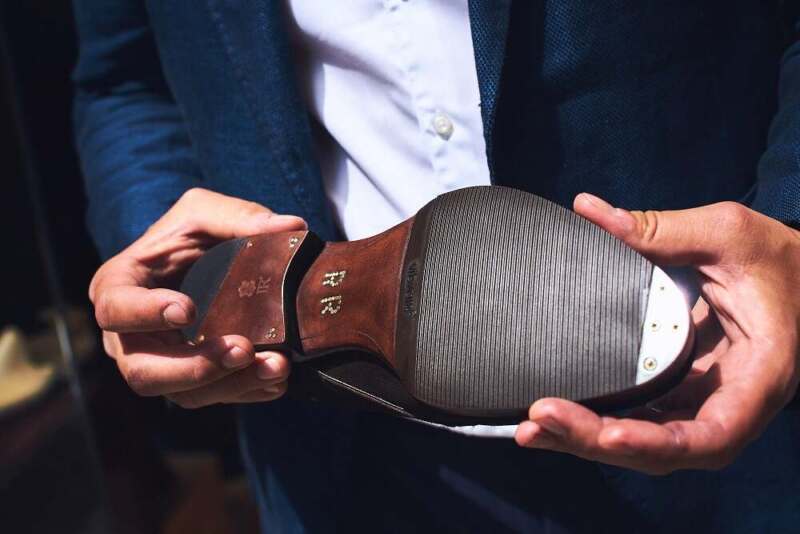
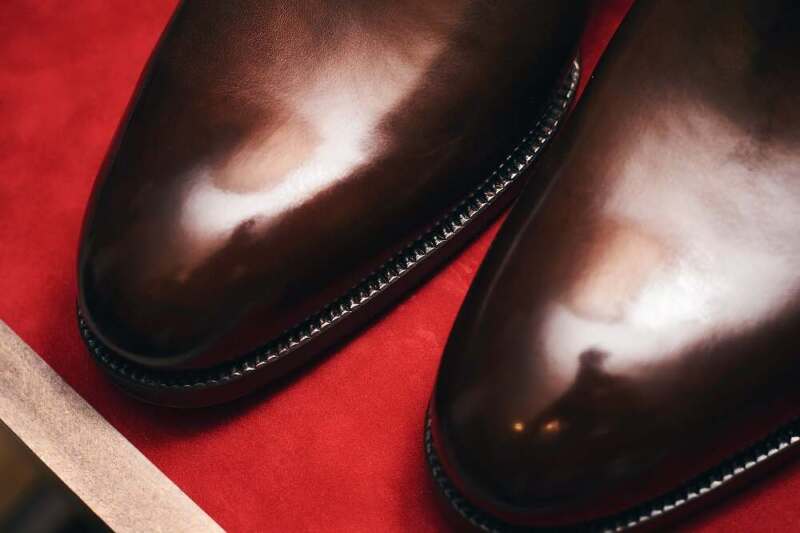
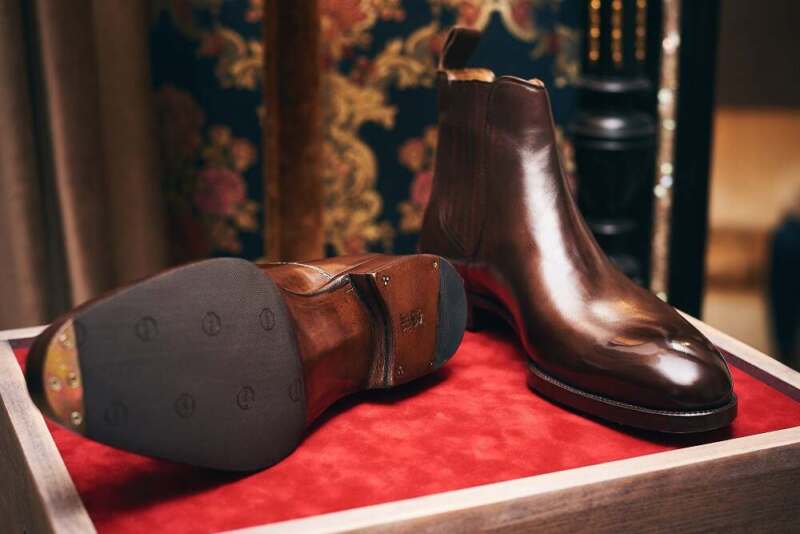
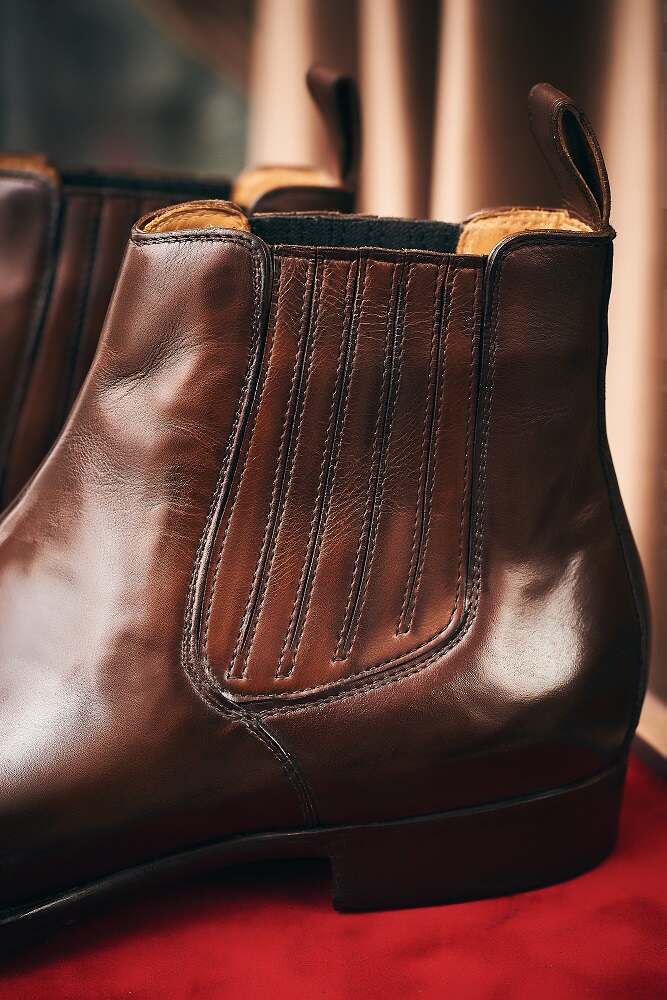
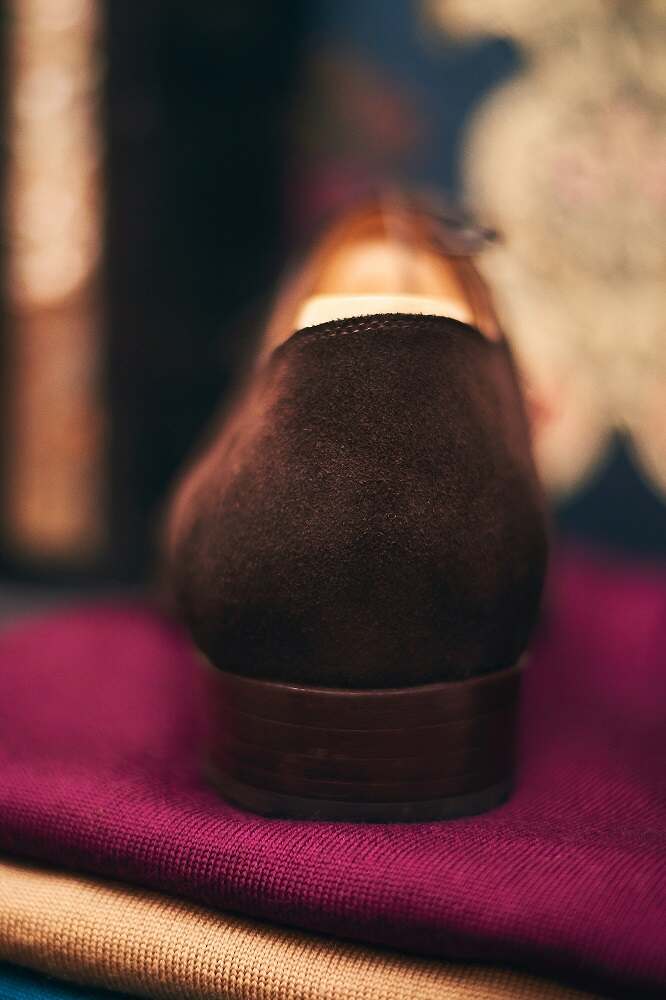
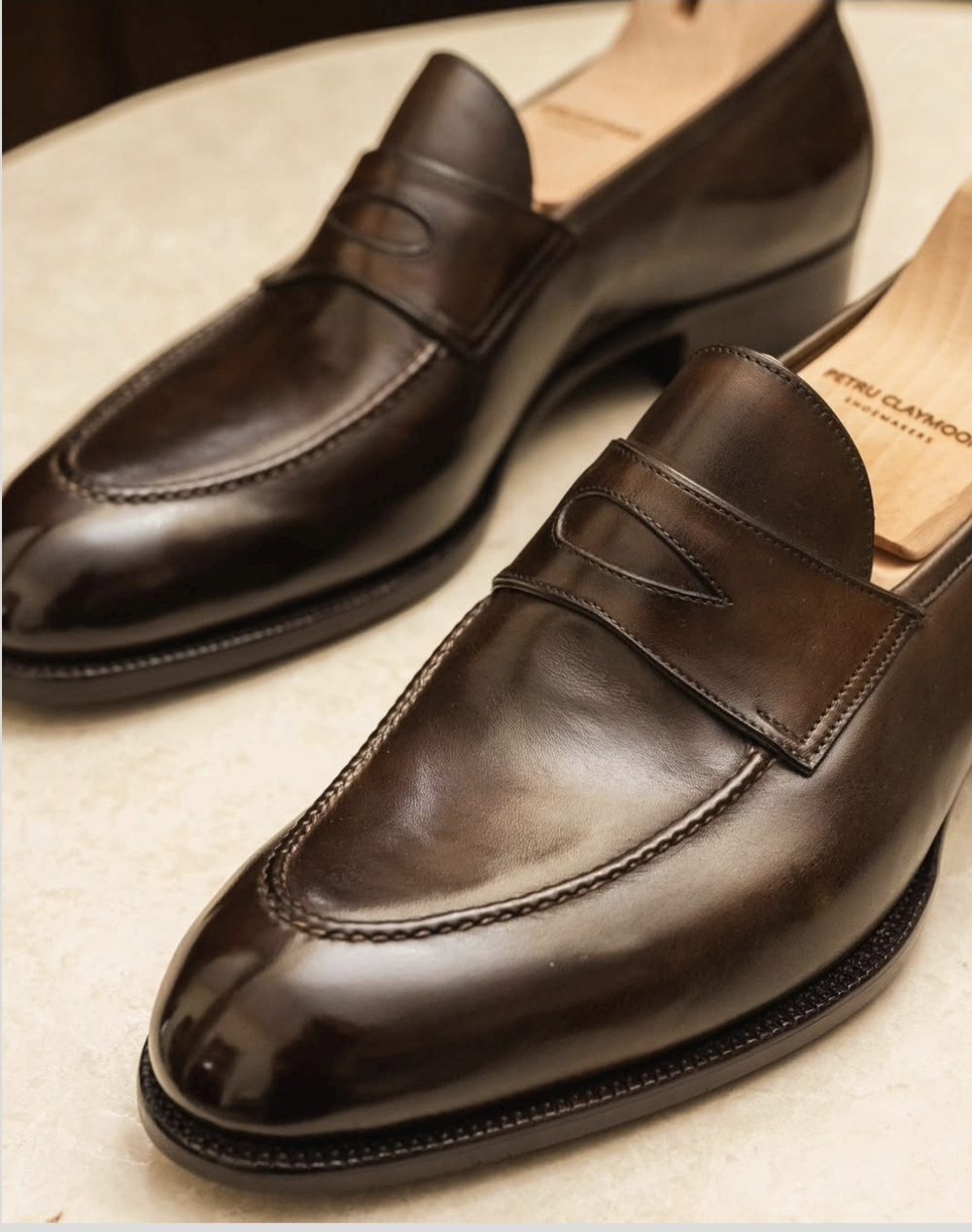
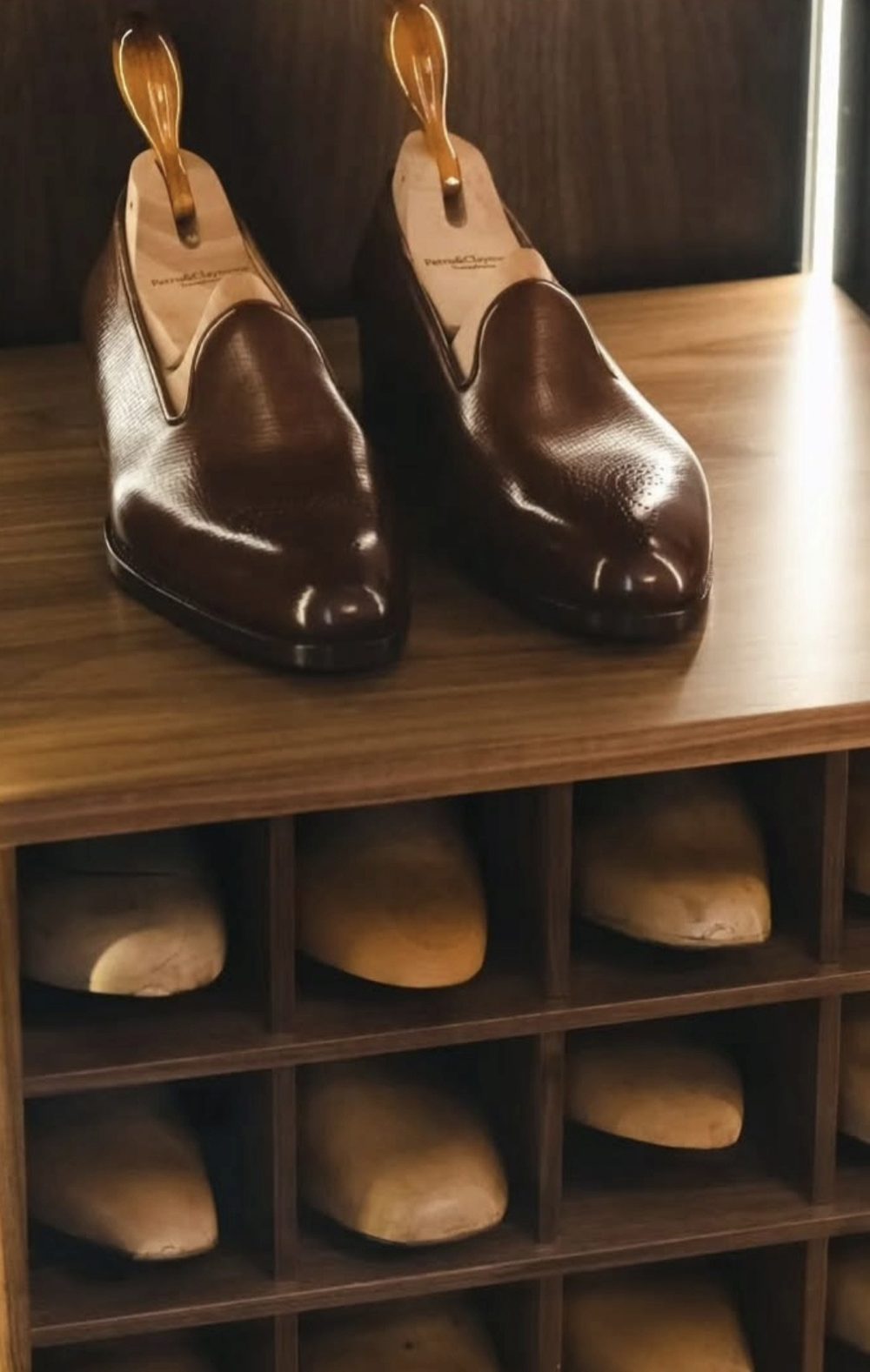
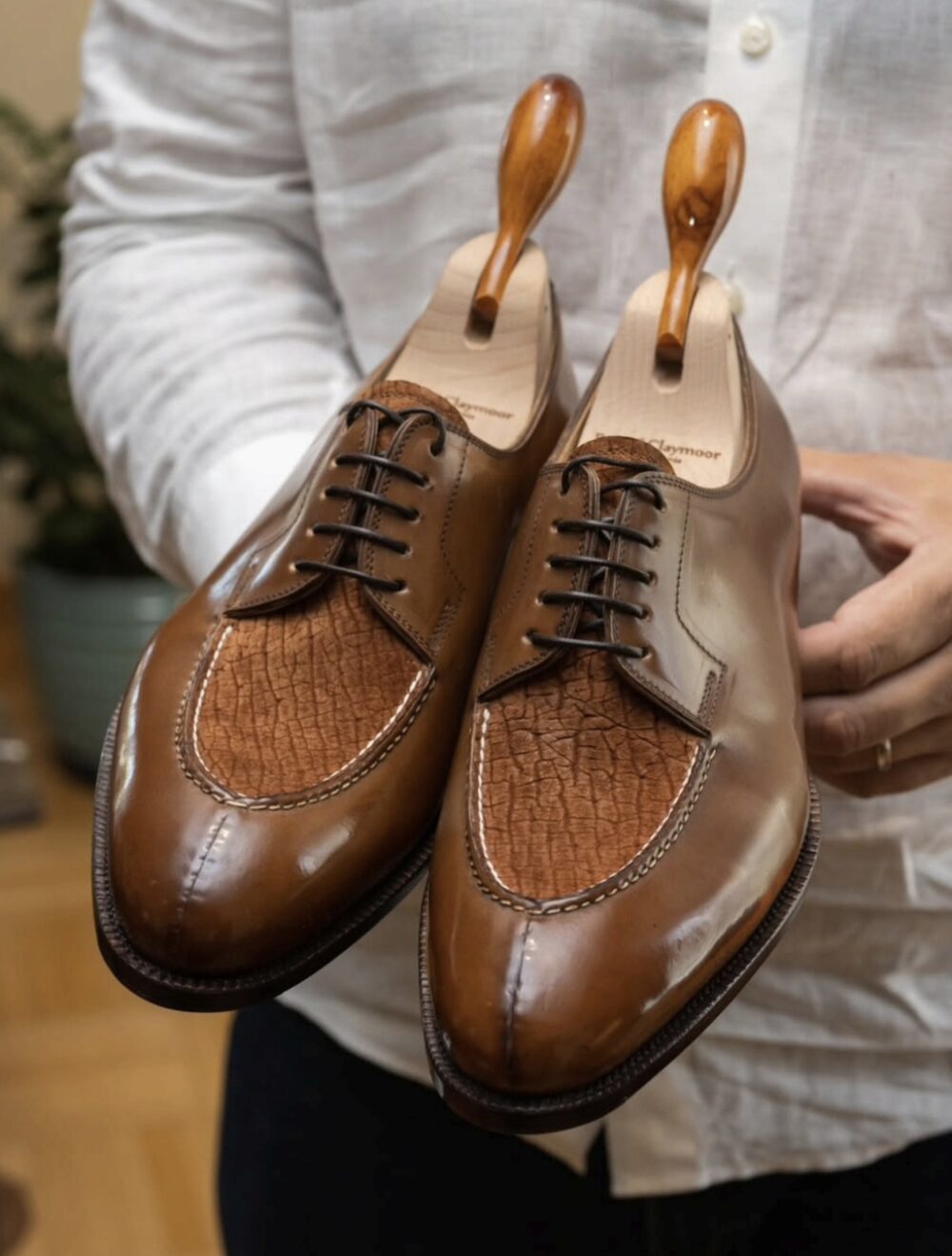
Petru & Claymoor shoes are clicked by hand, lasted by hand, welted by hand, and sole-stitched by hand. The heels are built individually, layer by layer. Aside from using an old sewing machine to close the uppers, the shoe is essentially created entirely by hand.
This is traditional shoemaking. And it is a tradition that has deep roots in this part of Europe. Yet another fact that often gets overlooked or forgotten about. A fact that very much still lives on today in our world of fast automation.
Transylvania was historically part of the Austro-Hungarian world, and that Central European shoemaking heritage never entirely disappeared. Political upheaval and the Communist era obviously changed the industry enormously, but the skills survived.
There are still craftsmen in Romania who know how to make shoes the old way. Petru & Claymoor is taking that knowledge and attempting to carry it forward.
Classic With a Twist
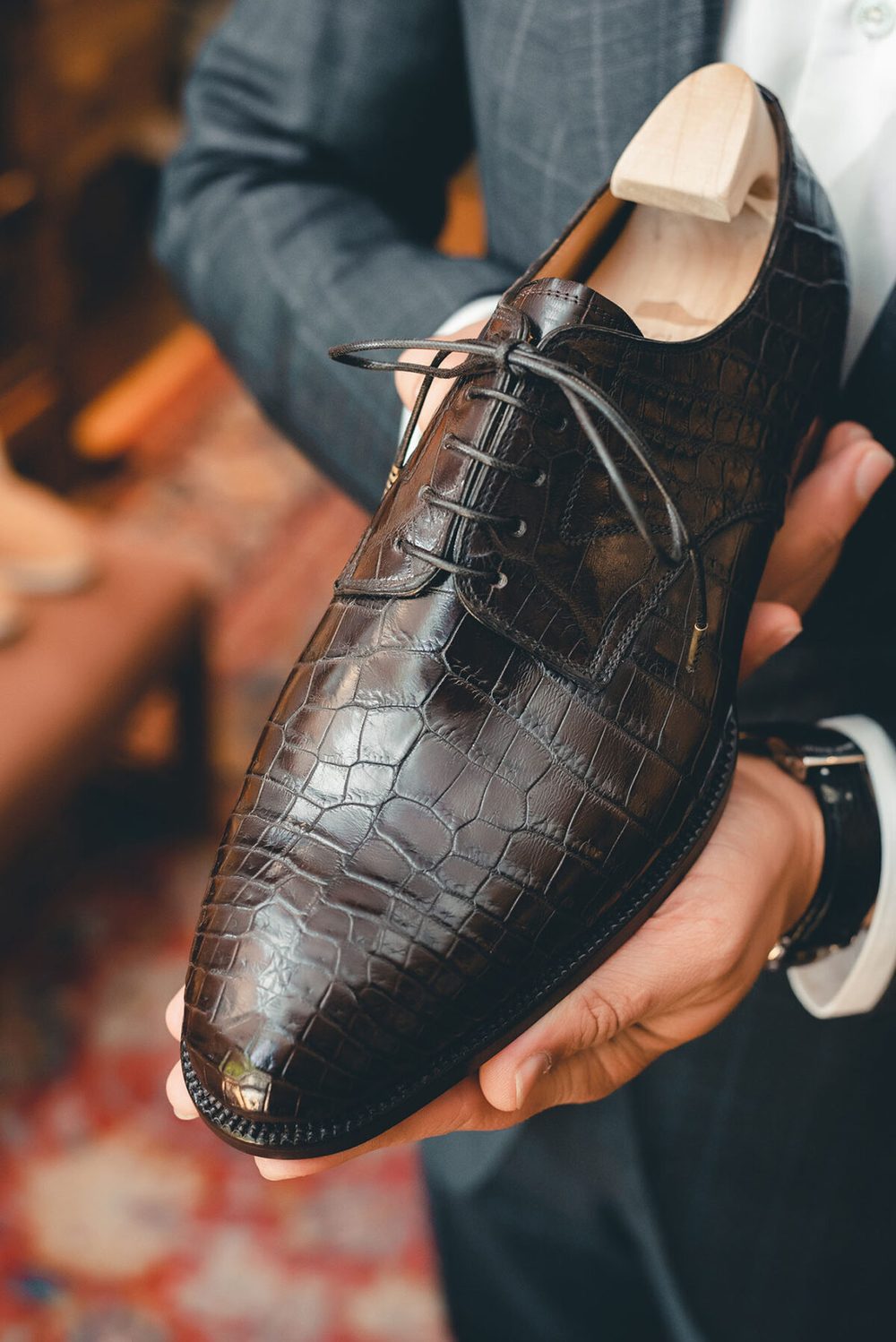
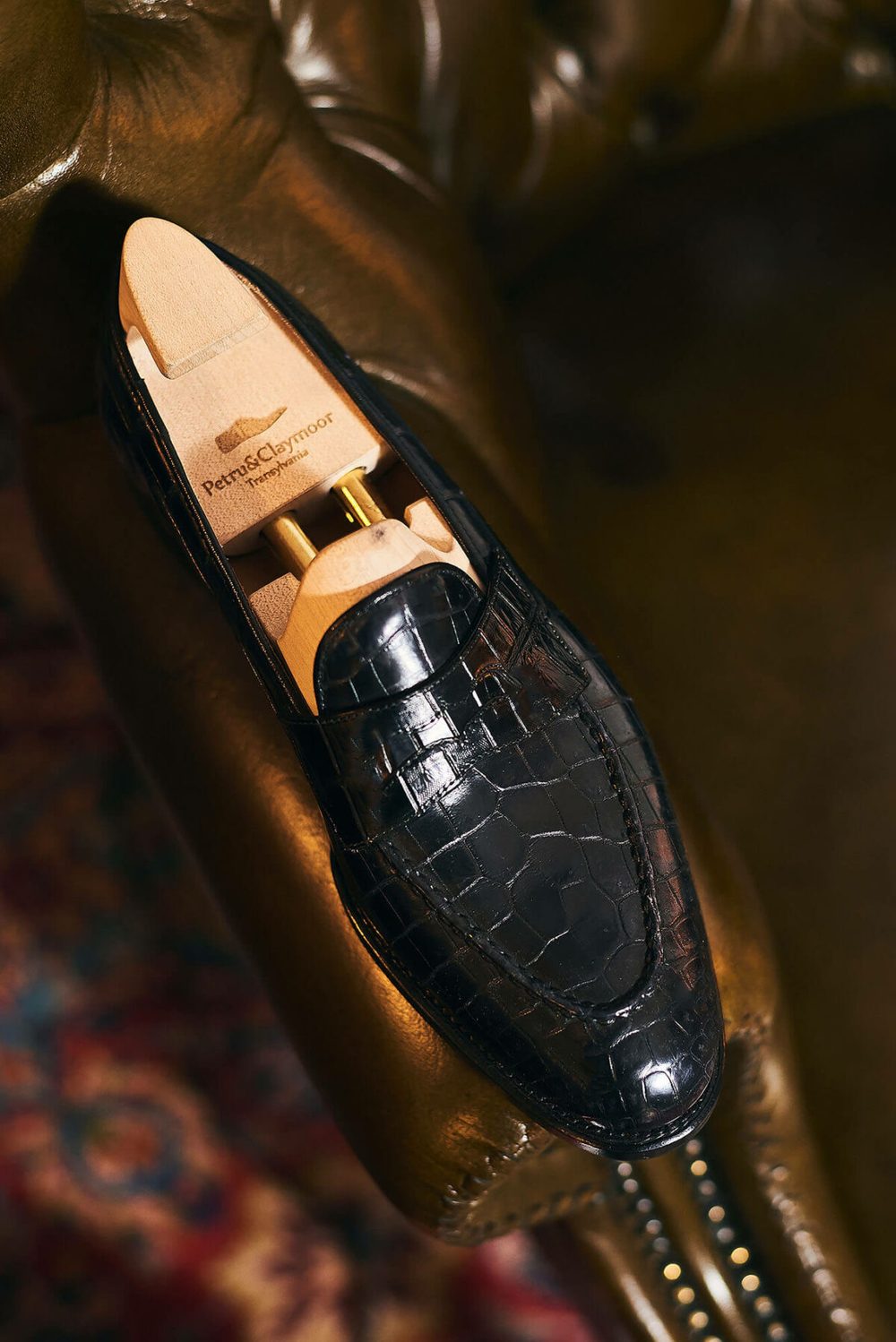
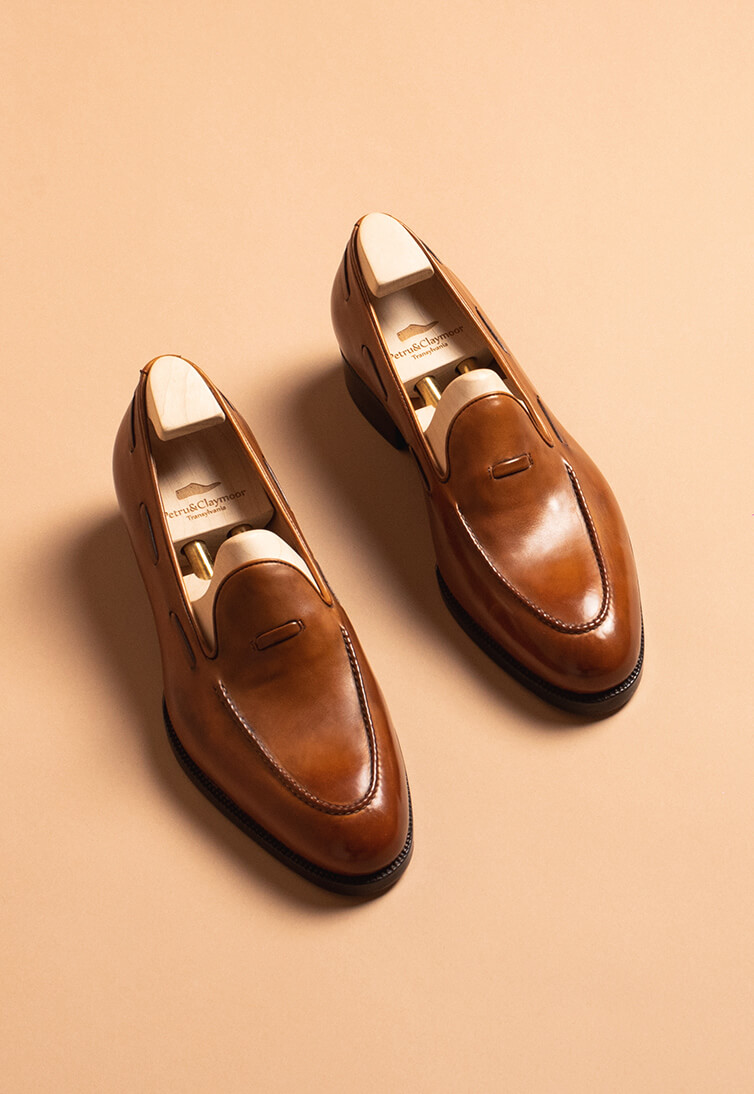
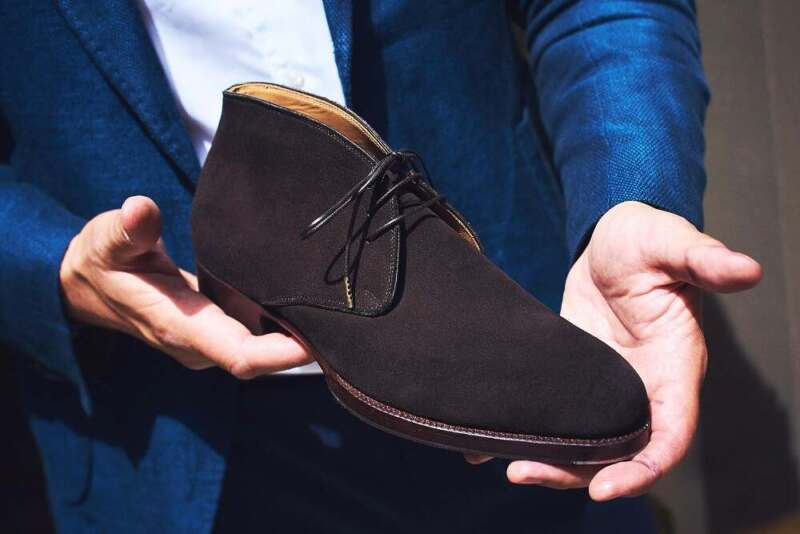
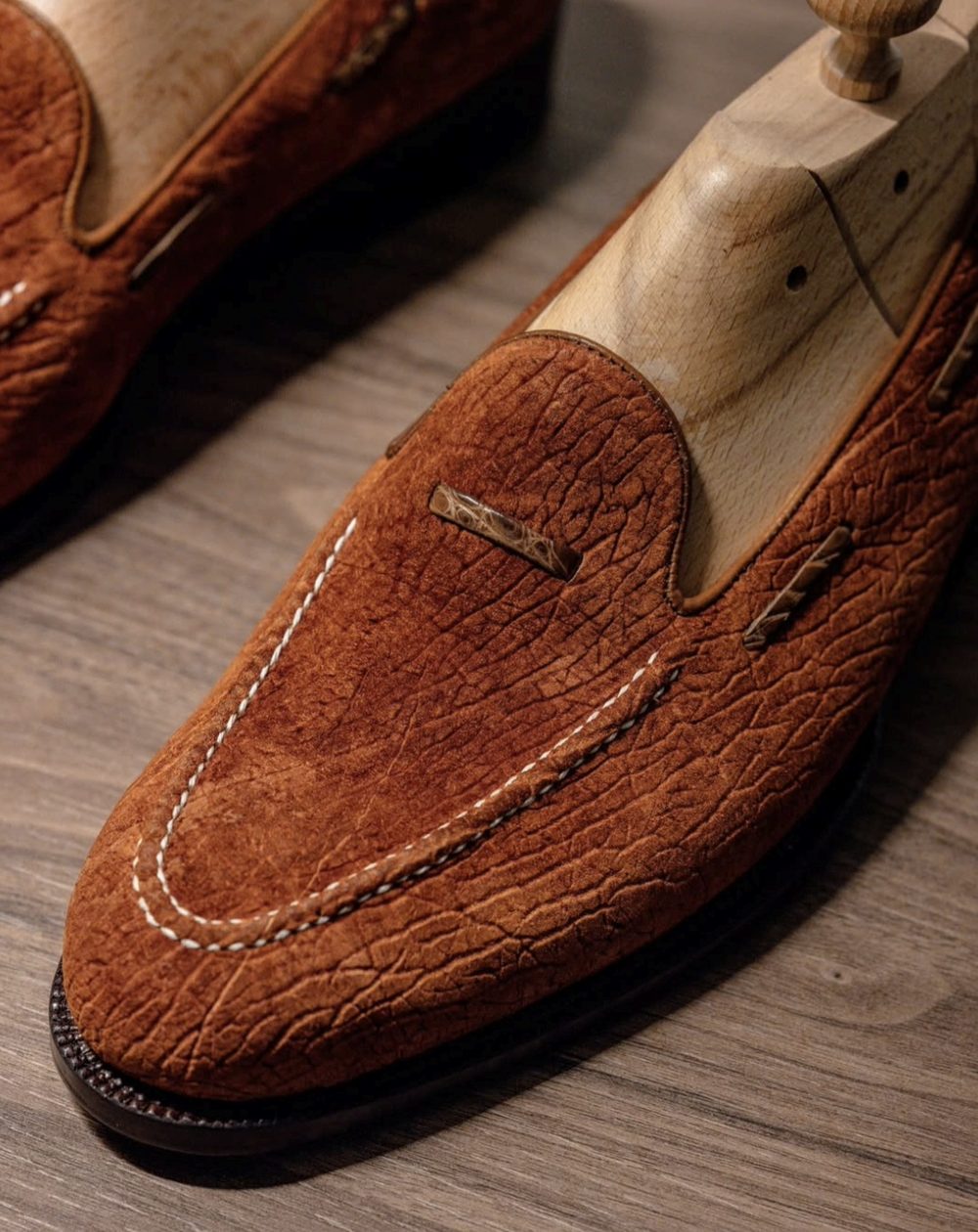
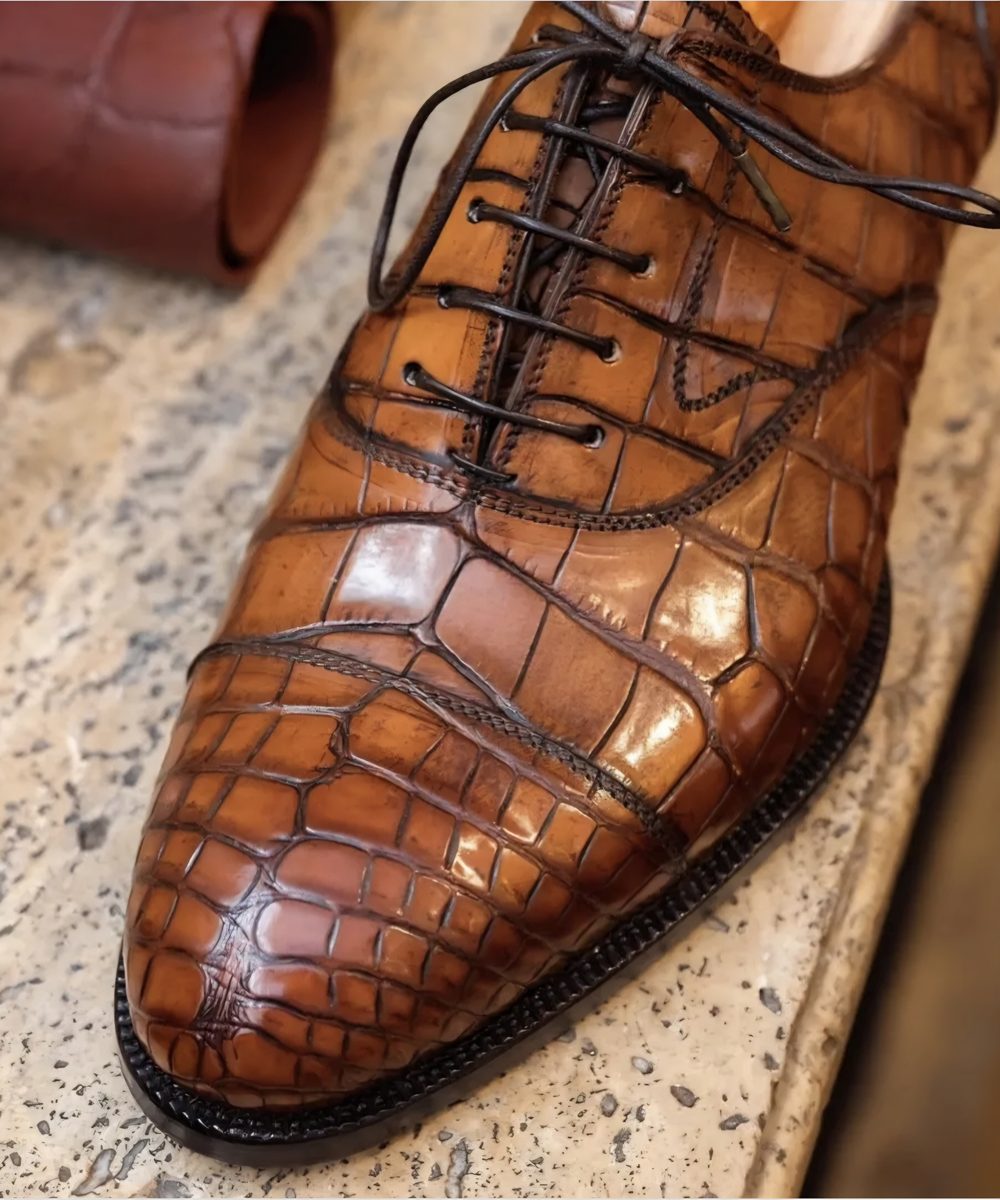
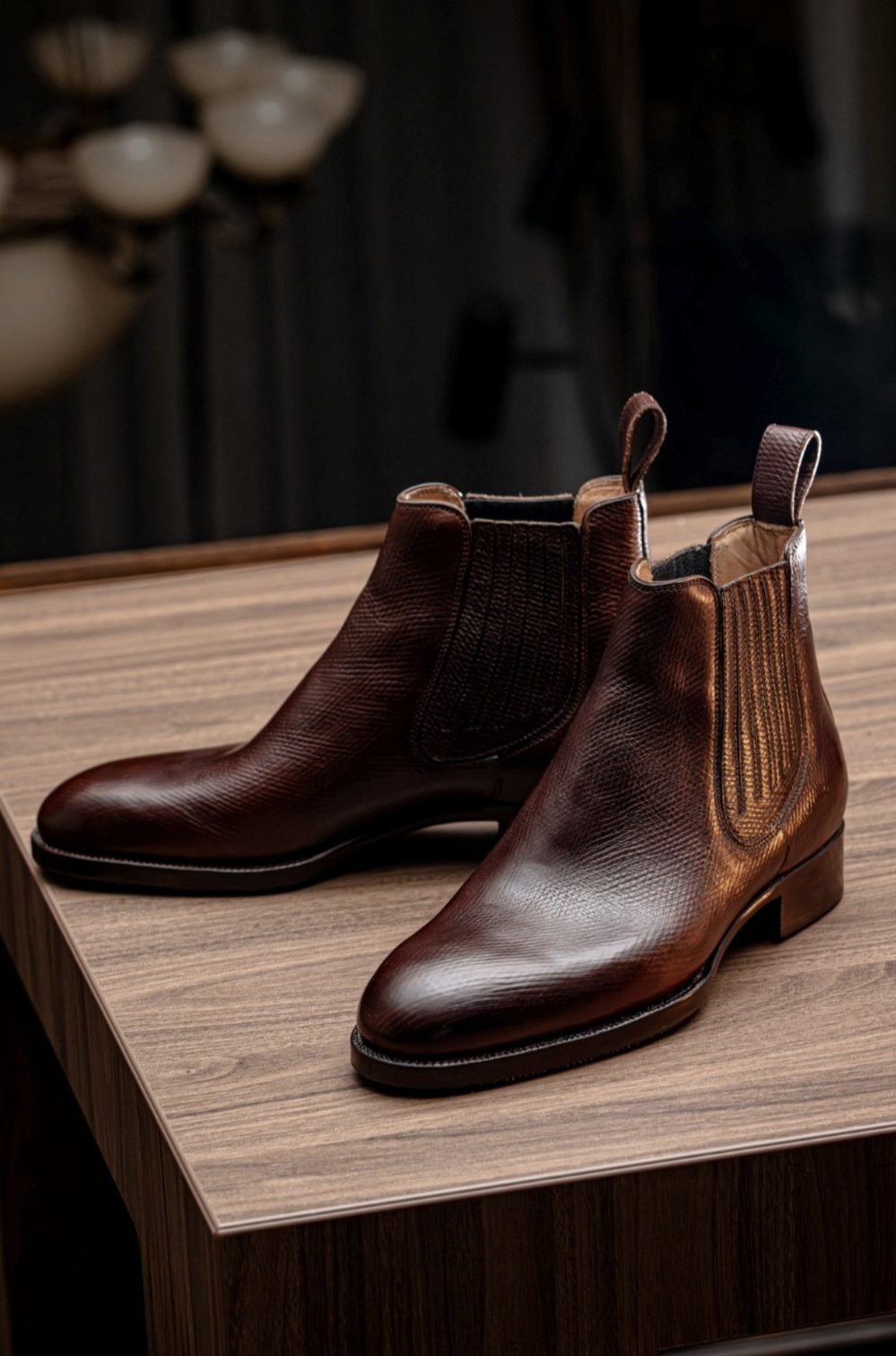
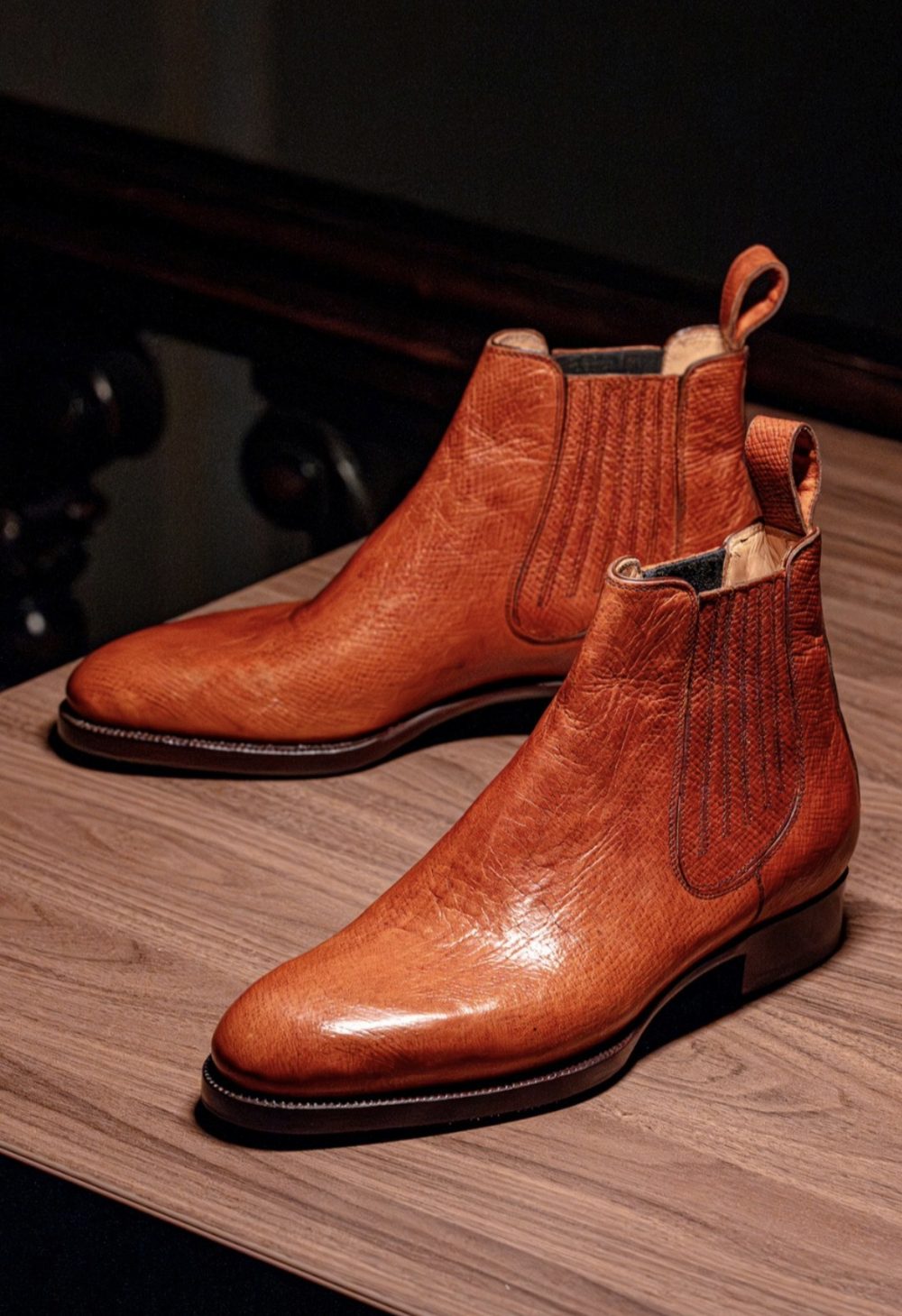
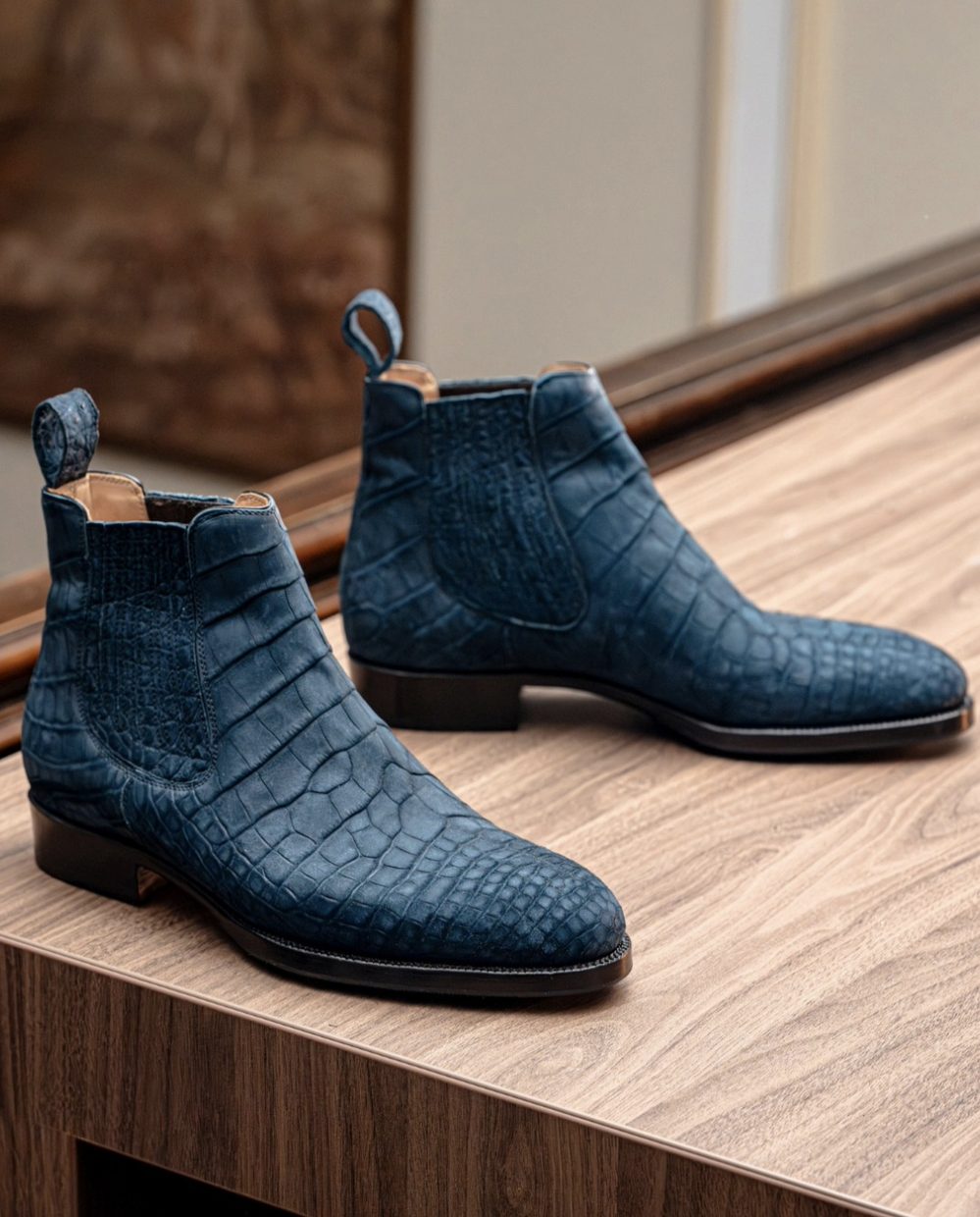
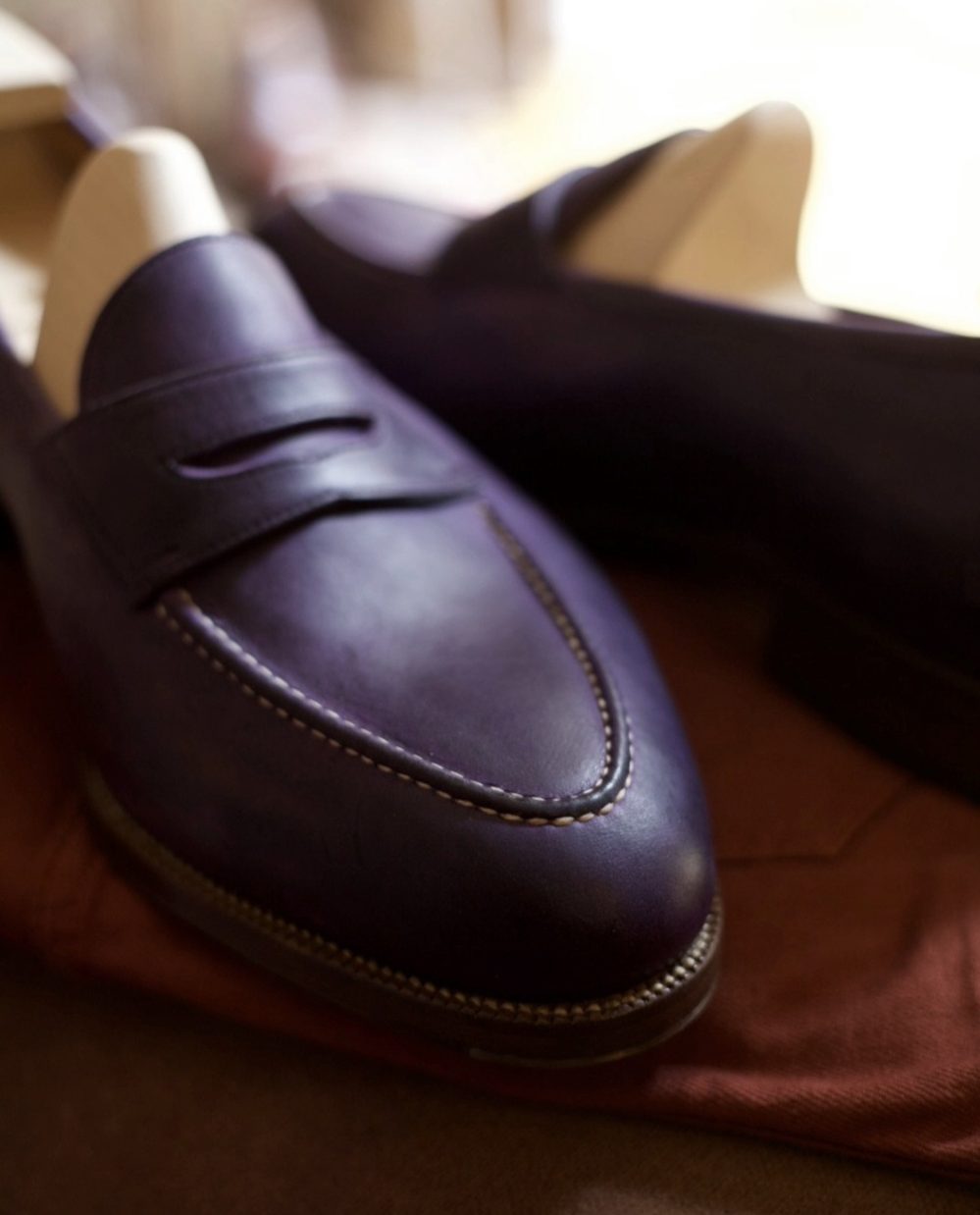
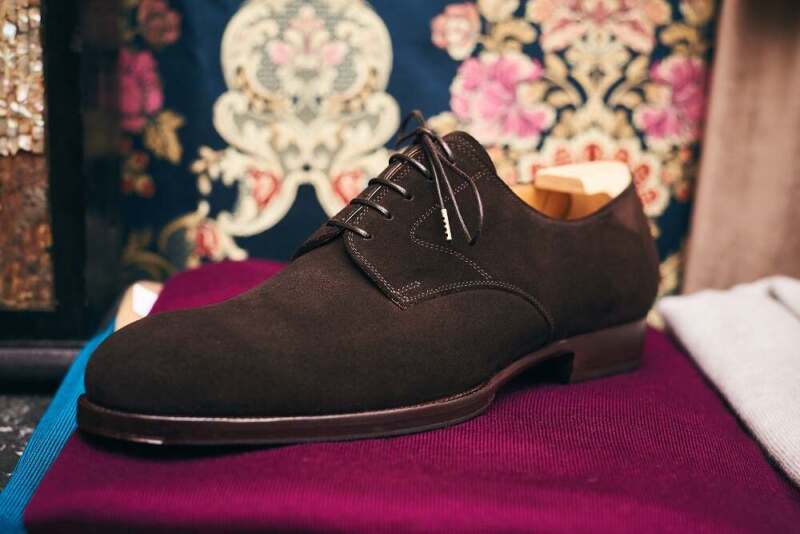
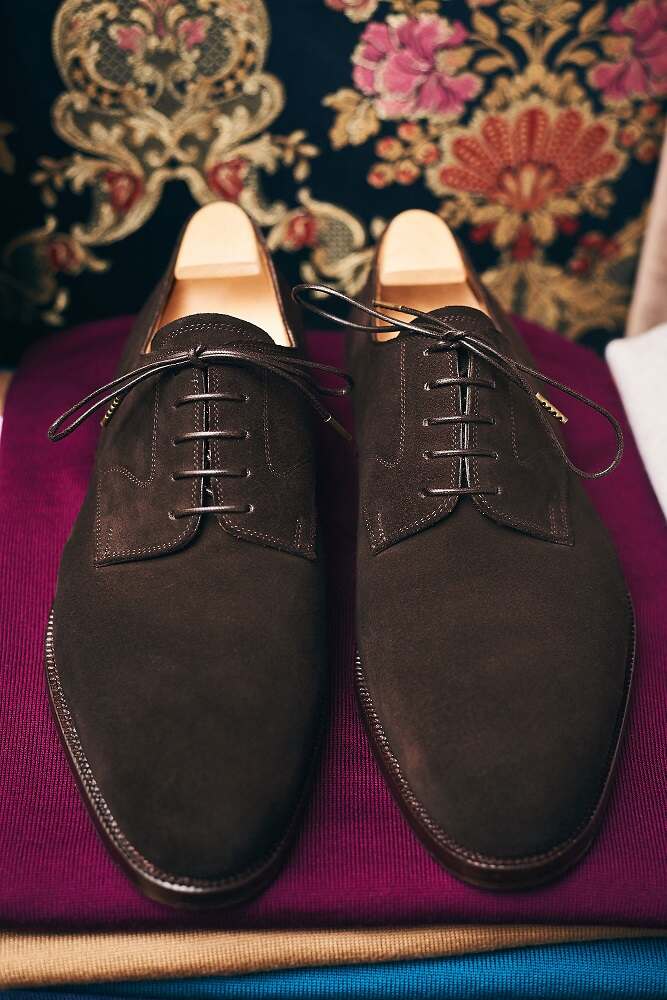
Classic with a twist can mainly mean anything. The ‘twist’ is very subjective. The shoes/designs themselves are largely rooted in classic footwear. Oxfords, Derbys, loafers and boots make up the foundation of what they do. The lasts tend to have that substantial Central European character without becoming overly heavy or exaggerated.
But where things become particularly interesting is in the materials and colors they choose to create with.
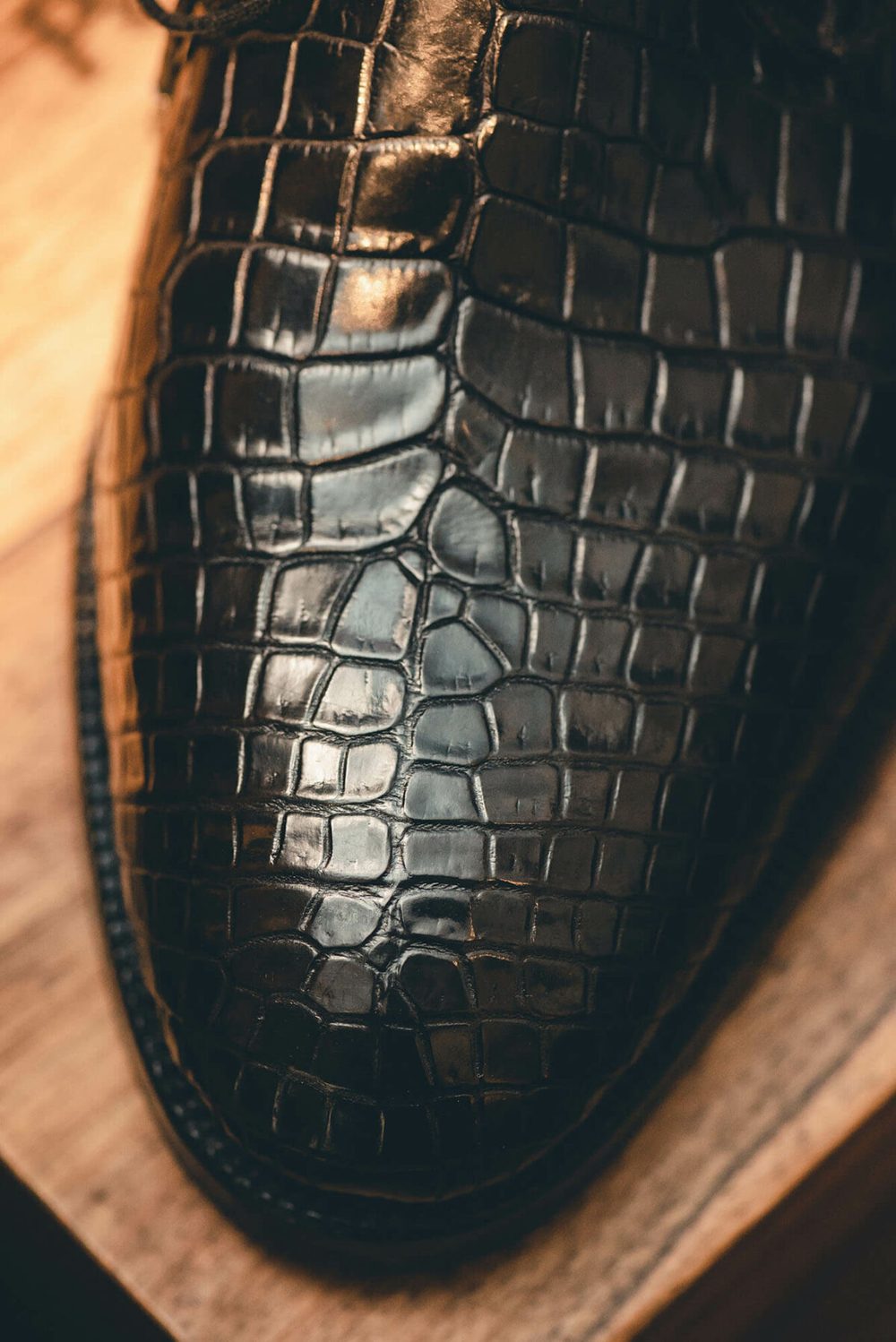
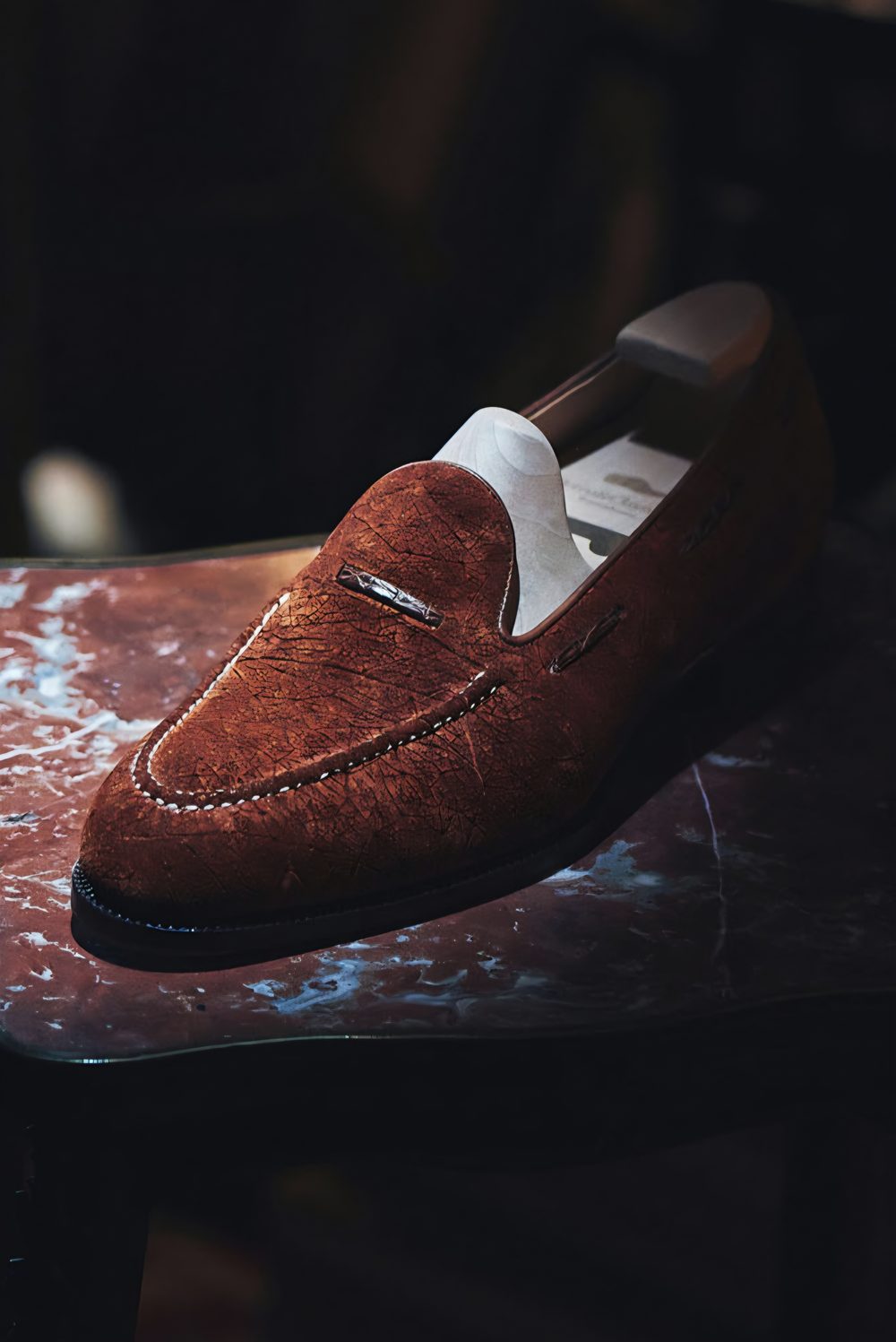
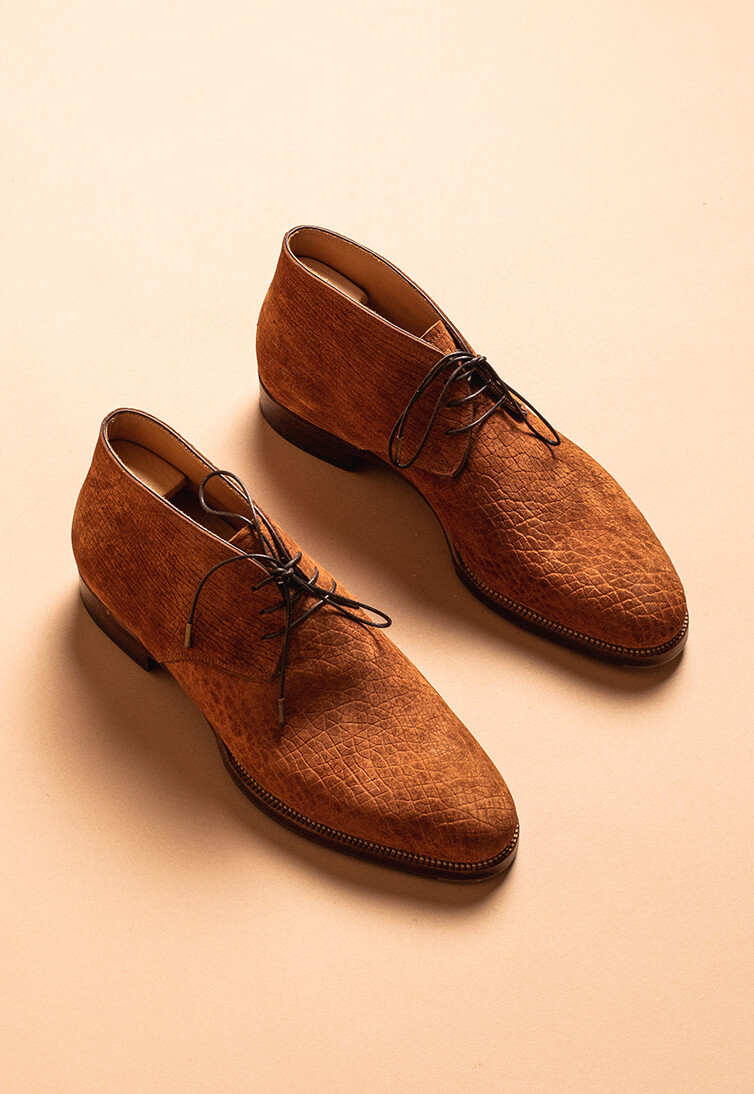
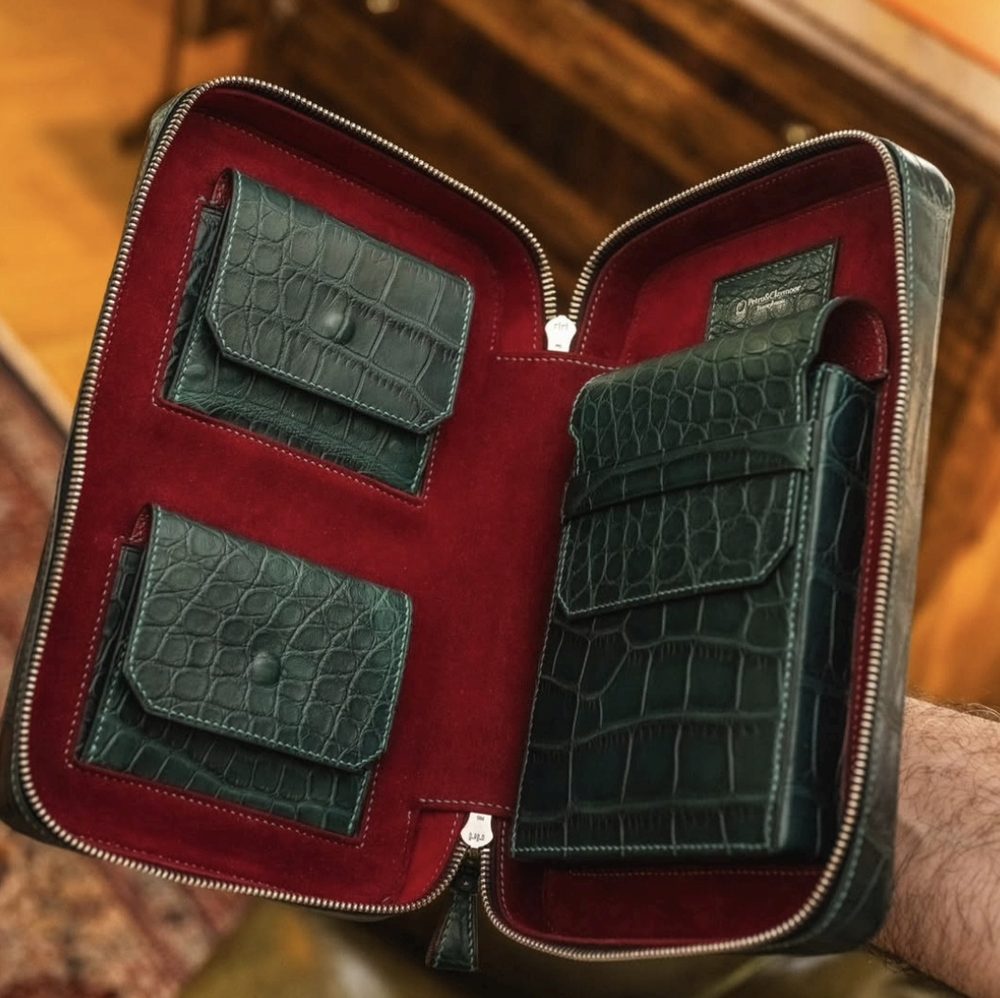
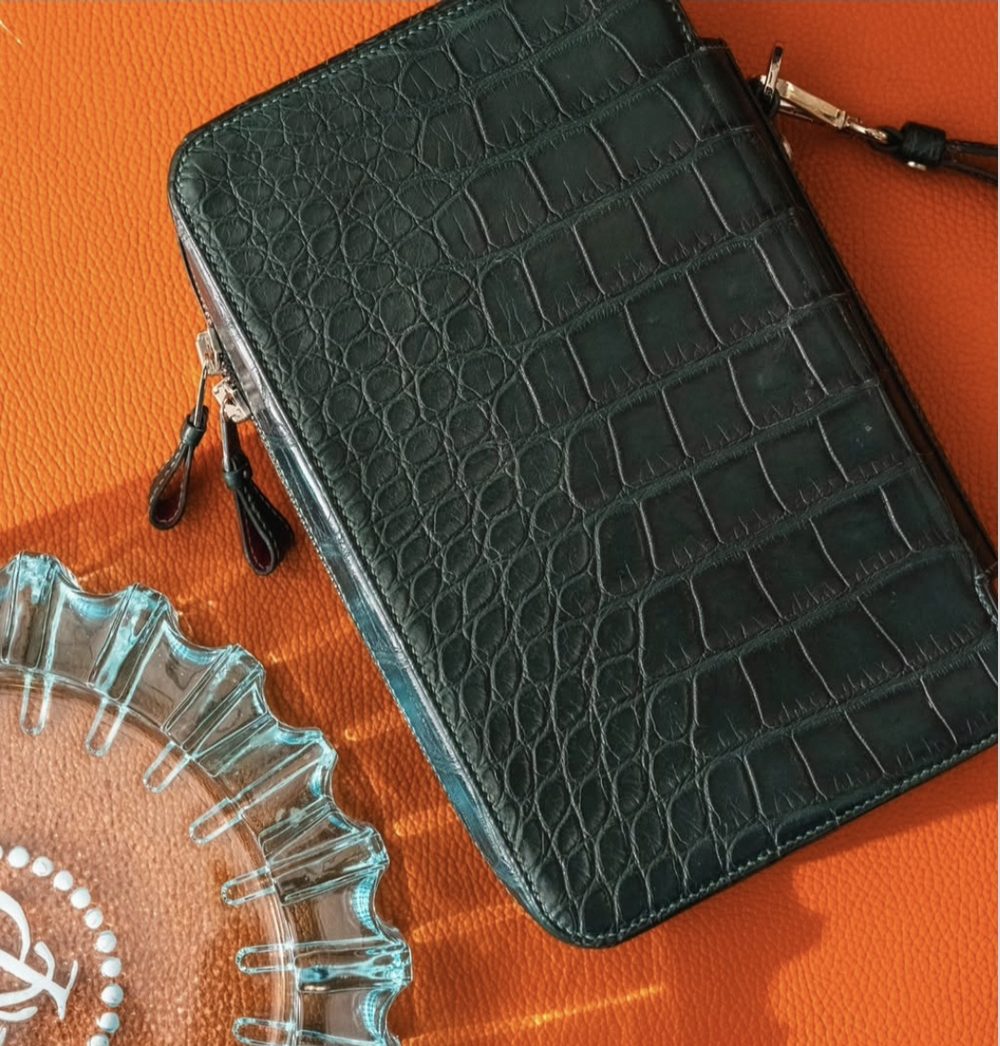
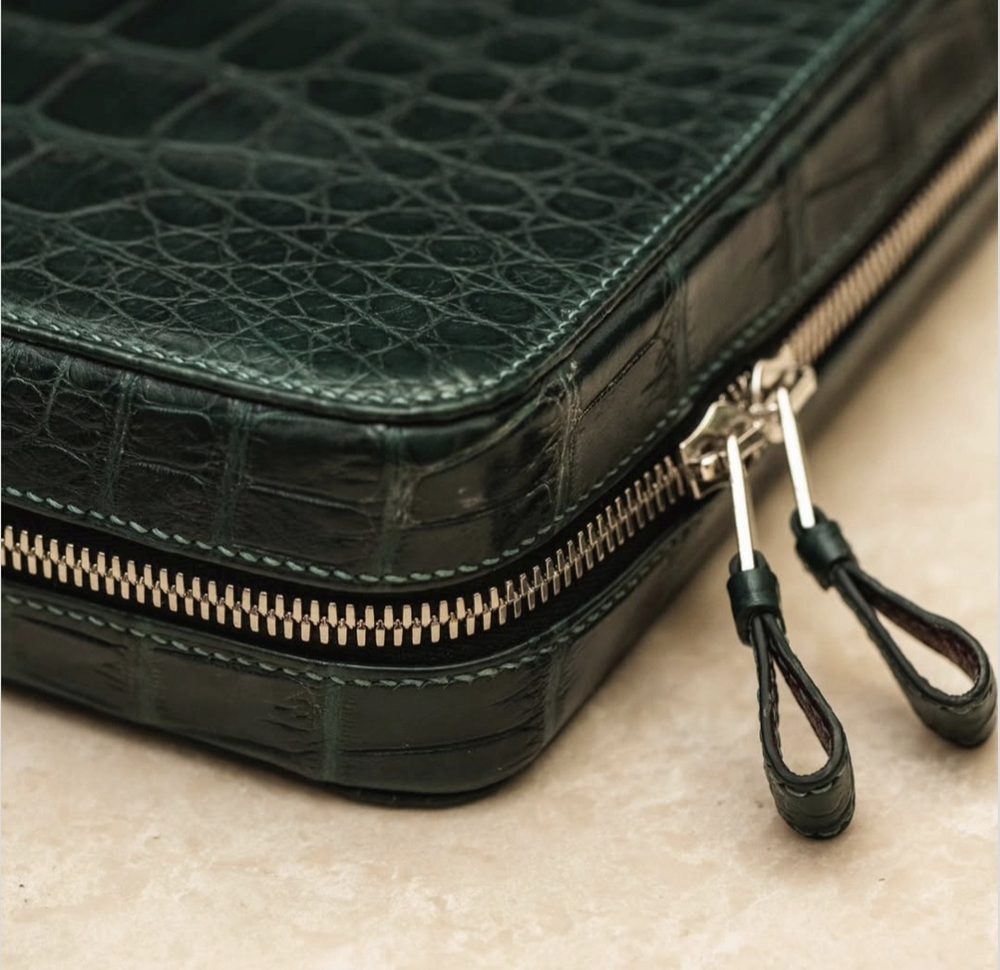
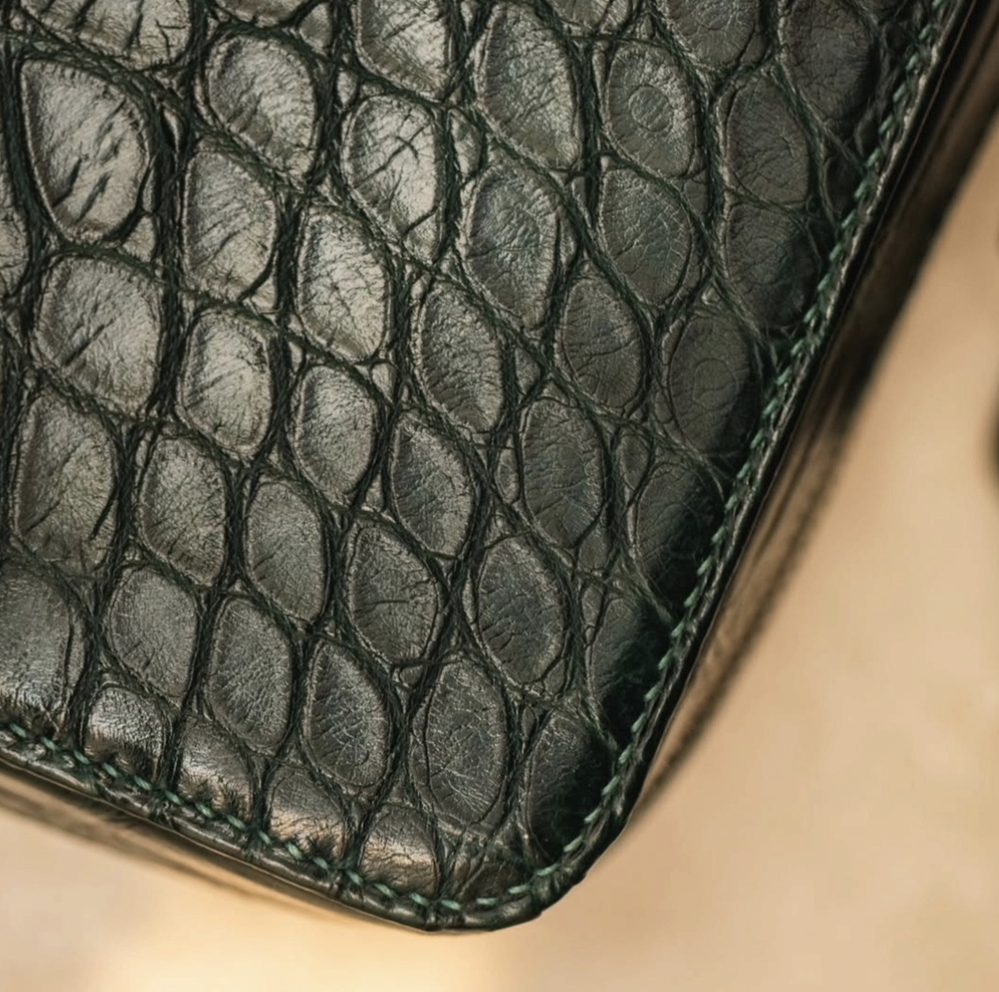
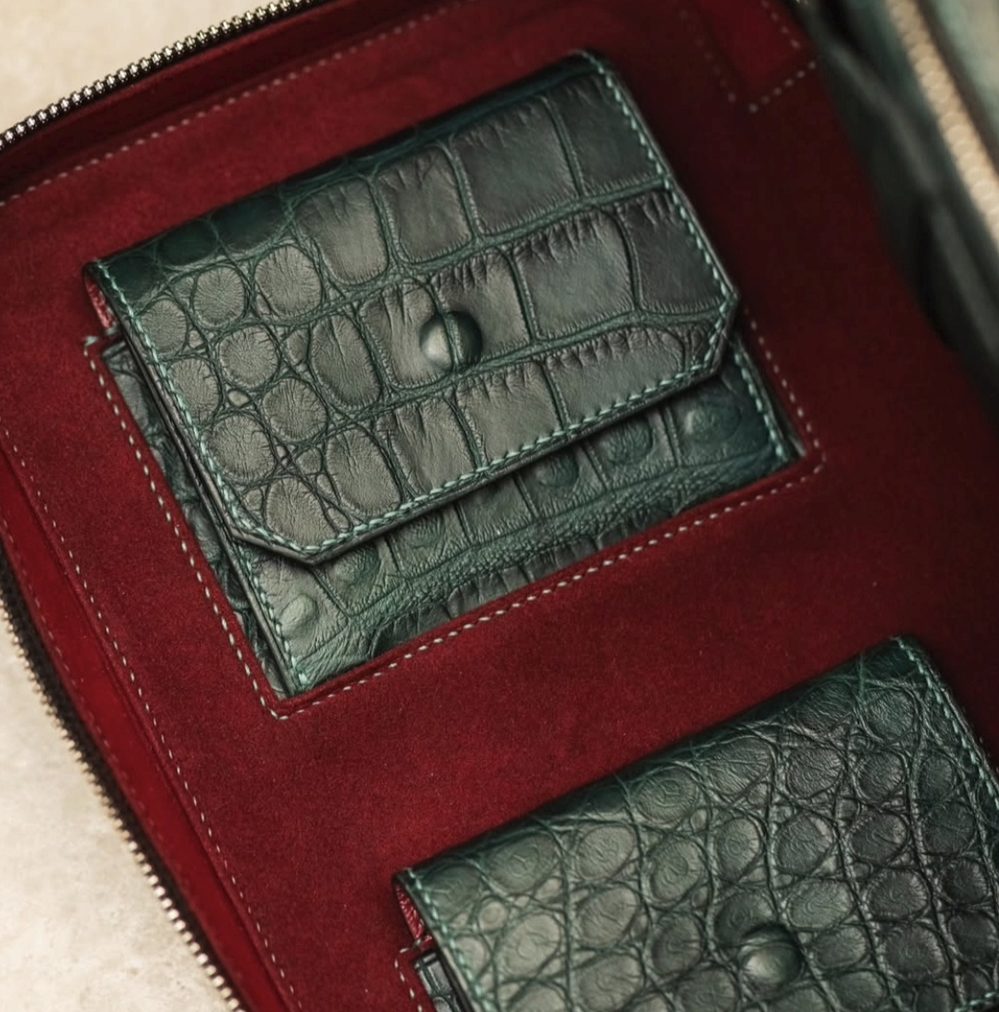
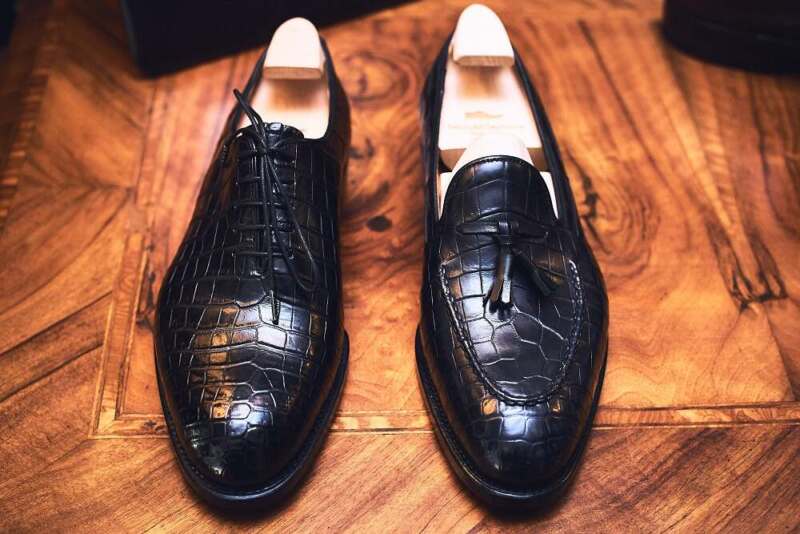
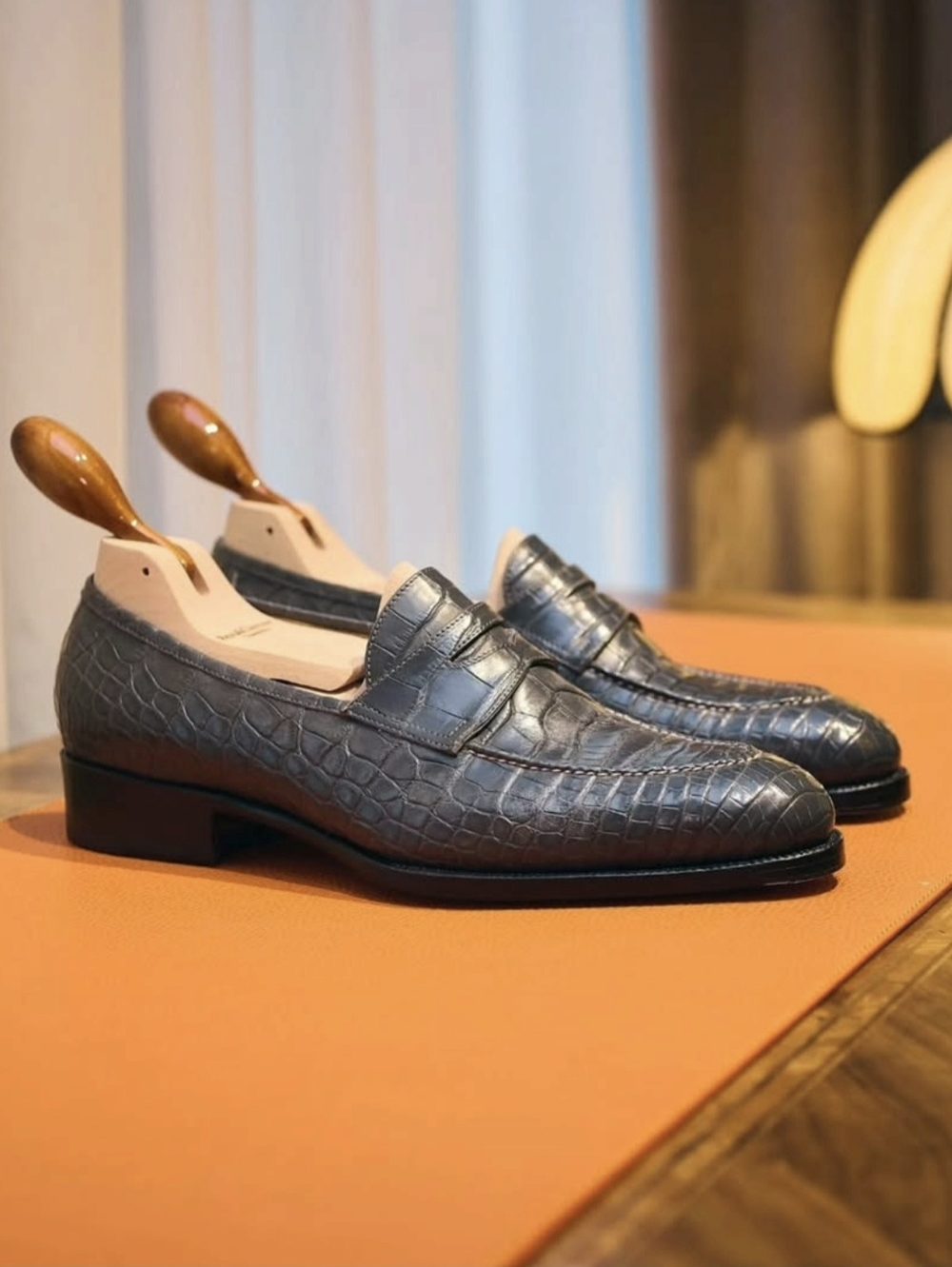
Alongside more familiar calfskins and suedes, Petru & Claymoor has never been afraid of using unusual leathers. Crocodile, alligator, peccary, hippopotamus and other exotic skins have all found their way into the collection.
It’s a smart technique: Classic Shoes + Bold Materials.
You might have an otherwise conservative Derby or loafer, but make it in hippopotamus or an unusual exotic suede, and suddenly it becomes something completely different. And in grey. Not necessarily in the traditional black or brown. That’s what gives it the ‘twist.’
That philosophy actually goes back to the beginnings of the company. Mircea once described their approach as “classic with a twist,” which I think remains a very accurate way of describing Petru & Claymoor today.
€2,300 For a Pair of Shoes?
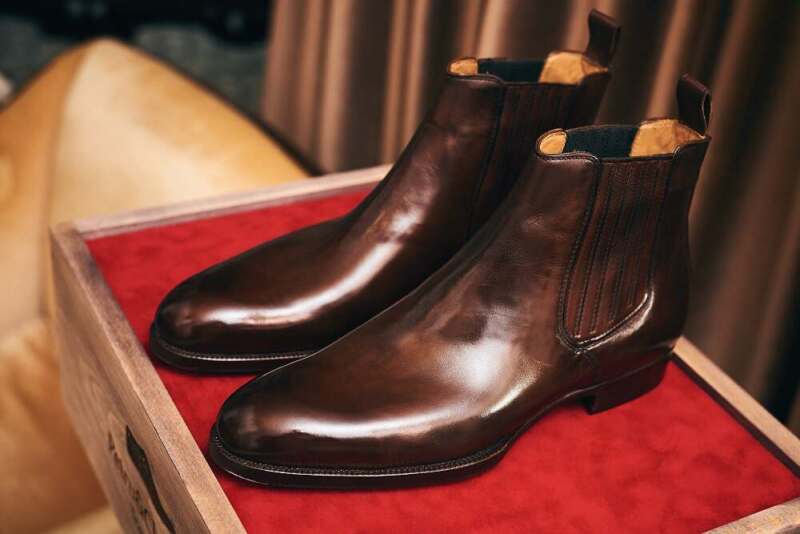
Now we have to address the elephant in the room. These shoes are not inexpensive. At the time of writing, many of Petru & Claymoor’s standard models start around €2,300, with certain models around €3,000 and exotic leather shoes climbing considerably higher.
And I already know what some people will say: €2,300 for a pair of shoes?! I see/hear it all of the time. But this is where understanding how a shoe is made becomes important.
You cannot really compare a shoe like this to a €500 or €700 factory-made Goodyear-welted shoe. You cannot even directly compare it to many shoes costing well over €1,000.
You are paying for labor. A lot of labor. Someone has to click that leather. Someone has to last the shoe by hand. Someone has to hand-welt it. Someone has to stitch the sole. Someone has to build the heel layer by layer. Someone has to finish it.
And all of those things take time. I sometimes think of shoes like these as ready-to-wear bespoke, so to speak.
Obviously, that is something of an oxymoron. True bespoke involves creating a personal last around your individual feet, fittings, adjustments, and everything else that comes with the bespoke process.
But from a construction standpoint, this is essentially the type of shoemaking you associate with bespoke footwear, simply offered in standardized sizes and lasts. That distinction matters. Whether €2,300 is worth spending on a pair of shoes is entirely personal. For many people, it won’t be. And there is absolutely nothing wrong with that.
But there is a difference between saying, “I would never spend €2,300 on shoes,” and saying, “Those shoes shouldn’t cost €2,300.”
When you understand how they are made, the price begins to make considerably more sense. And when you are the one making the shoes, you value them considerably higher than €2,300. I know, as when I made shoes for myself, I felt they were worth $10,000 with all of the pain, sweat, and tears I put into them!
The Beauty of Old-World Shoemaking
This is ultimately why Petru & Claymoor interests me. Having actually made that journey from Bucharest to Brașov and having seen the shoemaking culture of the region firsthand, “Handmade in Transylvania” means something slightly different to me.
It isn’t simply clever branding. There really are shoemakers working in this beautiful corner of Romania, using methods that have increasingly disappeared from the modern footwear industry.
And I think there is something worth preserving in that.
We live in an era obsessed with making everything faster, cheaper, and more scalable. Traditional shoemaking is essentially the opposite of all three. And I don’t say that as a hypocrite, as I too am guilty of partaking in that new era of scalability.
The Old World is slow. It is labor-intensive. It is difficult to scale. And that is precisely what makes it special and defines the relics we love to cherish. But they won’t exist if brands like Petru & Claymoor don’t keep it alive.
Petru & Claymoor is currently evolving as a company, including changes to its website and the way it presents and sells its footwear internationally. Hopefully that means more people will discover not only the brand, but this particular tradition of Romanian shoemaking.
Because while everyone knows Northampton, Florence, Paris, and Tokyo when discussing great shoes, there are other corners of the world where exceptional shoemaking continues to survive.
Brașov, Romania (Transylvania) is one of them. And Petru & Claymoor is helping make sure it stays that way.
Learn more here: https://petru-claymoor.com/
*** They are currently revising their website, so it might be down for now. Definitely check back in a few days if so***
—Justin FitzPatrick, The Shoe Snob
Shop · Marketplace · Patreon