What would an entirely simian society look like? Well, that concept was answered long ago by a 1968 film known as Planet of the Apes. It’s an intriguing prospect that marries our closely held physiological relationship with primates with the idea that their intelligence could, by some means, evolve to rival our own. Famously, Planet of the Apes suggested that astronaut George Taylor (Charlton Heston) awakens from deep hibernation only to crash-land on an unknown world ruled by walking, talking apes. But the film’s final striking image of Taylor standing before a dilapidated Statue of Liberty colliding with waves while it rests on the beach was a shocking reveal that this planet of apes was Earth all along.
Planet of the Apes would go on to see several sequels and even a Tim Burton reboot starring Mark Wahlberg in 2001 that was a critical failure. However, the property would be resurrected once again in 2011 with Rise of the Planet of the Apes, a film that acted as a prequel chronicling the era in which humanity’s downfall coincided with primates rapidly gaining intelligence through an experimental serum. This kickstarted what is known as the reboot trilogy.

- Subscription with ads
-
$12 per month
- Premium Subscription
-
$19 per month
The series’ central character, Caesar, is all the reason you need to watch this trilogy
Andy Serkis elevated motion-capture with his blockbuster performance

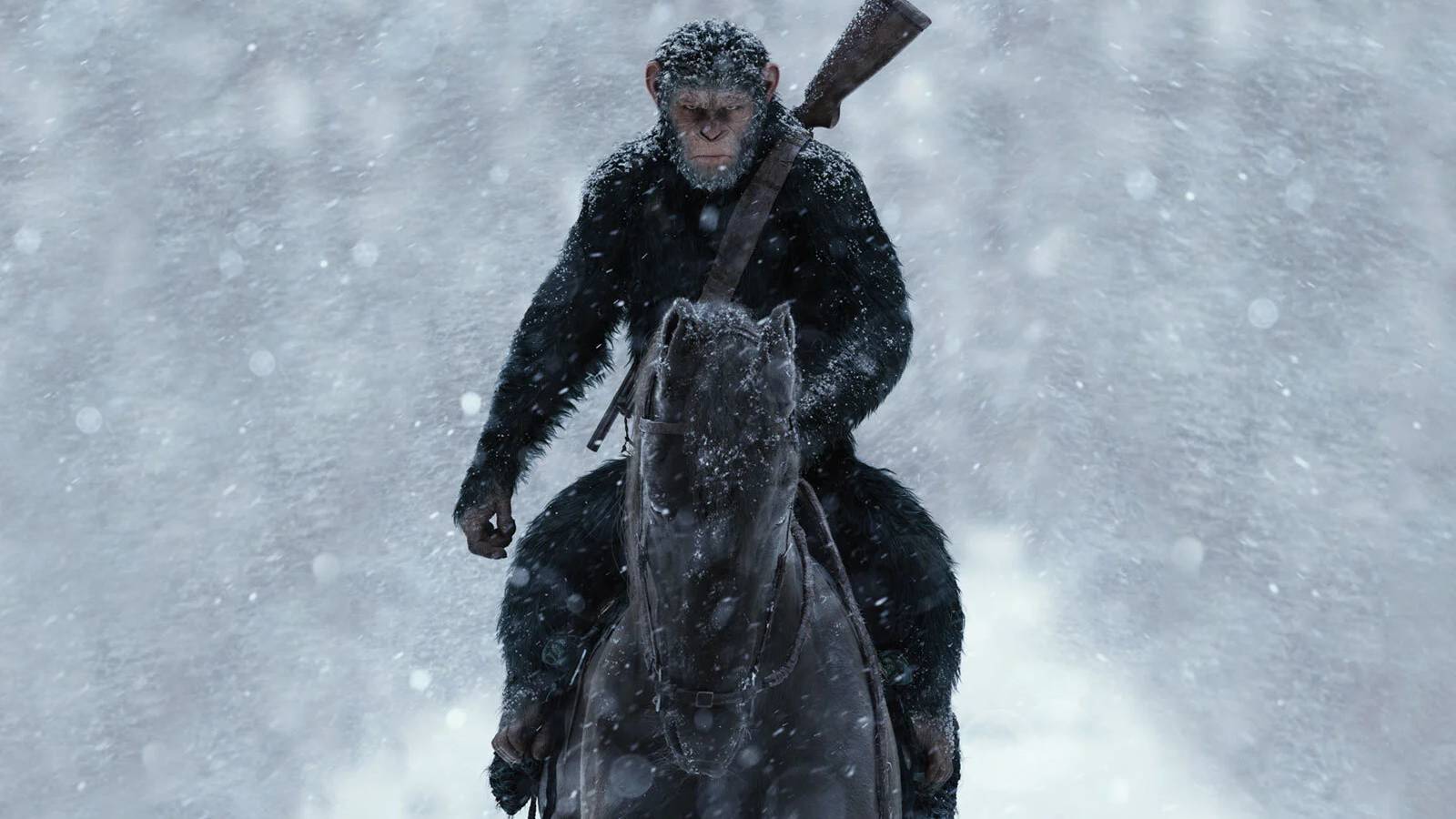
Central to the plight of intellectual apes is one conflicted and multi-layered character, Caesar. Originally a test subject for the experimental serum in Rise of the Planet of the Apes, Caesar’s narrative arc sees the ape embody the full spectrum of humanity as he navigates war with a faction of surviving humans who want all the apes eliminated, protects his own family, and balances his drive to seek freedom for his simian peers while not losing himself morally. The inner conflict within Caesar is highly apparent. In times of war, compassion is lost. But Caesar seeks to maintain a graceful stoicism that makes him incredibly engaging to watch.
Andy Serkis, the actor behind the ape hero, puts on the performance of a lifetime through motion capture. All the emotive responses and visual communication that people can deliver naturally, Serkis executes perfectly in this mocap venture. Joy, pain, regret, confusion, betrayal, and more are ever present on Caesar’s face, a character of few words. It’s the kind of presentation that makes these three films an absolute treat for movie lovers.
Each film within the reboot embodies a different tone and premise
The sequels aren’t simple extensions of Rise
One of the most thrilling aspects of this trilogy is that each film feels completely separate from the previous one while still maintaining the connective tissues and lore that make them a cohesive epic. The first film, Rise of the Planet of the Apes, leans heavily into the wonder of scientific discovery and consequence. Caesar also shares a bond with the scientist who ultimately gives him the gift of knowledge, so there’s plenty of heart. The movie ultimately feels like an apocalyptic disaster beginning to unfold.
Dawn of the Planet of the Apes establishes a world that is years removed from its predecessor where apes have formed a primitive civilization. What remains of humanity following the events of Rise has created a certain tension with their refusal to accept the primate races as intelligent beings equal to humankind. It’s a tense standoff with emotional and thrilling action sequences that elevates the series beyond what Rise had established.
War for the Planet of the Apes is exactly as it sounds. War is a central theme as humans make a final push to eradicate the apes. However, the film is much more than a simple “war” scenario. In fact, amid the broad scope of violent conflict is a more gritty drama involving the series hero, Caesar, and a menacing human colonel that becomes very personal, rather quickly. The movie is often dark in its themes of war and depravity, but it’s a thrilling end cap to an incredible trilogy.
The trilogy is available on streaming services
It’s a great time to revisit the series

If you have a Hulu subscription, you can watch the Planet of the Apes reboot trilogy now. It’s available on the Hulu platform and on Disney Plus as long as you have subscriptions to both platforms. If this trilogy isn’t enough ape-y goodness for you, then you can also watch Tim Burton’s 2001 Planet of the Apes reboot as well as the post Rise/Dawn/War trilogy sequel, Kingdom of the Planet of the Apes. A Hulu subscription is $11.99/month (with ads). You can also bundle Hulu with Disney Plus for $12.99/month which is a phenomenal deal considering the pricing of most streaming services these days. There are also bundle options that include ESPN and HBO Max.
If you can’t get enough of the sci-fi premise of another species taking over the planet, there are more options for you on these platforms. Adam Driver’s prehistoric fight for survival in 65 is available on Hulu. This film has a few key similarities to the original Planet of the Apes story arc aside from the major distinction of dinosaurs ruling the planet instead of apes. Or you can watch Roland Emmerich’s 1996 alien invasion film Independence Day. It may not be the Fourth of July, but there’s never a good reason not to watch this sci-fi blast from the 90s past. Speaking of aliens, X-Files is getting a fun update on Disney plus next month. If you’re a sci-fi lover like me, Disney plus and Hulu have plenty of options to satisfy that hunger.