


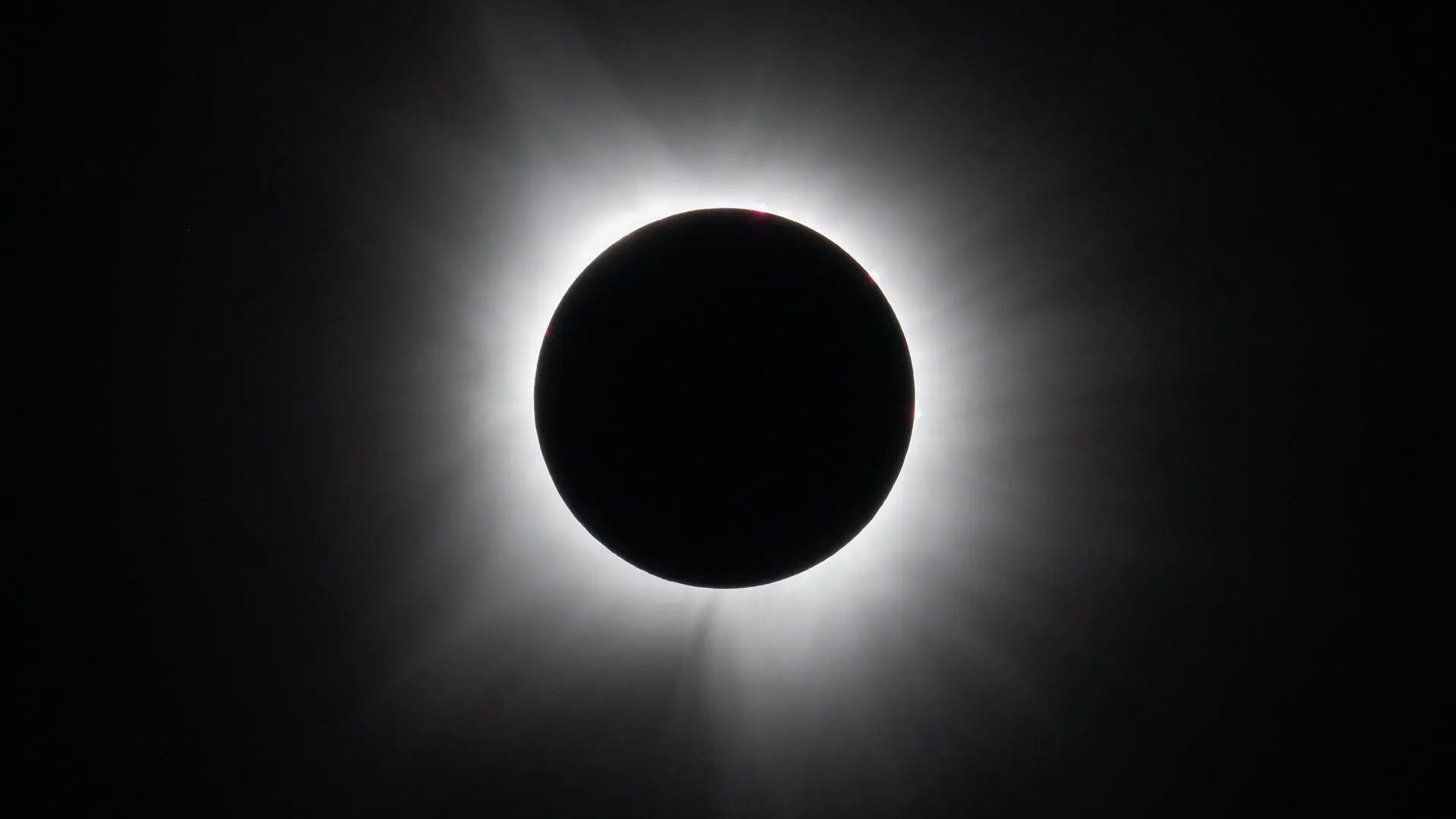
On Aug. 21, 1914, a total solar eclipse temporarily darkened skies across Europe and Asia. A young German astronomer and friend of Albert Einstein’s, Erwin Finlay-Freundlich, led an expedition to the Crimean Peninsula of Russia, where he hoped to record observations that would verify Albert Einstein’s general relativity theory.
This theory predicted that the light from distant stars appearing very close to the sun‘s edge should shift due to the curvature of space. Those stars would only be visible during a total solar eclipse, when the moon blocks out the sun’s bright light. Unfortunately, the start of World War I just 20 days before the eclipse foiled the expedition. After Germany declared war on Russia, Freundlich and his colleagues were captured by the Russian army and their equipment was confiscated.
After the war, a solar eclipse on May 29, 1919 was used to confirm Einstein’s theory of general relativity, so the experiment was ultimately a success.

Why it mattered
Today, Einstein’s general relativity theory is a given. This theory is firmly cemented in our modern understanding of how the universe works (not counting fringe conspiracists). But looking back just over 100 years, it is interesting to see how hard scientists had to work to gather evidence to validate this theory and consider the way war and geopolitics played a part in postponing this work.
Scientists continue to validate the theory to this day through a variety of methods and observations, though a modern trek to witness a total solar eclipse would be a lot easier than it would have been in 1914.
This expedition, or rather the planned expedition, took place well over 100 years ago. Whether for the purposes of trying to validate Einstein’s general theory of relativity or just for fun, people have experienced eclipses for as long as we can date back.

On this day in space! Aug. 20, 1977: Voyager 2 launches to the outer planets
It’s fascinating to look at the parallels between this planned expedition over 100 years ago and the treks that people around the world (including Space.com reporters) take in modern times to see a total solar eclipse. For example, during the 2026 total solar eclipse, people flocked from all over to locations like Spain and Iceland to experience the eclipse far from home.

