Netflix and Amazon Prime Video subscribers who do not even watch the BBC could still be forced to pay the £180-a-year TV licence fee to help fund the corporation.
Industry sources have claimed the Government is wary of funding Auntie with advertising because it would hurt ITV and Channel 4.
Instead, a blanket approach, where the licence fee is expanded to cover streaming platforms could be imposed by the end of 2027.
Currently people do not need a TV licence to watch ‘on-demand’ shows on services like Netflix, Amazon Prime, Disney+ and Apple TV.
It is only if Britons stream live TV such as live Champions League football on Amazon Prime, for example, they are required to buy a licence.
Closing this loophole is an option for Labour.

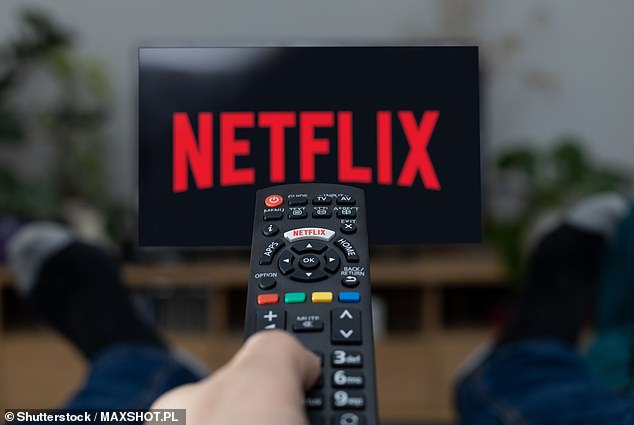
Netflix and Amazon Prime Video subscribers who do not even watch the BBC could still be forced to pay the £180-a-year TV licence fee to help fund the corporation
An industry source has told The Times that ministers favour this ‘expansive approach’ to the licence fee over an advertising model.
Culture secretary Lisa Nandy has previously said she would worry that a move from licence fee to a BBC subscription would hurt the Beeb’s ability to ‘unite the nation’.
The BBC declined to comment, saying it was for the Department for Culture, Media and Sport.
But in March a BBC paper on its future described how 80 per cent of the UK pay the licence fee – even though the corporation believes 94 per cent of the population use BBC services on TV, radio or online each month.
The document warned: ‘Households that watch or record live TV – on the BBC or elsewhere – or use BBC iPlayer to watch BBC content are required to hold a licence.
‘The number of people consuming live TV has fallen, as has the volume of live TV consumed. This is because audience behaviour has changed at a pace and scale not anticipated in the last Charter Review.
‘The general approach others [abroad] have taken has been to restore universality of payment while taking steps to enhance fairness through progressive pricing or concessions to help those on lower incomes’.
Streamers are said to be very unhappy about the idea all their customers would be charged the licence fee, on top of their subscription fee.

Culture secretary Lisa Nandy has previously said she would worry that a move from licence fee to a BBC subscription would hurt the Beeb’s ability to ‘unite the nation’
One senior streaming source said: ‘It’s pretty desperate to argue that everyone should be made to pay for the BBC whether they watch it or not.
‘The BBC needs to think more radically and creatively about how to generate income in ways that don’t undermine universal access’.
The Department for Digital, Culture, Media and Sport said in a statement: ‘The government does not comment on speculation.
‘We are reviewing responses to the BBC Charter Review consultation and will set out our decisions in a white paper to be published later this year.’
The Government is looking at how to replace or change the current licence fee funding model when the current BBC charter ends in December 2027.
If people watch or stream live TV they are required to buy a licence.
But if they stream on demand shows, they don’t, for now.
Among the alternative options being considered by ministers are letting the BBC use advertising, hitting streaming services with a particular tax or making those who tune in to BBC radio to pay a charge.
The government could still also decide to alter or even keep the current TV Licence system.
Funding through taxation or subscription remain options.
Ministers will also consider calls for a system which sees wealthier households pay more than poorer ones.