


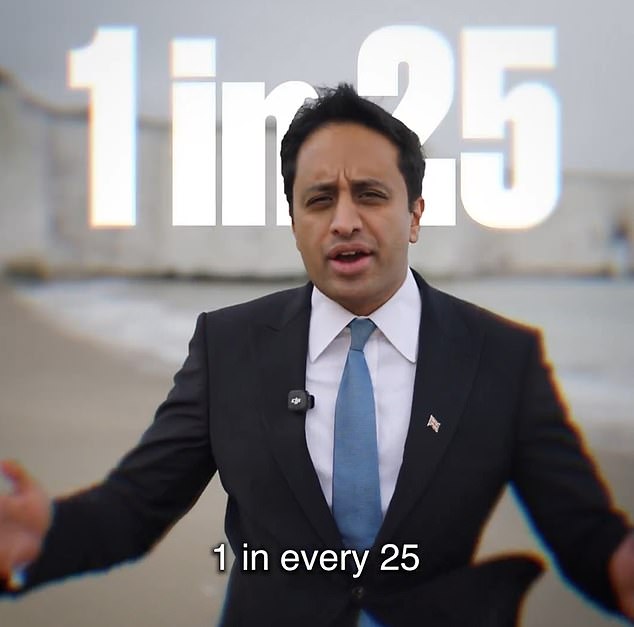
On Sunday, the home affairs spokesman for Reform UK, Zia Yusuf, posted a brilliant video discussing the huge levels of mass migration Britain has had in recent years – and what our party will do about it when we win the next general election.
He described how, since 2005, Britain has been overwhelmed after millions arrived, destabilising our country in countless ways.
He told how the Tories promised, in four separate manifestos, to bring net migration down to the tens of thousands but that the total influx might be closer to 12million during their 14 years in power: more than the populations of Edinburgh, Leeds, Sheffield, Nottingham, Stoke, Bristol and Cardiff combined.
Crucially, Zia explained how many of the millions who arrived under the last Tory government are now about to qualify for ‘indefinite leave to remain’, entitling them to a lifetime of benefits – and why that policy must be reversed.
He also pledged to deport everyone who is in the country illegally, foreign nationals committing crimes and those not paying their way.
It was sharp, important and informative – and more than six million people have now viewed the film.
But not – until very recently – on TikTok. The social media giant, which has 1.5billion monthly users, removed it hours after it was posted, admitting: ‘We have taken this decision in response to a report under the UK Online Safety Act.’
TikTok subsequently claimed the film was ‘Hate Speech and Hateful Behaviour’ and even threatened to kick Zia off the platform – before dramatically reinstating the video last night.
As Zia himself said, the episode was staggering given that ‘TikTok happily hosts hundreds of videos of people calling for the assassination of Nigel Farage … Labour is using the Online Safety Act to silence political opponents, and TikTok is doing their dirty work.’

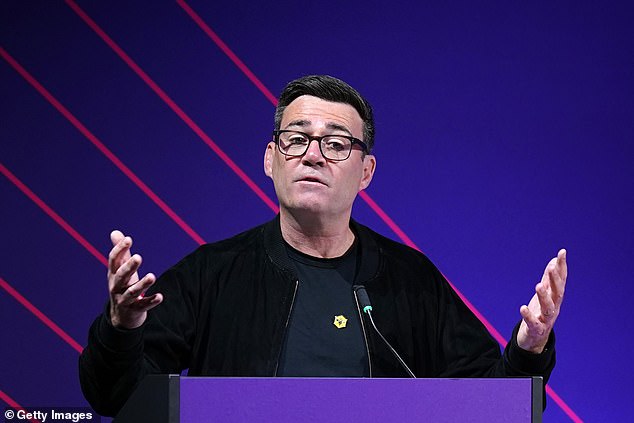
Zia Yusuf posted a video discussing mass migration in Britain. TikTok removed the clip, saying: ‘We have taken this decision in response to a report under the UK Online Safety Act’
Well, let me declare an interest. I was the culture secretary who helped shape the Online Safety Bill, which eventually became the Act. I followed the legislation from start to finish: from the ‘online harms’ White Paper of 2019 to the Bill receiving Royal Assent in 2023.
Yet I am now unequivocal that it is time to repeal the Act in its entirety. Consign it to the dustbin where it now belongs.
Let me be clear why. The Act was designed for the simplest of reasons: to protect children from harmful online content such as material relating to suicide, violence and pornography.
As culture secretary from 2021 to 2022, I signed off its most striking provision: that if an online publisher such as a social media giant breached the Act, it would face a fine equivalent to 10 per cent of global turnover, which could be in tens or even hundreds of millions.
It’s a stiff penalty, but it was the strongest tool I had to protect children from the worst material circulating online.
I had previously spent two years serving as a health minister. In that role, I held conversations with parents whose children had taken their own lives because of what they had seen on social media – including grisly ‘suicide kits’ that facilitated the process.
Coroners had sent me ‘prevention of future death’ reports, highlighting gruesome details of child suicides and warning about the role social media had played.
Let me tell you, after you have sat down with broken parents who have lost their children thanks to these rogue algorithms, which often directed children on to the unregulated ‘dark web’, you would do anything to make it stop.
I knew that I had almost universal support from parents to force the social media firms to come to heel – and that public opinion was behind me, too. Especially during Covid, when so many children were spending more time online and people were becoming increasingly aware of the dangers of social media, from grooming to terrorism and worse.
What I hadn’t accounted for was that once the redrafting of the Bill got under way, so many MPs would want to bring their own issues to hang on it.
Before long, ever more provisions were being added that had nothing to do with protecting children and were instead about restricting the free speech of adults (especially ‘hate speech’), widening tools of censorship, surveillance and the harnessing of personal data, and including every other pet project one MP or another wanted to bring.

The Act was designed to protect children like Molly Russell who died aged 14 after viewing harmful online content. But that original purpose has long been overtaken, says Nadine Dorries
I was referring to it as the ‘Christmas Tree Bill’ to my staff, as every new issue from MPs seemed to be hung on it like baubles as time went on. There was precious little I could do, because every bauble that was demanded came alongside a threat from the MP that they wouldn’t vote for my Bill if I didn’t include their provision.
Frankly, I was held to ransom. These MPs made the Bill unwieldy, intrusive and, I sensed over time, unusable.
I wanted to stop children taking their own lives after seeing terrible things online. I don’t care if grown adults want to look at pornography: not my cup of tea, but it’s not my place to judge. I also know, as it happens, that the main porn sites don’t want children accessing them – precisely because this attracts justified criticism from lawmakers and parents – and most already put steps in place to prevent this.
Equally, I abhor racism and other hatred and bigotry as much as anyone else. But our country already has legislation to deal with that abuse, including online. (When Lucy Connolly was imprisoned for a misjudged tweet during the Southport riots in 2024, she was prosecuted under the Public Order Act and not the Online Safety Act, as many have claimed.)
So as the Act continued to expand, it sent a chill over online publishers everywhere – not just the social media giants but countless smaller, harmless and innocent websites, too.
The ‘Green Living Forum’, which had been running since the early 2000s, closed down, with the site’s administrator saying it was not willing to be liable for fines.
The debate page of the ‘Charlbury in the Cotswolds’ website also closed, its owner calling the Act ‘a huge issue’.
Even the ‘Hamster Forum’ – ‘the home of all things hamster’ – admitted it was unable to meet the Act’s compliance requirements. (Thankfully, it later reopened.)
They and many others were terrified of being fined under the provisions I had personally enshrined in a Bill, but which became ever more stringent over time.
After I resigned my post, two more Conservative culture secretaries followed me. While Labour promised before the election to toughen up the Act even further.
The Christmas Tree groaned with ever more decorations and the final Act, when it came into law in October 2023, was 286 pages long and contained 241 clauses.
Its original purpose had long been overtaken. It was now clear to everyone that it was no longer about protecting children, but had become something else entirely.
So the episode with TikTok should be a warning. Social media must never be weaponised by political actors to shut down legitimate criticism.
There is nothing ‘hateful’ about Zia’s video: it is a vital film telling the British people the truth about what has been happening in their country.
In the meantime, we at Reform are rightly committed to repealing the Act as soon as we form a government. We will replace it with legislation directly targeted at protecting children – no more, no less.
Once again, free speech will become the cornerstone of the British way of life and this appalling policy mistake will be reversed for ever.