Jan Bartek – AncientPages.com – Archaeologists have discovered a stone coffin tomb in Halden, Norway, dating back about 4,000 years to the Neolithic Age, when farming first began in the region.
The find was made on the Svinesund Plateau, where archaeologists were studying Stone Age settlements before new industrial development began.
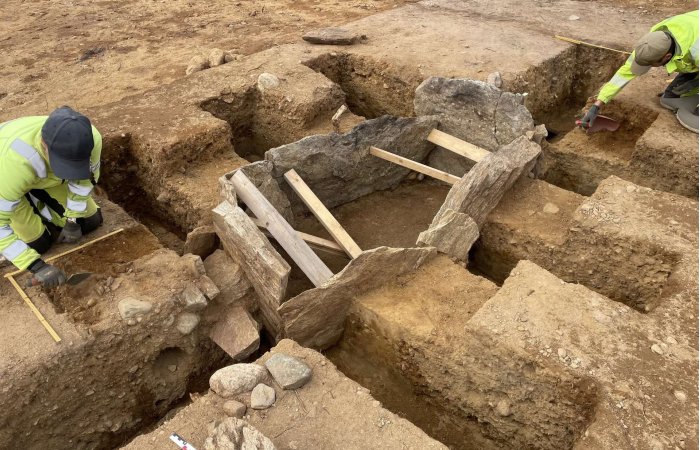
The slabs in the coffin are large and heavy. They needed to be secured to prevent them from falling inward when the soil and later the floor were taken away. Credit: Kulturhistorisk museum
The Hellekista is uncommon in Eastern Norway. It is a stone cist, or stenkiste, a box-shaped burial chamber made from upright stone slabs set into the ground.
Archaeologists have not found any human remains, but they did uncover an amber bead and some arrowheads.
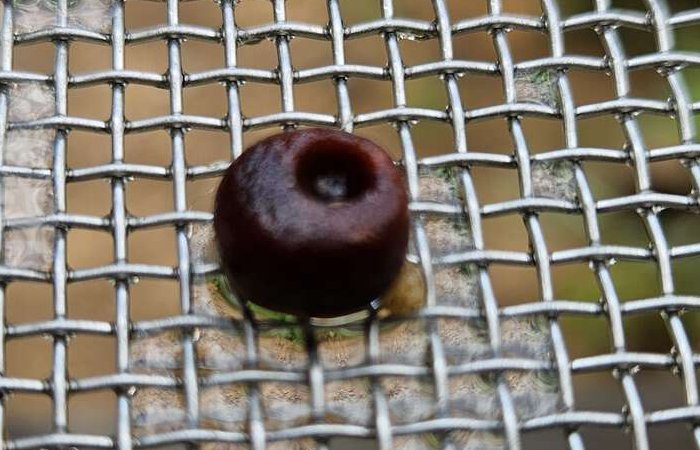
A beautiful little amber gem appeared between the stones at the bottom of the coffin. Credit: Kulturhistorisk museum
It is not yet known if the stone coffin will be kept for public display, moved, rebuilt, or taken away after it is documented.
“It is rare that we get to excavate something so beautiful and old. This is a 4,000-year-old structure,” says archaeologist Magnus Tangen about the discovery in Halden.
Thousands of years ago, people set stones into the ground and put wedges in the corners to keep them stable. Each stone weighs several hundred kilograms, and the coffin is about 70 centimeters deep.
Archaeologists think there is a kind of stone floor at the bottom.
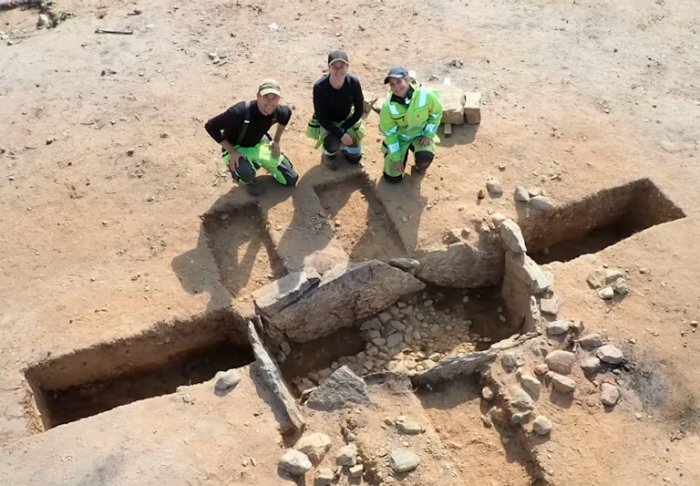
Credit: Kulturhistorisk museum
“We think it’s a floor where every single stone is placed precisely at the bottom, almost like a mosaic. It’s very well made,” says Tangen.
The Halden site is just a few kilometers from the Swedish border at Svinesund, where a large industrial area is planned.
Archaeologists must document all findings before anything is possibly destroyed.
During their investigation, the team first saw stones sticking out of the ground, then found traces of coal, which caught their attention.
“We gathered a small group and cleaned up, and suddenly we saw the coffin,” says excavation leader Carine Rosenvinge from the Museum of Cultural History.
The team originally planned to study nine Stone Age settlements, but such a discovery is rare.
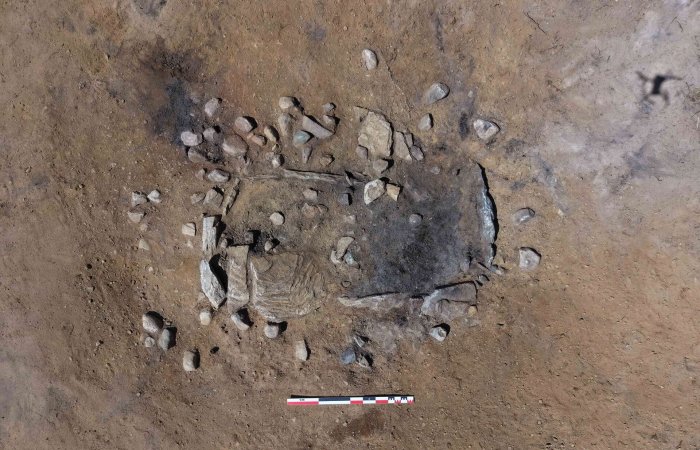
Overview photo of a cleaned coffin before excavation. Credit: Kulturhistorisk museum
Researchers have found about 20 similar stone coffins in Eastern Norway, but they are more common in Sweden. So, finding one near the border makes sense.
“It is completely unique. No rock cist in Eastern Norway has been studied in a management project with enough time to do it properly, at least not in recent times,” says Rosenvinge.
A similar grave was found in Selje, Western Norway, a few years ago, and remains were discovered there. In contrast, no such traces have been found in the Halden coffin.
The evidence suggests this burial probably belonged to one of the first farmers.
Some researchers think these are warrior graves. In the few cases where bones have been found, the remains belonged to young men, some with signs of battle injuries.
These graves often have flint daggers and arrowheads, which are usually seen as warrior gear.
No such items have been found in the Halden grave.
“We haven’t found any daggers here, but we have found an amber bead and some arrowheads. We haven’t found any human remains; they have decomposed into the soil over a long time,” says Rosenvinge.
The lack of flint daggers sets this grave apart from others and suggests it might not be a warrior grave.
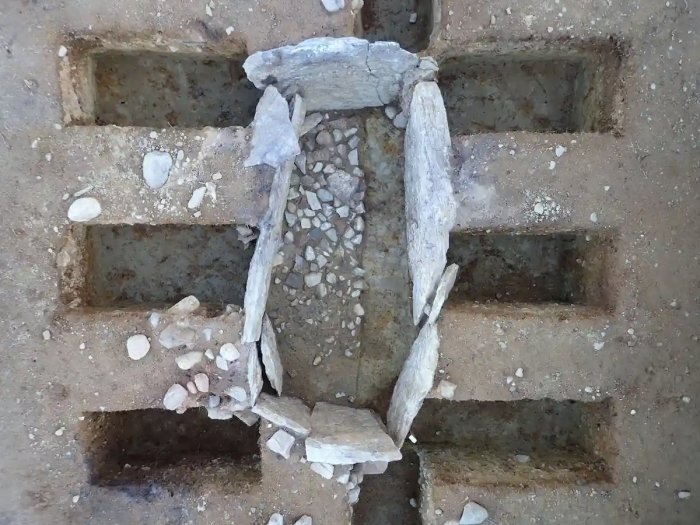
The slab coffin features a carefully arranged stone floor at its base. Credit: Kulturhistorisk museum
The amber bead might be the only thing left from the person buried here.
Archaeologists hope a new experimental method will give them more information. They collected DNA samples from the soil during the dig.
“We are excited to see if we succeed in getting good results from it,” the archaeologists say.
It is still unclear what will happen to the items found in the grave.
“Right now, the Cultural History Museum is talking with Østfold County Council about whether it should stay where it is and be made available to the public, or if we should bring it inside,” says Rosenvinge.
See also: More Archaeology News
“It may simply be removed, which is most common. Once we finish, we will have excavated and studied it scientifically. However, reconstruction is possible. We hope it can be made accessible to the public in some way.”
The project manager says the grave will be carefully documented and could give more insight into the people from that time.
“We will compare all the results and try to understand this phenomenon better than we do today. That is the hope with all excavations,” says Rosenvinge.
Source: Kulturhistorisk Museum – Universitetet I Oslo, NRK
Written by Jan Bartek – AncientPages.com Staff Writer