Conny Waters – AncientPages.com – An international research team has identified the origins of the ornaments on 18,000-year-old female figurines carved from mammoth ivory, showing how ivory growth patterns influenced Ice Age artists.
A study published in the Nature partner journal Heritage Science analyzed eighteen Venus figurines made from mammoth ivory, excavated over a century ago at the Mizyn campsite in Northern Ukraine.
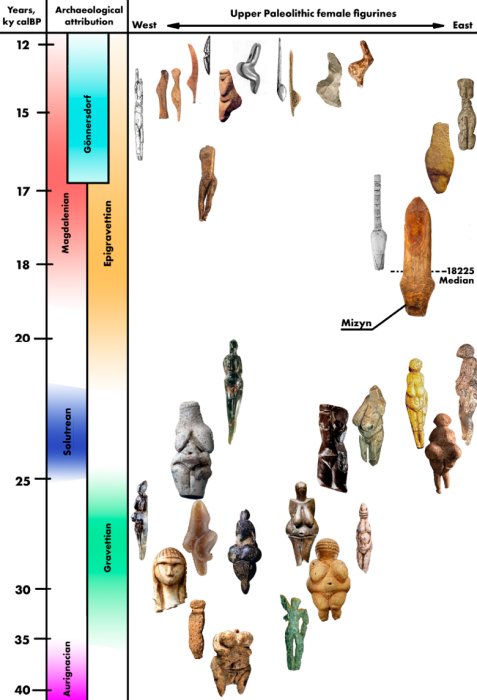
Credit: Radchenko et al., 2026
Researchers examined the figurines microscopically, and six were 3D-digitised as part of the Ukrainian Heritage Digitization and Dissemination Initiative, led by the Ukrainian NGO “Archa??” with NCO “CyArk,” and supported by the US Ambassador Fund for Cultural Preservation. Due to the targeting of historical artifacts in Ukraine by Russian military actions, access to these objects was restricted, making this the first opportunity for comprehensive digital documentation.
“Projects like this not only deepen our understanding of the past but also create new opportunities for research through advanced documentation and digitization methods. At a time when war continues to threaten Ukraine’s cultural heritage, this work is more important than ever, as creating high-quality digital records of artifacts is a crucial step in preserving them and supporting future research. This is why close collaboration between researchers and museums is so important today. We are sincerely grateful to the National Museum of the History of Ukraine for the opportunity to study the unique Mizyn artifacts and for its support of research initiatives,” Oleksandr Naumenko emphasizes.
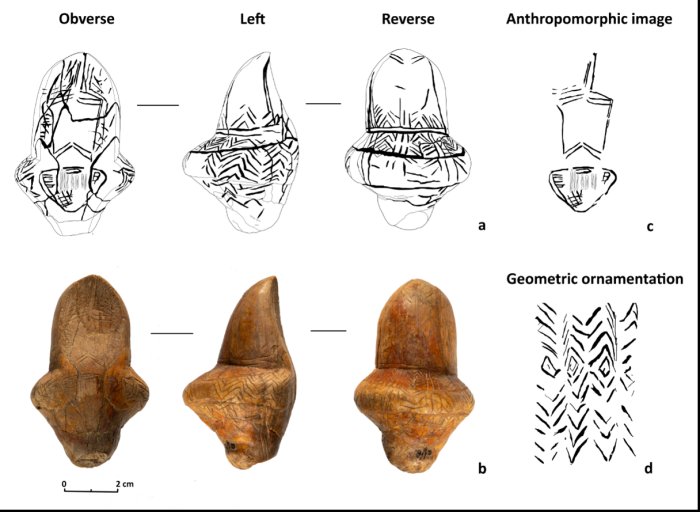
Credit: Radchenko et al., 2026
The team, led by Simon Radchenko, comprised six researchers from Ukraine (National Museum of History of Ukraine), Norway (University of Stavanger), the UK (Centre of Artifacts and Materials Analysis, University of York), and Germany (Leibnitz Center for Archaeology). This research, funded by the Marie Sklodowska-Curie Action, enabled the team to document the entire production cycle of the 18,000-year-old figurines and uncover the logic and sources of inspiration behind their intricate ornamentation.
In addition to the six Venus figurines from Mizyn, the team digitized hundreds of other objects, launching an ongoing heritage preservation effort in Ukraine. Due to their unique significance, these figurines are the first to be examined with such precision, providing valuable insights into their production methods.
“Combining modern digital techniques with microscopic analysis and archaeological context has allowed us not only to understand better how these figurines were made, but also to gain new insights into their role in the lives of Late Pleistocene people. Our findings suggest that the ornaments were more than merely decorative. They likely played an important role in the social lives of the people who created these objects,” Oleksandr Naumenko notes.
The study demonstrates that Schreger and Owen lines, the growth patterns of mammoth tusks, were observed, appreciated, and replicated on ivory objects from the Ukrainian Ice Age. Although this was first hypothesized in the 1960s, digital tools have now provided detailed evidence that these ornaments not only mirror the natural lines but also guide the composition of the figurines.
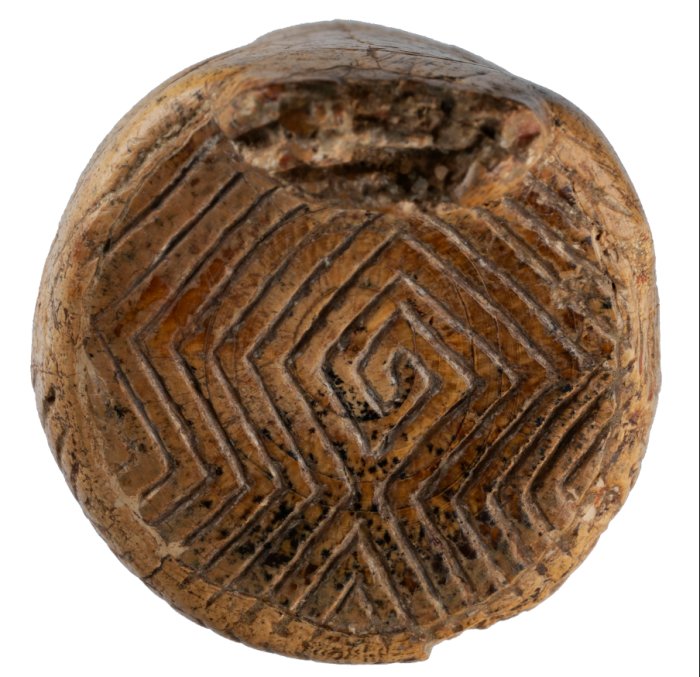
Sometimes the ornament repeats the ivory’s natural growth lines, offset by less than a millimeter. Credit: Radchenko et al., 2026
Researchers also identified evidence of careful planning in the anthropomorphic designs, confirming an innovative approach that combines a two-dimensional image with the three-dimensional form it is carved on. This positions the Mizyn figurines as works of greater creative complexity than previously known examples from the region.
To better understand this phenomenon, the team compared estimated production times for all known female figurines in Europe from 44,000 to 12,000 years ago. This analysis highlighted the unique position of Ukrainian Venuses in both time and place. These figurines mark the start of a new peak in female figurine production following the Last Glacial Maximum, the most recent period of extreme cold in Europe. New figurines first appeared in present-day Ukraine and then spread throughout the region. Shortly after, abstracted depictions of the female body emerged in Europe, such as the Magdalenian and Gonnersdorf styles. However, only the Mizyn figurines feature Schreger and Owen lines in their ornamentation.
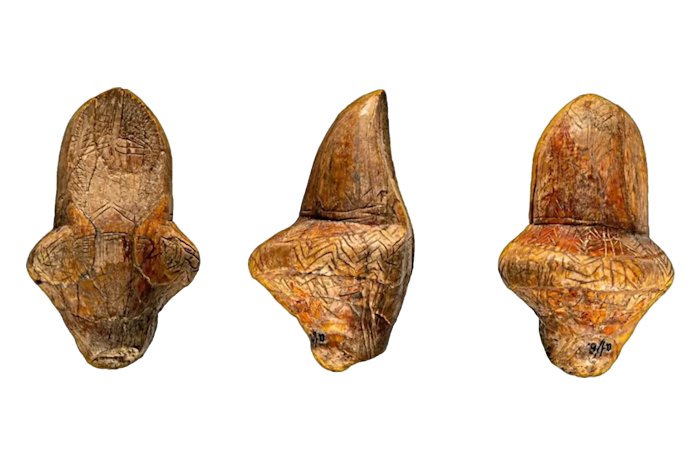
Credit: Radchenko et al., 2026
“Radiocarbon dates for the Paleolithic of Eastern Europe are difficult to work with: many legacy dates have huge standard deviations, others are done on samples without properly stated context. So, we speak about very large uncertainty intervals, those of millennial scale, and so, in fact, they can hide some fascinating stories inside which will be revealed by improvement in dating precision”, says Kiosak.
See also: More Archaeology News
The calibrated radiocarbon chronology indicates a substantial gap in the Upper Paleolithic record of anthropomorphic figurines. A hiatus of approximately 3,000–5,000 years separates the Early and Middle Upper Paleolithic figurines from those of the Late Upper Paleolithic, spanning roughly 24,000–22,000 to 20,000–18,000 cal BP. The figurines re-emerged only after this interval, slightly earlier in eastern Europe within Epigravettian contexts, most prominently at Mizyn, and in western Europe within Magdalenian assemblages, as evidenced by the Venus Impudique and the finds from Las Caldas Cave.
The study was published in the journal npj Heritage Science
Written by Conny Waters – AncientPages.com Staff Writer