Almost three million Australians will receive a hefty wage boost next month amid the cost-of-living crisis.
The Fair Work Commission announced on Tuesday that a 4.75 per cent increase would be applied to minimum and award wages from July 1.
The current minimum wage is $948 per week, or $24.95 an hour.
The increase will bring the lowest base rate for a full-time employee to $1,049.90 a week, or $26.44 an hour.
These are typically workers in entry-level roles with ongoing, permanent employment.
There is also a separate, lower introductory rate for workers who are new to a job or still in training, known as ‘introductory’ or ‘intermediate’ classifications.
For these employees, who can only be paid this rate for up to six months, pay will sit at $978.10 a week, or $25.70 an hour.
The decision sets new minimum pay rates across the award system, which covers workers in industries like retail, hospitality, cleaning and care work who are paid according to legally set pay scales

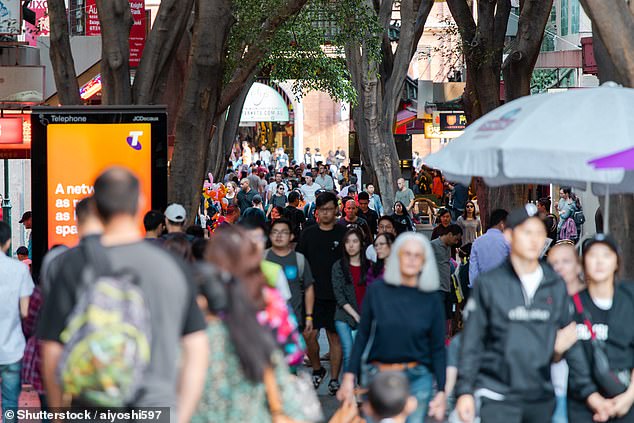
Millions of Australia’s lowest-paid workers are poised to receive a wage increase of 4.75 per cent, after the Fair Work Commission (FWC) handed down its latest decision (stock image)
The Fair Work Commission estimates the changes will directly affect around 100,000 of the very lowest-paid workers, though millions more on award wages will also see increases flowing from the decision.
The ruling comes amid mounting cost-of-living pressures, with global tensions, including the blockade of the Strait of Hormuz, fuelling already elevated inflation.
FWC President Justice Adam Hatcher when announcing the change, acknowledged the economic impacts of the conflict, as well as a bump in Australia’s inflation at the end of 2025.
The 4.75 per cent increase is smaller than the five to six per cent pushed by unions, such as the Australian Council of Trade Unions (ACTU), and would have marked a record lift in award wages.
Major business groups had proposed a drastically smaller increase of between 3.5 per cent and 3.9 per cent.
They argued that a six per cent rise would place additional strain on businesses already grappling with higher costs.
They warned it could lead to more insolvencies and further entrench inflation as companies pass increased wages onto consumers.
Headline inflation stood at 4.2 per cent in April.

Announced on Tuesday morning, the adjustment will apply to minimum and award wages from July 1 (stock image)
The Australian Chamber of Commerce and Industry instead proposed a 3.5 per cent increase, pointing to underlying inflation, recorded at 3.4 per cent, as a more appropriate benchmark.
ACTU meanwhile claimed that their figure of 6 per could would only add a ‘modest’ 0.64 per cent to the national wages bill.
‘Past increases haven’t increased inflation, and this one won’t either,’ the ACTU said in a statement before the announcement.
The Albanese Government also lodged a submission to the FWC in March, not offering a figure, but calling for a ‘sustainable real wage increase’.