


Jan Bartek – AncientPages.com – Hidalgo, Mexico, is home to numerous ancient cave paintings and rock art. Located in the pre-Hispanic region of Mesoamerica, the area has seen migrations of various indigenous peoples, including the Olmecs, Toltecs, Chichimecas, Aztecs, and later nomadic groups. This rich history is reflected in the region’s preserved beliefs, especially through its distinctive rock art and paintings.
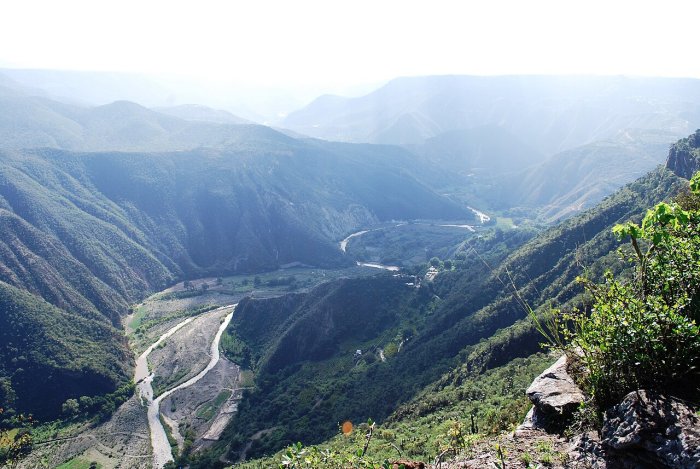
Canyon view looking south from the Peña del Aire in Huasca de Ocampo, Hidalgo, Mexico. Credit: Thelmadatter – CC BY-SA 3.0
Researchers have identified at least 55 scenes across 25 sites in Hidalgo depicting visits to the lord of the underworld, a prominent theme in local rock art. Studying these images enhances our understanding of Mesoamerican beliefs about the afterlife, the connections between humans, ancestors, and supernatural beings, and the enduring nature of these traditions.
Alfonso Torres Rodríguez, a researcher at the INAH Hidalgo Center, presented these findings at the X International Colloquium of History, Architecture, Sculpture, Urbanism, and Funeral Customs, organized by the Ministry of Culture and the National Institute of Anthropology and History (INAH).
The archaeologist explained that his research uses the concept of graphic syntagm, which refers to groups of images arranged to form scenes with specific meanings. While these meanings may evolve, they remain significant within the culture.
These scenes often depict one or two warriors guided by a canid to a location featuring a figure linked to the moon, a funerary bundle, or symbols of descent and ancient spaces that represent the lord of the underworld. Researchers have found such images, dating from 350 to 750 CE, at sites including Huapalcalco, Xihuingo, Dahñé, and San Miguel de las Piedras.
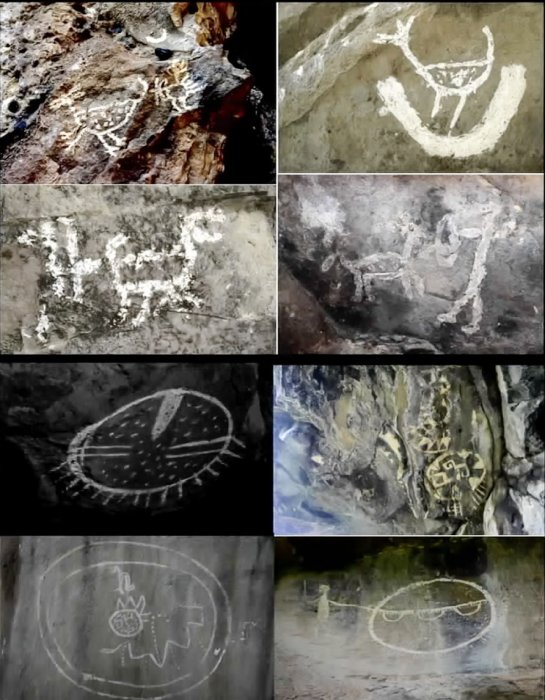
Credit: INAH
Torres Rodríguez has identified four main configurations: one character visiting another, one encountering two others, two seeing one, and a pair meeting two others. Their spatial distribution indicates regional differences. Two protagonists entering are more common in the mountainous regions of the east and south, while in the Mezquital Valley, scenes with only one character appearing before one or two entities are more prevalent.
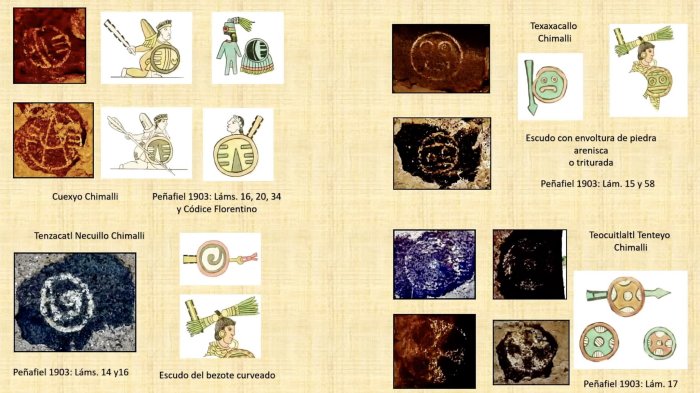
Credit: INAH
He has grouped the visited characters into three iconographic complexes: Tezcatlipoca-Huémac-Yaotl, which includes figures with warrior attributes, snake skin, or wide hands; Otontecuhtli-Tlotli-Mictlantecuhtli, represented by a seated entity associated with the Otomi people’s divine figure; and the ancestors, consisting of pairs of ancient beings found in both the mountains and the Mezquital Valley.
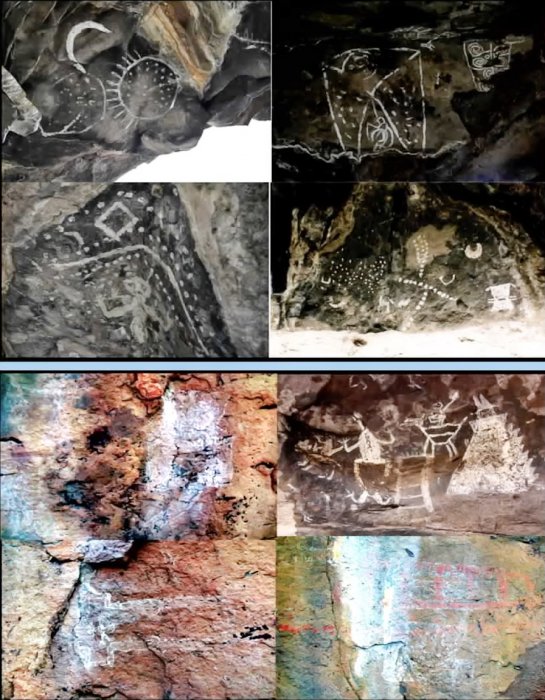
Credit: INAH
He noted that a key interpretive aspect is the relationship between the narrative and the concept of twinship. These pairs are not simple duplicates; they differ in ways that reflect complementarity. One brother embodies masculine, warlike, solar, and military qualities, while the other represents feminine, sacrificial, lunar, and agricultural traits.
See also: More Archaeology News
He explained that the narrative of twins confronting the lord of the underworld continues in the therapeutic rituals of the Otomi bädi (healer) in the mountain region. The healer can contact these forces but must have a dual soul entity, or “double heart,” to do so.
“If it does not have the character of twins, it cannot come into contact with the force of the underworld, because in the end it will leave a part to recover, in this case, the nzahki (great force), through confrontation, which, eventually, becomes a relationship of alliance, which we also see in cave paintings,” he concluded.
Source: INAH
Written by Jan Bartek – AncientPages.com Staff Writer
