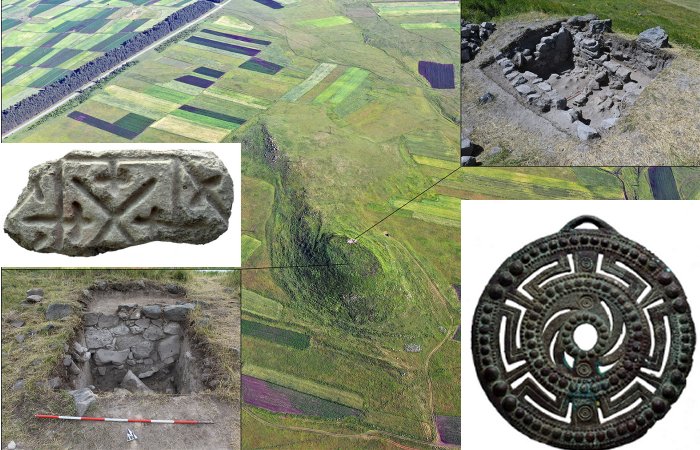
Conny Waters – AncientPages.com – Archaeologists have uncovered compelling evidence that fundamentally reshapes our understanding of Georgia’s ancient past. In the highlands of southern Georgia, they have identified 168 archaeological sites and conducted targeted excavations at Meghreki Fortress and Baraleti Natsargora.
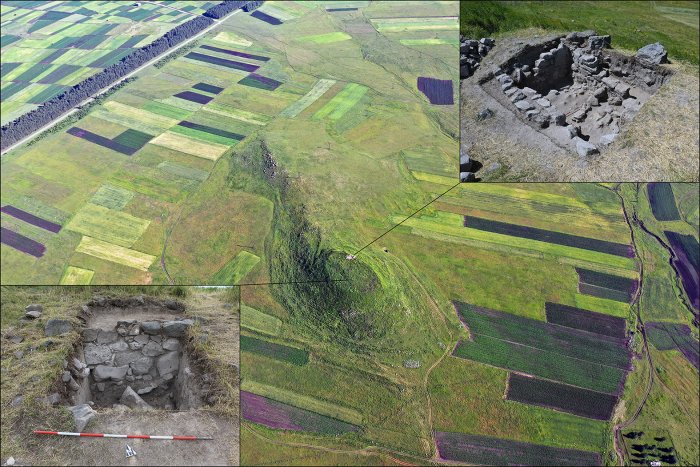
Aerial view of Baraleti with excavation areas (© Samtskhe-Javakheti Project).
These sites clearly demonstrate continuous human occupation from the Bronze Age through medieval times, proving that this region has long been a vital center of human activity rather than a marginal frontier.
The Samtskhe-Javakheti Project has focused on the Javakheti Plateau—one of the least-explored areas in the South Caucasus—for years. Their work is not just adding details to what we already know; it is opening an entirely new chapter in the ancient history of Georgia. The team has revealed stone-built fortifications, settlements, and extensive burial grounds, all of which point to complex, organized societies that invested heavily in defense, community life, and enduring funerary traditions.
Most of the identified sites fall into three key categories: fortifications, settlements, and necropolises. The strong presence of high-altitude refuges and enclosed structures—often described as “Cyclopean architecture” due to their massive stone construction—demonstrates deliberate, large-scale planning and sophisticated building techniques. This is not the work of scattered, simple communities; it reflects strategic thinking and long-term occupation.
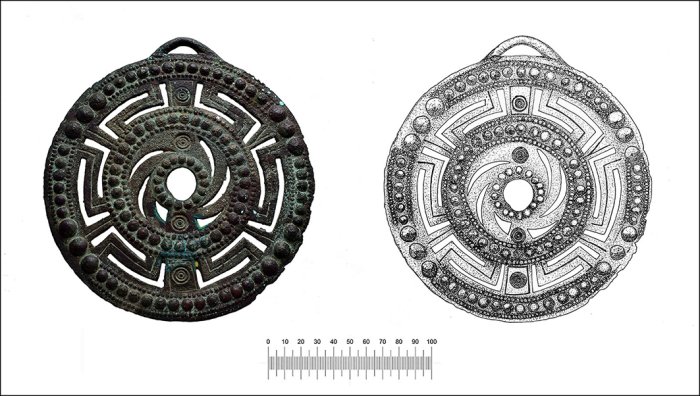
Bronze solar disk from Baraleti Natsargora (SJP025) (Drawing by F. Laurita © Samtskhe-Javakheti Project).
Crucially, the team did not rely on guesswork. Before setting foot on many of these sites, they used remote sensing to detect buried structures and landscape features such as ancient walls and enclosures. This scientific approach allowed them to pinpoint promising locations and then create digital maps of settlement distribution. These maps reveal how people moved across the land, organized their communities, and adapted to a harsh, high-altitude environment—evidence of resilience, ingenuity, and social complexity.
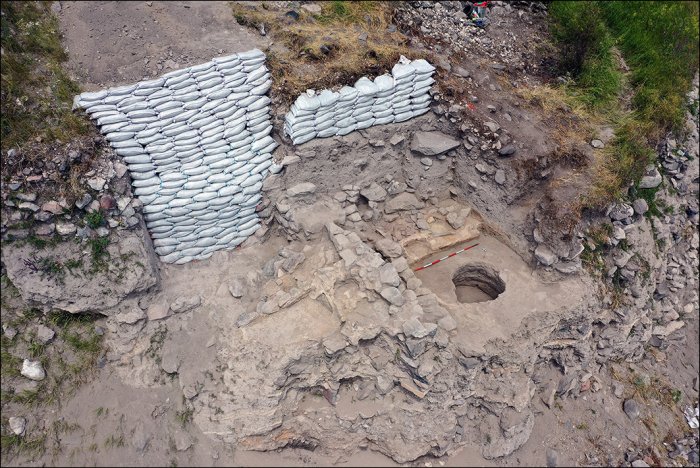
Southern aerial view of Meghreki Fortress; the road-cut exposure is visible along the lower edge of the image (foreground) (© Samtskhe-Javakheti Project).
The discoveries near Bertakana and Lake Tabatskuri are especially persuasive. Extensive necropolises in these areas confirm long-lasting and consistent funerary practices, indicating stable communities with shared beliefs and traditions over many generations. After mapping the plateau in detail, the team selected the most significant sites for excavation, including Baraleti Natsargora—a large mound known as the Hill of Ashes—and Meghreki Fortress. Their prominence and scale strongly suggest that these were central places of power, ritual, and daily life.
At Baraleti Natsargora, a prominent mound at the center of the plateau, researchers uncovered several layers of ash and stone. This evidence indicates that people repeatedly returned to this spot over thousands of years, likely to rebuild their homes or strengthen their defenses. Their continued return suggests that Baraleti Natsargora held lasting importance within the landscape.
Archaeologists at the site also discovered a finely decorated bronze solar disk, featuring concentric bands of knobs, angular motifs, and regularly spaced perforations. This object represents a regional tradition of symbolic metalwork associated with solar imagery and funerary display. Similar disks from southern Georgia are frequently found in female graves, implying that the Baraleti example—now housed in the Akhalkalaki Museum—probably came from a nearby burial.
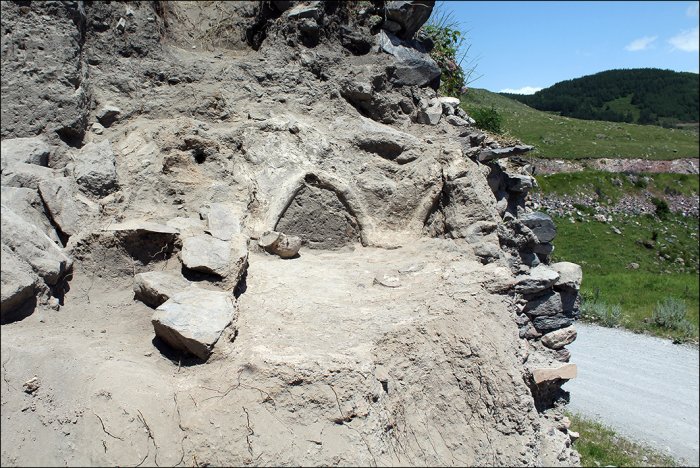
Corner of room 1 at Meghreki (SJP127) with hearth remains (© Samtskhe-Javakheti Project).
At Meghreki Fortress, researchers identified colorful clay plaques in many households. These objects may have served ritual purposes or functioned as visible markers of a family’s elevated social status.
“Two domestic structures containing clay installations, likely ovens or raised platforms, are provisionally dated to the Late Iron Age/Achaemenid horizon (c. sixth–fourth centuries BCE) Both feature decorative systems of fired clay plaques with incised and painted geometric motifs Some plaques carry red, white and dark blue pigments. Such decoration is uncommon in the South Caucasus, although parallels at Digasheni and Amiranis Gora suggest that patterned plaques may mark ritualized or high-status domestic spaces.
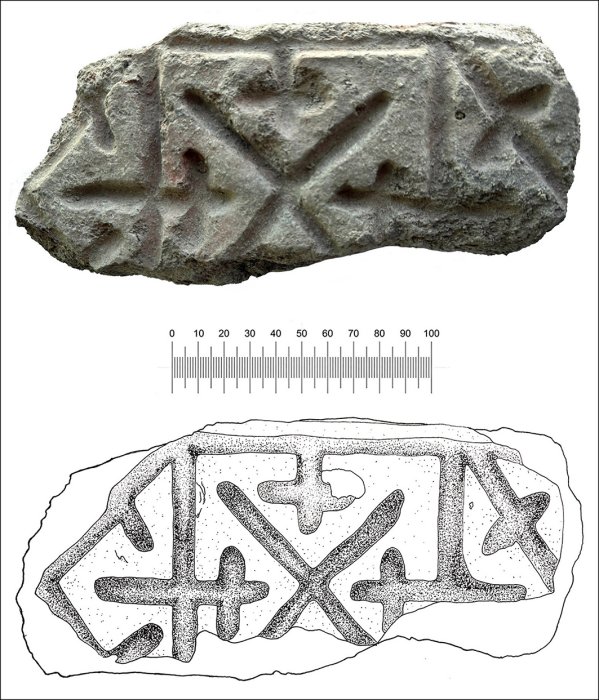
Decorated clay plaque from room 2 at Meghreki (SJP127) (Drawing by F. Laurita © Samtskhe-Javakheti Project).
At Meghreki, the number and context of the plaques indicate a broader and possibly longer-lived tradition bridging domestic and symbolic spheres,” the researchers write in their study.
Artifacts recovered at the site could provide valuable insights into the culture and belief systems of the people who once lived on the Javakheti Plateau. According to the scientists, examining symbolic objects such as solar disks and decorated plaques can significantly deepen our understanding of religious practices, social identity, and cultural markers in protohistoric communities.
See also: More Archaeology News
In addition, other important discoveries from various sites in the region include massive perimeter walls and ancient storage areas. These architectural features indicate that the area may have functioned as a major center of activity, rather than as a remote or isolated outpost.
The study was published in the journal Antiquity
Written by Conny Waters – AncientPages.com Staff Writer