

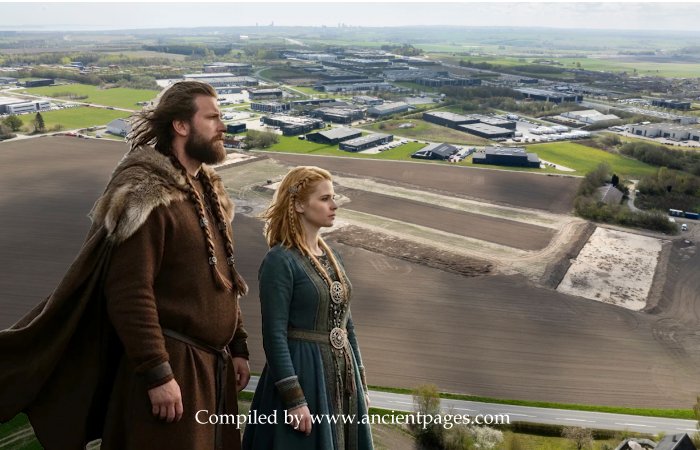
Jan Bartek – Ancientpages.com – Archaeologists excavating at Søften, Denmark, have discovered an extensive production site that may have supplied Viking Age Aarhus with textiles and craft goods.
Background: Drone shot of the excavation. Credit: Moesgaard Image compilation, AncientPages.com
Søften is located 10 kilometers north of Aarhus and only four kilometers from Lisbjerg, where Moesgaard archaeologists previously uncovered a noble estate closely connected to the Viking city of Aros, a center for the king and international trade. In 2024, a young archaeology student also discovered a Viking Age silver treasure in Elsted, a few kilometers from Søften.
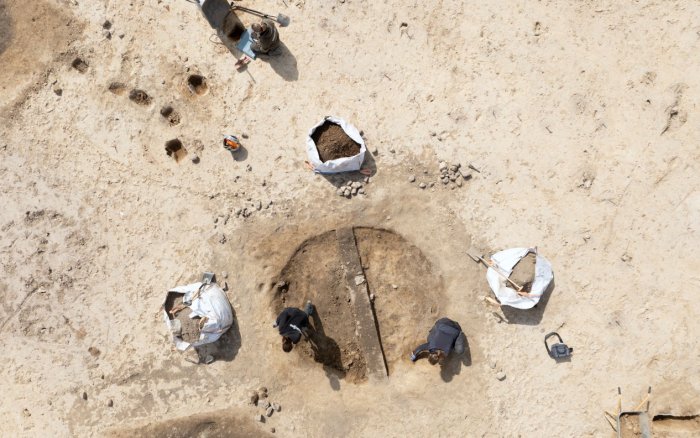
Archaeologists excavating a pit house at Søften. Credit: Moesgaard
The Søften settlement featured extensive, well-organized production facilities. Archaeologists have identified areas for processing flax and numerous pit houses, which are buried workshop huts typically linked to crafts and manufacturing.
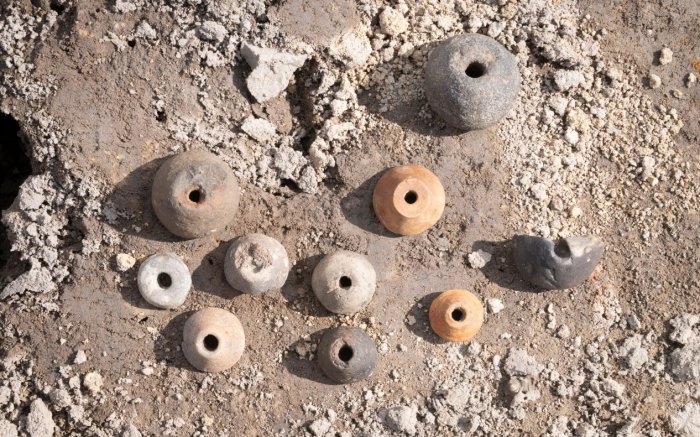
Ten weights used in connection with textile production. Credit: Moesgaard
“We do not see traces of an ordinary village, but rather a specialized and large-scale production area. The settlement includes distinct zones for production, crafts, and a single residential house.
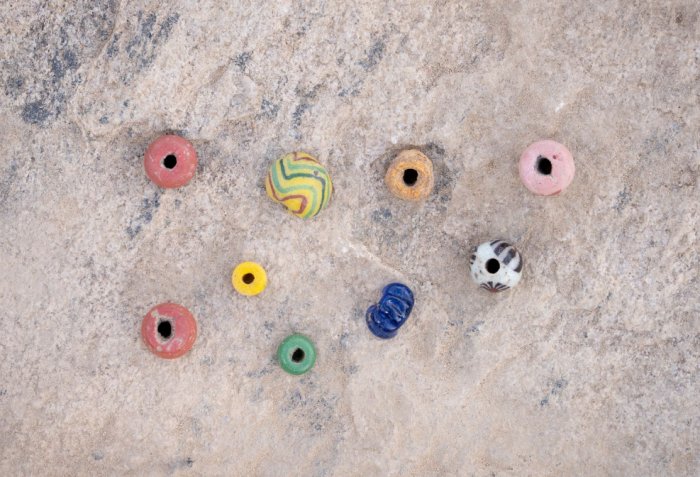
Pearls were a luxury item in the Viking Age that could be used as a form of barter. Credit: Moesgaard
This structure suggests that activities were directed by a central authority with control over resources and production,” says excavation leader Liv Stidsing Reher-Langberg.
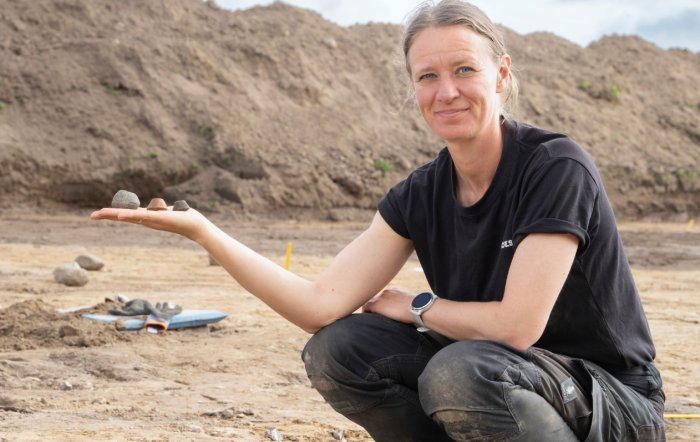
Excavation manager Liv Stidsing Reher-Langberg. Credit: Moesgaard
During the Viking Age, Aarhus became one of the kingdom’s leading trading centers under royal authority. However, cities did not develop in isolation, as Søften and Lisbjerg clearly illustrate. Goods and resources from the surrounding countryside were brought to the cities for trade, connecting them to the broader international network of the Viking Age, says historian Kasper H. Andersen.
See also: More Archaeology News
The current excavation at Søften covers just over 60,000 m2. Investigations south of this area in 2008 and 2013 revealed similar settlement and production traces from the same period. In total, the settlement is estimated to have spanned at least 100,000 m2. The current excavation has uncovered 48 pit houses, while previous excavations identified an additional 34, all part of the broader production environment.
Source: Moesgaard
Written by Jan Bartek – AncientPages.com Staff Writer