An Iranian migrant who tried to burn his home down has won a reprieve against deportation because he is ‘so profoundly mentally unwell’ and threatened to take his own life.
The migrant has been in a UK prison for 20 years and was deemed ‘dangerous’ after attempting to blow up a house following an argument with his housemate, the British asylum court was told.
To ‘demonstrate his annoyance’, he turned on all the gas appliances in the home then doused the carpet with petrol and lit a candle before leaving.
The asylum court was told it was ‘pure chance’ the candle went out, avoiding a ‘catastrophic explosion’, and the Iranian was given a rare indeterminate jail sentence because he is considered so dangerous.
Now, he has won an appeal against his deportation – arguing he is ‘so profoundly mentally unwell that it would breach his human rights to be returned to Iran’.
The unnamed migrant claims ‘if he were deported he would kill himself’.
He also claims he is a gay man and would face persecution if returned to Iran due to his sexuality.
He has won an appeal case at the Upper Tribunal of the Immigration and Asylum Chamber after it was found that a previous judge who dismissed his case did not fully consider ‘critical evidence’ about his mental health.
The migrant will now have a chance to fight for his right to live in the UK at a new hearing.
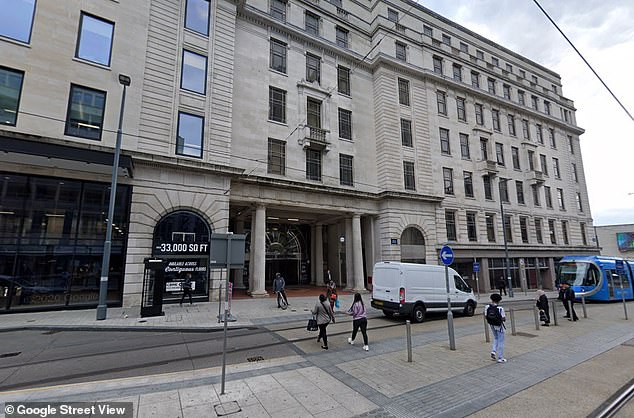
The Upper Tribunal, sitting at Birmingham Civil Justice Centre, was told the Iranian has been in prison since 2006.

An Iranian migrant who tried to burn his home down has won a reprieve against deportation at Upper Tribunal of the Immigration and Asylum Chamber, sitting at Birmingham Civil Justice Centre (pictured)
‘The (Iranian) is a serious foreign criminal sentenced in 2006 to an indeterminate sentence of imprisonment because he was found to be dangerous under the Criminal Justice Act 2003’, the tribunal heard.
‘He was sentenced to a minimum term of 612 days for offences which included attempted arson at a residential property where he resided with other tenants.
‘He had fallen out with a fellow tenant for some reason.
‘To demonstrate his annoyance the appellant had turned on all gas appliances in a room.
‘He had doused the carpet with petrol. He had lit a candle and placed it on the settee as a fuse. He then left. He had stolen property belonging to fellow tenants.
‘His fellow tenant came home. She found fortunately that the candle had gone out.
‘It was pure chance that there had not been a catastrophic explosion which would have destroyed the property and probably those adjacent to it.
‘There was a substantial danger to life.’
Indeterminate sentences are intended for people who are considered dangerous but whose offence did not merit a life sentence.
The tribunal heard that the Iranian has ‘become unmanageable in prison because of his conduct’.
The tribunal heard: ‘He exhibited extreme self-harm where he pinned his lips together, attached a page of the Quran and a picture of a penis from a sex magazine onto his chest using the same and self-inflicted two abdominal wounds.
‘This led to the (Iranian’s) first admission to psychiatric services in March 2004.’
His human rights case was dismissed by the First-tier Tribunal, but the Upper Tribunal has now found that the First-tier Tribunal judge made legal errors by not fully considering his mental health.
The man argued that ‘his constellation of mental health conditions cause him to act in a disinhibited, provocative and unpredictable way when under stress’.
Upper Tribunal Judge Paul Lodato said his case must be heard afresh because the previous First-tier Tribunal judge ‘could not satisfactorily explain what the Iranian authorities would be likely to do if confronted with this kind of behaviour from the (Iranian)’.
Judge Lodato said the previous judge did not properly consider psychiatric reports and ‘baselessly downplayed’ the migrant’s mental illnesses.
‘I am satisfied that there were serious deficiencies in the judicial analysis’, Judge Lodato said
‘In his findings, the (First-tier Tribunal) judge found that the (Iranian) would be exercising a choice if he attempted suicide upon being returned to Iran and that this would be unconnected to any mental illness.
‘In coming to this conclusion, the judge referred to (his) history of self-harm as being distinct from a risk of suicide and his manipulative behaviour.
‘The judge did not engage with the extensive range of expert opinion which traced a direct line between (his) recognised mental health conditions and a high risk of suicide on return.
‘This was yet another example of the failing to engage with important evidence going to central matters he was required to decide.’
Judge Lodato added that ‘anxious scrutiny and lawfully adequate reasons are required before the dismissal of a human rights claim founded on the absolute right to life and not to suffer inhuman and degrading treatment’.
The case will be re-heard at the First-tier Tribunal, in which a decision will be made whether the migrant can remain in Britain or face deportation.