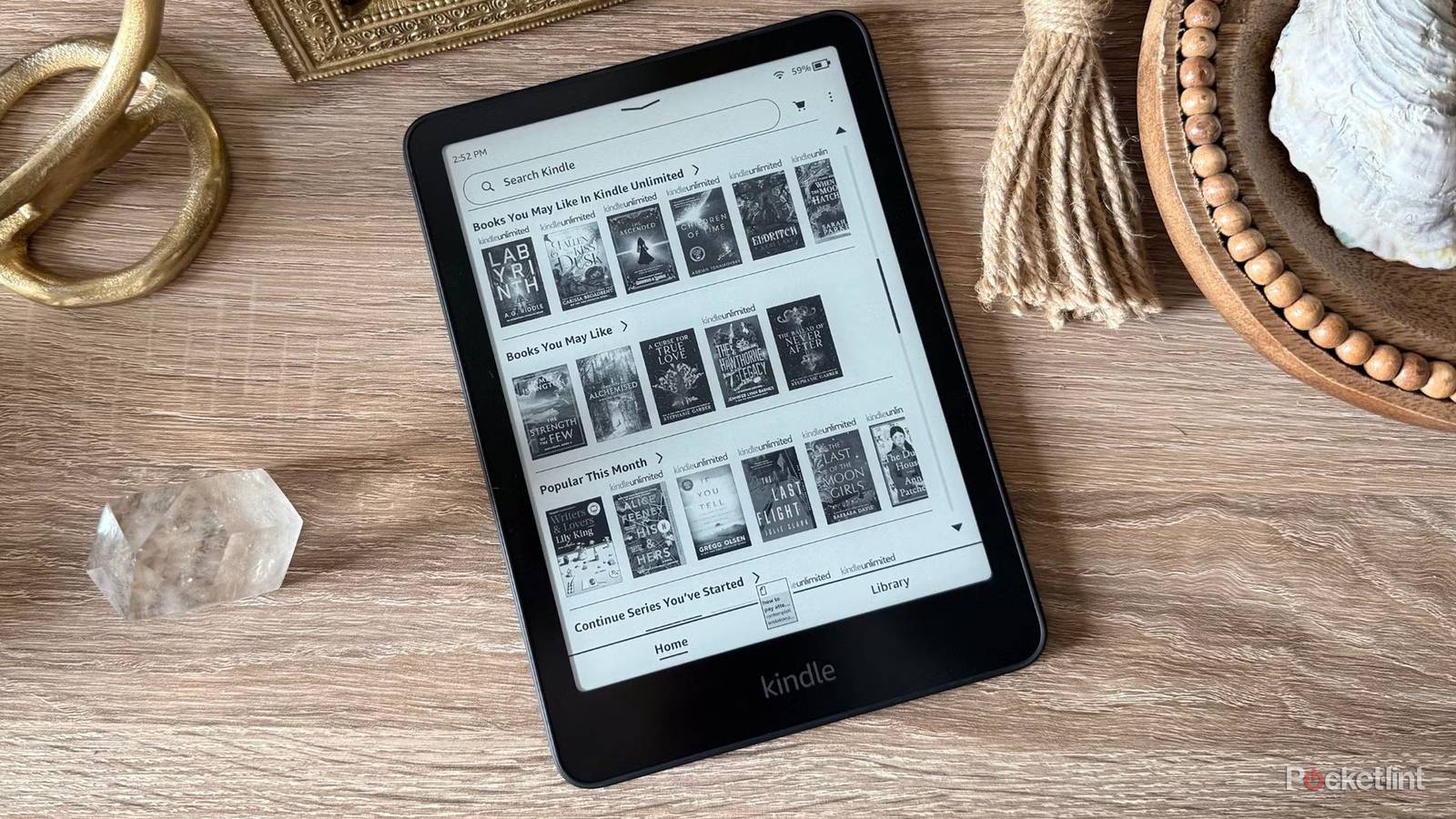
When it comes to eReaders, it feels like it’s Kindle and then everything else. Sure, there are plenty of competitors between Nook and Kobo, but anybody I talk to about eReaders is always talking about a Kindle. As you might know, there are many different Kindles to pick from, but they are slipping into uniformity as of late. What I mean by that is, the Kindle Paperwhite used to be my prized possession, but a regular Kindle has since replaced it.
The Kindlewhite used to stand out for its lit screen, but now you can find that on the base Kindle model. I upgraded to the first Kindle model that came with that light, and I haven’t looked back. Although a new Kindle comes out all the time, nothing gets me excited to upgrade. In fact, when the time comes for me to upgrade, I’m just going to do it for the updated charging port.
The switch to USB-C is the big Kindle upgrade for me
A sad reality

The main thing I want to see from my Kindle is USB-C charging, and that means I have to upgrade from my 2019 model that uses Micro-USB. I don’t have an issue with this cable, but it’s also the only thing in my house that uses that cable with any regularity. I typically leave the cable by my bed, so it’s a hassle to go upstairs and charge it when I want to read on the couch. I have a USB-C cable in pretty much every room, so it’s clear that would be a worthwhile upgrade for me.
One big problem is that my Kindle is working perfectly fine, so I’d feel weird going out and getting a new Kindle just for an updated charging port. On top of that, the hardware doesn’t really change much from iteration to iteration, so there’s really no need to go out and get the latest release. At the end of the day, a Kindle is needed to read books, and that’s it. It doesn’t matter if it has a blazing fast processor if all I’m going to use it for is flip pages. There are some exceptions to this rule, however. I have a Kindle Paperwhite that’s about a decade old, and it can barely navigate through menus these days. It’s obvious that the Kindle is ready to be retired, but fortunately for it, it already was by the base model Kindle I have now.
There’s also the forced upgrades you have to make when Amazon decides to stop supporting new models. In my experience, you’ll probably be on to something newer or better by the time that happens. I think Amazon needs to start making these new Kindles more appealing if they want people to upgrade. Canceling cool models like the Oasis isn’t a step in that direction, at least if you ask me. Ever since the base Kindle got a lit screen, I haven’t been particularly excited about any new model, which has the added effect of being great for my wallet.
This could be a good thing
For me, not Amazon

I sound like I’m complaining about the lack of compelling Kindle options. It’s because I am, but that’s actually a good thing. I should be applauding the fact that I can hang on to my older Kindle models for as long as possible. This is definitely possible since Kindles don’t have you navigate through a bunch of screens to get to where you’re going. If my tablet lagged all the time, I’d certainly upgrade it, but if my Kindle takes a second to flip a page on my book, I’d probably put up with it.
The Kindle has settled into a nice little niche, and that means it doesn’t need frequent upgrades. When you look at something like a phone that introduces new things each year like an improved camera, better processor, and AI tools — you’ll realize that Kindle doesn’t do anything like that. Kindle also doesn’t typically update models each year, but it’s often enough to where I’m left scratching my head. I’m sure there have been plenty of upgrades made since my 2019 model. The issue is that nothing feels like it’s speaking to me, and the lit screen is the biggest upgrade that could’ve happened, and it’s already happened. This means I’m just going to keep using my current model until it gives out or if Amazon forces me into an upgrade.
Amazon has made these little devices very durable, and I’m thankful for that. In a world where my more expensive devices feel like they have to be upgraded with more regularity, it’s cool to see some things lasting for years. I’ve actually done a good job at prolonging the life of my devices as of late, and a lot of that has come down to adding more devices into my rotation. Similar to how people recommend getting a rotation of running shoes to extend the lifespan of them, it applies to electronics too. I used a OnePlus 8 Pro long after its security updates ended, and it was still in great shape by the time I retired it. This was possible because I picked up a Galaxy Tab S6 that I did a lot of my social media scrolling on. This proved to be great for my phone’s long-term battery life, and it’s a practice that I’ve carried over to my Google Pixel 9a.
Kindles already have massive battery lives, and it’s not shocking to see a charge last for close to a month if you don’t use it a lot. The battery is typically my indicator for when something’s life is about to come to an end, and my Kindle still hasn’t reached that point. In fact, it’s still going very strong, so I don’t feel like an upgrade is on the horizon for me. On the other hand, it’s kind of a bummer because I can’t justify pulling the trigger on something shiny and new, which is something I like to do. I just don’t want to create any e-waste, and that would almost be guaranteed to happen since I still have my old Kindles sitting around collecting dust.
I’m honestly not sure what the next Kindle will need to have to actually get me excited. I’m not looking for something that doubles as a tablet. I love that the Kindle has stayed in its own lane, and I’m hoping more things continue to do that. Adding a web browser would only drive the price up, so I hope Amazon stays away from that for the Kindle line.