I was an early adopter of Netflix, subscribing when it made the pivot from only mailing out DVDs to becoming an online streaming service. It was a great deal at the time, and even over the years when the prices went up, the vast catalog and access to global titles still made it worth it.
I was also there when Disney+ came online. Even though its catalog was slim, there were plenty of classic films to enjoy and its few originals at the time were still fun to watch. However, as more streaming services have made themselves available, and prices continue to rise, there isn’t as much value as there once was. I’m turning away from streaming and back to physical media. Here’s why.

Quiz
4K Streaming vs. DVD
Trivia Challenge
Think higher resolution always means better picture? — think again, and test your knowledge of the tech behind your screen.
StreamingDVDsCompressionResolutionVideo Tech
What video compression format is most commonly used by major 4K streaming services like Netflix and Disney+?
Correct! H.265, also known as HEVC, is the dominant codec for 4K streaming because it compresses video more efficiently than older formats. However, even HEVC has to make significant sacrifices in quality to fit 4K content into manageable bitrates for internet delivery.
Not quite. The answer is H.265 (HEVC). While H.264 is still widely used for HD streaming, 4K content requires the superior compression efficiency of H.265 to keep file sizes practical — though that compression still comes at a visual cost.
What is the maximum bitrate of a standard DVD’s video stream?
Correct! A standard DVD tops out at around 9.8 Mbps for its video stream. While that sounds modest compared to 4K resolutions, the key is that this bitrate is delivering 480p content — meaning far less data is being squeezed, and compression artefacts are far less visible.
Not quite. A standard DVD’s maximum video bitrate is approximately 9.8 Mbps. That figure might seem low, but because it’s only encoding 480p resolution, the compression is far less aggressive and the picture can look surprisingly clean and film-like.
Approximately what bitrate does Netflix typically use to stream 4K HDR content?
Correct! Netflix streams 4K HDR at roughly 15–25 Mbps, which sounds decent but is actually quite compressed for content at that resolution. A 4K Blu-ray disc, by comparison, can deliver bitrates of 80–100 Mbps, which is why physical media still wins on raw picture quality.
Not quite. Netflix typically streams 4K HDR at around 15–25 Mbps. This is dramatically lower than a 4K Blu-ray disc’s potential 80–100 Mbps, meaning the streaming version must discard a significant amount of visual information to fit through your internet connection.
What visual artefact is most commonly caused by heavy video compression in 4K streaming?
Correct! Banding — where smooth colour gradients appear as stepped blocks — and blocking artefacts are the telltale signs of aggressive compression. You’ll often notice banding in dark skies or shadowy scenes in 4K streams, something far less common on physical media.
Not quite. The answer is banding and blocking artefacts. These appear when a codec discards too much colour and detail data to save space. Smooth gradients like dark skies can show visible ‘steps’ of colour, and fast motion can break into blocky patches — both common in heavily compressed 4K streams.
What is the native resolution of a standard DVD?
Correct! DVDs store video at 720×480 pixels for NTSC regions (like the US) or 720×576 for PAL regions (like Europe). Despite this relatively low resolution, the efficient use of bitrate and lack of heavy compression can make DVDs appear remarkably sharp and film-like on a modest screen.
Not quite. The answer is 720×480 for NTSC or 720×576 for PAL. These resolutions are a fraction of 4K’s 3840×2160, yet a well-mastered DVD can still look impressive because the compression is far less severe relative to the amount of picture detail being encoded.
In what year was the DVD format officially launched for consumers in the United States?
Correct! DVDs launched in the US in 1997, following an earlier debut in Japan in late 1996. The format was a massive leap over VHS, offering cleaner picture, chapter selection, and surround sound — and it dominated home video for over a decade before streaming began to take hold.
Not quite. The DVD launched in the United States in 1997. It had debuted in Japan a year earlier in 1996, and its combination of better picture, digital audio, and durability over VHS quickly made it the dominant home video format well into the 2000s.
What does ‘HDR’ stand for in the context of modern 4K streaming and display technology?
Correct! HDR stands for High Dynamic Range, and it refers to a wider range of brightness levels and colours that a display can show. When properly implemented, HDR can make a bigger perceptual difference than the jump to 4K resolution alone — but poor streaming compression can undermine its impact.
Not quite. HDR stands for High Dynamic Range. It allows displays to show brighter highlights and deeper shadows simultaneously, with a wider colour gamut. Ironically, the heavy compression used in 4K streaming can introduce artefacts that make HDR content look worse than well-mastered SDR video on disc.
What is the term for the process where a video codec selectively discards information deemed less visible to the human eye in order to reduce file size?
Correct! Lossy compression is the technique at the heart of all major streaming video codecs. By discarding data the human eye supposedly won’t notice — fine textures, subtle colour differences — codecs dramatically reduce file sizes. But at low bitrates, those shortcuts become very noticeable indeed.
Not quite. The answer is lossy compression. Unlike lossless encoding, which preserves every bit of data, lossy compression permanently discards information to shrink file sizes. At the low bitrates used by streaming services, this can strip away fine detail, crush shadow gradients, and introduce the artefacts that make 4K streams look worse than a DVD.
Your Score
/ 8
Thanks for playing!
Subscription prices are way too high
Costs continue to climb every year

The cumulative price of the many streaming services available is simply too high. Even when factoring in trials and discounts and price breaks for annual subscriptions instead of monthly ones, the cost is a lot. There are certainly hacks for some of the smaller services, but it’s much harder to get around paying for Netflix, Disney+, and whatever HBO is calling its service now. Depending on what you subscribe to, the price is likely to rival or surpass cable subscriptions of the past.
It becomes more a problem when you realize there is likely no real end to the price increase. One or two services are going to increase their fees every year, claiming that it’s needed in order to maintain a certain level of quality and keep providing customers with new and exciting features. That’s the case even if you didn’t ask for those new features. If you’re not someone who cares about live events on Netflix, that’s too bad because it’s part of your subscription fee. There will always be an excuse to raise prices; no platform is ever going to lower them.
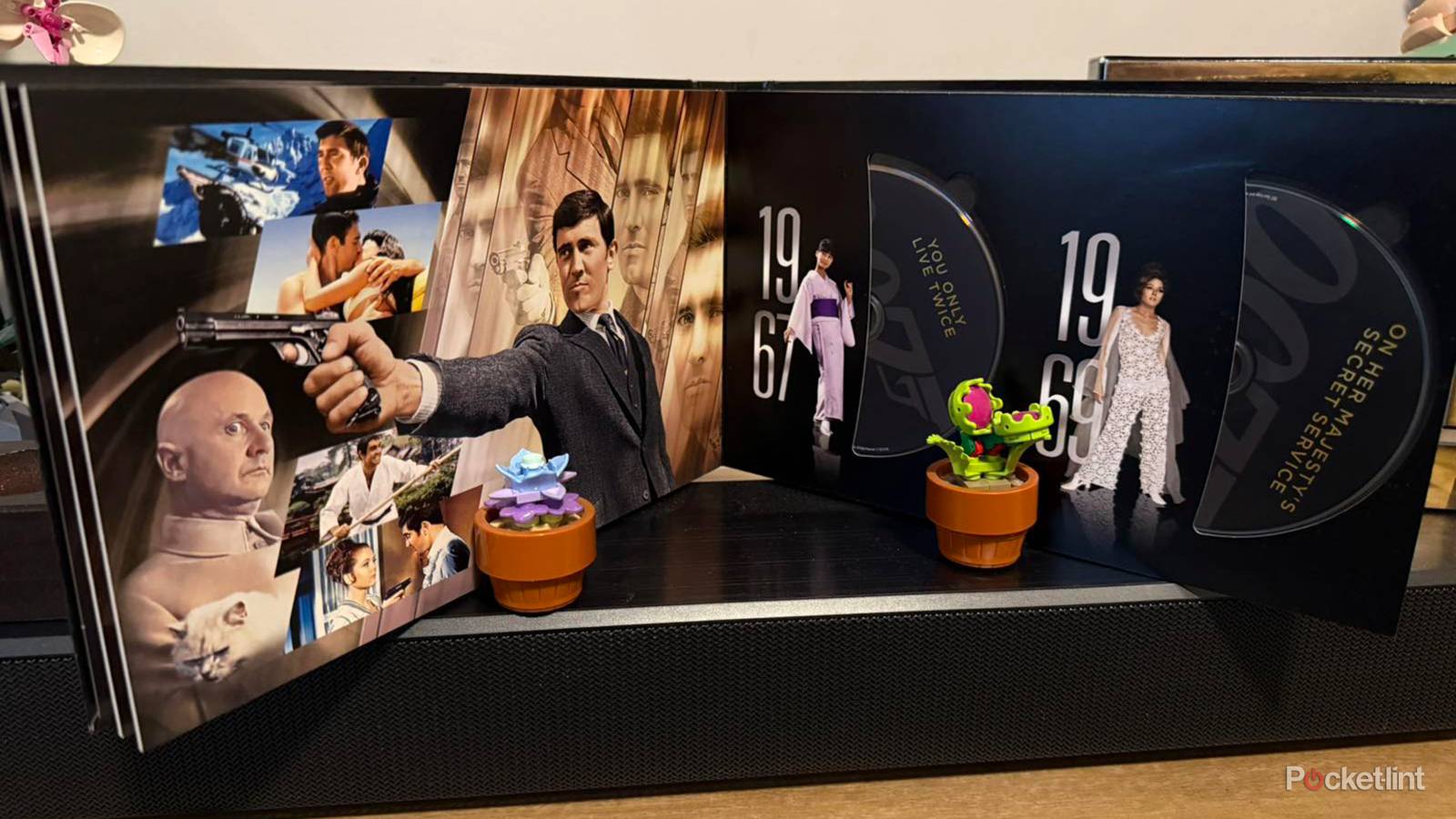
All of that money adds up and without any kind of cap on what you’re paying, the increases will continue. You don’t have that same worry with physical media. When I buy a disc, I buy it for life. There’s no increase in price between watching it now and watching it in five years. There may be a shelf life on physical media, but it’s a long time. A physical disc is a better investment.
There are too many ads and commercials
Streaming platforms need you to watch advertisements

A big reason I felt compelled to move away from streaming was a result of the deluge of ads and commercials and the resulting concerns over privacy. Streamers realized the only way to make money was by selling ad space, a notion that had been in existence for decades. Cable TV succeeded because of commercials and ads; streamers came along and killed cable only to become cable.
So ads are everywhere and they are only going to get worse. Amazon is leading the way on that. Amazon wants ads all over; not just before, during, and after things you watch, but also when you pause any title. It wants ads in the shows too, and wants to allow you to purchase anything you see or want on screen in seconds. Ads are going to be interactive, personalized, and inseparable from what you’re watching.
It’s important to keep in mind that platforms would prefer to sell you ads; they want you to subscribe to the cheaper ad-supported tiers available rather than the ad-free tiers. Ads generate more revenue and more information. If you’re trying to avoid ads, it’s going to cost you a lot of money over time.
Ads can be targeted because streaming services have a lot of data on you. Your TV contributes to that and while there are definitely ways to limit what your TV can track, the streaming services have a lot more opportunity. Platforms can get a really good idea of who you are by what you watch and what you skip over. Your viewing habits inform your age, gender, political beliefs, income, whether you have kids, and plenty more about your lifestyle and background. All that information is then used to sell you things. That information can also be hacked.
I’m very aware that most people have their information in a lot of different places, but you have to start somewhere if you’re going to limit it.
Inferior video and audio quality
Streaming compression and Wi-Fi connections downgrade titles

I take pride in my home entertainment system, and when it comes to blockbuster movies and prestige series, I want the video and audio quality to be the best it can be so that I can fully embrace the experience. And that’s all very hard to do with streaming.
The main issue is that when you’re streaming from Netflix and other platforms, you’re losing out on quality. Media files are so large that they have to be compressed in order for you to access them so quickly and conveniently on an app. There are different kinds of compression, and some services do them better than others. When you’re watching on Disney+, for example, you’re going to get better quality than, say, a free streaming service.
Still, even the best compression is going to leave out details that can negatively impact the viewing experience. You’re not getting the best possible version of the entertainment experience with streaming. What’s more, you could also be getting a very bad one.
That’s because your connection also plays a role in quality. Streaming via Wi-Fi isn’t ideal. A wireless connection, however strong, is still not going to give you the same fidelity and quality as a physical disc. And if you’re on a crowded network or the signal drops out, then the streaming service is going to downgrade the visual experience to accommodate the issues. Even if you have a 4K TV paired with a 4K subscription tier, you’re not guaranteed to get the best quality. A Blu-ray disc, and even sometimes a DVD, will provide a better experience.
Programming is mediocre and repetitive
Catalogs are populated by algorithms

Streaming platforms are all in on quantity. Netflix and Disney+ and others are buying up as many titles as they can while producing as much as they can. It leads to bloated catalogs that can be difficult to navigate. That’s the idea, though.
With mediocre titles, these platforms can keep you logged in and streaming for days and weeks and months on end. They are looking for titles that are just good enough, titles with recognizable faces and the semblance of a familiar plot. Under the surface, however, are shows and movies with poor writing that feel more like they were created by an algorithm or LLM than were by humans with a specific vision.
This trend towards mediocrity is frustrating and that there is a lot of sift though makes it feel like you’re spending more time searching for something to watch than you are actually watching something you want. It seems like all too often you’ve settled on a title after scrolling for what feels like hours instead of actively choosing something.
There is more selectivity when it comes to physical media. If I’m building my collection, I’m investing in titles that I know are good and worthwhile to me. There is no extra fluff. There are titles for specific moods and feelings and occasions.
It just feels lazy and disrespectful. As if users can’t see exactly what Apple TV+ and Netflix and others are doing now. Shows are carefully designed and marketed in an attempt to fool us. It’s more insidious in the past, though. It feels wrong and streaming services need to be put on notice.