


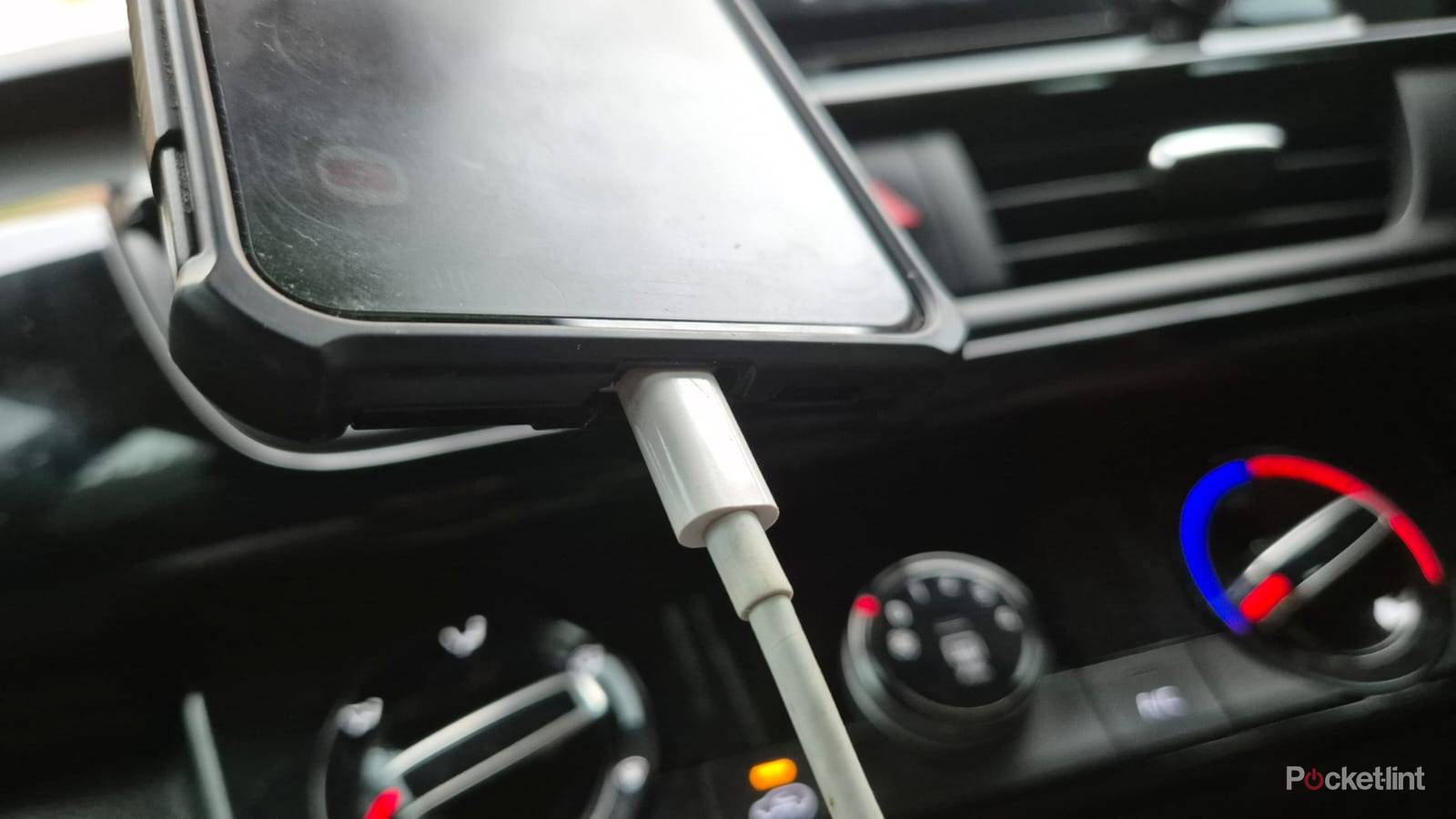
USB-C cables come in many speeds and sizes, so it’s easy to get confused by them. For the most part, you don’t need the fastest cables, but there are still some situations where it’s important, like connecting a monitor powered over USB-C. In that case, Thunderbolt cables are up to the task, but you might discover in your research that these are often short cables.
For phone chargers, it’s not uncommon to find a 10-foot cable, but Thunderbolt cables don’t come anywhere close to that. In fact, they’re far more likely to come in at around the 3-foot mark. You might be thinking that that’s far too short, but there’s actually a good reason why that’s the case. Much like HDMI cables, USB-C cables either work or they don’t. You either get a charge or a signal, or you don’t. The way to guarantee no drops is to have a shorter cable. Over three feet or fewer, you’ll still get the fastest speeds, and you don’t have to worry about the signal dropping. From that point of view, I understand why these cables have to be shorter, even if it means I don’t have as much versatility as I could otherwise have.
Short, but sweet actually applies here
Shorter is better here

In the case of high-speed cables, longer is detrimental to the speeds. If you’re buying something like a Thunderbolt 4 cable, you’re likely doing it for its bandwidth capabilities, so you’d be upset if there were drops in speed. The reason why a phone charger doesn’t have to worry about this is that it doesn’t come anywhere close to the power of a Thunderbolt cable. While I’ve complained in the past about how difficult it has been to tell the difference between USB-C cables, we now have our first indicator. If it’s a long cable, then it’s almost certainly a lower-powered cable. That doesn’t mean it’s useless — it just means it’s probably better suited for charging your phone than it is for powering a monitor.
Basically, it’s difficult for high speeds to move through a longer cable, and it boils down to physics. When the distance grows, the signal begins to weaken, and that leads to errors. This is why you don’t see cables with Thunderbolt speeds much longer than three feet very often, while slower speeds can be much longer. A shorter cable means less resistance, fewer voltage drops, and less overall degradation of the signal — three ingredients that are essential to a good cable.
For most people, that’s not an issue, as I would imagine most people using a USB-C cable don’t need something that comes with USB 3.1 or 3.2 Gen 2 speeds. I use my cables to power small fans, charge my phone, and charge my laptop. Anything with 10 Gbps speeds would be lost on me, and I would have to deal with a short cable. I love having a cable that’s able to reach across my bed and couch without losing any performance.
On the bright side, if you’re using a cable to power a monitor, it’s okay if it’s on the shorter end. This would typically mean you’re close to your laptop or PC where you need the extra monitor, so three feet could be more than enough. I’d much rather make the compromise in length if it means my connection remains stable, and it would appear manufacturers feel the same way.
It appears that this will be a limitation of cables for quite a while, and unless you’re okay with spending a lot of extra money on a cable with ways to boost the signal, these three feet or fewer cables will be the sweet spot. Thankfully, I don’t have many uses for a cable of these speeds, so I’d be okay with plugging a short one in every now and then. If my phone cable was only this short, it’d be a way bigger problem for me. A USB-C cable often costs under $10, and I wouldn’t really want to go much higher than that if I don’t have to. I do like to spend a little more and get braided cables, but that’s for durability more than anything.
Long USB-C cables are still worth it
A long HDMI cable on the other hand…

I would say that long USB-C cables are worth picking up if you need one that’s versatile. The nice thing about these cables is that they can charge just about everything nowadays, so it’s handy to have at least one in every room. My living room cable gets a lot of use, and it’s a laptop charger of all things. Despite its higher wattage, it’s not a big deal since your device only draws the power that it needs, so it fits the dual role of being long enough to reach across my couch and power everything from my phone to my Chromebook.
I wish I could say that HDMI cables have the same value for longer lengths, but I can’t. In my experience, longer cables for HDMI are just an unnecessary can of worms. While the picture and audio might look good, I can’t really justify the price hike, and I don’t have many uses for one anymore. These also suffer from the same problems that a long USB-C does, where the longer the cable, the bigger the potential for a dropped connection is. Back in the day, I wanted to run a cable from my PC to a TV in another room, and the answer to that would have been a long HDMI cable since DisplayPort cables don’t work on TVs. After looking at the logistics of that, mainly having a long cable run across my floor where I have a dog and a cat running around, I couldn’t justify spending money on something that might end up being a chew toy.
As it turns out, I found a nice alternative to this, and it’s streaming from my PC to my Xbox Series S. I know it sounds crazy, but it works very well. I have my PC plugged in via Ethernet, and even though my Xbox is running over Wi-Fi, my connection is still very steady. When I play games that way, it feels like it’s native, and the only HDMI cable I need is the one that runs from my Xbox to my TV. Who would have thought that the solution to my long HDMI problem was to not use one whatsoever? I tried not using my USB-C cables, most recently for wireless charging, and didn’t come away with the same experience. I’ll be sticking with USB-C cables for a while, but maybe not the long ones.


