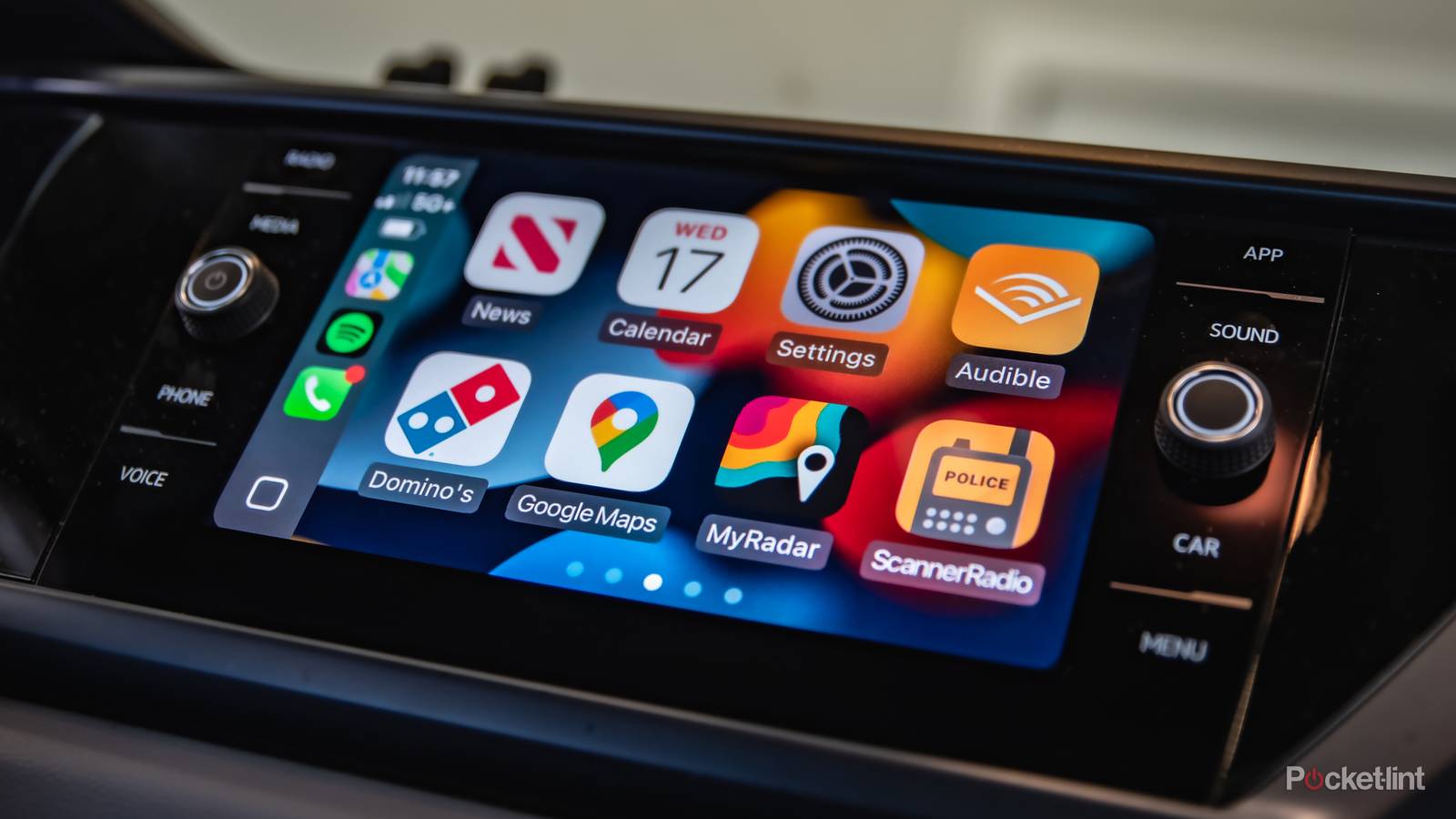
There’s a strange phenomenon with CarPlay that could be plaguing you daily, or may have never happened to you at all: sudden cutouts at precise geographic locations. My family and I used to live in Alberta, and whenever we would drive north from Calgary into Edmonton, CarPlay would drop at a highway section near Leduc. This was so dependable that we learned to shut off the infotainment system completely to avoid it.
In doing some research, I discovered that I’m hardly alone. People in many places are dealing with these failures, and in some circumstances, there may be no choice but to restart your dash interface and/or reconnect your iPhone after they hit. As it turns out, there’s one general culprit that can take on many forms.
What’s causing location-specific CarPlay cutouts?
Those mysterious outside forces

As you’ve probably deduced if you’ve dealt with this yourself, the cause is interference with the wireless version of CarPlay. When your iPhone pairs that way, it opens with a Bluetooth handshake, then switches over to 2.4 or 5GHz Wi-Fi for the main data link, depending on what your car (or connected adapter) supports. If a competing signal overlaps with the Wi-Fi channel(s) you’re using, it can overpower your CarPlay connection, severing the link.
When you’re driving, there are a variety of potential sources for this interference. In a simple example, some radio towers and cellular hubs (including 5G point-to-point microwave relays) could be accidentally bombarding the roadway, although that’s more likely to happen if you’re driving on a nearby bridge or overpass. These towers try to cast long distances rather than focus straight down, after all.
There’s also the potential for disruption from electromagnetic fields created by power lines or substations, though these would have to be both powerful and extremely close to the road to have any effect. Indeed the Connecticut Department of Public Health notes that EM fields return to background levels at 300 feet (about 91 meters) or less. As you’ve probably noticed, most high-voltage lines are located well away from public streets.
Other forms of city infrastructure could be responsible. Some intersections may have equipment like municipal Wi-Fi, mesh nodes, and/or traffic monitoring systems. If you’re driving along an area with toll roads or weigh stations, those might have license plate or RFID readers that are sufficiently powerful. That’s bad design, admittedly, and I’ve never dealt with that on any of the toll roads I’ve taken.
Perhaps the most exotic scenarios involve airport, military, and weather systems, namely communications and radar. These are not only powerful, but in many cases legally protected. Us civilians get a lower priority on the airwaves, since losing Google Maps for a moment is insignificant next to helping an airliner or troop transport land successfully.
Is there anything you can do to protect your car against dropouts?
Avoiding the Bermuda Triangle

Not much, unfortunately. You could hypothetically add RF shielding onto your car, but that would block your iPhone’s cellular signal as well. Realistically, then, you’ve got three choices: switching to wired CarPlay, detouring around the location giving you trouble, or temporarily shutting off your infotainment system as you approach. Restarting your dash takes a little time, it’s true. Recovering from a cutout can take even longer though, so it may be preferable.
You might be wondering if there’s anything Apple or automakers can do, and the answer to that is probably no. Hypothetically, there would be less interference if CarPlay operated entirely over 6GHz instead of 2.4 or 5GHz. That requires Wi-Fi 6E or 7, however, which may be standard on iPhones, but is rare in vehicles.