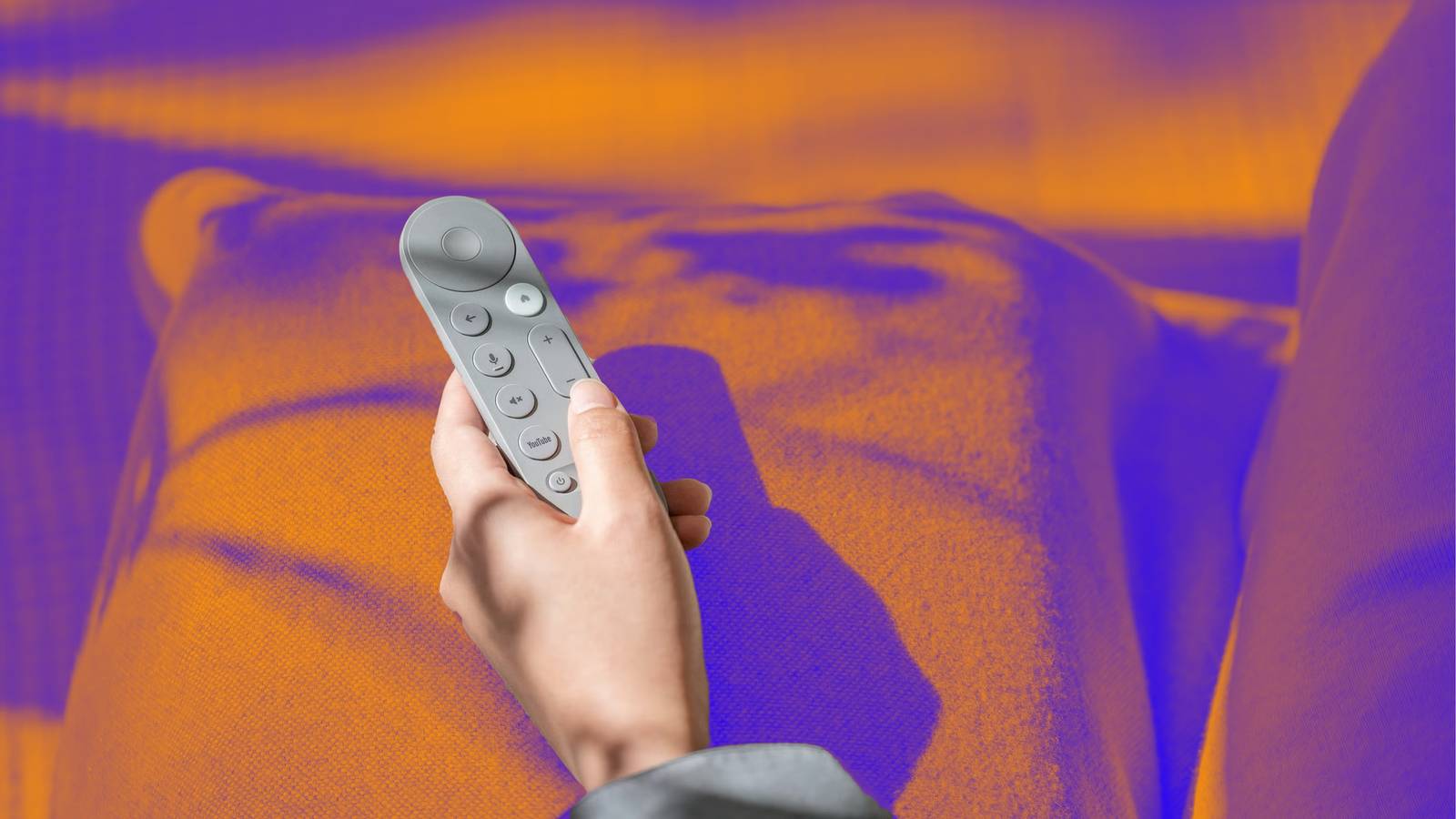
A Google TV Streamer with motion controls?
Google seems like it’s opening up the Android TV platform to new input methods

The specific language Google uses in its blog post is that developers should consider testing their app’s support for “pointer remotes,” remotes that can track your motion and effectively display a mouse cursor on your TV screen. “Gemini is changing the way we discover and stream content with voice,” Google writes, “but how we use the remote is evolving, too.” The company goes on to note that pointer remotes unlock “faster user navigation across the Google TV home page” and inside “content-heavy apps.” Rather than tapping a remote’s directional pad multiple times, Google thinks it’s a lot easier to point at what you want and select it by pressing a button.
There are no current Google TV devices that come with a pointer remote, whether smart TV or streaming device, and none that have been announced but not yet released.
Google says supporting mouse input is a good way developers can test how their app might respond to a remote with motion controls. What’s strange about the suggestion is it’s just that, a suggestion, and a suggestion that doesn’t really make sense for the current landscape of Android TV, or Google TV, the interface that lives on top of Google’s underlying operating system. There are no current Google TV devices that come with a pointer remote, whether smart TV or streaming device, and none that have been announced but not yet released. Why would Google go out of its way to highlight the need to support this feature unless it planned to offer it on a future version of the Google TV Streamer, or one of its partners’ TVs?
What a motion-controlled TV looks like
LG’s Magic Remote is one of the few examples of how this could work

While there aren’t currently any Google TV devices with pointer remotes, there is at least one prominent example among TV brands that can offer a sense of what it might look like. LG has offered a pointer remote, the LG Magic Remote, since 2010. The layout of the buttons and the general shape of the remote have changed over the years, but its ability to act as a motion-controlled cursor on your TV screen and let you scroll through menus with a physical scroll wheel has remained. LG’s webOS TV software is a different beast than Google’s, but it’s equally easy to navigate with a directional pad. The motion controls just make things simpler if you don’t want to do that.
Combined with the work the company has done with Gemini, Google seems interested in creating a TV interface that requires less direct input. Gemini drives, and you occasionally offer directions with a voice command. When you do need to do something more specific, like input a password or scroll through a larger menu, a pointer remote can let you do it with precision and motion controls. Of course, there’s no telling if that’s what Google actually has planned, but the fact the company brought up pointer remotes ahead of a new version of Google TV does at least seem significant.
Google TV is all about Gemini for now
The AI assistant is being aggressively pushed on TVs

While Google laid out the red carpet for Android 17 during its developer conference, it didn’t share whether or how Google TV would be changing once the update rolls out. The various platforms the company runs don’t often get updated at the same time, so it’s possible this shout-out to pointer remotes is confirmation that it’s one of several new features coming in the next Google TV update. At the very least, it’s safe to guess Gemini will play an even bigger role. The last three major updates to Google TV have expanded on its Gemini capabilities, adding things like AI-generated educational videos and the ability for Gemini to search your Google Photos library. Future updates are bound to take things even further. Whether they’ll be paired with new Google TV hardware remains to be seen, though.

- Dimensions
-
6.4 x 3 x 1-inch
- Connective Technology
-
Wi-Fi, Bluetooth
- Brand
-
Google
- What’s Included
-
Remote