


The beauty of the Android ecosystem is that it gives you nearly free rein to customize things to your liking. One such thing you can do is install a different front-end launcher, and have your phone boot directly into a screen that hardly resembles a smartphone. I did just that with the Beacon launcher, and it has completely transformed the way I use my phone.
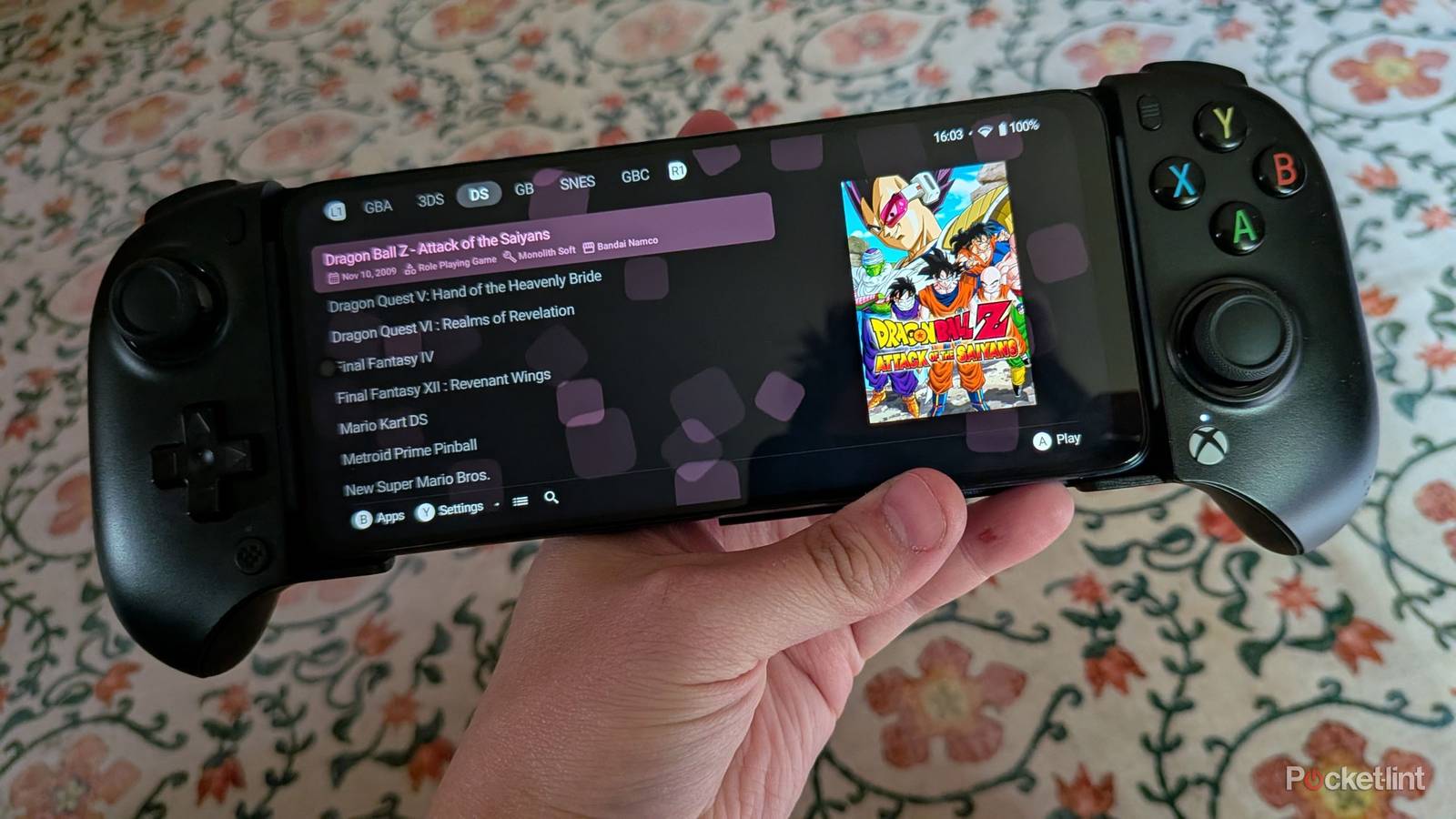
Beacon Game Launcher is a paid app on the Google Play Store, and it will have your phone feeling a lot like a handheld gaming device instead of an actual phone. You still have access to all the apps you would otherwise have with a regular Android experience, but it’s laid out in landscape mode and works nicely with telescopic controllers. I wouldn’t recommend doing this to your daily driver, but if you have an older phone lying around collecting dust, the Beacon front-end could give it some new life. Your phone is also a very nice retro game emulator, so you can play some classics without much trouble. I tested it out on my Google Pixel 9a, but I eventually set it all up on a different phone.

- Brand
-
Google
- SoC
-
Tensor G4, Titan M2
- Display
-
6.3-inch 1080 x 2424 pixel resolution pOLED, (422.2ppi), 60-120Hz variable refresh rate, 1,800 nits (HDR), 2,700 nits (peak brightness)
- RAM
-
8GB
- Storage
-
128GB/256GB
- Battery
-
5,100mAh
Give your phone a new purpose
Your old phone isn’t junk

Let me start with some backstory real quick. I’m not using an old phone for this purpose, but I actually bought a new one for it. I’m using a Moto G 2025 phone that I bought from Walmart. It costs just $30, and while you’re supposed to sign up for a phone plan, I just set it up and kept it without one. All I need it to do is connect to Wi-Fi, and it does that just fine. This isn’t a high-end phone by any means, and the Dimensity 6300 processor powering it leaves a lot to be desired. It doesn’t handle high-end emulation, so I wouldn’t expend to run the lion’s share of PS2 or GameCube games here. If you’re looking for PS1 and under, along with some Nintendo DS and 3DS games sprinkled in, it’s a great option. I also use it to stream my Xbox Series X and PC games, but any phone is great for that as it’s more reliant on your internet connection.
After loading my phone up with games, I wanted something that would make it feel less like a phone, and that’s how I stumbled across the Beacon app. Although it cost a few bucks, I was looking for something simple and straightforward, and that’s why I wanted something from the Play Store. Setup was painless, and since the Moto G 2025 has an SD card slot, I was able to load my ROMs onto that from my PC and get things to my phone with no problem. The only thing you need to do is direct the app to the correct folder, and you’re in business. You can then go into your settings and have your phone boot right into this front-end, making it truly feel like a game console.
 Quiz
QuizAndroid launchers
Trivia challenge
From stock to custom — how well do you know the apps that power your Android home screen?
LaunchersHistoryCustomizationFeaturesBrands
Which launcher comes pre-installed as the default on stock Android devices made by Google, such as the Pixel series?
Correct! The Pixel Launcher is Google’s own home screen experience, shipped as the default on Pixel devices. It features tight integration with Google Search, At a Glance widgets, and the Discover feed.
Not quite — the answer is Pixel Launcher. Google developed it specifically for its Pixel hardware lineup, offering deep integration with Google Assistant, search, and Android’s latest design language.
Nova Launcher is widely regarded as one of the most popular third-party Android launchers. Which company originally developed it?
Correct! Nova Launcher was created by TeslaCoil Software and became one of the most downloaded launchers on the Play Store thanks to its deep customization options and reliable performance.
Not quite — Nova Launcher was built by TeslaCoil Software. The team built a reputation for fast updates and extensive personalization features, making it a long-standing favourite in the Android community.
Which Android launcher introduced the concept of ‘covers’ — a feature that lets app icons expand into mini widgets when tapped?
Correct! Action Launcher introduced Covers, a clever feature where an app icon acts as a flap that opens to reveal a widget underneath. It gave users widget functionality without cluttering the home screen.
Not quite — the answer is Action Launcher. Developer Chris Lacy created the Covers feature as a unique way to merge app shortcuts and widgets into a single home screen element.
Microsoft released its own Android launcher primarily aimed at productivity. What is it called?
Correct! Microsoft Launcher (formerly known as Arrow Launcher) is Microsoft’s Android home screen replacement, designed to integrate with Microsoft 365, Cortana, and Windows 10/11 for a connected experience.
Not quite — it’s called Microsoft Launcher, though it started life as Arrow Launcher. Microsoft rebranded it to reflect its deeper integration with the Microsoft ecosystem, including OneDrive, To Do, and Office apps.
Lawnchair Launcher is notable for being open-source. On which platform is its source code publicly hosted?
Correct! Lawnchair Launcher’s source code is hosted on GitHub, allowing developers and enthusiasts to contribute, fork, and modify the project freely. It aims to bring Pixel Launcher features to any Android device.
Not quite — Lawnchair is hosted on GitHub. Its open-source nature has helped it gain a strong community following, as developers can inspect and contribute to the codebase without restrictions.
Which launcher is specifically designed around an AI-powered app drawer that automatically categorises apps into groups without manual input?
Correct! Smart Launcher 6 uses an AI-based system to automatically sort apps into categories like Social, Media, and Tools, making app discovery easier without the user having to organise anything manually.
Not quite — the answer is Smart Launcher 6. Its standout feature is intelligent automatic categorisation, which analyses what each app does and groups them accordingly, saving users the hassle of manual organisation.
Niagara Launcher is known for its minimalist design philosophy. What is its primary navigation feature that sets it apart from traditional launchers?
Correct! Niagara Launcher features an alphabetical app list that runs down the side of the screen, letting users quickly jump to any app by sliding their thumb along the alphabet. It’s a clean, one-handed-friendly approach.
Not quite — Niagara Launcher uses an alphabetical side-scroll list for quick app access. This vertical alphabet strip is its signature design feature, making it extremely fast and easy to navigate with one hand.
Which long-running third-party launcher was one of the first to offer icon pack support and gesture controls on Android, predating many modern competitors?
Correct! ADW Launcher, developed by AnderWeb, was a pioneer in the third-party launcher space and one of the earliest to support icon packs and gesture-based navigation. It laid the groundwork for many launchers that followed.
Not quite — ADW Launcher was the trailblazer here. Released in the very early days of Android customisation, it introduced concepts like icon packs and gesture shortcuts that became standard features in launchers for years to come.
Your Score
/ 8
Thanks for playing!
The only problem I run into is when the Nintendo DS mode, it’s annoying. I like to use the GameSir Pocket Taco for DS since I can get the screens stacked on top of each other, but the front-end doesn’t rotate with my phone. It means that I have to scroll through the menu and select the game first before loading on my Pocket Taco. It’s not the end of the world, but there are launchers that will automatically rotate with your device if it’s important.
What I like most about Beacon is that it opens up directly to my games, and I can pin the apps I use most that aren’t games. I have XBXPlay and Artemis pinned for when I want to stream from my Xbox and PC respectively. It’s nice not to have a lot of the bloat that comes with Android, and when I pair it with my 8BitDo Ultimate Mobile Gaming Controller, it feels very much like a game console. It’s also nice to use a secondary phone since I don’t have to worry about it draining the battery of my main device, but you could certainly use your main phone. Weirdly enough, it feels like SD card slots are for budget phones because my Pixel 9a doesn’t have the luxury of one.
Your phone could be your best handheld
It makes sense

I think a lot of people take for granted how powerful their phones are. I upgraded from an aging OnePlus 8 Pro to a Pixel 9a, but that actually represented a drop in power. My 8 Pro had a Snapdragon 865 chip powering it, something you see in many handheld consoles today, including the Ayn Thor Lite. It’s a powerful chip, and even though the phone stopped receiving security updates, I could’ve easily used it for emulation. Unfortunately, I gave the phone away, so that ship has sailed.
If you think about it, phones cost quite a bit of money, but many people roll the cost into their phone bill or get upgrades. Buying a flagship phone can easily cost you over $1,000, and at that price, it had better have good performance. If you have a powerful Snapdragon chip in your phone, like the 865, you can run quite a bit, even some of the Switch library. Flagship phones have more performance than that these days, so don’t feel like you have to go out and get a dedicated handheld, because your phone is capable of that very thing. I was surprised by how much using a controller and a special front-end could change my device from feeling like a phone to more like a gaming handheld.
I was hesitant about using my phone for gaming, but I slowly warmed up to it over the years. I played Dragon Quest 4 in portrait mode, I played Fortnite with one of those holders that straps right to an Xbox One controller, and I’ve played hours upon hours of Pokémon Pocket. All three of these games have ports with mobile in mind, but I found that emulating older games feels right at home, at least depending on how you play them. Games with 16:9 aspect ratios look better than 4:3 ones if you’re somebody who doesn’t like seeing a lot of black bars on the left and right. Streaming from my PC is even better because I’m able to directly match the strange 1604×720 aspect ratio of my phone with some games. I just finished the entirety of Final Fantasy Pixel Remaster with every inch of my phone’s screen being used.
The main hang up for me is not wanting to use my phone for gaming since it’s a big battery drain. That’s what led me to the Moto G, but if you don’t care about having to charge your phone often, grab a telescopic controller and start gaming. I’ve been gaming more than ever since getting one, so maybe