
Quiz
Apple TV
Trivia Challenge
Think you know your Apple TV history inside out — put your knowledge to the ultimate test!
HistoryHardwareSoftwareFeaturesStreaming
In what year did Apple first introduce the original Apple TV?
Correct! The original Apple TV was unveiled by Steve Jobs in January 2007 and began shipping in March of that year. It was initially codenamed ‘iTV’ before Apple settled on its final name.
Not quite. The first Apple TV was announced in January 2007 and started shipping in March 2007. Steve Jobs introduced it at Macworld, describing it as a way to bring your iTunes library to your television.
What was the storage capacity of the original first-generation Apple TV at launch?
Correct! The original Apple TV launched with either a 40GB or 160GB hard drive, as it was designed to store synced media locally from your iTunes library. This was before streaming became the dominant model.
Not quite. The first Apple TV came with either a 40GB or 160GB internal hard drive. Because it was designed to sync content from iTunes rather than purely stream it, local storage was a key part of the original design.
What major redesign did Apple TV receive in 2010 that dramatically changed its form factor?
Correct! The second-generation Apple TV launched in 2010 was a dramatic departure — it shrunk to a tiny black puck and completely removed the internal hard drive, shifting fully to streaming. It also dropped the price to just $99.
Not quite. The 2010 Apple TV (2nd generation) was reimagined as a tiny black puck-shaped device that removed local storage entirely, relying on streaming instead. Steve Jobs famously called the original a ‘hobby’ before this pivotal redesign.
What is the name of the operating system that runs on Apple TV HD and Apple TV 4K?
Correct! tvOS is Apple’s dedicated operating system for the Apple TV platform, first introduced alongside the fourth-generation Apple TV in 2015. It’s based on iOS but optimised for the living room experience.
Not quite. Apple TV runs tvOS, a purpose-built operating system Apple introduced with the fourth-generation Apple TV in 2015. While it shares a foundation with iOS, tvOS is specifically tailored for big-screen, remote-controlled navigation.
Which fourth-generation Apple TV feature allowed users to install third-party apps for the first time?
Correct! The fourth-generation Apple TV in 2015 introduced the App Store to the platform, finally allowing developers to build and distribute apps directly to the TV. This was a landmark moment that transformed Apple TV from a streaming box into a proper platform.
Not quite. The App Store was the defining new feature of the fourth-generation Apple TV launched in 2015. For the first time, users could download games, streaming apps, and utilities directly onto their Apple TV, opening it up as a true app platform.
Which chip powers the Apple TV 4K (3rd generation) released in 2022?
Correct! The third-generation Apple TV 4K, released in November 2022, is powered by the A15 Bionic chip, the same processor found in the iPhone 13 series. This gave it a significant performance boost and enabled smooth 4K HDR playback.
Not quite. The 2022 Apple TV 4K (3rd generation) uses the A15 Bionic chip. Apple often reuses chips from its iPhone lineup in Apple TV, and the A15 offered a meaningful performance improvement over the A12 found in the previous model.
Apple TV+ launched as a streaming service in November 2019. What was notable about its launch pricing in many markets?
Correct! Apple TV+ launched on 1 November 2019 at just $4.99 per month, making it one of the most affordable streaming services at launch. Crucially, Apple also offered a free one-year subscription to anyone who purchased a new Apple device.
Not quite. Apple TV+ launched at $4.99 per month and sweetened the deal by offering a free year of the service to anyone buying a new Apple device. The aggressive pricing was seen as Apple’s strategy to rapidly build a subscriber base for its fledgling original content library.
What is the name of Apple’s feature that allows iPhone users to use their phone as a camera source through Apple TV?
Correct! Continuity Camera, introduced with tvOS 17, allows users to use their iPhone as a webcam for FaceTime calls on their Apple TV. It takes advantage of the iPhone’s superior camera hardware for a much better video calling experience on the big screen.
Not quite. The feature is called Continuity Camera, and it was introduced with tvOS 17. By wirelessly connecting an iPhone to Apple TV, users can enjoy high-quality FaceTime video calls on their television using their iPhone’s powerful camera system.
Your Score
/ 8
Thanks for playing!
How long should the Apple TV hardware last?
Not quite bulletproof

When it comes to the Apple TV 4K, you’re probably golden. This is a point I can speak to from direct experience. There are two Apple TV 4Ks in my house — one a 2017 original, the other from 2021 — and both are still running strong. People do occasionally report failures across model ranges, but assuming you don’t run into defects or other unusual scenarios, there’s probably no reason a 4K model can’t last a decade, if not longer.
It’s harder to speak to older Apple TVs, but you probably wouldn’t want to use anything past the 2017 model anyway. The 2015 Apple TV HD is limited to 1080p resolution, HDMI 1.4, and Wi-Fi 5. It can’t handle any form of HDR, let alone Dolby Vision or HDR10+, and it’s the oldest product that still supports tvOS 26. I’ll expand on the software support issue in the next section.
As always with media streamers, the main risk to your hardware is heat. While you won’t (normally) find one operating at extremes, the product is meant to stay plugged in 24/7, and almost never shuts down completely, simply entering a sleep mode when you hold the remote’s power button. If heat is elevated for long stretches of time, that’s going to increase wear on components, raising the risk that one part or another will fail prematurely. The 2022 model is designed to operate in ambient temperatures between 32 and 95F (0 and 35C). You should be fine, then, as long as a space is well-ventilated, and you control other factors like dust and direct sunlight. Leaving your Apple TV in the sun for several hours every day is a recipe for disaster.
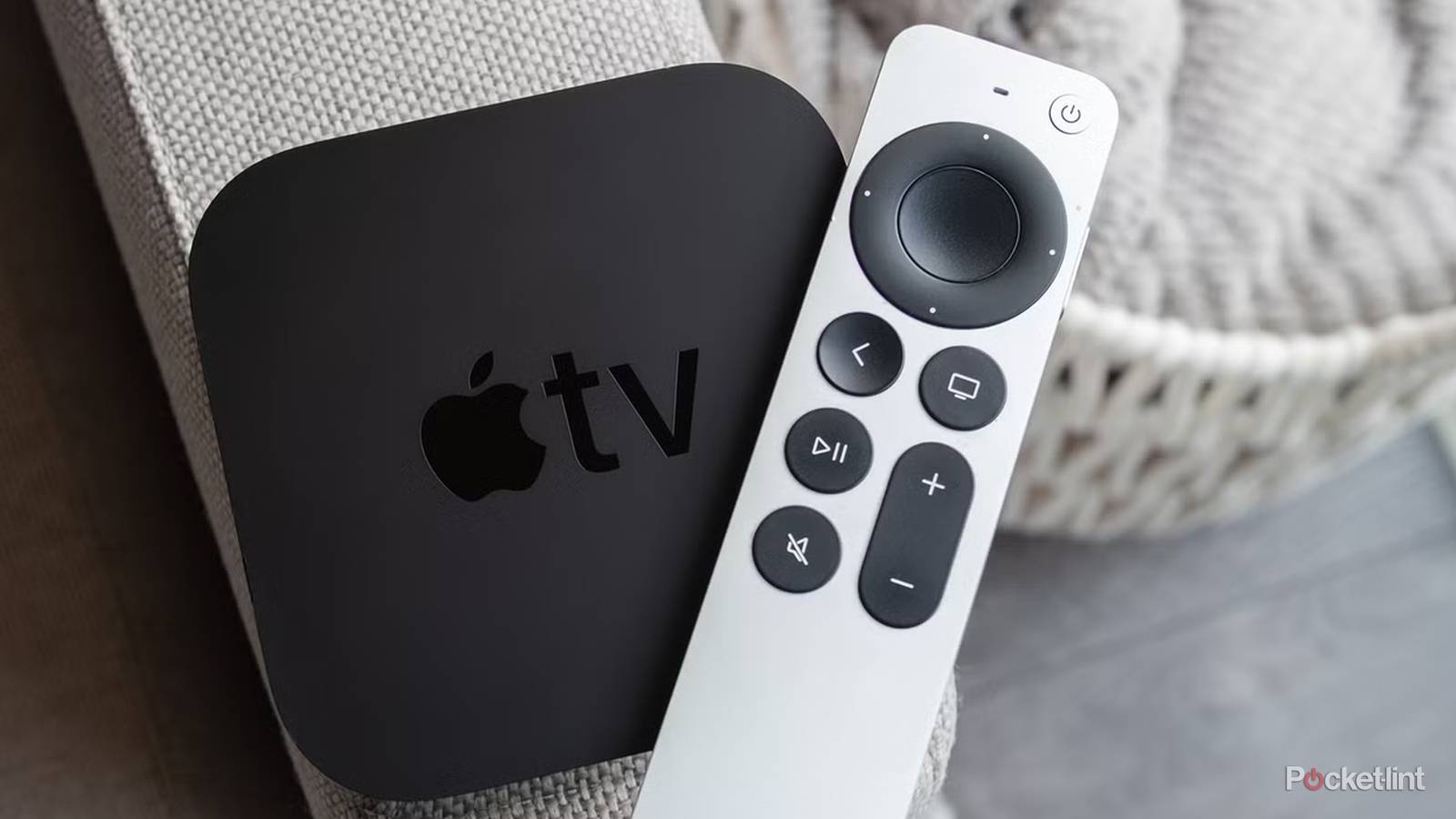
Other things can go wrong, of course, such as liquid exposure, or accidentally damaging the HDMI port. Another thing to be careful with is the Siri Remote. While the current aluminum accessory is almost overbuilt, it’s still vulnerable to liquids and port damage, not to mention buttons becoming stuck or unresponsive under bad circumstances. Older remotes are even more fragile, owing to their glass trackpads. Replacing a Siri Remote isn’t cheap — that’s going to set you back $59, more than some Amazon and Roku streamers.
As I’ve hinted a couple of times, your most serious concern may be obsolescence. TV and computing technology is constantly evolving, so an Apple TV that was cutting edge at launch can still end up feeling inadequate a few years down the road. My 2017 model continues to run apps smoothly, for example, but it’s saddled with HDMI 2.0 and Wi-Fi 5, and doesn’t support HDR10+, even though that format launched the same year. The 2022 model is already facing potential issues like the absence of HDMI 2.2 and Wi-Fi 7. Those don’t matter much today, but could turn out to be significant as you upgrade the rest of your home.
Something to be aware of Apple’s official “vintage” and “obsolete” labels. Vintage products have been off the market for at least five years, but less than seven. Every Apple TV prior to the 4K line is considered obsolete, meaning you can’t get any repair service. Not that it would be worth it — you might spend as much or more on the repairs than you would on a replacement.
What about the Apple TV’s software support?
A storm is brewing

Apple tends to be one of the better companies for software support. As I mentioned, you can still install tvOS 26 on the Apple TV HD, which is nearly 11 years old. That’s beyond Microsoft’s support for Windows 10, which officially ended in October 2025, a little over 10 years after the initial release.
That said, I won’t be surprised if Apple drops support for the HD in tvOS 27, and that has implications. It won’t get access to any new software features, and most if not all bugfixes will stop — there might be a few security-only updates if serious vulnerabilities are discovered. Expect a similar treatment of recent devices as the OS evolves. Once a device stops receiving major tvOS releases, it will continue to work, but only as long as the apps themselves remain functional. App developers tend to end support sooner than Apple does.
The next Apple TV, rumored to ship in late 2026, is liable to create the biggest rift in years.
Why would Apple cut things off? The leading reason is the money and labor involved in updates, which don’t have much business value as user numbers start to dwindle. Cynics might (plausibly) suggest planned obsolescence in order to nudge you towards a hardware upgrade, but there’s also a reason that’s less directly connected to profits: modernizing the platform. Apple will actually disable features on devices to maintain compatibility — Liquid Glass is missing on my 2017 Apple TV — yet over time, legacy hardware starts to hold an entire OS back, since some elements can’t make progress without being gutted and redesigned.
The next Apple TV, rumored to ship in late 2026, is liable to create the biggest rift in years. It should be the first model compatible with Apple Intelligence, the company’s generative AI tech — and that’s going to require not just tvOS 27, but an A17 Pro processor or better. The 2022 Apple TV is stuck with an A15. If the promised Gemini-based overhaulof Apple Intelligence bears fruit, a lot of customers may feel pressured into trading up, or even ripped off if they bought a 2022 model a few months ago.
That’s a big “if,” mind you. The 2024 incarnation of Apple Intelligence was limited and unpopular. If the response to the 2026 overhaul isn’t much better, Apple might choose to downplay the tech, keeping older hardware relevant for a little while longer.
At the moment, I’m encouraging people to hold off on buying an Apple TV until the company’s September 2026 press event, possibly a month or two later than that. There’s rarely any need to rush out and buy a media streamer, and waiting to see how the new Apple TV holds up could pay dividends in futureproofing, especially if it supports Dolby Vision 2 and HDR10+ Advanced.

- Brand
-
Apple
- Bluetooth codecs
-
5.0
- Wi-Fi
-
6
- Ethernet
-
Gigabit (128GB model only)