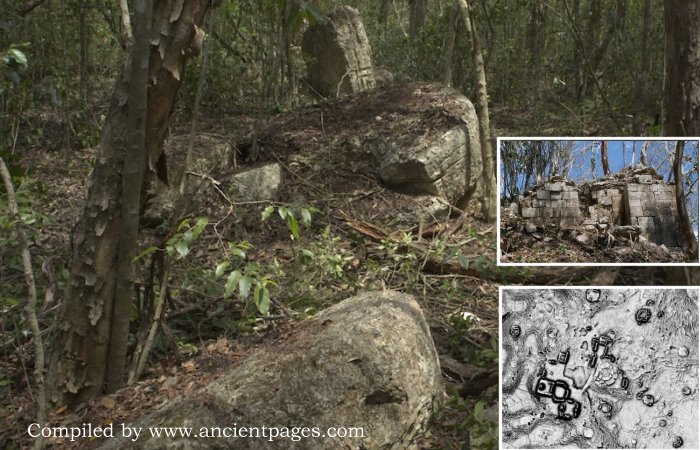
Conny Waters – AncientPages.com – Many ancient Maya cities are still hidden in the jungle, waiting to be discovered. One of these, called Minanbé—which means “there is no path” in Yucatec Maya—was recently found by a team of Mexican and Slovenian experts led by archaeologist Ivan Šprajc.
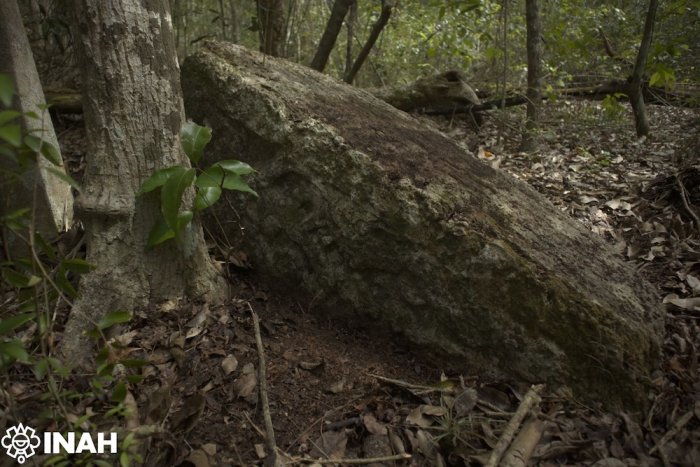
The presence of 14 stelae and altars indicates its significance within the regional hierarchy during the Late Classic period (600-900 CE). Credit: INAH, Quintín Hernández.
Now in ruins, this remarkable archaeological site has remained untouched for over a thousand years. Minanbé, located in the Calakmul Biosphere Reserve in Campeche, reached its peak during the Late-Terminal Classic period.
This discovery is the result of thirty years of research by Ivan Šprajc, who works at the Research Center of the Slovenian Academy of Arts and Sciences. His project focused on the Central Mayan Lowlands, an area that was home to 9 to 11 million people during the Late Classic period (600 to 900 AD).
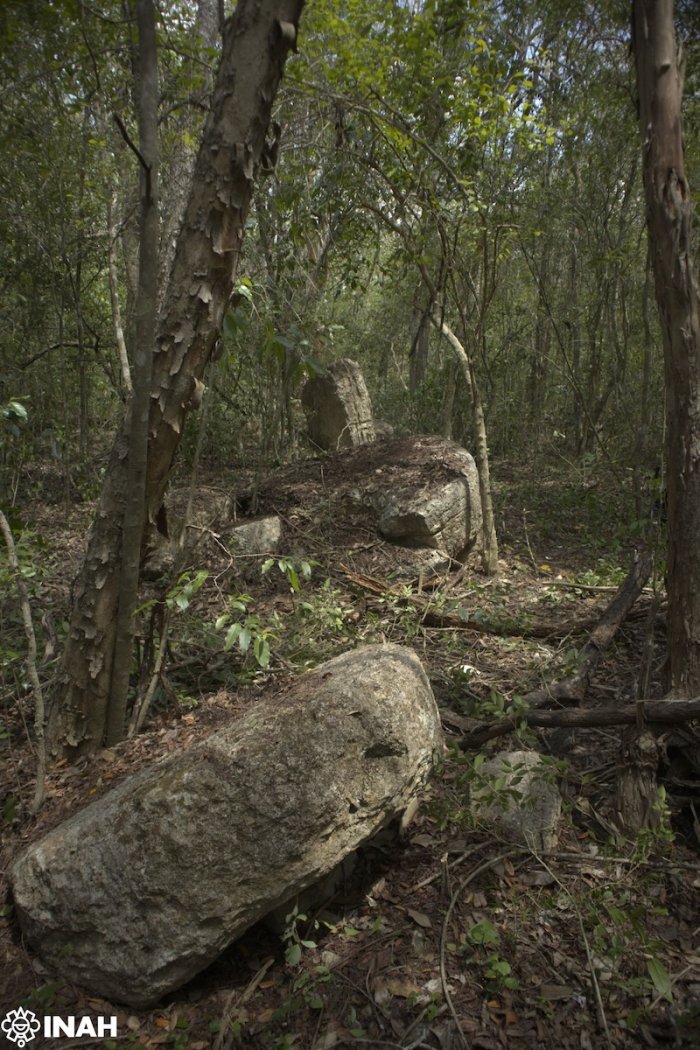
A team of Mexican and Slovenian archaeologists discovered the Mayan site of Minanbé in the dense jungle of the Calakmul Biosphere Reserve in Campeche. Credit: INAH, Quintín Hernández
This field season, with support from the Archaeology Council of the National Institute of Anthropology and History (INAH), the team went back to the northern part of the reserve to survey a site west of Chactún. This main center was first reported by the same group 13 years ago, and the team used airborne laser scanning (LiDAR) to help guide their search.
Archaeologists and local workers from Constitución cleared a five-kilometer path using machetes. After that, they traveled another five kilometers by ATV and on foot in the sun.
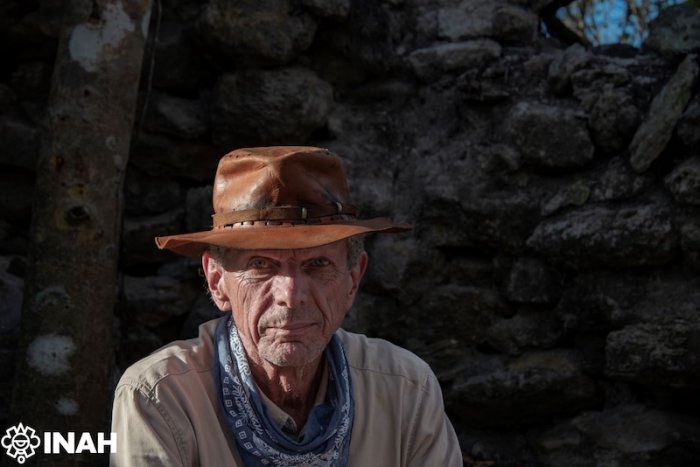
This discovery marks the culmination of Ivan Šprajc’s 30-year project focused on the central Maya lowlands. Photo: Daniel Santaella-INAH
Ivan Šprajc saw the lack of paths or old logging roads—which often lead to other sites—as a good sign. He said, “Compared to other places where we did surface surveys, access here was much more difficult; however, in the last three years, this is the first one we’ve found intact, with no signs of looting. It was a discovery, a great surprise for us.”
He explained, “That’s why we chose the name Minanbé, which comes from Yucatec Maya ( mina’an , ‘there is no’, and be , ‘path’). Thus, we follow the tradition in Mayan archaeology of naming some sites according to some characteristic of the place or in allusion to the circumstances of the discovery.”
Stone Enigmas And A 13-Meter-High Pyramid Temple
Archaeologists Atasta Flores Esquivel, Israel Chato López, Quintín Hernández Gómez, and Vitan Vujanovic conducted a site reconnaissance, beginning with LiDAR images that revealed a 15-hectare settlement beneath the forest. They then confirmed the presence of an urban center featuring squares surrounded by palatial and religious buildings, terraces, and wetlands with hydraulic channels.
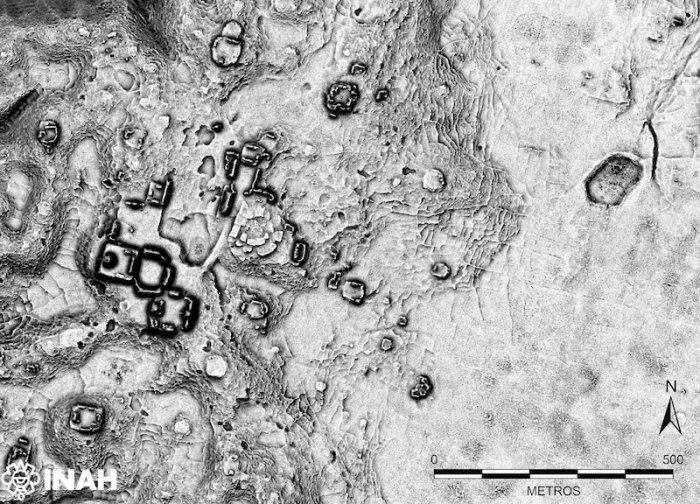
LiDAR data indicate that the settlement’s monumental core covers about 15 hectares. Credit: INAH
Regarding one of the tallest structures, a pyramidal temple exceeding 13 meters in height, Vujanovic explains that it has characteristics of the Río Bec style, such as fine masonry or smooth panels on the facade, a steep staircase, and moldings at the top. He says, “This is the first time I have recorded a temple that is more or less well-preserved, and a stela still bearing glyphs.”
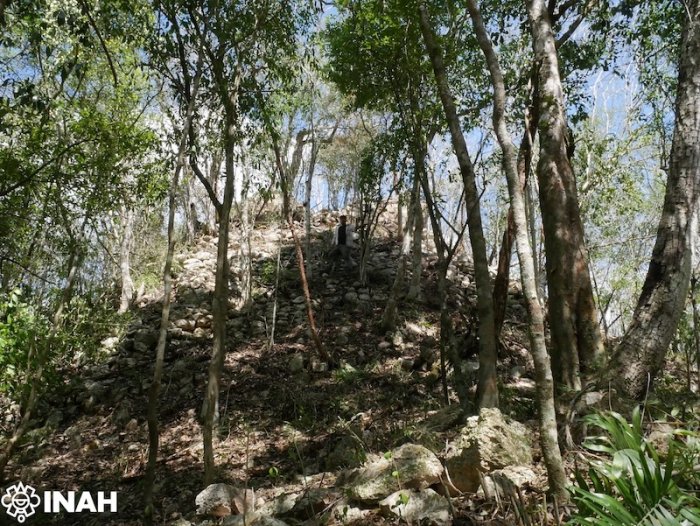
A pyramidal temple over 13 meters tall displays features of the Río Bec style. Credit: INAH, Vitan Vujanovic
Stela 1 is also significant, featuring an engraved decapitation scene. It was the first monolith identified by the team. In addition, they documented 14 other monuments, some of which contained iconographic elements and hieroglyphic texts.
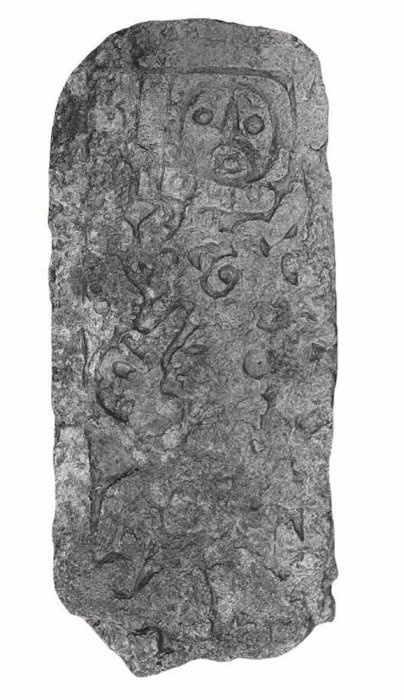
Stela 1 depicts a figure using a knife or axe to decapitate another individual and is dated 5 Ajaw, 849 AD. Credit: INAH
Quintín Hernández, an archaeologist working with Špraj, recalls that during their exploration of the site’s northern section, they found a series of monuments arranged in a row. The monuments at the southern end of the causeway linking the central and northeast sectors were cleared for photogrammetric survey.
Using five hundred photographs, the team created three-dimensional models of each of the 14 altars and stelae discovered. These models were sent to the project’s epigraphist, Octavio Esparza Olguín, who used advanced editing software to identify key elements despite significant erosion on most limestone surfaces.
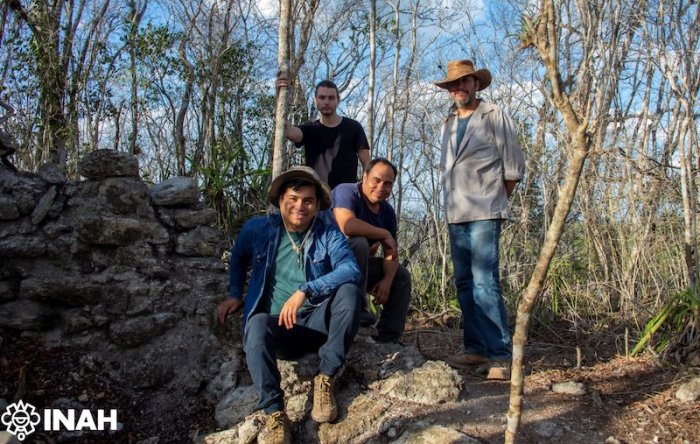
Archaeologists identified an urban center composed of plazas, palatial and religious buildings, terraces, and wetlands with canals. Credit: Daniel Santaella-INAH
The specialist notes that at the top of Stela 1, a figure is shown wielding a knife or axe to decapitate another individual.
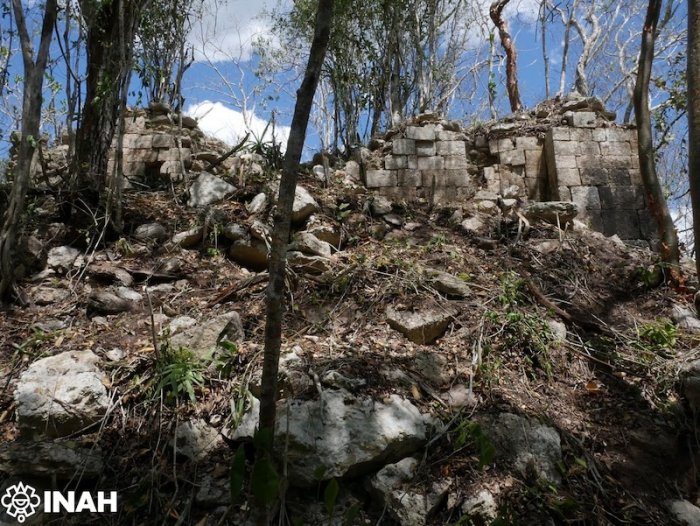
The facade features prominent fine masonry and smooth panels. Credit: INAH, Vitan Vujanovic
At Minanbé, both round and rectangular altars were also discovered. Their arrangement suggests several were intentionally altered. For example, Monument 6 is broken and features hieroglyphic cartouches on its sides, as well as an image of a ruler wearing a feathered headdress, a trilobed pectoral, wristbands, and necklaces. One hieroglyphic text includes part of a Long Count date likely from the late 7th century, making it the oldest in the area.
See also: More Archaeology News
Ivan Šprajc concludes that the discovery of Minanbé aligns with the regional context: an area heavily modified for agriculture that peaked during the Late Classic period, likely with a hierarchy tied to production and surplus trade. However, the findings also raise questions about possible incursions by groups from the northern Yucatán Peninsula, who may have arrived later to disrupt the abandoned city’s power structure.
Source: INAH
Written by Conny Waters – AncientPages.com Staff Writer