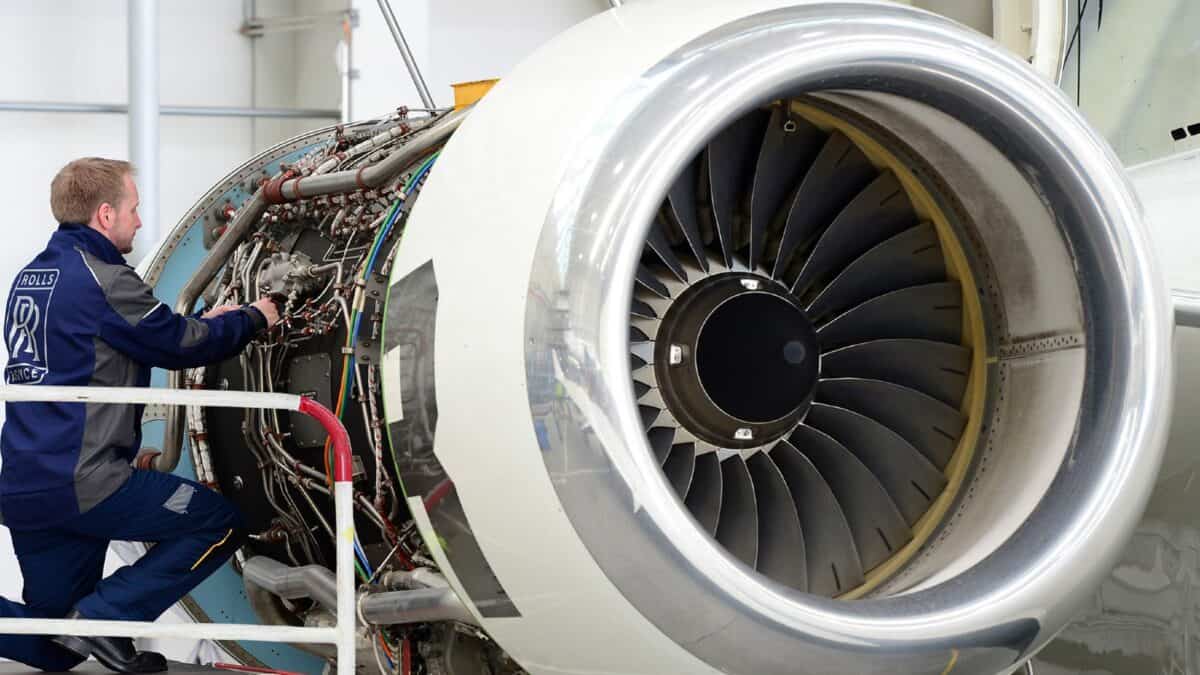

Image source: Rolls-Royce plc
A £20k investment in Rolls-Royce (LSE:RR) made 18 months ago would now be worth almost £50k. Were the shares bought inside an ISA, this meaty return would be totally tax-free.
But what about the next 18 months? What might £20k invested in Rolls-Royce today be worth by January 2028?
Please note that tax treatment depends on the individual circumstances of each client and may be subject to change in future. The content in this article is provided for information purposes only. It is not intended to be, neither does it constitute, any form of tax advice. Readers are responsible for carrying out their own due diligence and for obtaining professional advice before making any investment decisions.
Caveats
The first thing to admit is that this exercise is entirely speculative. Ultimately, Rolls-Royce could carry on delivering the goods at an operational level, while the stock’s valuation multiple contracts due to a stock market meltdown or something else that spooks investors (CEO Tufan Erginbilgiç abruptly leaving, for example).
Alternatively, the engine maker could lower its medium-term (2028) guidance for between £5bn and £5.3bn in free cash flow. Disappointed by this, investors might quickly sell off the stock, sending the £20k investment underwater.
What’s more, £20k is the entire annual Stocks and Shares ISA allowance. It could be a very dicey move putting that much in a single stock, especially one like Rolls-Royce, which is already trading expensively and offering little margin for error.
With these caveats out of the way though, let’s give it a shot.
Price target
As mentioned, Rolls-Royce is targeting around £5.2bn in free cash flow in 2028. Today, it’s trading at around 30 times its next 12 months’ free cash flow.
Putting these together, we get a projected market-cap of about £156bn by the start of 2028. Assuming the firm buys back roughly £5bn worth of shares by then (at an average price of 1,600p), I calculate a share price target of about 1,925p.
Let’s be conservative and call it 1,900p, which is still 35% higher than today’s share price. This would turn £20k into around £27k by then — a very solid return.
So am I buying any more shares?
Again though, this assumes investors are willing to value Rolls-Royce on the same multiple in 2028. This isn’t guaranteed and ultimately out of the company’s hands.
As a shareholder, what’s important is that Rolls-Royce continues hitting the targets it sets. On this front, the firm has done a tremendous job over the past three years, with guidance consistently beaten and raised along the way.
However, with the Middle East conflict flaring back up, and supply chains already challenged, there’s probably less chance of this continuing in the near term. At least on the level seen in previous years.
The conflict in the Middle East has created uncertainty for the industry… we expect to fully mitigate the current financial impact of the disruption to our business. We continue to monitor the situation for any future direct and indirect impacts and will take the necessary actions to mitigate them.
Tufan Erginbilgiç
Having first bought the FTSE 100 stock at a much lower price in 2023, I’m not looking to add to my position at the moment. Rolls-Royce is trading at a pricey 34.5 times forward earnings while the dividend yield is less than 1%.
Investors considering the stock should look out for the engine maker’s half-year earnings report on 30 July. I’ll be reading that before making any decision.
Should you invest £5,000 in Rolls-Royce Plc right now?
When investing expert Mark Rogers and his team have a stock tip, it can pay to listen. After all, the flagship Twelfth Magpie Share Advisor newsletter he has run for nearly a decade has provided thousands of paying members with top stock recommendations from the UK and US markets.
And right now, Mark thinks there are 6 standout stocks that investors should consider buying. Want to see if Rolls-Royce Plc made the list?
Ben McPoland owns shares in Rolls-Royce.