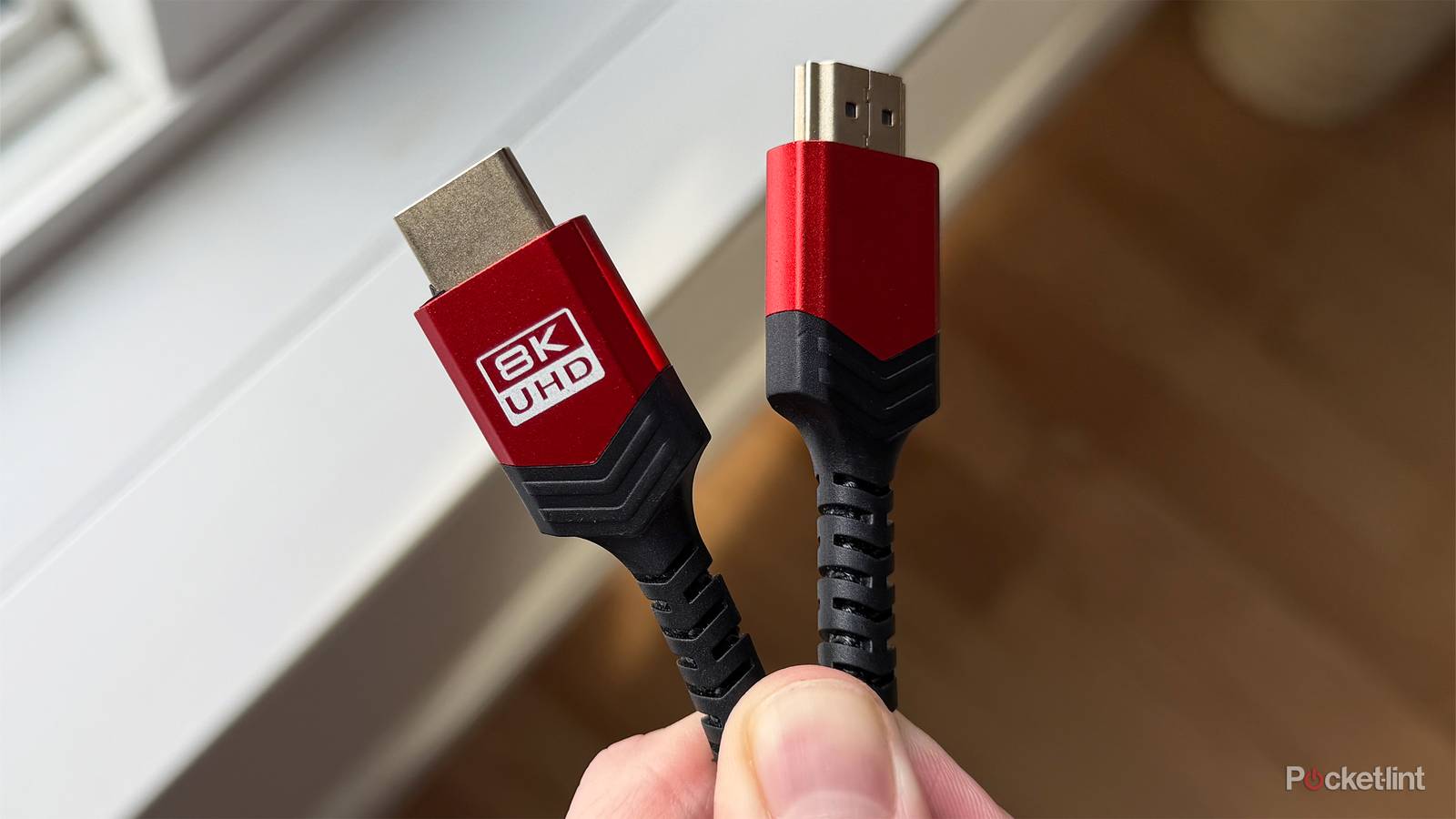
HDMI cables are all over the market today, and they come in at many different prices. In most cases, I would just recommend using the cable that came with your device, but that’s not always possible if you shop used or have simply lost track of what cable goes where. I have so many things plugged in, and I’ve moved so many times, so I know that I have jumbled up my cables at some point. I’ve also been slowly trying to upgrade all my cables to HDMI 2.1 just so I don’t have to be concerned about what I’m using not getting enough juice to my device.
If you’re in the market for a new HDMI cable, you have your pick of going cheap or going expensive. In many cases, you can get away with a cheap option. That could leave you wondering why there are expensive cables in the first place. I won’t say that they’re totally useless, but I just don’t see the value in picking one up myself. I know what my needs are, and I don’t see any reason to spend $100 on a single HDMI cable. I think manufacturers are sort of banking on you thinking a higher price equals higher quality. While that might be the case in general, I don’t think you’ll really need to go that high.
There aren’t many reasons to buy expensive HDMI cables
I don’t see the value

Look, I like to spend my money as much as the next person, but I can think of many things I’d rather spend it on than an expensive HDMI cable. Cables are so easily found, and I haven’t had any fail on me yet. When I run into trouble, I typically give it the reliable unplug it and plug it back in, and the problems are fixed. Reasons such as that show me why it just doesn’t seem necessary to spend a lot of money on a cable.
Let’s use the gold-plated cables as an example really quick. These cables are meant to provide more durability, and while that’s the case, how often are you dealing with corroded cables? I have some cables that are over a decade old, and everything is still working just fine. The main reason people are buying HDMI cables is to get audio and picture from their TV. An HDMI cable at any price will do that for you, and it’s just diminishing returns on anything expensive. You won’t magically get better picture quality from a $100 HDMI 2.1 cable than you would from a $10 one.
One scenario I can think of is if you have your PC set up in a different room but want to play on your TV. A long cable is necessary here for people who don’t want to lug their PC between rooms, and that’s going to cost you. Situations like that a few and far between, as most things you plug into your TV are going to be placed on a stand either with the TV or close by, so there’s no need to get a long cable. HDMI cables are all or nothing — they either display your picture or they don’t. Sure, there are fears about the signal dropping in and out if you have one that’s long, but as long as you do your research and get the proper cable, that’s not an issue.
I would go as far as saying that Amazon Basics-branded cables will get the job done for you. The main thing you have to be on the lookout for is whether you’re grabbing an HDMI 2.1 cable or not. These cables are needed to get the most out of your PS5 and Xbox Series X, and as long as you have one, you’re good to go. In 2026, I wouldn’t recommend buying something older than 2.1, and the good news is that 2.1 cables don’t really cost any more than a 2.0 cable. You can also use your 2.1 cable with all of your devices, even if they don’t reap the benefits of a 2.1 cable.
If I can, I like to go for the braided HDMI cables since those can hold up to more wear and tear, especially if you have a cat batting at your cables. Those don’t usually cost much more, and that’s an example of something I think is worth splurging on, especially if it’s just a few bucks more. On the other hand, durability isn’t all that concerning if nobody messes with your cables. The cable running from my Xbox to my TV doesn’t do anything, so it’s going to hold up for a very long time. If you have one that you constantly have to move around, then a braided option would be a good choice.
I would just save my money
Ignore the gimmicks

There are many HDMI cables out there that promise some extra benefits, but I don’t think the average person will find those very appealing. When I was looking through some of my older cables, I noticed I had one that had Ethernet capabilities. I had no idea that was the case, and I can confirm that I never once used the Ethernet portion of it, and I never felt like there was any need for me to consider that. Most people would fall into that same category, and it feels like a lot of these features feel like gimmicks more than anything. There are probably some niche situations where this would come in handy — a home theater receiver comes to mind. I have a receiver in my living room, but I don’t even have it connected with an Ethernet cable.
We’re also looking at Fiber-optic HDMI cables that reach up to 300 feet. I don’t know about you, but I don’t see a world where I ever need my HDMI cable to stretch that far. That’s not saying these aren’t good cables, but it’s more that the average person wouldn’t get any use out of them. In case you were wondering, these cables in question cost over $150. Obviously, these fill a niche need that I’m sure somebody out there has. The everyday person will be just fine paying for some bottom of the barrel HDMI cables and not notice a single difference in quality.
The bottom line is that most people use a 4K 60Hz TV, and that means the average $10 cable is more than enough. It even means that an HDMI 2.0 cable is fine in the majority of cases. I would still future-proof and grab a 2.1 cable since the price difference is minimal, but there’s no way I would shell out over $100 for a cable. I wouldn’t even spend $50 on one, and I don’t see why you should either.