


The tech industry changes fast, particularly when Google is involved. That’s not necessarily a compliment. Google is infamous for killing off products that it never really gives a chance, whether that means more money, different strategies, or simply time. One of the worst examples is the Pixel Pass — it was an attempt to compete with Apple’s iPhone Upgrade Program, but Google ended it before the first customers could actually take advantage of it. Then there’s Stadia, a cloud gaming service which never got many big games, and often forced you to pay for titles on top of any subscription fee. If you left Stadia, your purchases were useless.
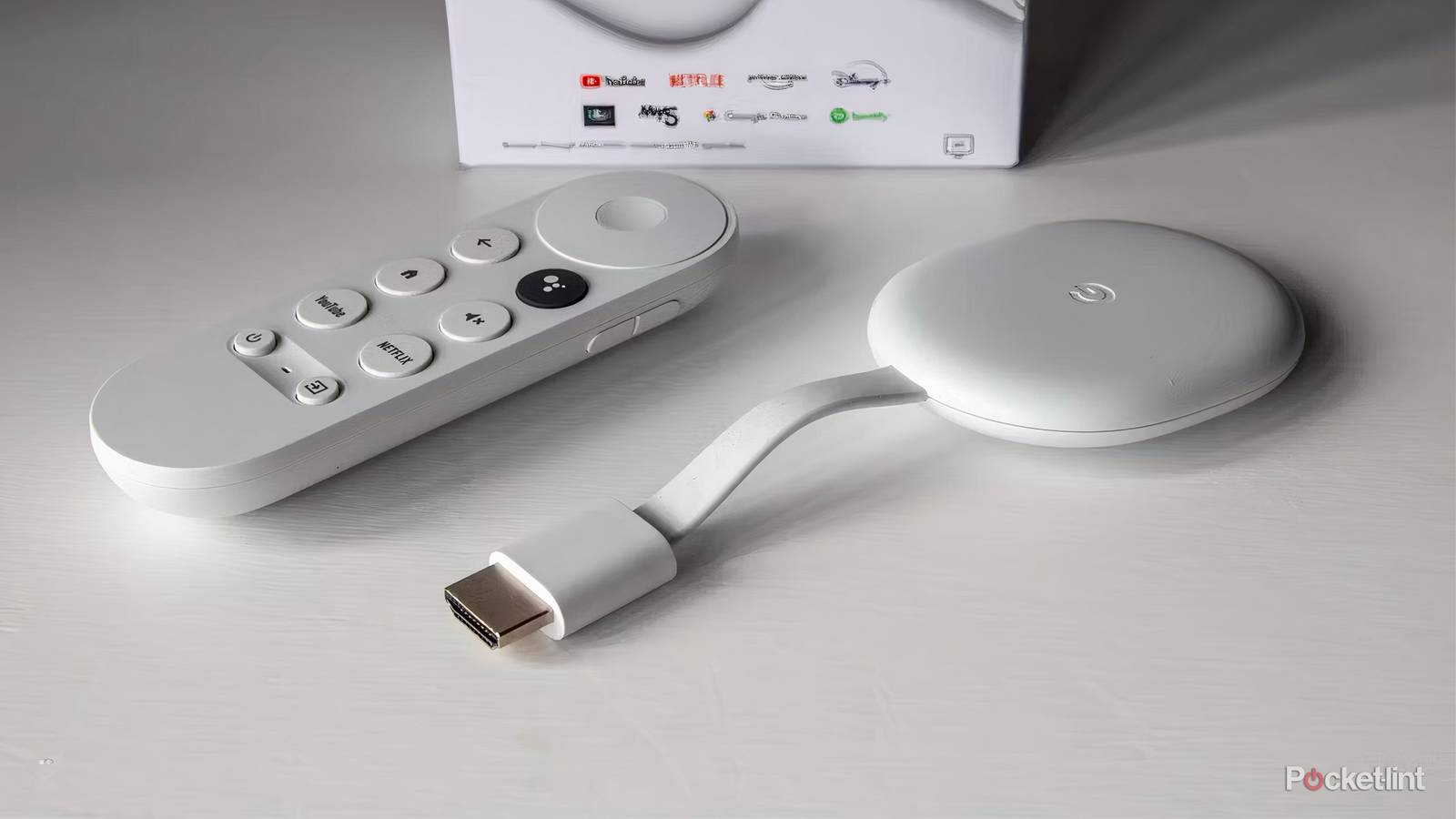
The Chromecast is different. When the first model launched in 2013, it was a revelation. Indeed without the Chromecast, the concept of casting from phones, tablets, and laptops might not be as popular. Google kept the product line going until 2024, when it was replaced with the Google TV Streamer.
Like a lot of people, I think, I’m still sour about Google’s decision. There are a few reasons why. Thankfully, unlike some wishes into the void, it’s not inconceivable that Google might launch a real successor to the Chromecast at some point.
The lost virtues of the Chromecast
Bigger isn’t always better

There’s nothing inherently wrong with the Google TV Streamer. Naturally, it’s an upgrade in several respects. It’s faster, has more onboard storage, and comes with a gigabit Ethernet jack — something even your TV might lack. If you’ve got a smart home setup, the Streamer can act as both a Matter controller and a Thread border router.
The overriding complaint, though, is about the device’s form factor. The Streamer is a set-top, not a dongle. That means you have to find space for it in your entertainment center, which is already a dealkiller for people who prefer minimalism. The Roku Streaming Stick 4K and Amazon Fire TV Stick 4K Max may be lacking some of the Streamer’s features, but they’re good enough that shoppers chasing the “clean” look might not care.
For me, the biggest loss is portability. The Chromecast was incredibly convenient not just for space reasons, but because you could quickly swap one between rooms, carrying over your apps and settings. Some people enjoyed (and probably still enjoy) using Chromecasts as a travel device, since hotels don’t exactly prioritize TV. For me, getting a Chromecast online in a hotel was often a pain or impossible, given cumbersome web portals, but success meant being able to access all my favorite services instead of hoping something good was on Adult Swim or Comedy Central.
In a way, it’s mysterious that the Streamer is as big as it is. There’s no spec it offers that requires a set-top form factor. In fact, the device is curiously backwards in some areas. It only supports Wi-Fi 5, never mind 6E or 7, and despite including an HDMI 2.1 port, its refresh rates top out at 60Hz. Those deficiencies aren’t a big deal in most circumstances — but 120Hz and Wi-Fi 6 were already de facto on a lot of mobile devices by 2024.
Then there’s the matter of cost. Part of the reason the original Chromecast was a revelation was its $35 pricetag — that was rare at the time, and since the device relied on your phone or laptop to do the heavy lifting, it performed like rivals that cost several times as much. It was the very first media streamer I ever owned, even though I could’ve forked out for an Apple TV without much trouble.
The Streamer isn’t exactly a bank-breaker at $100, but that price is high enough that you have to pause for a minute and weigh your options. Many TVs already have a decent preloaded interface, and if it’s missing, Google TV may not be that much better in practice. For just a little more than $100, meanwhile, you can pick up an Apple TV 4K, which offers the smoothest performance on the market.
Putting it bluntly, Google has wedged itself into a crevice where it doesn’t have the best specs, yet it also can’t compete in budget territory. You have to be committed to the Google ecosystem for a Streamer to make sense, in which case you might already have a Google-based TV. The Chromecast allowed people to dip their toe into Google’s world without much penalty, and it even offered an advantage over Apple thanks to portability.
Could Google bring the Chromecast back from the dead?
Casting to the winds

On the surface, this seems unlikely. Google has mostly neglected its smart home lineup for ears, in some cases continuing to sell products that have been around since 2020 or 2021. It’s almost a miracle that we got the Streamer or the Google Home Speaker.
At the same time, the company is presumably aware of the Streamer’s market position, and concerned about keeping two things at the forefront of the TV market: Google TV and Gemini. Both of those keep you hooked into Google services like YouTube and Google One, and from a business perspective, it would be neglectful to skip an opportunity to put them on every TV possible.
How might Google revive the Chromecast? One thing’s for sure — it’s not going to use the same name. Beyond its web browser, Google has been shifting away from the Chrome branding. Chromebooks are becoming Googlebooks, and the Chromecast’s namesake tech has long been renamed as Google Cast.
Google could conceivably put out a new device as soon as this fall, which might even be necessary to fend off competition from a rumored Apple TV 4K update, ironically featuring the Gemini-enhanced version of Apple Intelligence.
One possibility is that it could release an updated Streamer that simply compresses similar specs back into a dongle form factor. A few performance tweaks would be mandatory — including Wi-Fi 6E and 120Hz refresh rates at a minimum — but the Streamer can already handle Gemini, so it might not even need a new processor. That would keep shelf prices down.
If Google is actually committed to having a hit, it needs to push further. That means Wi-Fi 7, as well as support for Dolby Vision 2 and HDR10+ Advanced. Realistically, the Streamer’s Vision 1 and HDR10+ support are functional at the moment, given a lack of compatible TVs and movies. But when people shop for home theater gear, they expect some degree of futureproofing. It’s always irritating to spend full retail price on something only to learn that it can’t keep up with standards that may not be mainstream yet, but are nevertheless out the door, and poised to become the new defaults well before you’re ready to upgrade.
Google could conceivably put out a new device as soon as this fall, which might even be necessary to fend off competition from a rumored Apple TV 4K update, ironically featuring the Gemini-enhanced version of Apple Intelligence. I guess we’ll see how badly Google wants to stay competitive.

- Dimensions
-
6.4 x 3 x 1-inch
- Connective Technology
-
Wi-Fi, Bluetooth
- Brand
-
Google
- What’s Included
-
Remote