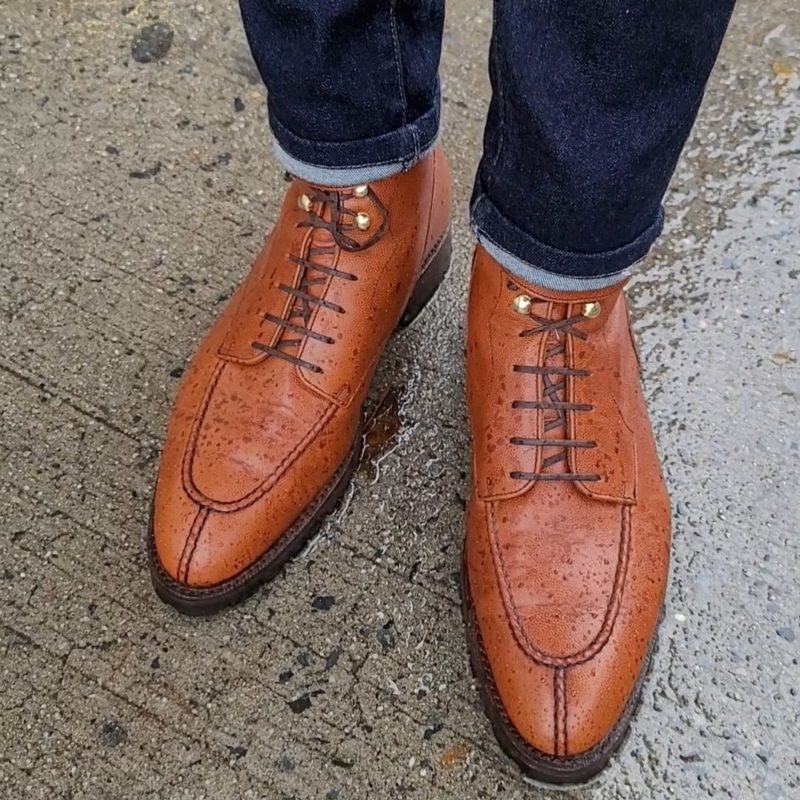
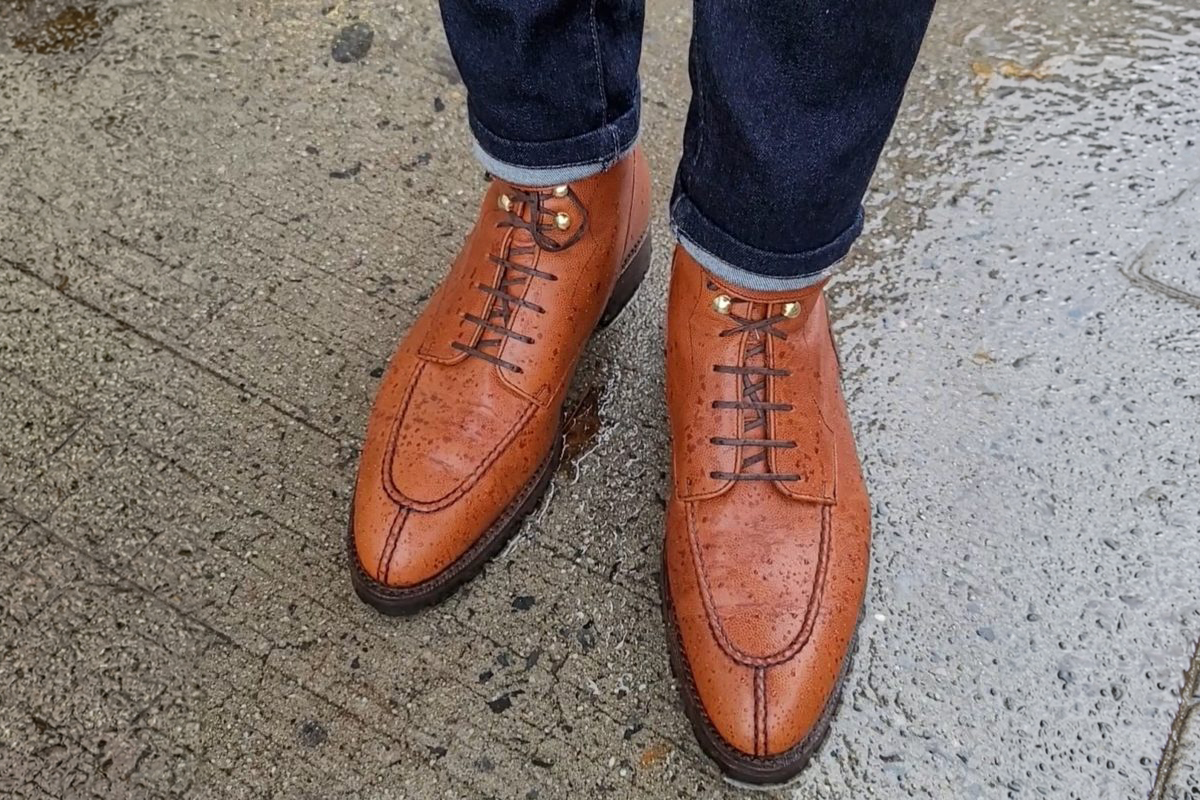
One would think that it is common sense not to wear brand-new shoes in the rain. And of course, I won’t lie and say that I have never done it. But after doing so—and seeing the consequences—I have learned from my mistakes. I share this so that you do not make the same errors that I, and countless others, have made.
Leather Is Unpredictable — Especially When New
All leathers are different. All leathers react differently. Cheap leathers, especially. Light colors even more so.
But just because those are generally regarded as more volatile does not mean that one should be careless with darker or more expensive leathers. The reason is simple: not all rain is the same.
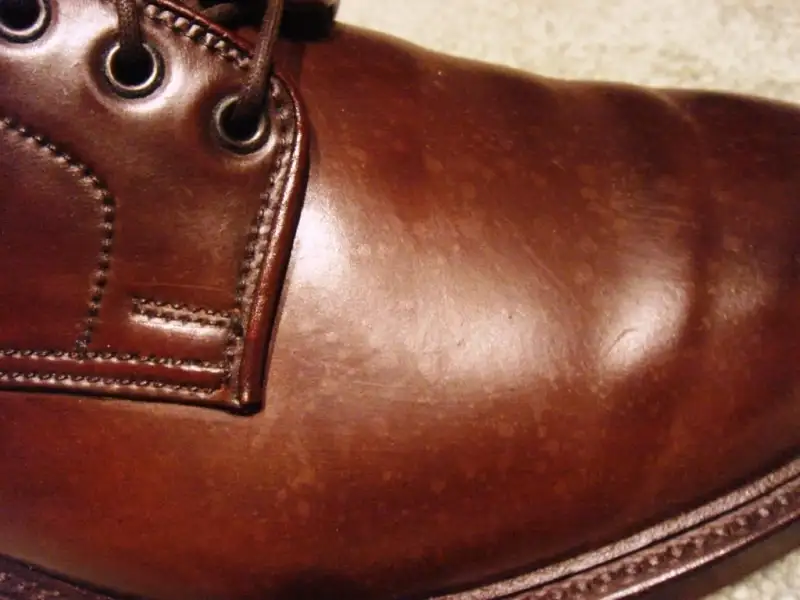
Different regions have rain with different properties—some with higher salinity, others with more pollutants. I have had downpours turn my shoes completely dark, only for them to dry evenly. I have also had a single drop of rain hit a shoe and leave a permanent stain.
Go figure, right?
Why New Leather Reacts More
When leather is new, its pores have not yet opened. Because of that, it is more susceptible to surface issues.
Now, I won’t pretend to explain this on a scientific level. But I have dealt with it countless times—both as a professional shoe shiner and as someone who has owned more than 1,000 pairs of shoes from hundreds of makers, across all price points.
I have had shoes made from the exact same leather behave completely differently:
- One pair, worn in the rain after a few wears, was perfectly fine
- Another pair, worn for the first time in the rain, blistered immediately
That alone should tell you something, right?! Was the rain different? Was the leather from different parts of the hide that reacted differently? Who knows. The fact is, I could have avoided the adverse effects by simply wearing the new pair on a dry day. But I lived so you could learn.
Polish Is Not a Guarantee
You can, of course, do what you want and wear new shoes in the rain. But what always prompts these types of posts is when know-it-alls do what they want and then blame someone else for the consequences of doing what they felt like instead of listening to wise advice.
You can polish your brand-new shoes, assume they are protected, and take your chances. But understand this: polish does not guarantee protection from rain. A good shine acts as a protectant but does not make shoes rain-proof. The best protection is prevention.
The smartest thing you can do is simple:
👉 Wear your brand-new shoes on a dry day first – this is especially best for leather soles with closed channels.
Break the leather in. Let the pores open naturally. Then give them a proper shine. Then enjoy them in the rain. Those steps will keep your shoes lasting a long time.
After that, you can feel far more confident facing the rain.
The Stretching Problem
There is another issue that people rarely consider: stretching.
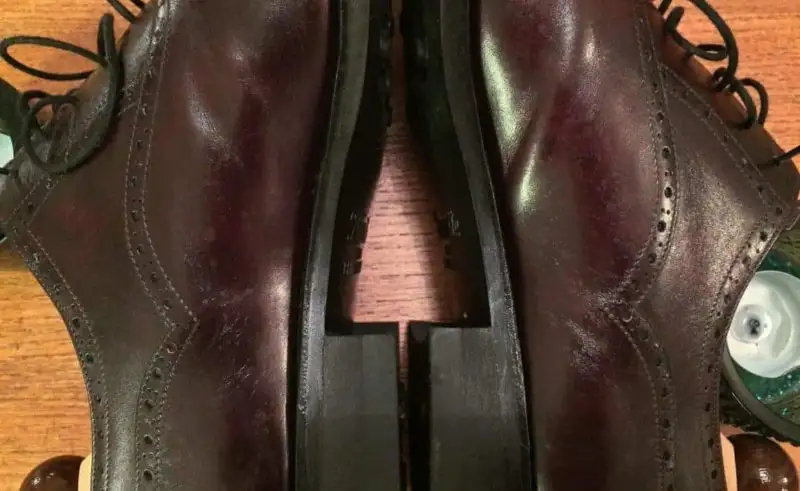
If you soak brand-new shoes, the leather can loosen far more than it should. I’ve experienced this firsthand.
I have had Chelsea boots stretch dramatically after getting soaked on the first wear. At the same time, I’ve had other pairs—broken in properly on dry days—remain snug and well-shaped for years, even after being worn in wet conditions later on.
Again, same idea. Different outcome.
This Is Experience, Not Theory
I write this post with one agenda: to help you. Nothing more. It is really just like the rest of the blog. But some take offense at ideas that break their programming.
I will make the mistakes so you do not have to. All I ask in return is that you trust me and follow my guidance. Remember, it is for your own good 😉
Everything here is based on firsthand experience—not theory. I won’t claim to be a scientist explaining why leather behaves the way it does. But after handling tens of thousands of shoes, owning thousands, and coming across nearly every brand imaginable, I can give you a precaution that carries real weight.
It’s not a 100% rule. There are always exceptions. But it is strong enough advice to save you from avoidable mistakes.
Final Thought
The simple fact is this:
👉 New leather, with closed pores, is more susceptible to adverse reactions.
👉 As you wear your shoes, the leather opens, adapts, and becomes more resilient.
Some shoes will take rain on day one and be fine. Many others won’t. So why take the risk? Just don’t wear new shoes in the rain. It’s not hard.
Break your shoes in on a dry day. Avoid potential problems if you can.
You just might thank me later 🙂
If you enjoy these educational posts, make sure to check out the rest here.
—Justin FitzPatrick, The Shoe Snob
Shop · Marketplace · J.FitzPatrick · Patreon