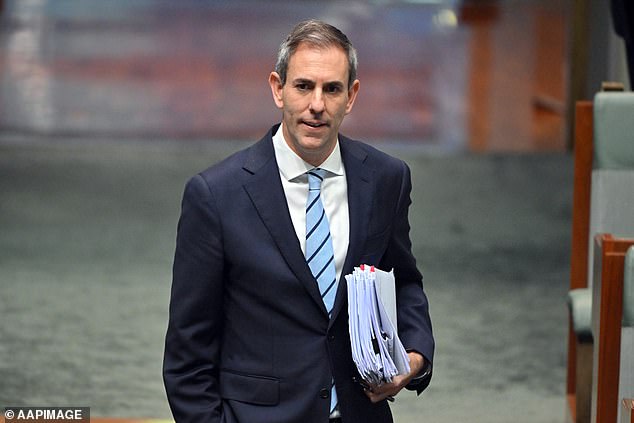
Treasurer Jim Chalmers can blame the Middle East all he likes, but the latest economic warnings aren’t just about oil shocks and global jitters.
They are about a domestic economy rotting beneath the floorboards, propped up by unpopular population growth, bloated government spending and desperate political spin.
Deloitte Access Economics has said Australia is staring down its longest stretch of sub-par economic growth in more than 35 years. That’s Jim Chalmers’ legacy in the making after four years in the role – unless something dramatically changes.
Deloitte now has growth at just 1.3 per cent in this financial year, then below two per cent for the next two years, the longest sub-two per cent stretch since the early 1990s recession.
As a country we are facing a miserable cocktail of sub-two per cent growth, sticky inflation that Australians were promised was behind them, rising unemployment and the looming threat of further interest rate hikes.
The Treasurer prefers a more convenient alibi, endlessly pointing the finger at the ‘lingering costs and consequences’ of the Middle East.
You almost feel like he breathes a deep sigh of relief whenever international turmoil presents itself: another excuse he can use to spin his way out of responsibility.
Global shocks matter, of course they do. But they don’t explain away a domestic supply side strangled by chronic underinvestment in housing, infrastructure and energy. While that sits with Chalmers now, both major parties have failed the nation over the longer term on these issues.

Treasurer Jim Chalmers can blame the Middle East all he likes, but the latest economic warnings aren’t just about oil shocks and global jitters

Deloitte Access Economics has said Australia is staring down its longest stretch of sub-par economic growth in more than 35 years (stock image)
Deloitte’s warning strips away the government’s favourite excuse. This is not simply imported turbulence washing up on our shores but a homegrown failure Labor now owns.
Chalmers might yet dodge a technical recession and the odds suggest he will. Ironically, that may be largely due to population growth driven by high levels of immigration, an issue that remains contentious among many voters.
The latest ABS figures show Australia’s population increased by more than 300,000 people through net overseas migration.
With growth remaining weak, the prospect of a per capita recession remains well and truly on the cards, and we have experienced several such instances in recent times.
Using immigration to mask a technical recession can’t hide the per capita pain.
The latest national accounts showed the economy grew by just 0.3 per cent in the March quarter, but on a per capita basis declined. If that trend continues for consecutive quarters, Australia could enter a per capita recession.
Pumping up the population makes overall GDP look better, but it does not make households more prosperous. It flatters the headline number while living standards go backwards for millions of Australians. In essence, it’s Treasury trickery.
KPMG’s chief economist Brendan Rynne did not need to forecast a formal recession to land the killer blow, recently saying this anaemic growth already feels recessionary to anyone experiencing it.

Prime Minister Anthony Albanese’s response to criticism of Labor’s high-tax, big-government agenda was to dismiss it as ‘barely coherent noise’. The arrogance is breathtaking
Yet Prime Minister Anthony Albanese’s response to criticism of Labor’s high-tax, big-government agenda was to dismiss it as ‘barely coherent noise’. The arrogance is breathtaking.
He acts as though anyone unconvinced by Labor’s economic brilliance is simply too stupid to grasp it. In the middle of an economic chokehold, that response is politically toxic.
This was supposed to be the government of adults, as we were promised. Chalmers demands credit for low unemployment – which has long been the case in Australia – while attributing weak growth to global forces.
He wants applause for wage rises but takes no responsibility for the inflation eating them alive, nor the interest rate rises that follow.
That is not an economic strategy, it is a PR survival tactic – and it is wearing thin.
The fiscal bind Labor has created is just as damning. Structural spending in health, the NDIS, aged care and defence is pumping demand into an inflationary fire.
When inflation is already stubbornly too high and rates are punishing, a bloated public sector doesn’t make the Reserve Bank’s job any easier.
Labor’s idea of ‘reform’ looks suspiciously like more spending, more regulation and higher taxes while the private sector weakens and households continue to foot the bill.
Labor has been in power long enough now to own this mess. It can’t keep gaslighting a public that feels poorer by the day.
Australia is getting bigger without getting better, or wealthier.
Albanese can dismiss his critics, Chalmers can duck for cover, but voters know the difference between a statistically expanding economy and collapsing living standards.
The backlash they are hearing isn’t barely coherent noise. It’s the sound of a false economic narrative falling apart.