


Jan Bartek – AncientPages.com – A prehistoric sanctuary near Chleby, over 6,500 years old, served as a ritual center aligned with the movements of the Sun and Moon. Archaeologists from the University of West Bohemia have identified it as one of Central Europe’s oldest monuments, predating Stonehenge by 1,000 years.
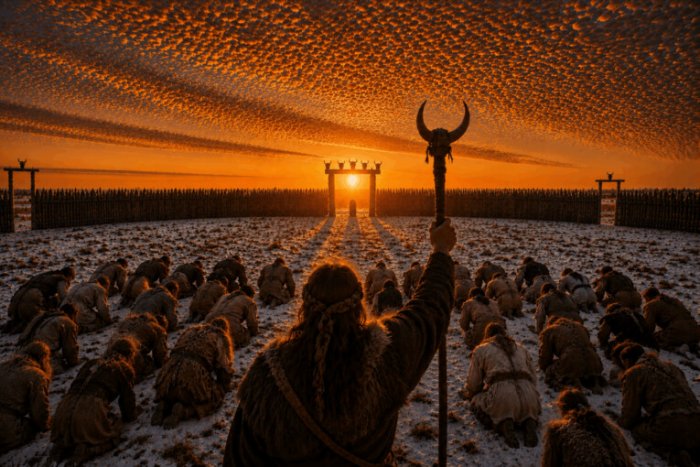
Visualization made by ChatGPT. Credit: University of Bohemia
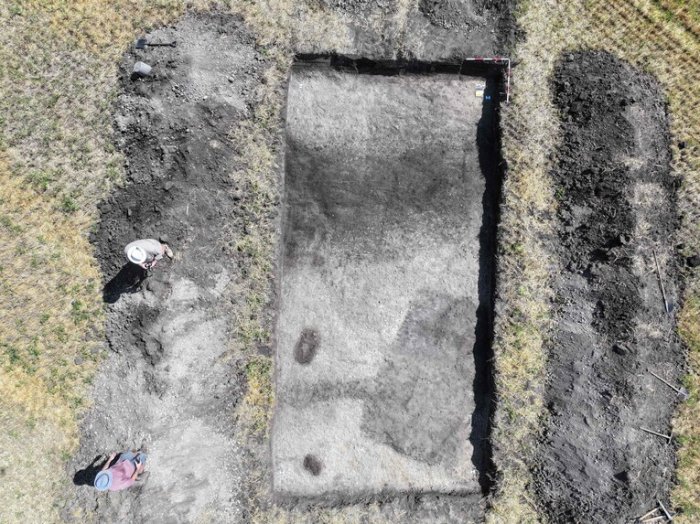
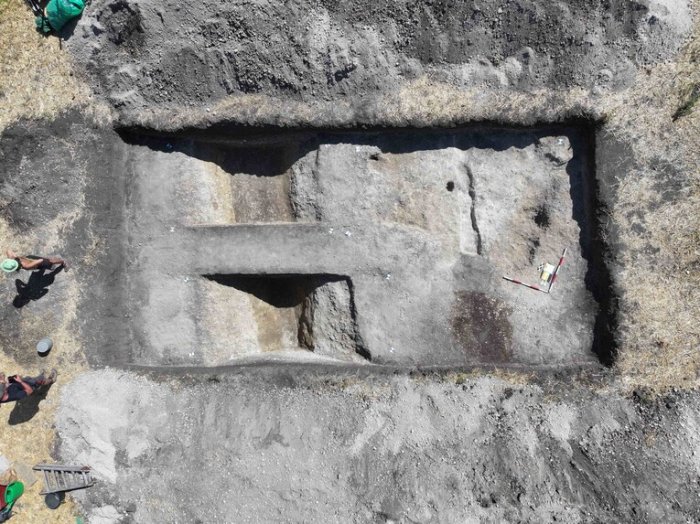
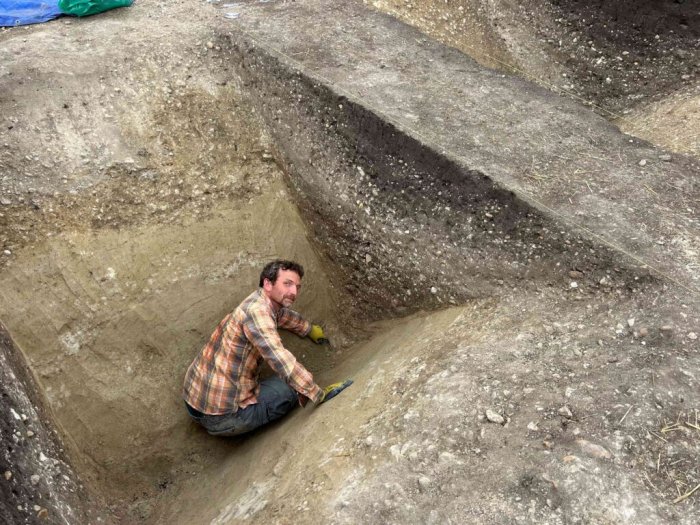
Around 6,500 years ago, people constructed an almost circular enclosure at present-day Chleby, measuring 230 meters in diameter. The site includes a ditch over 2.5 meters deep and twelve irregularly spaced entrances.
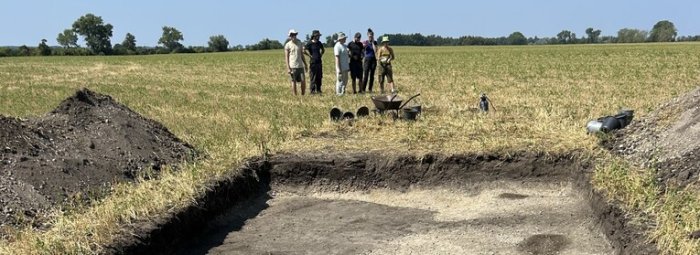
“Circular enclosures are completely unknown in our region for this period, which already makes the site exceptional. But when we began to analyze the positioning of the entrances in detail, it became clear that their arrangement was not random. Their geometry creates a system that made it possible to observe the most significant moments of the solar and lunar cycles,” explained Petr Krištuf of the Department of Archaeology at the Faculty of Arts of the University of West Bohemia, who leads the research.
Credit: University of Bohemia
Archaeologists have identified two main observation points: one aligned with the Moon’s extreme positions during its 18-year cycle, and another connecting sunrise at the summer solstice with sunset at the winter solstice. While Stonehenge features a similar arrangement, recent findings confirm that the Chleby structure is much older.
Credit: University of Bohemia
“For prehistoric farming communities, the connection between sunrise and the summer solstice symbolized a beginning, while sunset and the winter solstice represented an ending. The same principle can be seen along Stonehenge’s main axis. We can now see that the sanctuary at Chleby was designed similarly. Still, more than a thousand years earlier, as we have established from the dating of organic material,” Petr Krištuf explained.
Credit: University of Bohemia
Like Stonehenge, Chleby served as a site for rituals. Evidence includes bull skulls and horns discovered in the ditch near the entrances.
“We assume that they may originally have decorated monumental gateways leading into the enclosure. The cult of the bull was an important religious symbol among the first farming communities and is known from many parts of prehistoric Europe,” added archaeologist Jan Turek, who represents Charles University in the research.
Human bones were also found in the ditch. Earlier research revealed a Bronze Age Únetice culture burial containing the remains of approximately 18 people, who were buried there gradually over time. Current research, however, indicates that the site’s role later changed.
Credit: University of Bohemia
“While Stonehenge experienced repeated periods of renewed use and is still associated, for example, with Celtic druids, the first results from Chleby suggest the opposite development. By the Iron Age, the monument appears to have definitively lost its original significance. The ditch was gradually filled in, and an ordinary settlement was established on the site of the former sanctuary,” Petr Krištuf added.
See also: More Archaeology News
Scientists will now also focus on analyzing the soil. “In addition to artifacts and the remains of the dead, people leave chemical traces in the soil. These can help us understand how this exceptional site was used during different periods of prehistory,” said Jan Fišer of the University of Hradec Králové, who is analyzing soil samples from the enclosure and its wider surroundings.
Source: University of Bohemia
Written by Jan Bartek – AncientPages.com Staff Writer

