
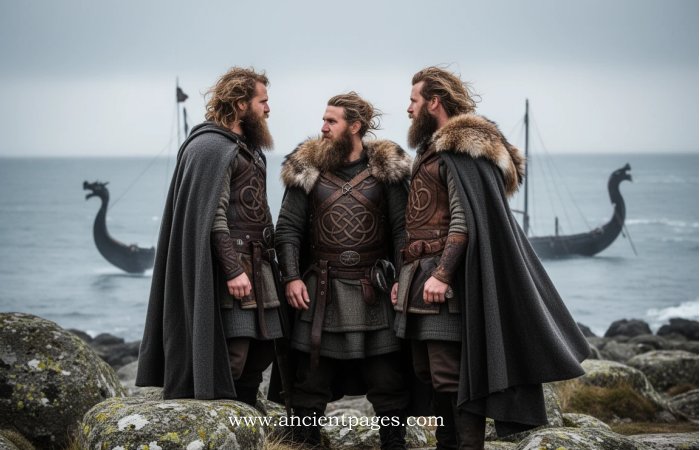
Jan Bartek – AncientPages.com – Norwegian and Irish archaeologists are investigating what may be Ireland’s largest Viking Age settlement, likely established by Vikings from Norway.
The excavation is taking place in Waterford, in southern Ireland, at a Viking settlement called Woodstown.
Current findings indicate that Woodstown, most likely founded by Vikings from Norway, served as a significant center of trade, business, and industry, rather than solely as a base for raids.
If confirmed, this may be the largest Viking settlement discovered in Ireland to date. The remains appear to be those of a longhouse or great hall, and were most likely established by Norse Vikings, according to Kristin Armstrong-Oma, museum director and professor of archaeology at the Archaeological Museum, University of Stavanger.
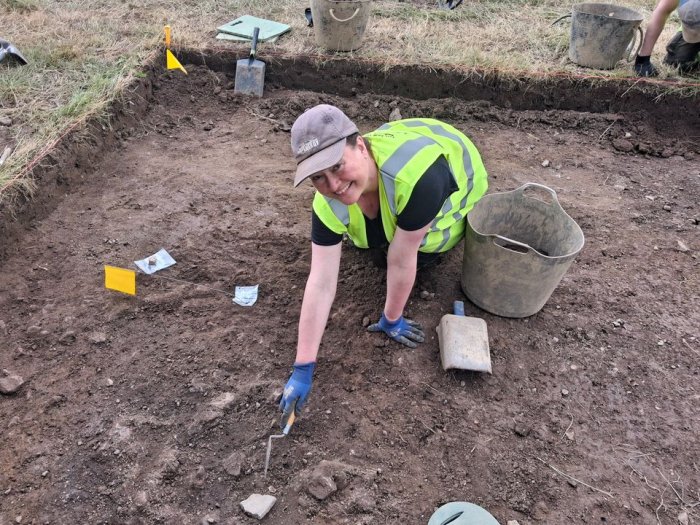
Archaeologist Hilde Fyllingen of the Archaeological Museum at the University of Stavanger is excavating what is likely one of the largest Viking Age trading posts in Ireland. Evidence suggests Norwegian Vikings established the site over a thousand years ago. Credit: Archaeological Museum, University of Stavanger
Archaeologists from the Archaeological Museum at the University of Stavanger are participating in the excavation, funded by the Royal Irish Academy. The museum is collaborating with Discovery Program Ireland, Waterford City and County Council, and Abarta Heritage.
A “Fossilized” Viking Village
During the Viking Age, Scandinavians traveled across much of the world to plunder and trade. In some cases, they chose to settle abroad.
Unlike other Viking settlements in Ireland, such as Dublin or Waterford, Woodstown never developed into a modern town. This offers a unique opportunity to study a Viking settlement preserved over time.
Previous investigations at Woodstown uncovered the grave of a Viking warrior buried with a sword.
Archaeological evidence suggests the settlement was established by Norse Vikings, particularly from Rogaland.
“We have found an object commonly discovered in Rogaland: a fragment of a metal fitting from a cross, reliquary, or manuscript originating from a church or monastery. Such items indicate looting or extortion. This directly links Woodstown to Rogaland and suggests Woodstown served as an intermediary between Norway and Ireland at the time”, says Armstrong-Oma.
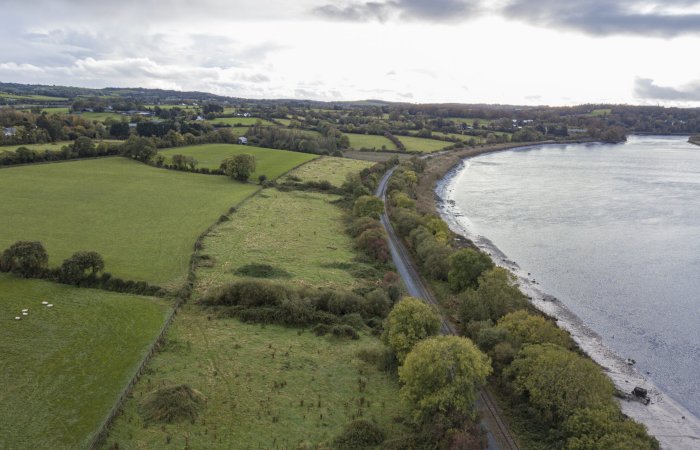
This site was likely the largest Viking Age trading post in Ireland. Evidence found there connects it to Norwegian Vikings. Credit: Abarta Heritage
The Archaeological Museum at the University of Stavanger holds the largest collection of such objects in Scandinavia. Several are now on display in the recently opened World of the Vikings exhibition in Stavanger.
The Vikings Who Colonized Ireland
The Viking Age (c. 790–1050 AD) was marked by extensive travel and significant change. Scandinavians plundered, traded, and settled from Ukraine to North America. Their settlements gave rise to new societies where old traditions blended with local customs, creating distinct identities. New goods, ideas, and stories also transformed life in Scandinavia.
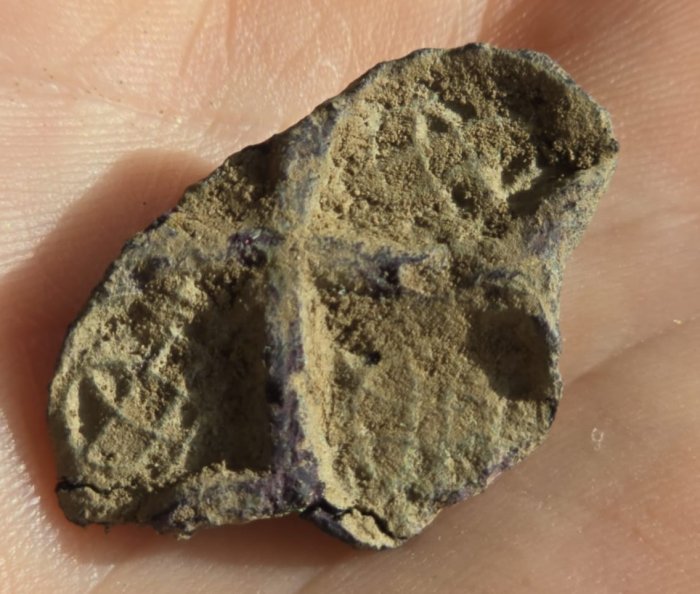
This Irish-decorated fitting was likely originally attached to a church object. In Norway, it was later repurposed as jewelry. Credit: Neil Jackman, Abarta Heritage
From the mid-800s, Scandinavians began settling in regions they had previously only raided during the summer. Many Norwegians established colonies to the west. According to the sagas, Rogalandians were among the first to colonize Iceland and Greenland. Vikings from Rogaland were also active in Ireland and may have contributed to the development of cities such as Dublin and Waterford.
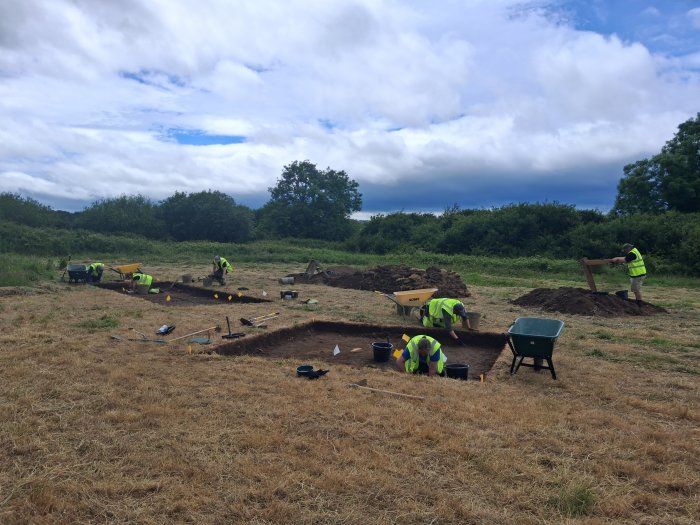
Norwegian and Irish archaeologists working together in Woodstown. Credit: Håkon Reiersen, Archaeological Museum, UiS
“Among other things, we have found weights, which were used to weigh silver. Together with findings of crucibles, raw metal and slag, this indicates that both trade and metal crafts took place here”, says associate professor and archaeologist Håkon Reiersen at the Archaeological Museum, University of Stavanger.
“It was also very special to find parts of a pot made of Norwegian soapstone. This must have been transported from Norway to Ireland by Vikings. The Irish archaeologists at the excavation had never seen soapstone before”, says Reiersen.
See also: More Archaeology News
DNA analyses have confirmed the presence of Norwegian genes in female and male Viking Age graves in Ireland.
“The people who lived in the colonies often retained their Scandinavian identity, but adapted to their new surroundings. The result was societies with their own complex traditions,” says Reiersen.
Source: University of Stavanger (UiS)
Written by Jan Bartek – AncientPages.com Staff Writer