


Christopher Nolan’s adaptation of The Odyssey removes one of Penelope’s most defining moments from Homer’s epic, fundamentally changing the heroine’s long-awaited reunion with Odysseus and reshaping the qualities that made her one of literature’s most enduring characters.
For nearly 3,000 years, The Odyssey has been remembered as the story of a man trying to find his way home. Odysseus battles monsters, outwits gods, and survives a journey that becomes the defining adventure of Greek mythology. Yet while he sails across unfamiliar seas, another story quietly unfolds back in Ithaca—one without mythical creatures or legendary battles, but no less remarkable.
Penelope spends twenty years waiting for a husband, whom the world assumes is dead. Every passing season brings fresh pressure to abandon hope, choose a new king, and surrender the life she has spent protecting. Surrounded by ambitious suitors who consume Odysseus’ estate while competing for her hand in marriage, she survives not through strength of arms but through patience, intelligence, and an extraordinary ability to stay one step ahead of everyone around her.
ADVERTISEMENT
Article continues below this ad
It is that quiet resilience that has made Penelope one of mythology’s most admired heroines. In Christopher Nolan’s adaptation, Anne Hathaway steps into the role of the Queen of Ithaca, but the film also reimagines several defining moments that shaped Penelope’s legacy in Homer’s epic.
Christopher Nolan Removes the reunion Homer spent 20 years building
By the time Odysseus finally returns to Ithaca in Homer’s Odyssey, the greatest challenge of his journey is already behind him. The Cyclops has been defeated. The Sirens have been left behind. Scylla and Charybdis no longer stand in his way. Even the suitors occupying his palace have fallen.
Yet Homer saves one final test for the very end of the epic, and it belongs not to Odysseus, but to Penelope. Modern retellings often present their reunion as the inevitable happy ending audiences have been waiting for. Homer, however, refuses to make it that simple. After twenty years apart, Penelope does not immediately throw herself into her husband’s arms. Instead, she hesitates.
To some readers, that hesitation can seem surprisingly cold. But it is precisely what makes the scene so emotionally powerful. For two decades, Penelope has lived in a world built on uncertainty. Rumours of Odysseus’ death arrive as often as rumours of his survival. Strangers come bearing stories. Hope itself becomes something dangerous, because believing the wrong person could destroy everything she has fought to preserve.
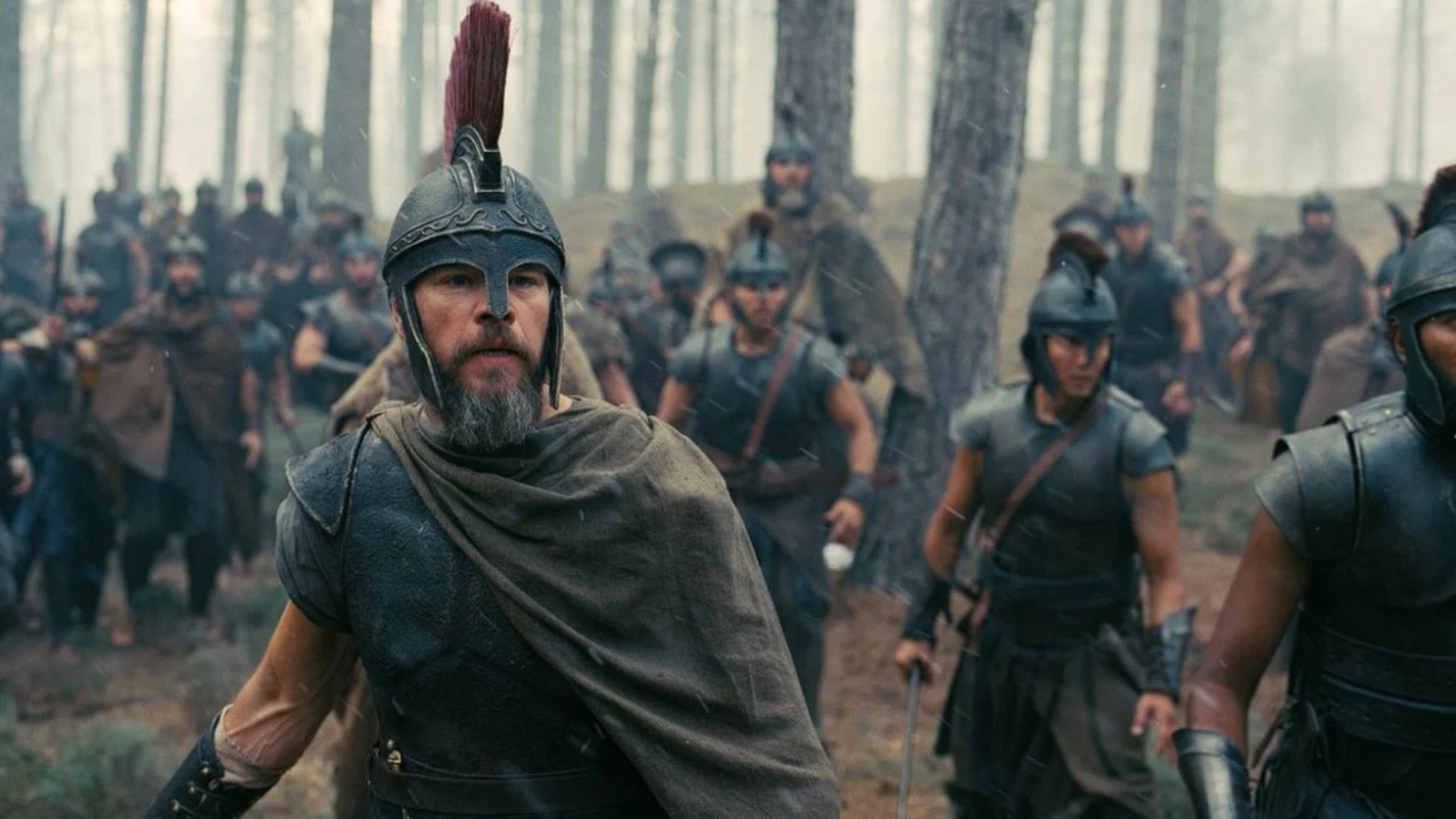
Credit: Universal Pictures
Credit: Universal Pictures
Her caution is not a failure to recognise her husband. It is the inevitable consequence of loving someone long enough to understand how cruel false hope can become. Rather than accepting the man standing before her, Penelope devises one final test. She instructs a servant to move the couple’s marriage bed so it can be prepared elsewhere. Odysseus immediately protests, insisting the bed cannot be moved because he built it himself around the trunk of a living olive tree rooted deep within their home.
Only then does Penelope finally believe him. That revelation is far more than a clever twist. It reminds readers that their marriage was built on shared memories no impostor could possibly know. The bed becomes a symbol of everything time failed to erase—trust, intimacy and a life constructed together long before the Trojan War separated them.
It is one of the most celebrated scenes in ancient literature because Homer turns recognition into something that must be earned rather than assumed. After twenty years of loss, Penelope’s certainty matters just as much as Odysseus’ return. Christopher Nolan’s adaptation removes this famous exchange altogether. Instead of challenging Odysseus through the marriage-bed test, the film resolves their reunion without Homer’s final act of recognition, significantly changing the emotional rhythm of the story’s ending.
Christopher Nolan also rewrites the qualities that made Penelope one of Homer’s greatest heroines
Removing the marriage-bed test changes how Penelope’s story ends, but it is only one part of a much larger rewrite. Throughout The Odyssey, Homer defines Penelope through qualities that rarely command attention in modern blockbusters. She is neither a warrior nor a traveller. She does not defeat monsters or command armies. Instead, she survives because she understands that intelligence, patience and restraint can be just as powerful as a sword.
Long before Odysseus reaches Ithaca, Penelope has already been fighting a battle of her own. With Odysseus presumed dead after the Trojan War, more than a hundred suitors occupy the royal palace, consuming his wealth while demanding that Penelope choose one of them as her new husband. The pressure is not merely personal. Whoever marries Penelope effectively gains control of Ithaca, making her decision a matter of political survival for the kingdom itself.
Knowing she cannot reject the suitors forever, Penelope devises one of the most ingenious deceptions in classical literature. She announces that she will choose a husband only after completing a burial shroud for Odysseus’ elderly father, Laertes. Every day, she faithfully works on the weaving before the watching suitors. Every night, once the palace sleeps, she secretly unravels everything she has finished.

Anne Hathaway bei der Premiere des Kinofilms The Odyssey Die Odyssee im AMC
Lincoln Square Theater. New York, 14.07.2026 *** Anne Hathaway at the premiere
of the movie *The Odyssey* at the AMC Lincoln Square Theater in New York, July
14, 2026 Foto:xJ.xShorex xFuturexImagex odyssey_ny_6797
Anne Hathaway bei der Premiere des Kinofilms The Odyssey Die Odyssee im AMC
Lincoln Square Theater. New York, 14.07.2026 *** Anne Hathaway at the premiere
of the movie *The Odyssey* at the AMC Lincoln Square Theater in New York, July
14, 2026 Foto:xJ.xShorex xFuturexImagex odyssey_ny_6797
The deception continues for nearly three years before one of her servants finally reveals the truth. It is an extraordinary act of endurance. Penelope does not escape through force or divine intervention. She simply refuses to surrender, buying herself time with nothing more than intelligence and relentless discipline. Homer presents her as Odysseus’ equal not because she shares his adventures, but because she mirrors his greatest strength. Just as Odysseus repeatedly survives through cunning rather than brute force, Penelope preserves his kingdom through strategy instead of violence.
That parallel is one of the poem’s most elegant ideas. Husband and wife are separated by an ocean, yet they endure in remarkably similar ways. Anne Hathaway’s Penelope remains central to Christopher Nolan’s The Odyssey, but the film gradually shifts the way those strengths are expressed. Rather than remaining primarily a quiet strategist operating behind the scenes, Nolan presents her as a more outwardly assertive presence whose emotions and convictions are allowed greater visibility throughout the story.
One of the clearest examples comes through her relationship with Telemachus. In Homer’s poem, Telemachus’ journey is as much a coming-of-age story as Odysseus’ is a homecoming. As the years pass, the timid young prince slowly begins stepping into the role his absent father once occupied. Penelope remains an important figure, but Homer often allows her son to grow into authority, reflecting the gradual restoration of order within Ithaca itself.
Nolan alters that family dynamic. Penelope emerges as the more dominant personality within the household, taking a more direct role in guiding events and shaping Telemachus’ decisions. Rather than quietly enduring circumstances while others rise around her, she becomes a more active participant in the family’s future.
Neither interpretation diminishes Penelope’s importance, but they celebrate different kinds of strength. Homer admired the power of restraint. His Penelope understands when silence is wiser than confrontation, when patience can accomplish more than action, and when certainty should never be accepted without proof. Much of her brilliance lies in what she chooses not to do. Nolan, by contrast, reshapes her into a character whose strength is expressed more openly. His Penelope is less defined by quiet calculation and more by visible resolve, giving modern audiences a heroine whose emotions and decisions occupy a more immediate place within the story.
It is a subtle shift on paper, but a profound one in practice. The woman Homer immortalised through extraordinary patience gradually becomes someone whose defining qualities are no longer rooted in waiting, but in moving forward.
Christopher Nolan gives Penelope a different ending—and changes what The Odyssey has always been about
If the marriage-bed test is the emotional climax of Homer’s Odyssey, then what follows is its philosophical conclusion. For Penelope, the story has never been about seeing the world. It has been about preserving one.
Every decision she makes over two decades is driven by a single purpose: ensuring that Ithaca is still standing when Odysseus finally returns. She deceives the suitors, protects her son’s inheritance and refuses to abandon hope—not because she dreams of another adventure, but because she believes her husband’s journey should eventually come to an end. That belief sits at the very heart of Homer’s epic.
Despite its reputation as one of history’s greatest adventure stories, The Odyssey ultimately argues that the greatest triumph is not discovering new worlds, but returning to the one that already belongs to you. Odysseus resists immortality with Calypso, survives impossible trials, and outwits gods because every step brings him closer to home. Ithaca is not simply his destination. It is the reward that gives every hardship meaning.
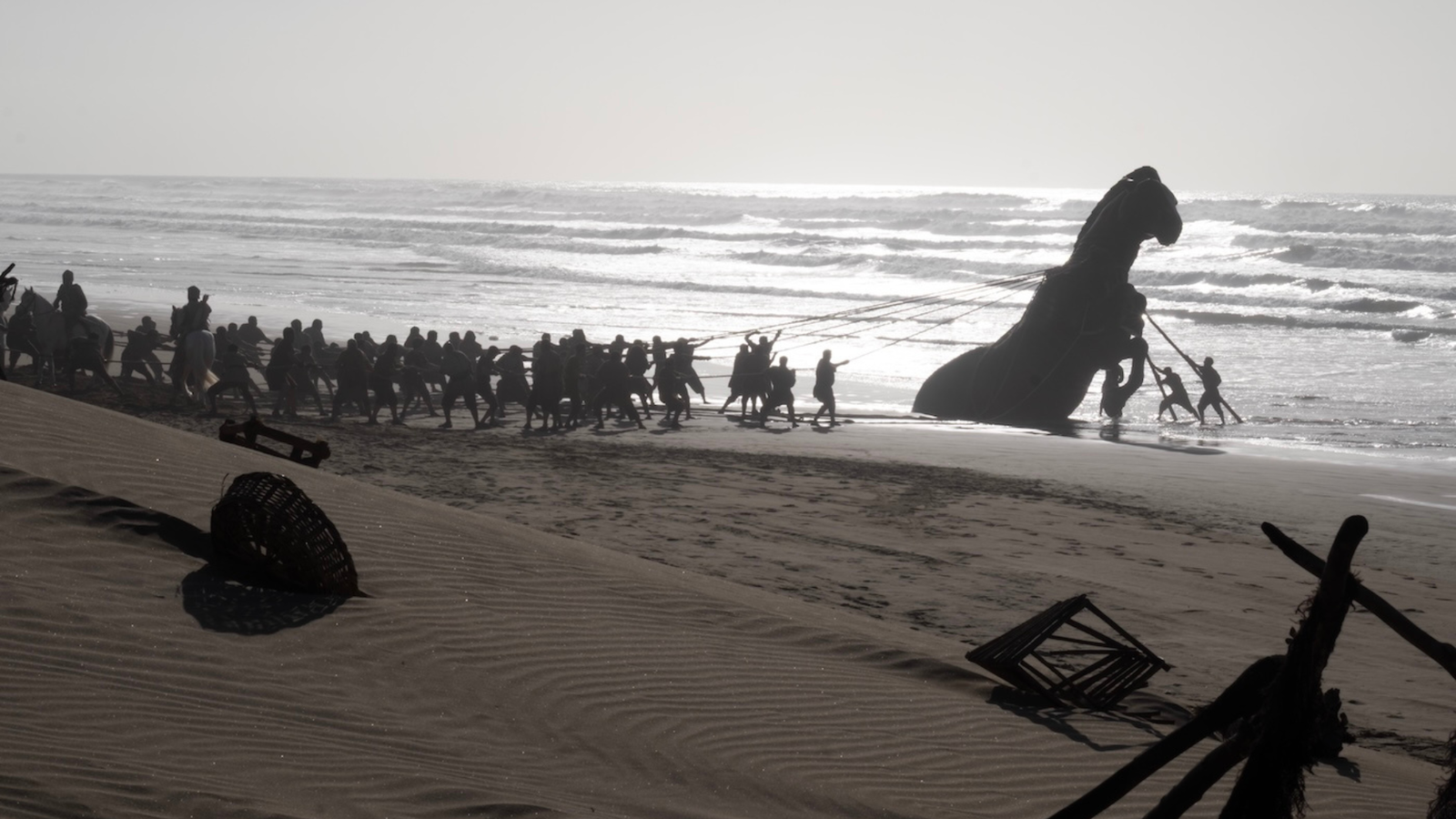
Credits: Universal Pictures
Credits: Universal Pictures
Penelope embodies that same idea. She has already completed her own odyssey without ever leaving the palace walls. She wages a quieter war against grief, loneliness and political collapse. By the time they finally stand together again, Homer suggests that both have earned the same thing—not another journey, but peace.
Christopher Nolan chooses a different resolution. Rather than ending with the restoration of life in Ithaca, the film has Odysseus and Penelope sail west together, while Telemachus assumes the throne. It is a conclusion that shifts the focus away from reclaiming home and toward embracing what lies beyond it.
Viewed on its own, the ending is neither illogical nor out of character for Nolan’s filmmaking. Across much of his work, his protagonists are rarely defined by the comfort of arriving somewhere. They continue searching, questioning and moving forward even after achieving what they set out to accomplish. That sensibility naturally finds its way into The Odyssey, transforming the ancient epic’s final destination into the beginning of another chapter.
Yet it also changes what Penelope’s twenty years of waiting ultimately represent. In Homer, every sacrifice points toward the same destination. The years of uncertainty, the endless deception and the refusal to surrender all culminate in reclaiming the home she never stopped protecting. The reunion is powerful precisely because it closes a wound that has remained open for two decades.
Nolan’s ending reframes that journey. Instead of closing the door on Penelope’s long years of endurance, it opens another. Home is no longer the final reward for everything she has endured; it becomes something she is willing to leave behind. That single decision changes the emotional message of her story.
It does not erase Penelope’s resilience or diminish her importance. If anything, Nolan grants her greater freedom than Homer ever imagined, allowing her to step beyond the palace that had defined her life for twenty years. But in doing so, he replaces the ancient poem’s quiet sense of closure with a more contemporary belief that fulfillment can still be found beyond the ending.
For some viewers, that will feel like a fitting evolution of one of mythology’s most iconic women. For others, it may come at the cost of one of literature’s most deeply earned conclusions. What remains undeniable is that Nolan has done far more than modernize Penelope. By removing the marriage-bed test, reshaping the way her intelligence is expressed and giving her a completely different future, he transforms one of Homer’s most celebrated heroines into a character who reflects a different vision of strength.
ADVERTISEMENT
Article continues below this ad
Homer’s Penelope became unforgettable because she proved that patience could be heroic, that caution could be an act of love and that the hardest journeys are not always measured in miles. Through Anne Hathaway’s performance, Nolan preserves Penelope’s importance, but asks audiences to see her through a different lens—one that values movement over stillness and reinvention over restoration.
For nearly 3,000 years, Penelope’s story has been about finding home again. Christopher Nolan’s The Odyssey dares to imagine that home was never the ending after all.
ADVERTISEMENT
Article continues below this ad
Do you prefer Homer’s original ending or Christopher Nolan’s reimagining? Let us know in the comments!


