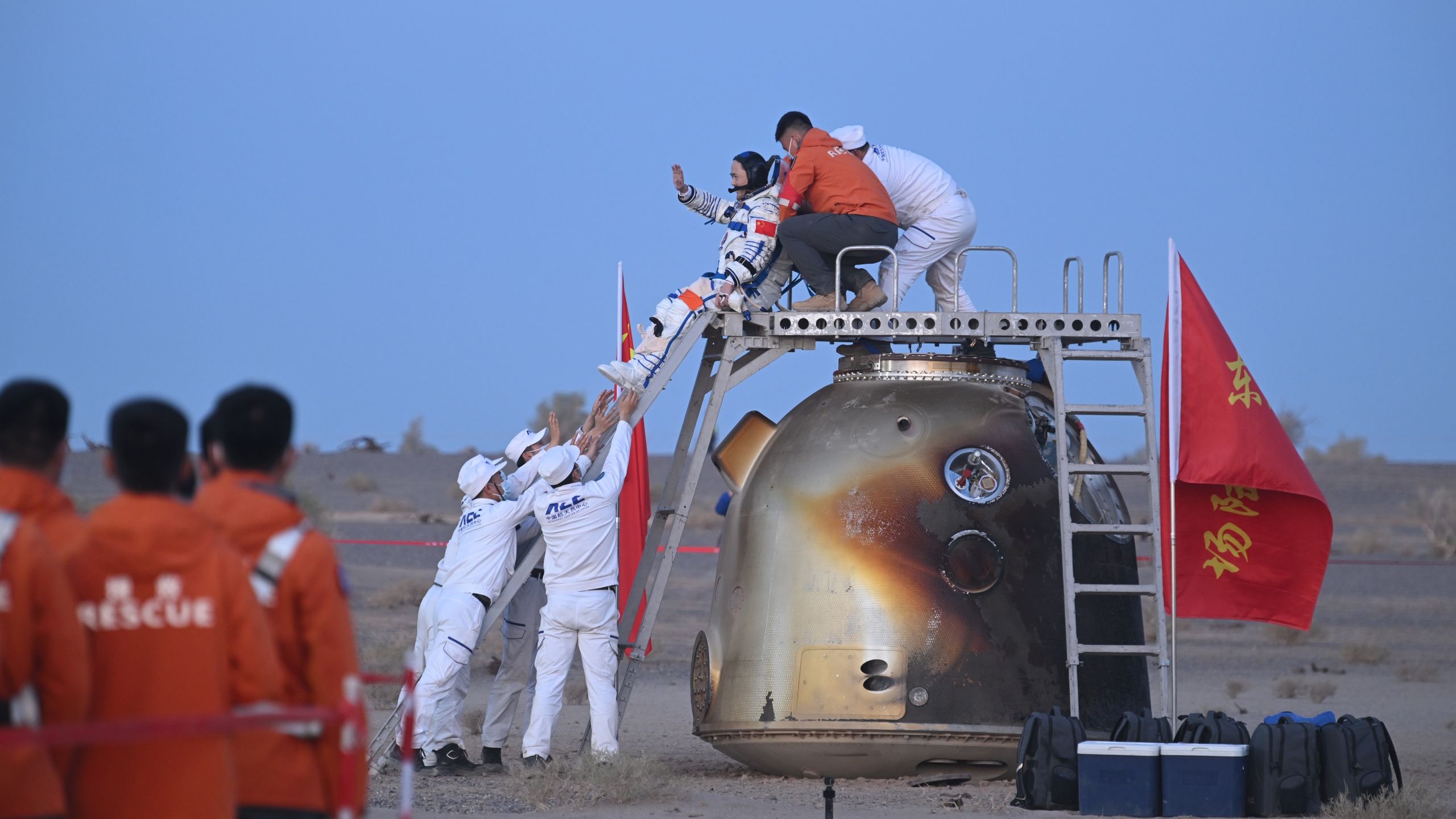
China’s record-breaking, and very eventful, Shenzhou 21 astronaut mission has come to an end.
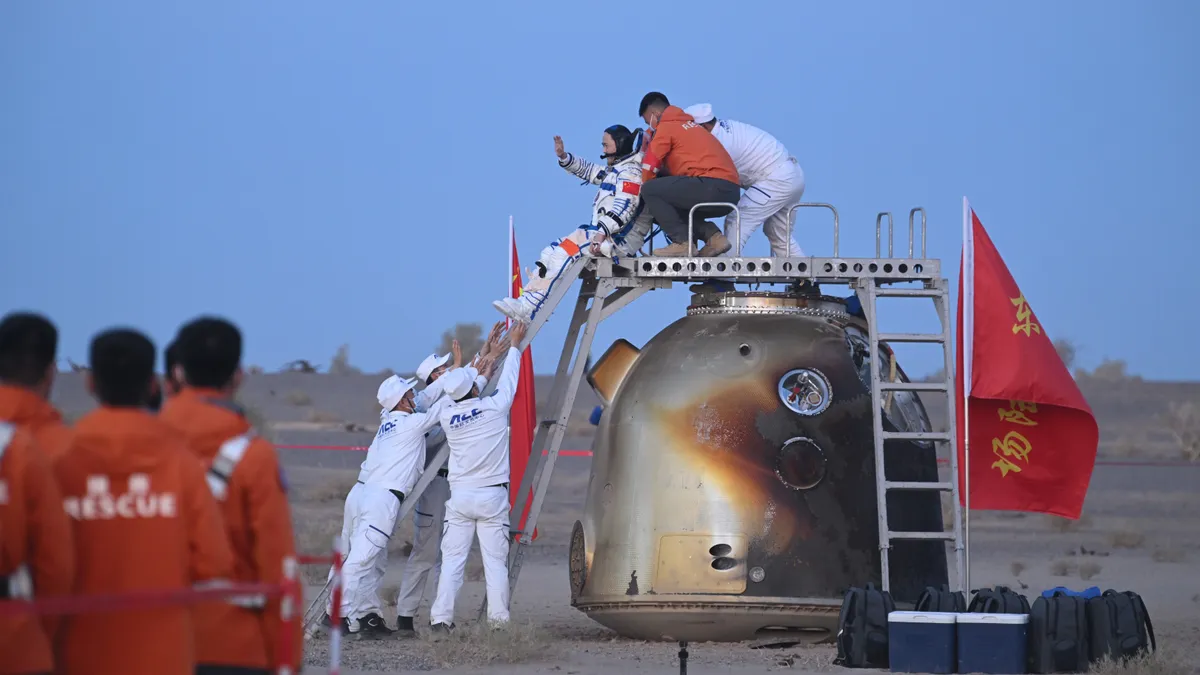
The Shenzhou 21 trio returned to Earth today (May 29) from China’s Tiangong space station, touching down safely at the Dongfeng Landing Site in Inner Mongolia at 8:11 a.m. EDT (1211 GMT; 8:11 p.m. China Standard Time).
The three astronauts had been aloft for 210 days — a new record for a Chinese crewed mission. And they came home in a different spacecraft than the one that carried them up, thanks to a slightly scary orbital event.
The Shenzhou 21 astronauts — mission commander Zhang Lu, Wu Fei and Zhang Hongzhang — launched to Tiangong on Oct. 31 of last year to relieve the Shenzhou 20 crew.
The Shenzhou 20 astronauts were supposed to head back to Earth on Nov. 5, but pre-departure inspections revealed a crack in the window of their capsule, which was presumably caused by a space debris strike.
Chinese space officials deemed it too risky to bring astronauts home in the damaged Shenzhou 20 vehicle. So, on Nov. 14, the Shenzhou 20 crew returned to Earth aboard the Shenzhou 21 vessel, leaving the newly arrived astronauts “stranded” on Tiangong.
That vulnerable condition didn’t last long, however. China fast-tracked Shenzhou 22’s trip to the pad, launching the spacecraft to Tiangong without anyone on board on Nov. 24. And that’s the vehicle that carried Zhang Lu, Wu Fei and Zhang Hongzhang home today.
The damaged Shenzhou 20 capsule, meanwhile, came back to Earth on Jan. 21, without any astronauts on board. The spacecraft survived the trip in one piece.
Shenzhou 21 was the second spaceflight for Zhang Lu, who previously flew on the Shenzhou 15 mission to Tiangong in 2022-2023. It was the first mission for both Zhang Hongzhang and the 32-year-old Wu Fei, the youngest Chinese astronaut ever to fly to space.
“This mission has taught me that the most beautiful form of youth is to answer the call of one’s country,” Wu said shortly after touchdown on Friday, according to CGTN.
The Shenzhou 21 astronauts conducted three spacewalks during their extra-long space stay. (Missions to Tiangong generally last about six months, or 180 days.) The trio “also completed numerous scientific experiments in fields such as microgravity fundamental physics, space materials science, space life science, aerospace medicine and space technology,” CGTN wrote.
The Shenzhou 21 crewmates were relieved by the three astronauts of the Shenzhou 23 mission, which launched to Tiangong on May 24. (Shenzhou 22 was changed to an uncrewed flight, thanks to the Shenzhou 20 debris strike.)
The Shenzhou 23 crew consists of mission commander Zhu Yangzhu, Zhang Zhiyuan and Lai Ka-ying (the first astronaut from Hong Kong to reach space). One of these three will spend a full year aboard Tiangong — another first for the Chinese space program. Chinese officials have not yet revealed which astronaut will enter the history books.