


The CDC’s acting director has issued a stark statement about the hantavirus-infected cruise ship clarifying that ‘this is not COVID’ in an attempt to quell public panic, as Americans onboard are due back on US soil any day.
Centers for Disease Control’s Acting Director Jay Bhattacharya adamantly told CNN’s Jake Tapper on Sunday morning that the hantavirus outbreak will not be the next pandemic.
‘This is not COVID, Jake, and we don’t want to treat it like COVID,’ Bhattacharya said.
‘We don’t want to cause a public panic over this. We want to treat it with the hantavirus protocols that we – that, again, were successful in containing outbreaks in the past. And so we followed those protocols.
‘This health alert is coming up because, again, there’s this discrete event of the 17 arriving in the United States very, very soon. And so we just want to make sure that the medical community understands this.
‘We’ve been communicating the last week, as sort of the press attention has picked up more with the public as is appropriate, given the nature of this disease.
‘The key message I want to send to your audience is that this is not COVID. This is not going to lead to [that] kind of outbreak. And I’m pleased by – to hear your – the opening segment, where you emphasized that, because we shouldn’t be panicking when the evidence doesn’t warrant it.’
The message allaying Covid-19 pandemic fears across the US comes as 17 American passengers are preparing to evacuate from the MV Hondius.

Centers for Disease Control’s Acting Director Jay Bhattacharya adamantly told CNN’s Jake Tapper on Sunday morning that the hantavirus outbreak will not be the next pandemic

The message thwarting Covid-19 Pandemic fears across the US comes as 17 American passengers are preparing to evacuate from the MV Hondius

Groups onboard the MV Hondius luxury cruise ship disembarked on Sunday after the vessel docked in Tenerife, and the week-long process to send the 147 passengers home has begun
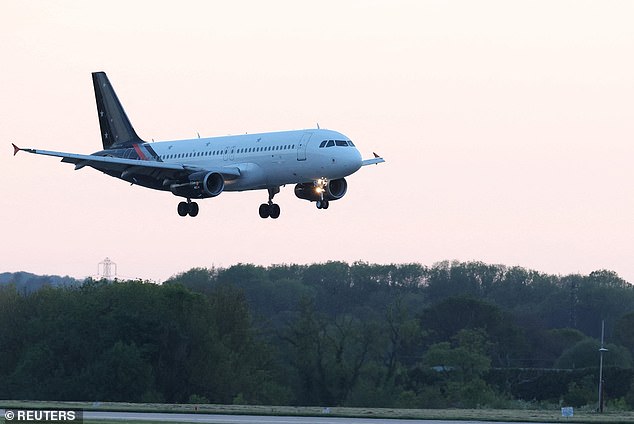
American travelers on board are set to be taken on a repatriation flight to the National Quarantine Unit in Nebraska for assessment and quarantine.
Vacationers and crew members onboard the luxury cruise ship arrived at the Port of Granadilla this weekend where they awaited on small boats to ferry them onto the island of Tenerife.
Spanish passengers – 13 vacationers and one crew member – were the first to disembark on Sunday morning at around 9.30am before they were loaded onto buses headed for the airport.
Some 147 passengers were on board the ship in total, and the process to safely transport each person home is expected to take around a week.
Bhattacharya said all 17 passengers will be interviewed by the CDC, who are working in tandem with the World Health Organization, to assess them for risk.
‘In this case, risk doesn’t mean the risk of dying…The risk is a high risk if they have been in close contact with somebody who was symptomatic,’ he continued, emphasizing that the disease is difficult to transmit from person to person and requires a person who is positive for the virus while showing symptoms.
‘If they weren’t in close contact with someone who was symptomatic, then we’re going to deem them a low risk. If they were in close contact, we’re going to deem them a medium or high risk.’
Weeks ago, seven Americans who had been onboard the infected ship returned home to the US and were identified across at least four states, including California, Texas, Virginia and Georgia.

The US, Germany, France, Belgium, Ireland and the Netherlands are some of the nations which will send aircrafts to return the passengers and crew members home
‘So the protocols that are being followed for them are the same [successful] protocols that were followed in a 2018 outbreak of this exact same strain of the hantavirus, including a reported case in Delaware with their 51 contacts,’ Bhattacharya said.
The CDC acting director said that the organization has been working in close contact with state and local public health officials to monitor the seven travelers who previously returned and to coordinate and accommodate the return of the following 17.
Bhattacharya emphasized that the seven passengers who returned commercially were not showing symptoms, and therefore could not spread the disease.
‘If they don’t have symptoms, they’re not at risk of exposing others,’ he said.
The official health warning that was issued on Friday was ‘deemed appropriate’ given the return of the 17 passengers.
‘To the American people, I say that the CDC has absolutely been working night and day to stay on top of this, to keep you safe from outbreaks like this,’ Bhattacharya added.
‘You want to moderate the response to the actual epidemiological threat. And so that’s what we did with this hantavirus threat. As you said, Jake, if the threat level were higher, then we would have obviously reacted differently.’
He added that the organization has been ‘absolutely on top of this outbreak.’
Government officials emphasized that the evacuated groups would have no contact with the public, despite reports that the passengers were not showing symptoms of the virus.
The World Health Organization recommended a 42-day quarantine for those onboard the boat, which saw its first confirmed case of the outbreak on May 2.
In an update on Friday, the WHO confirmed that eight passengers no longer on the ship had fallen ill, with six of them confirmed to have contracted the hantavirus. Four remain hospitalized in South Africa, the Netherlands and Switzerland.
A suspected case in Germany tested negative, while a Spanish woman, who had flown on the same flight as a patient who later died from the virus, tested negative on Saturday.
Before the boat evacuated, medical officials ran tests on those onboard the ship, Spain’s Health Minister Mónica García said, CNN reported.
Three people – a Dutch couple and a German national – were reported to have died from the virus, a rare disease typically caused by exposure to infected rat waste, after the cruise ship left Argentina last month.
The US, Germany, France, Belgium, Ireland and the Netherlands are nations included in the operation and will send aircraft to return the passengers and crew members home.
‘The sequence of disembarkation will be coordinated with arriving repatriation flights,’ Oceanwide said.

Spain’s Health Minister Mónica García seen with Spanish Ministers of Interior Fernando Grande-Marlaska, left, and Spanish Territorial Policy Minister Angel Victor Torres, right

Passengers onboard the hantavirus infected ship were seen watching others disembark from the cruise ship toward the island of Tenerife

Security and health officials operate at the port of Granadilla de Abona following the arrival of the cruise ship MV Hondius
Spain’s health ministry also reported that no rats were detected on board the cruise ship.
Spanish officials said all passengers are set to remain onboard the boat until their aircraft home has arrived, meanwhile 30 crew members will remain onboard while the ship will finally sail to the Netherlands to be disinfected.
WHO sought to reassure ‘worried’ Tenerife residents that they will not encounter passengers of the hantavirus-hit cruise ship set to dock on their island.
In a letter addressed to the people of Tenerife, WHO director-general Dr Tedros Adhanom Ghebreyesus said he knew residents were ‘worried’.
He said the virus was ‘serious’ but the outbreak was ‘not another Covid’ and the ‘current public health risk from hantavirus remains low’.
He added: ‘Spain’s authorities have prepared a careful, step-by-step plan: passengers will be ferried ashore at the industrial port of Granadilla, far from residential areas, in sealed, guarded vehicles, through a completely cordoned-off corridor, and repatriated directly to their home countries.’
The outbreak has been connected to a birdwatching expedition in Argentina that two of the passengers went on before boarding the ship.
WHO chief Tedros Adhanom Ghebreyesus, who arrived in Spain on Saturday and is expected to oversee the ship evacuation, gave the same assurance and thanked the people of Tenerife for their solidarity.
‘I need you to hear me clearly,’ Tedros wrote in an open letter to the people of Tenerife on Saturday: ‘This is not another Covid.’
After arriving in Tenerife, he said he was confident the operation would be a success. ‘Spain is ready and prepared,’ he told reporters.
The MV Hondius left Ushuaia, Argentina on April 1 for a cruise across the Atlantic Ocean to Cape Verde.
In Madrid, Spain’s health and interior ministers insisted there would be ‘no contact’ with the local population, and that passengers would leave ‘by nationality groups’.
‘All areas [the passengers] pass through will be sealed off,’ the interior minister said, adding a maritime exclusion zone would be in force around the vessel.
Provincial health official Juan Petrina said there was an ‘almost zero chance’ the Dutch man linked to the outbreak contracted the disease in Ushuaia based on the virus’s incubation period, among other factors.
In a statement on Sunday, Oceanwide Expeditions, the operator of the MV Hondius ship, said: ‘Oceanwide Expeditions continues to work with relevant authorities to bring the medical situation on board m/v Hondius to a conclusion.

WHO chief Tedros Adhanom Ghebreyesus arrived on the island on Saturday and sought to reassure ‘worried’ locals that the outbreak is ‘not another COVID’
‘The vessel arrived at the port of Granadilla, Tenerife, on Sunday, 10 May, at 6.24am local time.
‘Led by local authorities, the WHO, and select international governments, the disembarkation of all guests and a limited number of crew members is now underway. This is being performed by launch boats and, if necessary, the Zodiac craft of m/v Hondius.
‘Upon disembarkation, all individuals will be transferred immediately to waiting aircraft. The sequence of disembarkation is being coordinated with the arrival of repatriation flights.
‘Oceanwide Expeditions is not involved in the planning and facilitation of guest screening and repatriation.
‘As outlined by the WHO, in partnership with several international organizations and governments, guests will be transported by air to their respective countries, where they will enter quarantine procedures.
‘Respective national authorities determine these procedures. No quarantine of non-Spanish nationals will take place in Spain.
‘After all guests and limited crew have disembarked, m/v Hondius will bunker and take on necessary supplies at Santa Cruz, Tenerife.
‘Following this, the vessel will transit to the port of Rotterdam, the Netherlands with the remaining crew members aboard. Further details regarding the vessel’s arrival in Rotterdam will be provided when available. The expected sailing time to Rotterdam is around 5 days.’
In a statement to the Daily Mail, the US Department of Health and Human Services said: ‘The US government is conducting a coordinated, interagency response led by the Department of State. HHS, through ASPR and CDC, is supporting efforts to protect the health and safety of U.S. citizens, including repatriation, medical evaluation, and public health guidance.’
‘Passengers will be transported to the United States via a Department of State-coordinated airlift with appropriate medical capabilities onboard.
‘It is important to note transmission of the Andes variant is typically associated with close contact with a symptomatic person and is not commonly linked to people without symptoms. It does not spread easily, and the risk to the public remains extremely low.’