Hundreds of babies and mothers died or were left seriously injured at a ‘toxic’ hospital trust where women were ignored and mistakes covered up, a report found yesterday.
The damning review that exposed the biggest maternity scandal in NHS history found a culture of bullying, where ‘speaking up was dangerous’ and bosses’ responses were ‘shaped by self protection rather than patient safety’.
When families did complain about care at the Nottingham University Hospitals NHS Trust they were met with an ‘intimidating, male-dominated’ panel who were ‘dismissive of non-medical voices’.
The review, which took four years and analysed 2,500 cases, found 520 instances of mothers and babies who suffered potentially avoidable harm or death as a result of poor care.
Bosses knew about issues as far back as 2010 but simply ‘brushed them under the carpet’, expert midwife Donna Ockenden said yesterday after families, some of whom work for the trust, fought for an investigation.
Her 343-page report found women who were in desperate pain were turned away while others were treated ‘cruelly’ and with ‘brutality’.
Singling out senior managers – many of whom refused to provide evidence to the review – she said women were ‘failed by a service which did not listen, did not learn and did not respond adequately when concerns were raised’.
Babies died from conditions including oxygen starvation, mismanaged labour, hospital-acquired infections and poor postnatal care. Others suffered serious and life-long injuries.

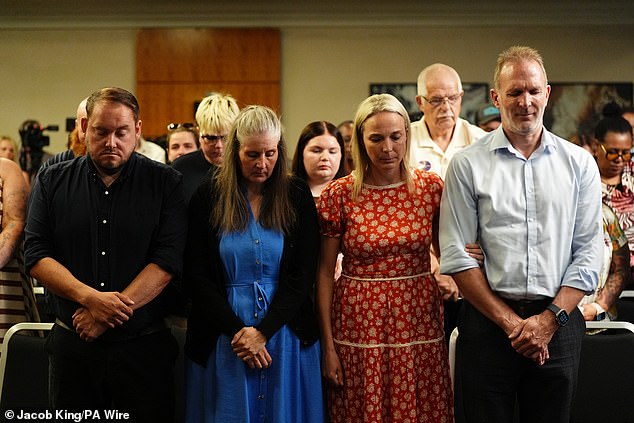
Families take part in a minute silence following the publication of an independent report into maternity care at Nottingham University Hospitals (NUH) NHS Trust
A ‘tragic quest for a normal birth’ stopped staff intervening when things were going wrong, even as women were screaming for C-sections.
Ms Ockenden said: ‘At Nottingham, a toxic culture was allowed to take hold and was allowed to persist.
‘A small number of powerful leaders, described in both family and staff testimonies as having infected the unit, creating an environment in which bullying was normalised, speaking up was dangerous and governance was shaped by self protection.’
The incident review panel was described as intimidating, male-dominated, dismissive of non-medical voices.
She said staff left because ‘incidents were being brushed under the carpet’.
She said that women who raised concerns were told ‘they were anxious and imagining it’ and women in labour ‘turned away repeatedly’.
Ms Ockenden added that some families only found out the truth after instructing ‘lawyers many years later, and some are still waiting’.
The families yesterday slammed the ‘perverse’ culture under which bosses have been ‘rewarded’ with new NHS jobs.

The report found that women were ‘failed by a service which did not listen, did not learn and did not respond adequately when concerns were raised’
Join the discussion
How should senior NHS leaders be held accountable when repeated warnings lead to tragic outcomes?
Jack Hawkins, whose daughter Harriet died in 2016 and who, along with his wife Sarah has been instrumental in bringing about the review, said: ‘We are victims who became campaigners. Ten years later, still nothing has happened about Harriet’s care in the regulatory framework. Nothing. Every single person who was working then is still working now, unless they’ve retired.’
Addressing the significant number of top staff who chose not to take part in the review, he said they were showing self-preservation mattered more to them than maternity safety.
Health Secretary James Murray apologised on behalf of the NHS.
He told the Commons ‘no options are off the table’ as he was pressed by MPs for a public inquiry into NUH – which could mean leaders could be compelled to give evidence.
The NHS trust – which runs Queen’s Medical Centre and Nottingham City Hospital – has already paid out millions of pounds in compensation and fines.
Ms Ockenden spoke to more than 800 staff, but it is understood that half of the 60 former senior executives and directors refused to answer questions.
In total 150 doctors and midwives are being assessed over complaints about fitness to practise.
Staff who worked at NUH before 2017 told the review that trust managers were often thought of as ‘invisible, unapproachable and unresponsive’, they ignored concerns, bullied people, and were rude and aggressive.
Anthony May, chief executive of NUH, said the review was a ‘watershed moment’, adding: ‘It is very important that we have robust, independent oversight of the implementation of the review’s findings.’
Bosses at the helm as Trust’s problems grew
By Shaun Woller, Health Editor
The Ockenden review does not point the finger at any named officials, but here the Daily Mail identifies some of the trust’s key players during its troubled years.
Dr Peter Homa

Pictured: Peter Homa, chief executive
Peter Homa was NUH’s chief executive from 2006 to 2017, joining just weeks after the trust was created in April 2006. The Ockenden report said that from 2010 onwards, a series of indicators pointed to ‘underlying weaknesses’ in governance, leadership and organisational culture. In November 2013, a Care Quality Commission inspection identified NUH as a ‘high risk’, highlighting staff shortages, mortality alerts and increasing safety problems. Dr Homa last night declined to comment on the report.
Dr Keith Girling

Pictured: Keith Girling, medical director
Dr Keith Girling was appointed medical director at NUH in June 2017. He was acting chief executive for around a month in August 2022. The Ockenden report says from 2021, maternity was a major agenda item at almost all open board meetings, with focus on a maternity improvement programme, CQC responses, historic under-reporting of serious incidents and the Ockenden inquiry. In October 2021, following a critical CQC report, Dr Girling faced calls to resign.
Eric Morton

Pictured: Eric Morton, chairman
Eric Morton chaired NUH from May 2017 to February 2022. In October 2021, Mr Morton faced calls to stand down following the damning CQC report. The chair of Nottinghamshire County Council’s health scrutiny committee said the trust’s maternity service was ‘in crisis’ and the board had allowed this to happen.
Tracy Taylor

Pictured: Tracy Taylor, chief executive
Tracy Taylor was made chief executive at NUH in October 2017. Despite the leadership change, ‘underlying concerns persisted’, Ms Ockenden’s report said, and in 2018, staff submitted a formal letter to the board raising concerns about staffing levels and safety. The Healthcare Safety Investigation Branch raised concerns about stillbirths and safety. CQC inspections, a review and an NHS staff survey in 2020 and 2021 identified concerns including bullying, racism and ineffective governance. The healthcare watchdog rated maternity services as inadequate. The Ockenden report said that between 2020 and 2021 maternity services had reached a point of ‘systemic failure’. Ms Taylor left in October 2021.
Jenny Leggott
Jenny Leggott led the merger of Nottingham City Hospital and Queen’s Medical Centre to form NUH in 2006. She was there until at least 2014. The Ockenden review describes long-standing cultural problems, attributing many of them to the merger. It also highlights the case of baby Ryan Sissons, who was seriously harmed in 2007, and a series of ‘warning signals’ that emerged from 2010.
Joy Payne
Joy Payne was head of midwifery at Heartlands Hospital when NUH approached her to carry out a review into Harriet Hawkins’s death. Harriet’s family say they were sent a draft report in December 2016 saying her death was ‘directly contributed to’ by five things. At the same time, Ms Payne was approached by NUH about a director of midwifery post, which she accepted. When the final report was published, its conclusion changed to say Harriet’s death ‘might have been avoided’ if four things had happened. The family said it ‘smacked of a cover-up’. Ms Payne left the trust in December 2018.