


Prime Minister Anthony Albanese has defended the U-turn on his election vow not to change negative gearing, which is now set to be overhauled along with capital gains tax (CGT) policy in Tuesday night’s federal Budget.
Before the last election, Albanese snapped when he was asked whether he would touch either of the contentious housing policies – denying he would: ‘Yes! How hard is it? For the 50th time.’
But on ABC Radio National on Monday, Albanese had changed his tune, saying his government will ‘respond to the circumstances that are here and now when it comes to intergenerational equity’.
Pressed on what exactly had changed since his government ruled out touching negative gearing, Albanese said the lack of progress in housing affordability had prompted a rethink.
‘How they are different is that they continue to be entrenched without reform, and that’s the point,’ he said.
Albanese said the situation in housing had not sufficiently improved in the previous 12 months.
‘For a long period of time, young people have tried to save for a home,’ he said.’Another year has passed since the election, and not enough has changed.
‘So many people have had another year of missing out at auctions, of renting and paying someone else’s mortgage, and too many young people are close to giving up on the opportunity of owning their own home.’

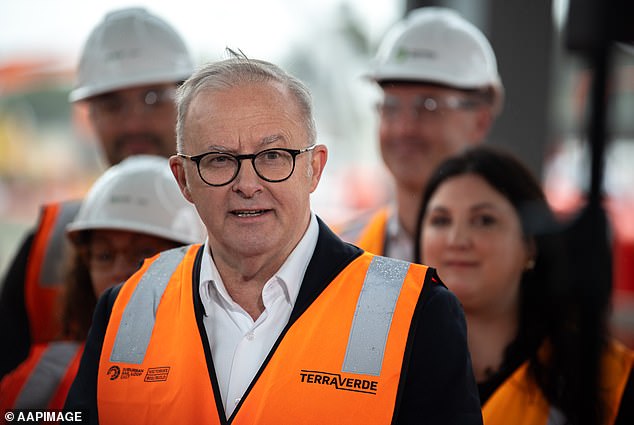
Anthony Albanese (pictured) defended the government’s expected changes in the Budget
According to a leak of the government’s proposed changes, from 2027, only newly-built homes that meet strict government criteria will be eligible for negative gearing.
Negative gearing is a popular investment strategy where investors get a tax break when the costs of owning a property exceed the income it generates.
From Tuesday, investors purchasing established properties will no longer qualify for tax advantages under negative gearing, unless they already own suitable investment properties.
Current property investors will retain negative gearing concessions for properties already held. But anyone who does not already own a negatively-geared property will miss out on the tax benefit for established homes going forward.
The full details of the changes are yet to be released. The Australian Financial Review reported that there will be a one-year grace period for both the negative gearing and CGT changes.
Any property acquired from Budget night onwards will be subjected to the negative gearing change, however, the policy will not come into full effect until July 1, 2027.
Likewise, the CGT change – replacing the current 50 per cent discount with the pre-1999 model, which adjusts gains for inflation rather than applying a flat discount – is expected to kick in on July 1 next year.
The Opposition slammed the Albanese government over the backflip, saying housing has ‘collapsed’ under their watch.
Opposition housing spokesman Andrew Bragg said the government’s Housing Australia Future Fund, part of $80billion in spending, had delivered less housing than when the Coalition was in office.

The government has been slammed for breaking its election pledge on negative gearing (file)
‘Over the course of these four years, they have only built, on average, 170,000 houses,’ he said.
‘Under the last Coalition government, there were 200,000 houses being built every year on average.
‘So the government has spent $80billion of taxpayer funds to build 30,000 fewer houses each year.’
He accused the government of driving up housing costs for younger Australians through policy settings, including the uncapped 5 per cent deposit scheme, which has widely been criticised for lifting demand and increasing house prices.
He added: ‘They have collapsed supply, and meanwhile they have really made things ugly for younger Australians by pump priming house prices at the entry level with their ridiculous non-means tested 5 per cent deposit scheme.’