


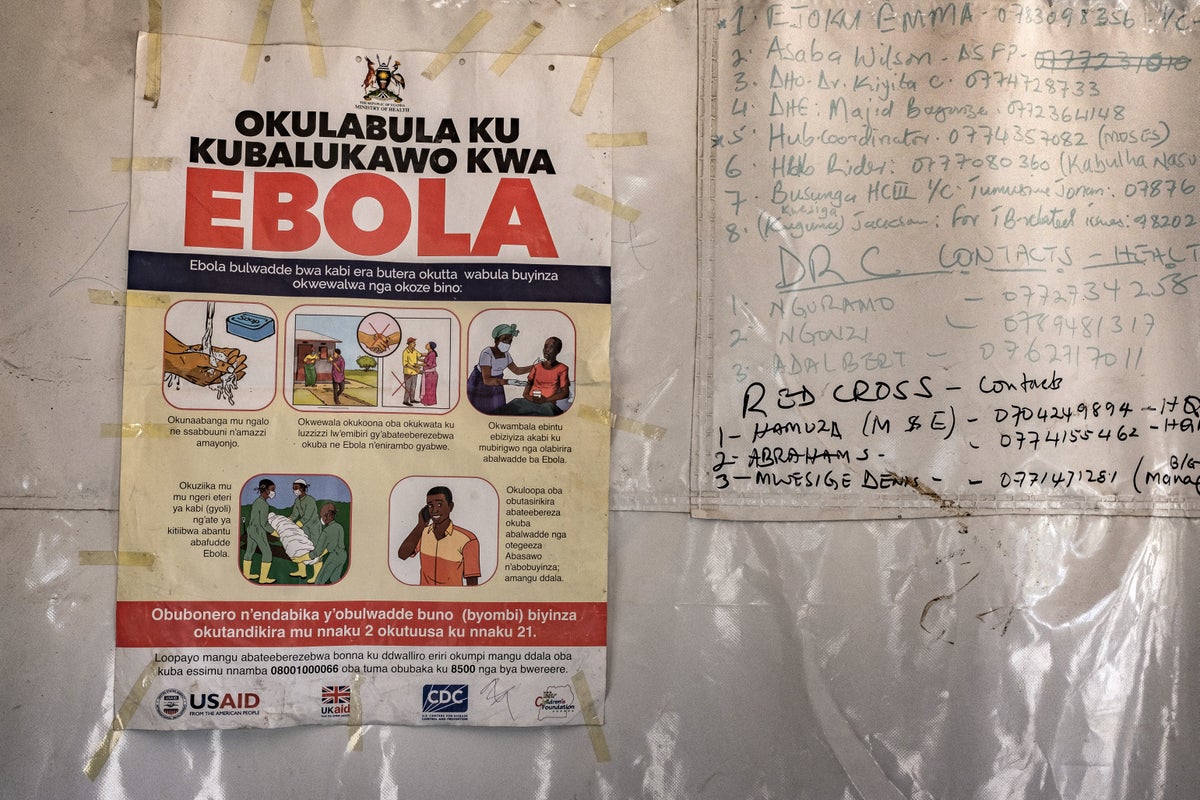
An outbreak of Ebola in the Democratic Republic of the Congo (DRC) and Uganda has global public health officials scrambling to contain the relevant virus, which the World Health Organization (WHO) has warned will likely spread further and cause more deaths beyond the more than 130 estimated fatalities so far. This type of Ebola-causing virus, a species called Bundibugyo virus, has no approved vaccine, is thought to be fatal in about 25 to 50 percent of cases and has sickened hundreds, including at least one American.
The WHO has declared the situation “a public health emergency of international concern,” citing the high number of initial suspected cases and “significant uncertainties” about the extent of the spread. But as serious as this outbreak is, public health experts stress that the risk of a pandemic-level threat is low, with minimal danger to the U.S.
“Not every pathogen has the ability to cause a pandemic,” says Amesh Adalja, a senior scholar at the Johns Hopkins Center for Health Security. “People think it’s either zero or pandemic…. There are many types of public health emergencies that fall short of a pandemic that are still important.”
On supporting science journalism
If you’re enjoying this article, consider supporting our award-winning journalism by subscribing. By purchasing a subscription you are helping to ensure the future of impactful stories about the discoveries and ideas shaping our world today.
The situation in the DRC is especially acute: the first cases clustered in a remote region riven with political conflict and violence that displaced more than 100,000 people in 2025. That has made it “very unsafe” for health care workers to offer aid, says Jeanne Marrazzo, chief executive officer of the Infectious Disease Society of America and former director of the U.S. National Institute of Allergy and Infectious Diseases (NIAID).
The only American confirmed to have the virus, a missionary physician named Peter Stafford, was reportedly working in the DRC when, doctors believe, he came into contact with someone with Ebola. He has been evacuated for treatment in Germany, which has “previous experience caring for Ebola patients,” according to the U.S. Centers for Disease Control and Prevention.
Currently there are no known Ebola cases inside the U.S., and the risk of the outbreak spreading to the country is “low at this time,” according to the CDC. The nation’s government has also instituted a travel ban on visitors from three African countries to try to further limit the potential for the virus to enter the U.S.
There are other reasons why risk to the U.S. is likely to remain low, health experts say, including the biology of the virus itself. People typically become infected with orthoebolaviruses, the group of viruses that cause Ebola, through contact with bodily fluids—such as blood, feces and saliva—and that’s not an especially efficient mode of transmission, Adalja says, unlike, say, that of the COVID-causing virus, which can spread through the air.
“It is not a subtle airborne infection that you can get from people who are presymptomatic, like we see with flu and COVID,” Marrazzo says, adding that some of the worst pandemics have historically been caused by respiratory viruses that can transmit between hosts before symptoms start.
People infected with orthoebolaviruses, on the other hand, are not thought to be infectious until after the onset of symptoms. These can include fever and aches, as well as vomiting, diarrhea, and, as the disease progresses, internal and external bleeding. The incubation period—the time between exposure and symptom onset—for Bundibugyo virus is typically between two and 21 days.
“It would be vanishingly unlikely that this could cause sort of a zombie-type World War Z epidemic,” Marrazzo adds, referring to the 2006 novel about a zombie pandemic and its 2013 film adaptation. “It’s not that kind of virus.”
Past outbreaks show that with rigorous control measures officials have managed to stop the spread of Ebola, she says. The largest Ebola disease outbreak, which began in 2014, took two years to contain and infected more than 28,000 people, according to the CDC. It was caused by a different and more common species of orthoebolavirus than the current outbreak. Bundibugyo virus, meanwhile, has been linked to just two other outbreaks in Uganda and the DRC since its identification in 2007.
“Ebola does not have pandemic potential, but it clearly is an epidemic disease and has massive regional importance,” Adalja says.
For the average American, the risk of exposure from travelers coming from African countries where Ebola is present is “extremely low” at this time but not totally inexistent, making it more of a “theoretical risk,” Marrazzo says. “Just be alert, think about where you are, and, if you see someone who’s ill, I would exercise extra caution,” she says.
Still, at this point, it’s much more likely that you will pick up a respiratory infection or a foodborne illness such as norovirus while traveling, she says. Wearing an N95 mask and washing your hands can help prevent those illnesses.
“I’m an infectious disease person, so I’m very cautious. But I would say, ‘Don’t get caught up in some of these theoretical risks that are pretty unlikely.’ And just remember that, every day, people get really sick during travel, and much of that is preventable,” she says.