by Catherine Nakalembe, Yale Climate Connections
July 7, 2026
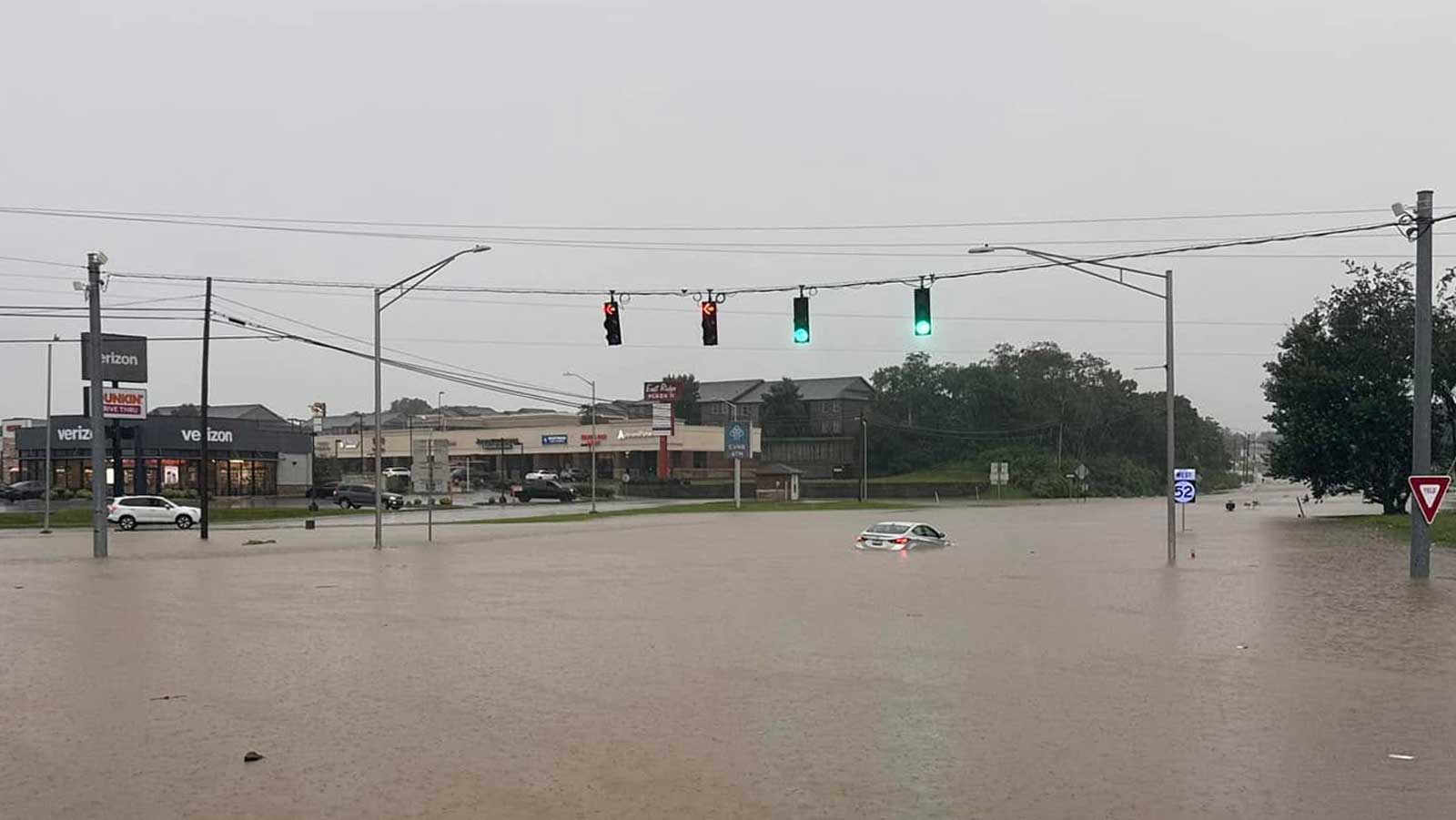
Every year from May through October, the United States enters what climate scientists and emergency managers now call “Danger Season,” a six-month gauntlet of compounding climate hazards when hurricane season peaks, heat domes settle over cities for days, wildfires spread across millions of acres, and flash floods tear through communities with little warning.
Ever-improving AI-driven forecasts can help some people stay safe by helping them understand when it’s time to buy extra food ahead of a major storm, stay off the roads, or evacuate. But millions, whether in an uninsured American mobile home park or a village in rural Madagascar or Nigeria, may receive the same warning but have no safe shelter to flee to and no financial means to protect their livelihood.
In my more than 15 years of developing models using satellite data to predict drought or assess impacts of flooding, I have found that the barrier to saving lives is rarely data accuracy, but the absence of the policy infrastructure required to act on it. While billions of dollars are poured into data centers, the physical infrastructure for resilience, such as seawalls and grain banks, is falling behind. This AI-first bias also overlooks “ground-truth” data and factual, localized validation from tools like rain gauges and soil sensors. Without this ground-level input, AI lacks the credibility and trust that local policymakers need to trigger lifesaving actions.
The funding gap reveals the most glaring mismatch. The primary international relief mechanism, the Fund for Responding to Loss and Damage, has received less than 0.1% of the actual need, leaving interventions such as early warnings and prearranged disaster responses unfunded.
And in the U.S., disaster response may be severely compromised by the systemic overhaul of FEMA, including cuts to critical disaster mitigation programs, leadership turnover, and shifting financial burdens and responsibilities onto states.
Although the global funding gap is immense, a growing movement around anticipatory action – the practice of deploying resources before disaster strikes rather than after – and planned relocation – moving vulnerable communities out of harm’s way before catastrophe forces them out – is a reminder that better forecasting, faster coordination, smarter resource deployment, and genuine local leadership show what becomes possible when the world chooses and can act before disaster strikes. These approaches, while still limited in scope and inconsistently implemented, demonstrate that acting early, whether by pre-positioning supplies, triggering automatic financing, or relocating populations before a storm makes landfall, is far more cost-effective than reactive aid.
Data from the United States’ Federal Insurance and Mitigation Administration consistently show that every $1 invested in disaster mitigation saves $6 in future recovery costs. In Europe, research found that investing in coastal flood adaptation would deliver €6 for every euro invested. Even more striking, every dollar invested in climate adaptation globally may bring over $10.50 in benefits over a 10-year period, with average returns of 27% per project.
These are not abstract numbers; they represent real lives saved, livelihoods protected, and communities that remain intact rather than displaced. But data alone is not enough.
Without sustained investment in local leadership and integrated frameworks to execute disaster interventions at scale, their promise remains out of reach. Closing this gap is imperative, especially given the clear and compelling return on investment that disaster prevention efforts consistently provide.
Navigating escalating climate risks requires pairing AI and data infrastructure with physical capacity: the crews to clear roads, the grids to keep power on, the supplies pre-positioned before a storm arrives. The goal is something like a FEMA-level response capability in every country, but that capacity varies enormously. Where it is absent, even the most sophisticated forecast becomes a longer wait for the inevitable. High-tech warnings only save lives when local actors have the financial means, legal authority, and trained personnel to act on them.
The 2026 Danger Season should be the moment when financing priorities finally shift away from AI-first and only strategies. While technology giants lead the charge in AI and forecasting, international finance institutions cannot take their eye off the ball: Digital tools are only as effective as the physical infrastructure and on-the-ground expertise they support. By prioritizing the brick-and-mortar and human capacity of local organizations, investors can finally bridge the gap between having intelligence and having the power to act.
I posit that for every one cent allocated to AI and digital infrastructure, approximately $10 must be dedicated to the local technical capacity and physical infrastructure required to respond and act. Without this rebalancing, world-class forecasting remains a digital blueprint with no one and no means to build it.
Catherine Nakalembe is a professor of translational geoAI, which bridges geographical sciences with artificial intelligence to address real-world problems, at the University of Maryland, and a Public Voices Fellow on Technology in the Public Interest of The OpEd Project.
This <a target=”_blank” href=”https://yaleclimateconnections.org/2026/07/ai-can-predict-disaster-but-it-cant-save-you/”>article</a> first appeared on <a target=”_blank” href=”https://yaleclimateconnections.org”>Yale Climate Connections</a> and is republished here under a <a target=”_blank” href=”https://creativecommons.org/licenses/by-nc-nd/4.0/”>Creative Commons Attribution-NonCommercial-NoDerivatives 4.0 International License</a>.<img src=”https://i0.wp.com/yaleclimateconnections.org/wp-content/uploads/2020/10/ycc-favicon.png?resize=100%2C100&ssl=1″ style=”width:1em;height:1em;margin-left:10px;”>
<img id=”republication-tracker-tool-source” src=”https://yaleclimateconnections.org/?republication-pixel=true&post=140028&ga4=1401ERFF5Q” style=”width:1px;height:1px;”><script> PARSELY = { autotrack: false, onload: function() { PARSELY.beacon.trackPageView({ url: “https://yaleclimateconnections.org/2026/07/ai-can-predict-disaster-but-it-cant-save-you/”, urlref: window.location.href }); } } </script> <script id=”parsely-cfg” src=”//cdn.parsely.com/keys/yaleclimateconnections.org/p.js”></script>