

The newly released Netflix documentary Miguel Ángel
Blanco: The 48 Hours That Changed Spain offers a deeply moving exploration
of a crisis that permanently shifted a country. This powerful cinematic
investigation reveals how the tragic 1997 abduction of a local politician
transformed pervasive societal fear into a massive movement of national
resistance. While the heart-breaking event ultimately cost a young public
servant his life, it simultaneously unified millions of citizens to finally voice
their outrage against relentless domestic t********.
(Warning: There are spoilers ahead. Reader discretion is advised.)
The opening sequence masterfully transports viewers directly
into the chaotic media landscape of a nation under immense distress.
ADVERTISEMENT
Article continues below this ad
The haunting reality of a terrifying ultimatum
The narrative of Miguel Ángel Blanco: The 48 Hours That
Changed Spain commences by immersing the audience in original news footage
and dramatic television channel broadcasts from the precise moment the crisis
began. These vintage media clips vividly capture the widespread panic that
erupted when the radical separatist group ETA (Euskadi Ta Askatasuna) suddenly
abducted Miguel Ángel Blanco on 10 July 1997 on his way to see a client.
The extremist organization threatened to execute its
captive unless the Spanish government complied with an immediate demand to
transfer Basque prisoners to regional facilities within a strict 48-hour
window. The screen initially highlights the vibrant optimism of the country
during the 1997 festivities before juxtaposing it against the sudden
horror of political violence.
In a fraction of a second, images of a celebratory society
completely dissolve into historical records of a population suffering from mass k******* and relentless b*******. When the news of the
kidnapping broke out, a significant portion of the populace did not even know
the identity of the young town councillor.
The documentary beautifully organizes this complex history
by blending the diverse perspectives of prominent journalists, close friends,
and former Prime Minister José María Aznar. The central emotional anchor of the
entire film remains Marimar Blanco, the dedicated sister of the victim, who
guides viewers through the intimate heartbreak of the family.
The visual direction uses profound symbolism to emphasize
the agonizing passage of time as the critical deadline rapidly approaches.
The ticking clock and a relentless search for justice
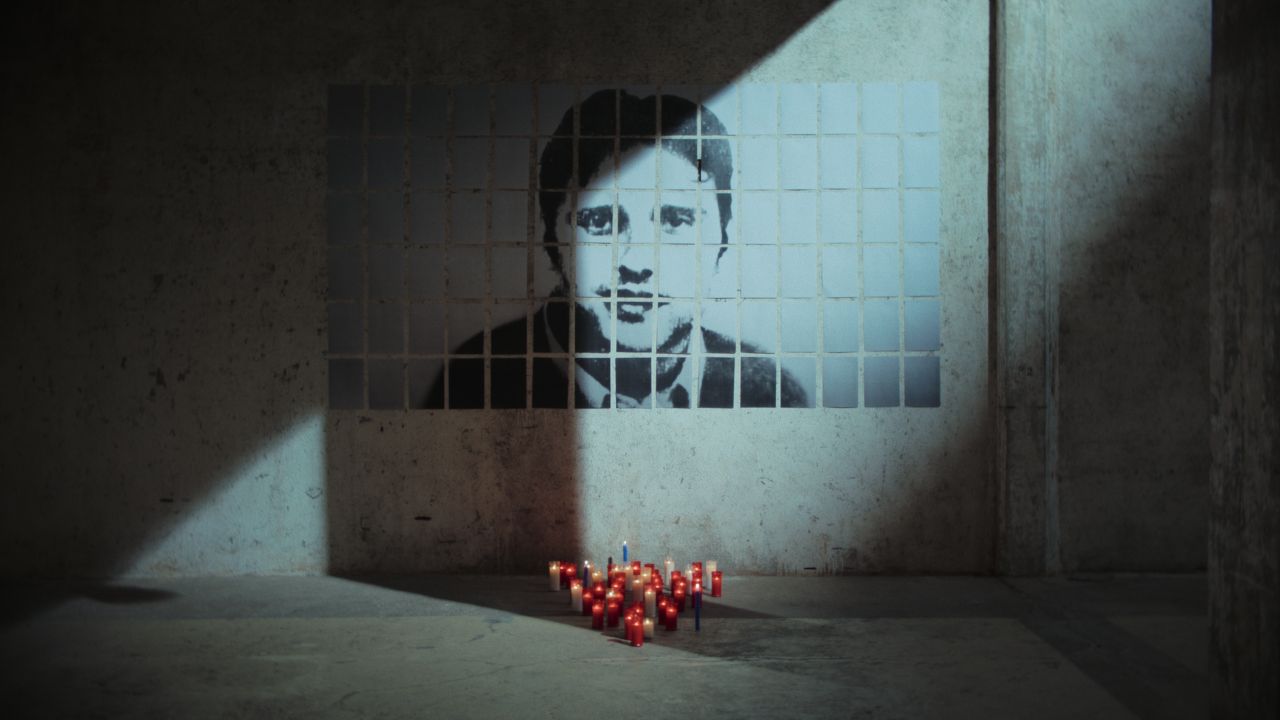
The filmmaker transitions into a symbolic sequence featuring
burning red and white candles while the physical timer counts backward from 48
hours. Due to primitive communication networks, 5 to 6 hours elapsed before the
public fully understood the severity of the threat against the politician. As
the terrifying news spread, television broadcasts flooded screens with blue
ribbons, which emerged as the universal symbol for peace and anti-t********.
The central administration firmly refused to capitulate to the blackmail of the
radical group, forcing law enforcement to launch a desperate race against the
clock.
Journalists worked tirelessly alongside investigators to
connect the dots of past abductions, aiming to trace the hidden suspects before
time expired. Executing a massive manhunt in 1997 proved to be an incredibly
difficult task without the convenience of modern social media or internet
databases.
Scanning a single photograph and printing physical flyers
for public circulation required valuable hours that the search teams simply did
not have. Meanwhile, an unimaginable crowd of citizens flooded the streets in
peaceful protest, collectively praying that the tense standoff would yield a
non-tragic conclusion.
The visual metaphor of the candles grows increasingly
intense as the final hour of the ultimatum slips away from the authorities.
The shattered hope and an enduring national spirit
The most horrific segment of the production occurs when
Marimar Blanco recalls the immense sorrow of her starving mother during those
final hours. Family friend Carmen Cuesta and coworker Juan Cabezas watched
helplessly as the historical countdown reached its absolute limit without a
political resolution. Marimar Blanco vividly remembers the heartbreaking words
of her mother when she was urged to eat.
“Child, how can
I eat when at this moment they are killing my son?,” Marimar Blanco’s
mother said to her.
Shortly after the deadline expired, search teams discovered
the politician on the outskirts of San Sebastián with his hands bound securely
and 2 fatal g**-s**** to his head at 16:50 on 12 July. Although doctors
utilized an electroencephalograph to sustain his basic vital functions, medical
professionals eventually declared the young man brain dead at the hospital at 4:30
a.m. on 13 July.
On screen, a single blue candle, the same colour as the
symbol ribbon representing the anti-t******* movement, flickers and completely
blows out as radios announce his tragic passing. However, as the nation wept
over newspaper headlines, citizens completely lost their fear of ETA, causing
that symbolic blue candle to miraculously reignite.
ADVERTISEMENT
Article continues below this ad
The criminal members of the separatist group, Francisco
Javier García Gaztelu (Txapote) and his girlfriend, Irantzu Gallastegi (Amaia), were eventually brought to trial in 2006, while the grieving family received
thousands of supportive letters, drawings, and paintings from around the world.
The documentary concludes with a final poignant memory from the mother of the
victim regarding the profound historical impact of the tragedy.
“My mother would say, ‘If the death of my son has served to
put an end to ETA’,” said Marimar Blanco. The ultimate sacrifice of Miguel Ángel Blanco effectively
birthed the historic Spirit of Ermua, permanently changing the country. Stream Miguel
Ángel Blanco: The 48 Hours That Changed Spain on Netflix today to witness
the definitive turning point of modern Spanish history.
ADVERTISEMENT
Article continues below this ad
What do you think about the Netflix documentary, Miguel Ángel Blanco: The 48 Hours That Changed Spain which showed the world the dark side Spain went through? Let us know in the comments.