



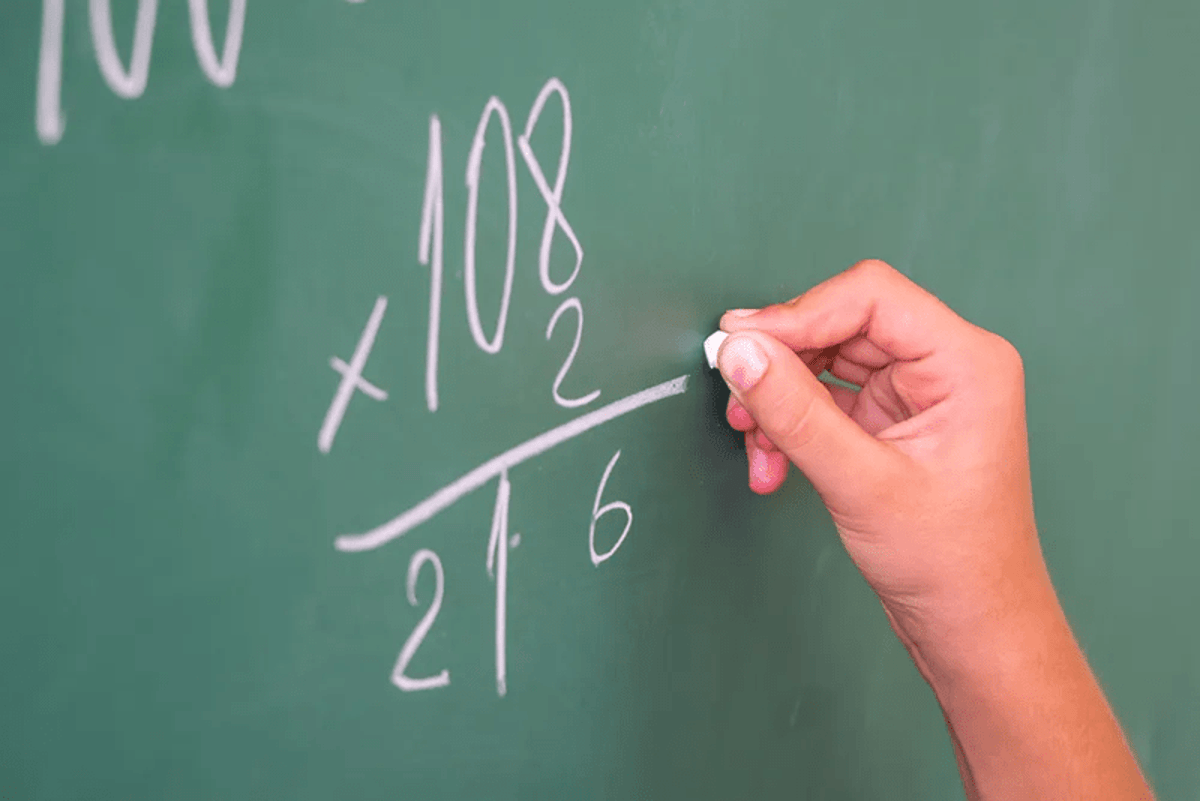
What is 29 + 14?
Some readers may solve the problem procedurally: line up the two numbers, add the ones column, carry the one, and add the tens to get 43. Others might instead notice a creative shortcut: 29 + 14 is the same as 30 + 13, a much easier sum to calculate. Recent studies show that the less likely someone is to use procedural solutions, the better they tend to be at more abstract problem-solving—and gender is a significant predictor.
In a new study, researchers asked a group of 213 students from one Midwestern U.S. high school to do three arithmetic problems. Only 18 percent of the boys used the procedural method for all three questions, compared with 52 percent of the girls. And those who rarely used a procedural algorithm were significantly more likely to succeed on problem-solving questions.
On supporting science journalism
If you’re enjoying this article, consider supporting our award-winning journalism by subscribing. By purchasing a subscription you are helping to ensure the future of impactful stories about the discoveries and ideas shaping our world today.
“Honestly, [the results] blew me away,” says Indiana University Bloomington mathematics education researcher Sarah Lubienski, a co-author of the study, published in the British Journal of Educational Psychology. They are “the most interesting findings of my career,” she adds. And that was before Lubienski and one of her co-authors realized that another group had reached almost identical conclusions in a similar study with 810 U.S. adults. The researchers decided to team up for a two-study paper. “Together we felt like it made a pretty compelling argument that we need to pay more attention to how people are approaching computation from a young age,” Lubienski says.
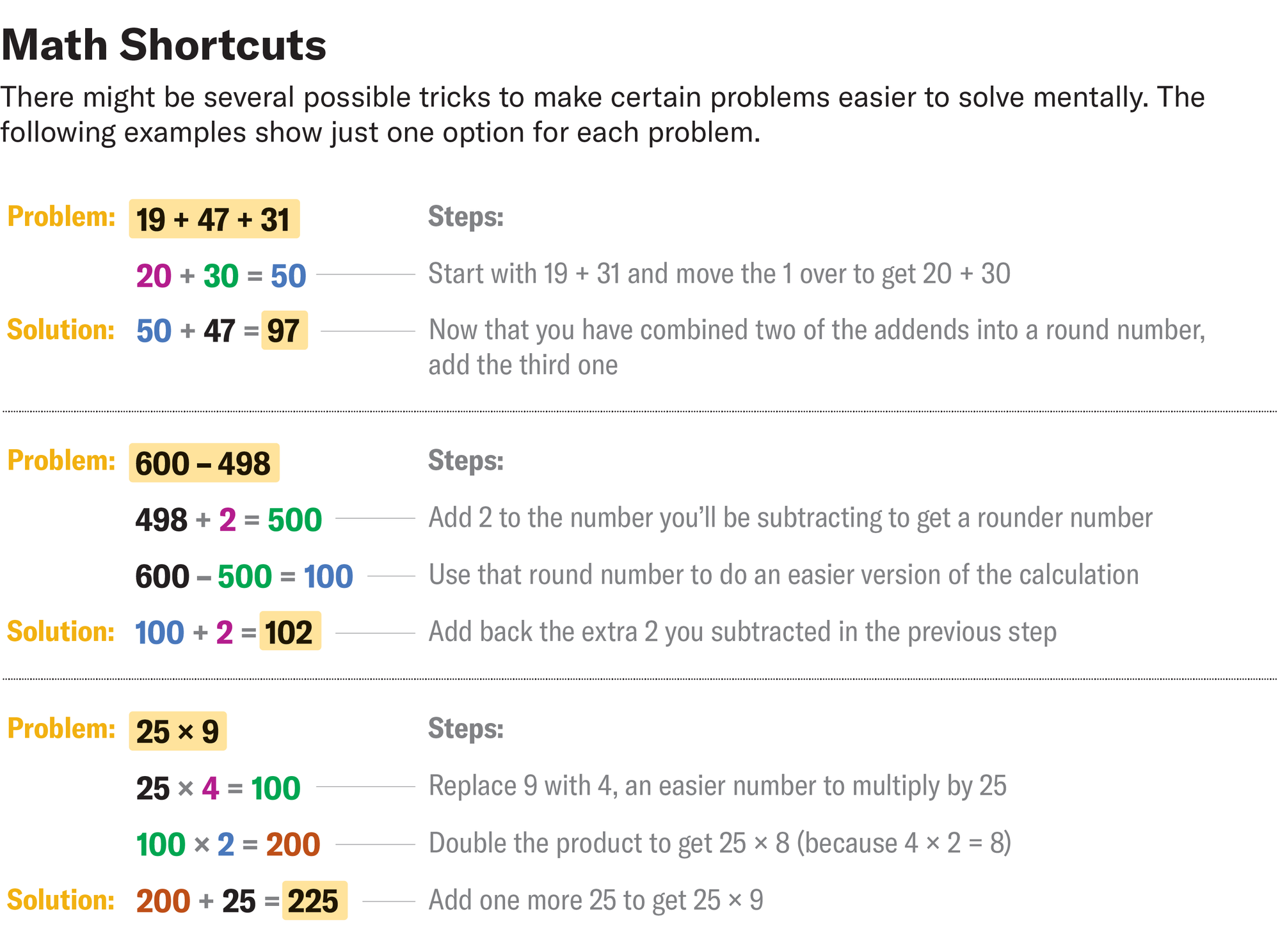
The team found that students who reported a greater desire to please their teachers, a trait that skews heavily female, were more likely to solve problems procedurally—that is, the way the teacher instructed them to. This tendency could factor into a long-standing paradox in math education: girls often have better math grades than boys, and girls and boys perform similarly on state assessments, but girls lag behind on high-stakes testing such as the SAT and beyond, especially with tasks that involve solving problems they’ve never seen before. The same studiousness that helps girls get ahead in school may be holding them back later on. The researchers also found that creative problem-solving was correlated with stronger spatial skills, specifically, with being able to rotate objects in one’s mind—an ability that Lubienski says can be learned.
“What I find exciting is that [the paper] points to potentially malleable mechanisms—not just ‘girls do X, boys do Y’ but why those differences might emerge,” says education researcher Joseph Cimpian of New York University, who was not involved in either study. “The issue may be not ability but rather the interaction of instruction, classroom norms, anxiety and what students believe is expected of them.”
Even if you’re no longer in high school, it’s never too late to improve your problem-solving skills and practice thinking outside the box, Lubienski says. “Try to solve math puzzles in Scientific American,” she suggests.
It’s Time to Stand Up for Science
If you enjoyed this article, I’d like to ask for your support. Scientific American has served as an advocate for science and industry for 180 years, and right now may be the most critical moment in that two-century history.
I’ve been a Scientific American subscriber since I was 12 years old, and it helped shape the way I look at the world. SciAm always educates and delights me, and inspires a sense of awe for our vast, beautiful universe. I hope it does that for you, too.
If you subscribe to Scientific American, you help ensure that our coverage is centered on meaningful research and discovery; that we have the resources to report on the decisions that threaten labs across the U.S.; and that we support both budding and working scientists at a time when the value of science itself too often goes unrecognized.
In return, you get essential news, captivating podcasts, brilliant infographics, can’t-miss newsletters, must-watch videos, challenging games, and the science world’s best writing and reporting. You can even gift someone a subscription.
There has never been a more important time for us to stand up and show why science matters. I hope you’ll support us in that mission.