


Australia is facing critically low fuel reserves, raising fears petrol prices could surge amid escalating conflict between the United States and Iran.
The International Energy Agency recommends countries maintain at least 90 days’ worth of fuel stockpiles, but Australia is reported to have just 28 days of reserves remaining.
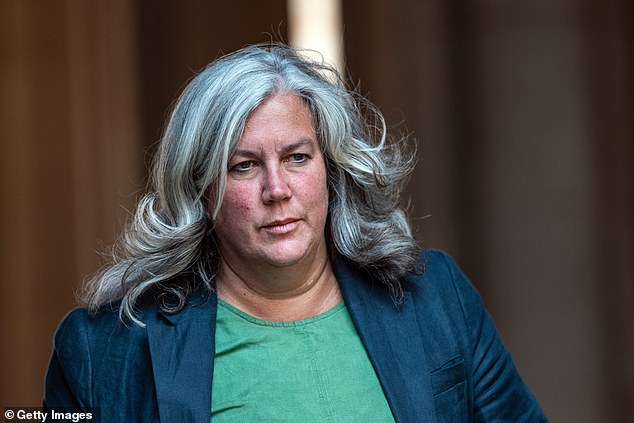
Nationals MP Barnaby Joyce warned that the situation could escalate into a crisis if urgent action is not taken.
‘It’s a shame in a crisis like this that we’ve got ourselves down to two oil refineries, so that if there’s a crisis in the production of fuel, we’re in a bad spot,’ he said on Monday morning.
‘We’ve got the old policies here – cross fingers, everything should be right as long as President Trump is able to bring this to a conclusion.
‘People have got to start looking at what the effects are for Australia, not just the Middle East, and you can start looking for those effects at a petrol pump near you.’
Deputy Prime Minister Richard Marles said the government was aware of the shortage and was monitoring it ‘very closely’.
‘Look, we take crude oil from around the world, but that would include from the Middle East, but it’s not the only place where we take crude oil from,’ Marles said.

Australia is running significantly low on fuel reserves and with petrol prices potentially set to skyrocket due to the conflict between the US and Iran, this could spell danger
‘But I guess what that highlights is that, I mean, this is an important region. It has an impact on the global economy.
‘We’ll all be watching that very closely, exactly what impact it has as a function of how long this continues.’
Global oil supplies rely heavily on the Strait of Hormuz, a strategic shipping route effectively controlled by Iran, which is why escalating conflict in the Middle East could directly push up petrol prices in Australia.
Analysts now expect Iran will cut off access completely, choking the main access point for the region which produces a massive 27 per cent of the world’s crude oil.
It’s estimated up to 20 per cent of global crude oil typically travels through the Strait of Hormuz.
Other shipments tend to move through the Red Sea and the narrow Bab-el-Mandeb Strait.
As of Sunday night, Australian time, reports had surfaced of the Strait of Hormuz already being ‘practically closed’ with traffic dropping by around 70 per cent.
Andy Lipow, president of energy consulting firm Lipow Oil Associates, told CNN the worst-case scenario would involve a major disruption to oil shipments through the region.

Barnaby Joyce said ‘everything should be right as long as President Trump is able to bring this to a conclusion’
‘The worst-case scenario for the oil market is an attack on Saudi oil infrastructure followed by a complete closure of the Strait of Hormuz,’ he said.
‘It remains to be seen if Iran will indiscriminately attack oil tankers in the region, shutting the waterway.’
AMP chief economist Shane Oliver warned fuel prices are likely to jump significantly, very soon.
‘Oil prices will spike sharply, possibly above US$100 a barrel, from US$67 on Friday for West Texas, given the disruption to oil supplies, including via the Strait of Hormuz,’ Mr Oliver said.
‘This is particularly so given the broad nature of the US and Israeli attack – including talk of regime change – and Iran’s broad-based retaliation so far.
‘The key issue is how long it lasts.’
Brent crude soared close to 13 per cent at Monday’s open AEDT, briefly pushing past US$82 a barrel.
The benchmark is now up more than 30 per cent this year as traders factor in mounting US-Iran tensions.
Mr Oliver warned that for every US$1 increase in crude oil prices, Australian motorists can expect petrol to rise by about one cent a litre.
A US$40 spike would equate to a 40-cent jump at the pump.
Mr Oliver cautioned the impact may stretch well beyond petrol prices.
‘If there are sustained interruptions to the flow of oil from the Middle East to China, that could have a negative impact on China’s economy and, presumably, on China’s imports from Australia,’ he said.
One-fifth of the world’s liquefied natural gas also passed through the Strait of Hormuz, meaning gas prices could also go up.