



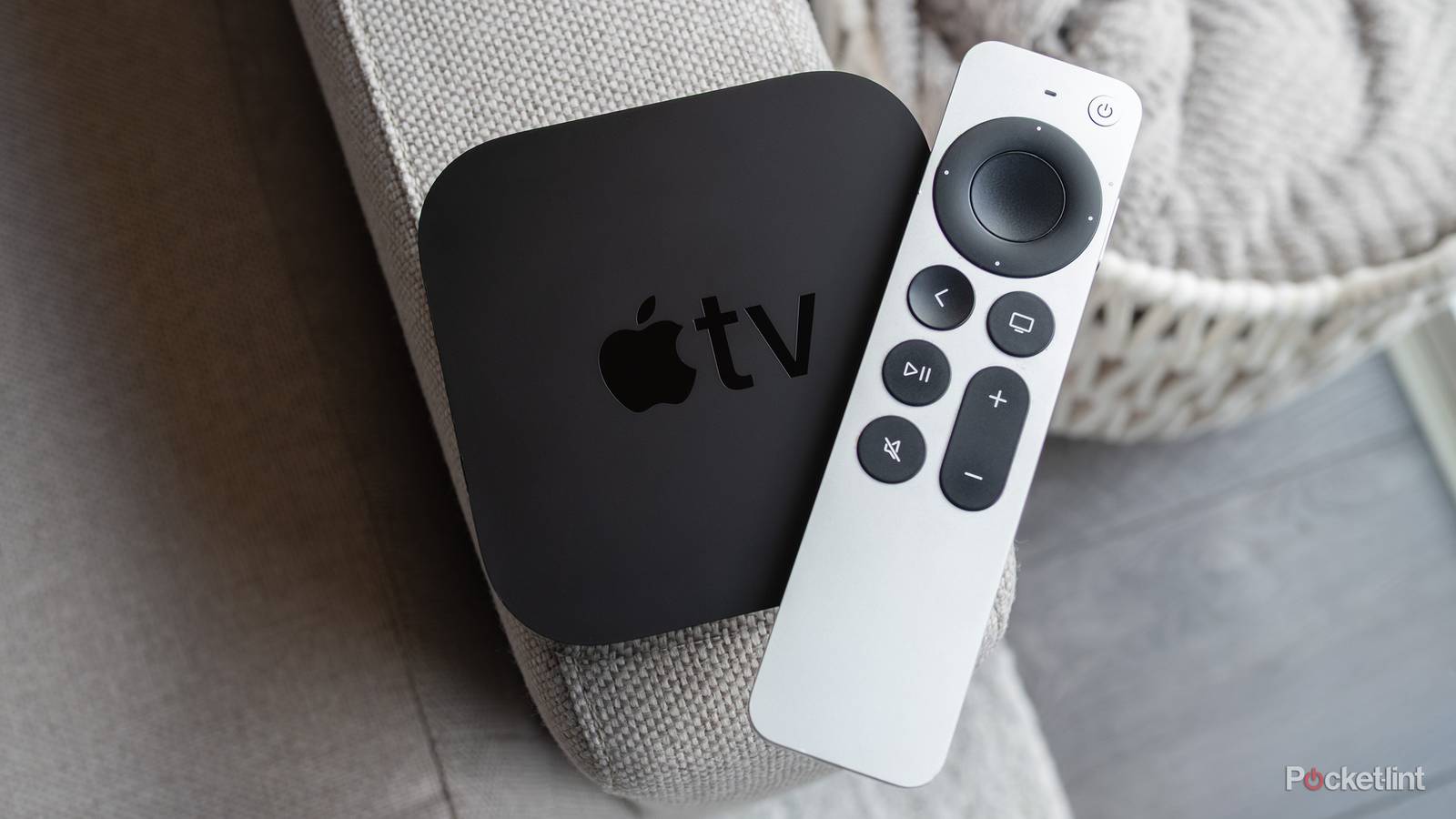
Taking a bird’s-eye view, media streamers are a lot less critical than they used to be. Back in the early 2010s, they were a revelation, since the apps on TVs were often badly designed and powered by weak chips. If you even had a smart TV — many people were still using “dumb” TVs, and lucky to have something with an HDMI port.
As of 2026, apps and platforms have standardized, and most TVs are reasonably well-equipped for tasks like 4K HDR and spatial audio. You can buy a set with Google TV or Roku OS and never think twice about adding a streamer later. But if you want a deluxe experience, you should still invest in an Apple TV 4K — even if you never buy any other Apple devices. A lot of its qualities are byproducts of the company’s overall business strategy.
What makes the Apple TV 4K so special?
Cutting through the nonsense

On paper, many of the 2022 model’s specs are so common as to be pedestrian. It supports Dolby Vision and HDR10+ among its HDR formats, and various flavors of Dolby surround sound, up through Atmos. The most expensive model supports gigabit Ethernet, and acts as a Thread border router for smart homes. Yet even those features aren’t that rare. It’s actually a little outdated in some respects — it’s still using Bluetooth 5.0 and Wi-Fi 6, despite those standards first arriving in 2016 and 2019, respectively.
Where Apple decimates the competition is in speed. You see, the company once had ambitions of treating the Apple TV like a game console, which meant giving it an unusually fast processor. Those ambitions have flopped — Apple never commits strongly enough to win over gamers or studios — but users have still come to expect that level of performance, so it keeps equipping new models with iPhone processors.
The 2022 model is equipped with an A15 Bionic chip, first found in 2021’s iPhone 13. You might think that would make it feel ancient, but in practice, it’s grossly overpowered. tvOS is a stripped-down platform compared to iOS — so when it’s not running games, an Apple TV is glassy smooth. Unlike most TVs and add-on streamers, which have slight delays when launching apps or scrolling through menus, the Apple TV offers virtually zero friction. Sometimes, it’s actually too smooth — on any model, it’s so easy to swipe through things using the Siri Remote that you can occasionally overshoot your target. It’s better than the alternative when all you want to do is relax after a long day of work.
Unlike most TVs and add-on streamers, which have slight delays when launching apps or scrolling through menus, the Apple TV offers virtually zero friction.
Aiding this is the design of tvOS itself. While there is a separate “TV” app with a watchlist, store, library, and recommendations, the software defaults to a straightforward homescreen full of your apps. There are no suggestions, no categories to sort through, and more importantly, no ads except maybe the occasional Apple promotion up top. This uncluttered approach is possible partly because the Apple TV 4K isn’t a low-margin product — the company turns a profit on every unit it sells, so it doesn’t need jam ads in your face or constantly nudge you to buy, rent, or subscribe to something. The bar shouldn’t be so low, perhaps, but I think it’s well worth paying to use a product instead of becoming one.
Longevity is an underrated advantage. I have a 2017 box in my dining area, and performance-wise, you’d hardly know it was that old without comparing it to a later one. It continues to get the latest app and OS updates too, no matter that it can’t handle things like Liquid Glass or HDR10+. This contrasts with the likes of Amazon’s Fire TV platform, which is notorious for slowing devices down over time. While that software is due to get an overhaul in 2026, I’d still put more trust in Apple’s tech.
I haven’t even touched on the perks for people in the Apple ecosystem. If you’ve got an iPhone, iPad, or Apple Watch, you can use those as remotes without much hassle. The device supports HomePods and other AirPlay speakers for wireless audio, and it’s integrated with a range of free and paid Apple services, ranging from HomeKit and iCloud Photos to Apple Fitness+. Some people will buy AirPods just to have the convenience of quickly switching from their phone to their TV.
Are there reasons why someone should avoid an Apple TV?
Dealing with the integration question

Aside from its higher pricetag — starting at $129 — there aren’t many issues. Some people find the Siri Remote too simplistic, or its touchpad too finicky, although you can always tap arrow buttons instead. Siri itself is also a mediocre voice assistant in its pre-Gemini form, though I find it works well enough for TV commands. It’s easy to search, open an app, or fast-forward and rewind.
The greater concern tends to be platform integration. For casting, it’s designed around AirPlay, not Google Cast, so that’s an inherent restriction for Android and Windows users. And if you’ve got a smart home based around Amazon Alexa or Google Home, there’s no way to integrate an Apple TV into those ecosystems’ automations or voice commands. That might not sound important on the surface — but it’s immensely useful to be able to set up something like a “movie night” routine that dims the lights, closes the blinds, and switches the TV to the right app. Siri and HomeKit do support these kinds of functions, but HomeKit is such a locked-down and Apple-centric ecosystem that it can sometimes be hard to find compatible accessories if they’re not equipped for universal pairing via Matter.
Hold off on buying an Apple TV if you can, though
The refresh is coming

If you need a media streamer right now, there’s no real harm in buying the 2022 model. It’s going to be useful for the next several years, at least, and there’s no sign it’s about to be outdone by any of Apple’s rivals.
The real issue reason to wait is an imminent refresh. A new model is expected in the next few months, if not the next few weeks, with updated specs across the board. Those include things like Wi-Fi 6E or Wi-Fi 7, and most importantly, a new processor fast enough to handle Apple Intelligence. Yes, that tech has been a bust so far on other Apple devices — but with an upgrade based on Google Gemini around the corner, Siri might finally be useful for handling complex tasks and questions, including hunting down something to watch. Whether or not this lives up to expectations, it would be a shame to miss the opportunity to find out.
The next Apple TV should include things like Wi-Fi 6E or Wi-Fi 7, and most importantly, a new processor fast enough to handle a Gemini-based Apple Intelligence.
Apple is also likely to add support for the two newest HDR standards, Dolby Vision 2 and HDR10+ Advanced. It’s going to be a while before compatible TVs become commonplace, never mind content to watch — but Apple’s support could actually help spur the rest of the industry.