


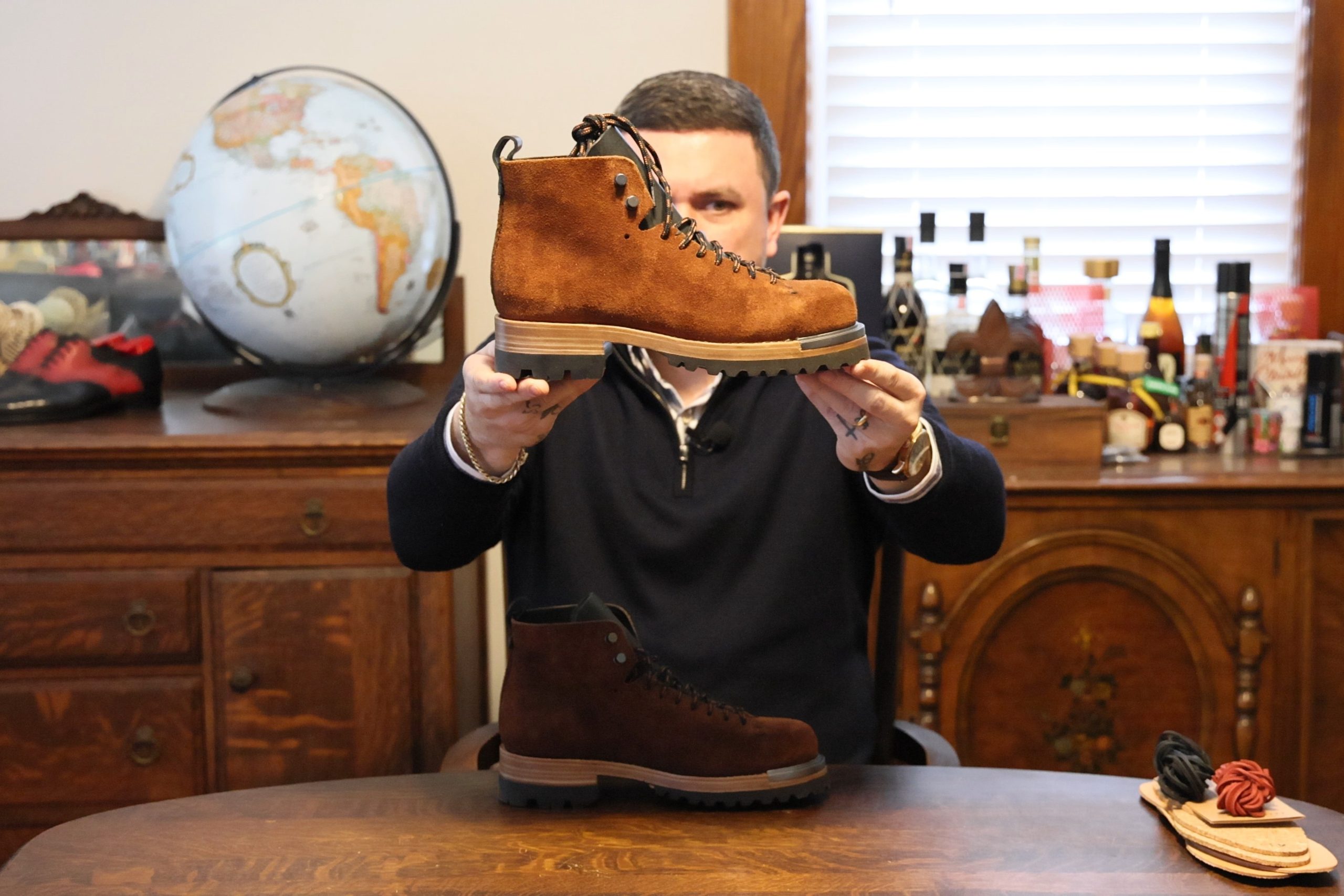
FEIT is one of those shoemaking brands that I have known about for years but never really explored in depth. Interestingly enough, when I first moved to New York City, they had a shop just around the corner from my original showroom, near Christopher Street and 6th Avenue. I must have walked past it a hundred times, yet never actually went inside. Looking back, I regret that. I should have taken the opportunity to learn more about what they were doing.
My first introduction to FEIT was through their handmade sneakers, which were quite revolutionary at the time. We’re talking about handsewn, wholecut leather sneakers that were selling for close to $1,000 long before luxury handmade sneakers became a popular conversation. I remember thinking that the concept was pretty wild, especially considering the price point.
But that was about the extent of my knowledge. FEIT always seemed to exist in a slightly different world from the traditional welted footwear community that I normally associate myself with. They have this interesting crossover between fashion, artisanal craftsmanship, and traditional shoemaking. And while I knew they were making serious footwear, I never fully appreciated just how serious until I got my hands on these boots.
So here we have the FEIT limited-edition wholecut hiking boot that is quite unlike anything I’ve reviewed before. These particular boots are not mine, unfortunately, but belong to a good friend who kindly allowed me to borrow them for a closer look.
And what a pair they are!
👉Watch the long form video review here:
Handmade Construction at Its Finest
The first thing you notice about these boots is their sheer substance. They are big, heavy, and built with what looks like enough leather to make several pairs of ordinary shoes. But what makes them truly interesting is the construction.
FEIT takes a very deliberate approach to shoemaking, focusing on handmade construction techniques that are increasingly uncommon in the modern footwear industry. These particular boots were made in China, and each pair comes with a certificate of authenticity stating that the boots were handsewn from start to finish by one master craftsman. It even bears the maker’s signature in Chinese characters.
I love that. It brings a personal element to shoemaking that is often lost in today’s world of mass production.
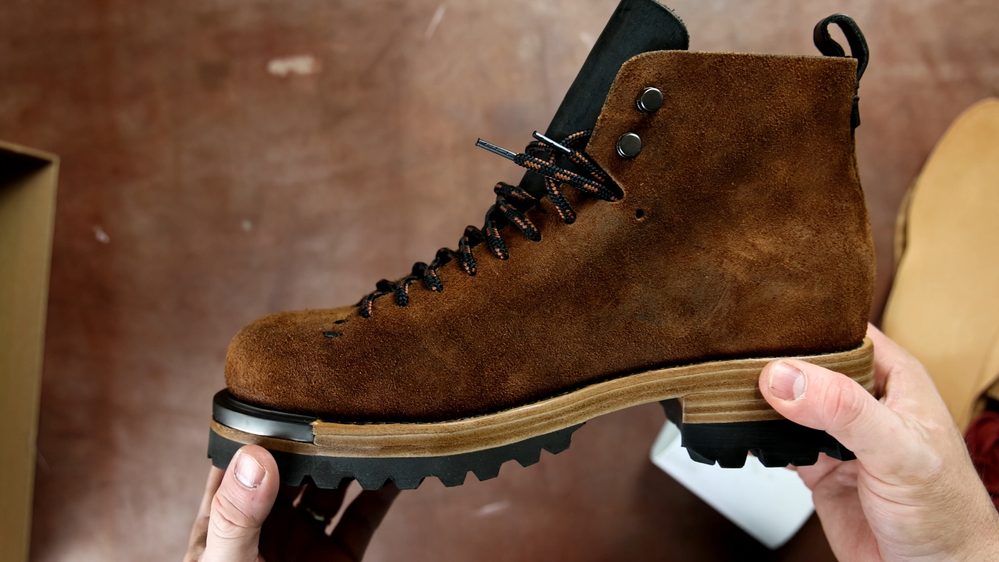
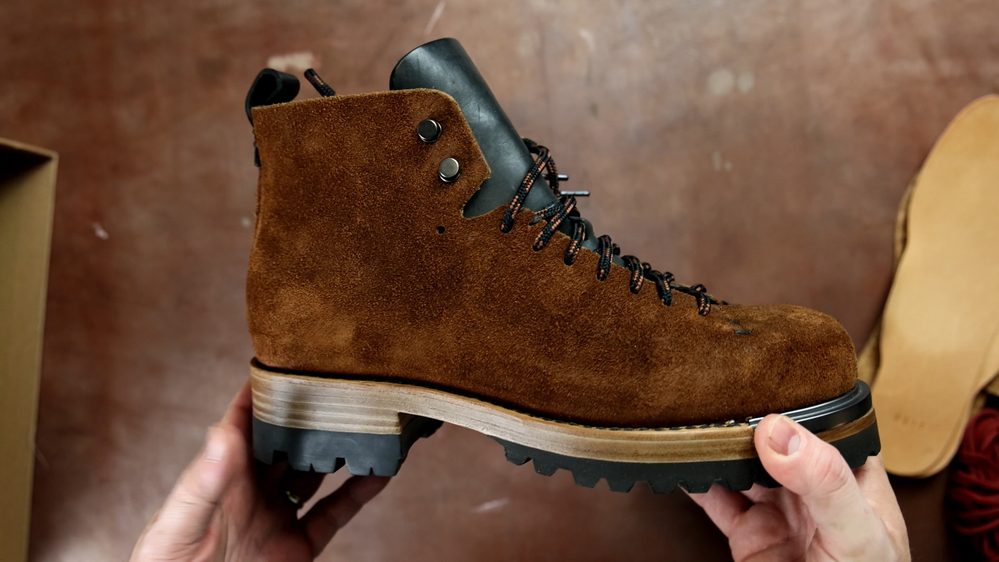
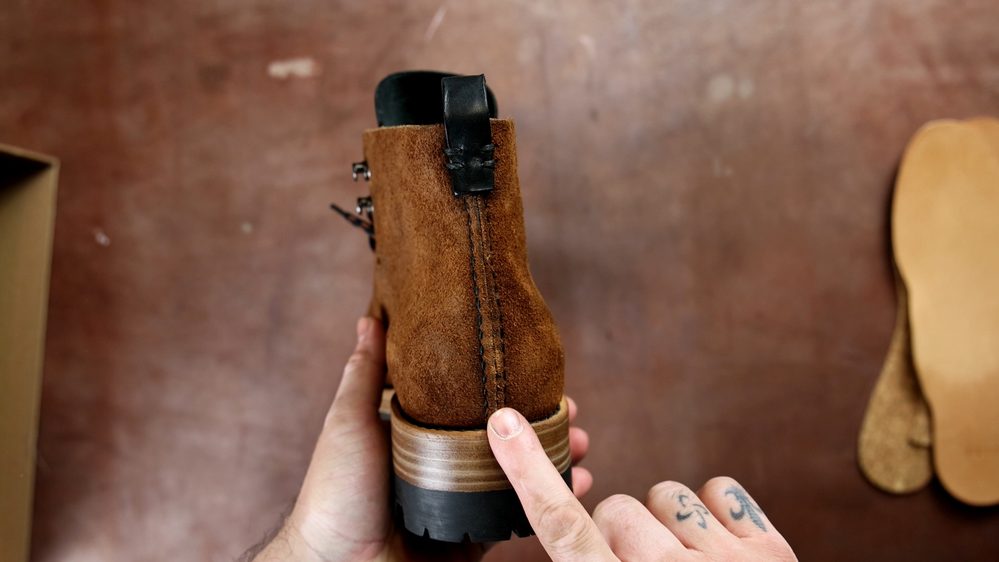
The boots themselves are made from a wholecut piece of suede, meaning the upper is formed from a single piece of leather, with the main closing seam positioned at the back of the heel. And this is where you begin to appreciate the skill involved.
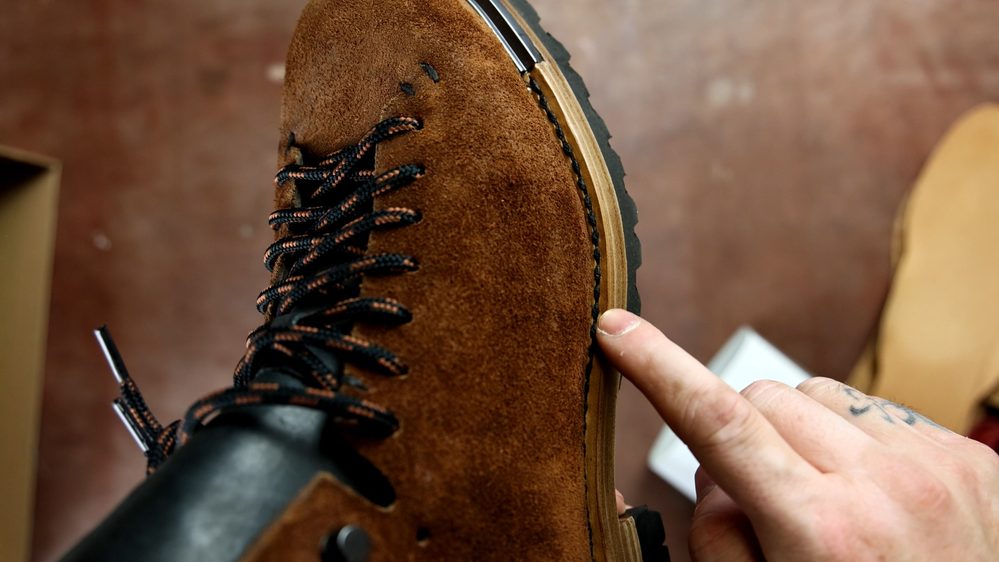
The heel seam is joined with a beautiful handsewn, pie-crust-style stitch, the type of work you might otherwise associate with the apron of a handmade loafer. It is substantial, evenly executed, and gives the boot a wonderfully artisanal appearance. There are additional handsewn details throughout, including the prominent whip stitching that forms part of the boot’s distinctive character.
What I appreciate here is that the handmade nature of the boot isn’t just something written on a marketing card. You can actually see it in the construction and feel it in your hands.
👉Watch the up close video review here:
A Triple Sole That Means Business
Now, if the hand stitching is impressive, the sole construction is on another level entirely.
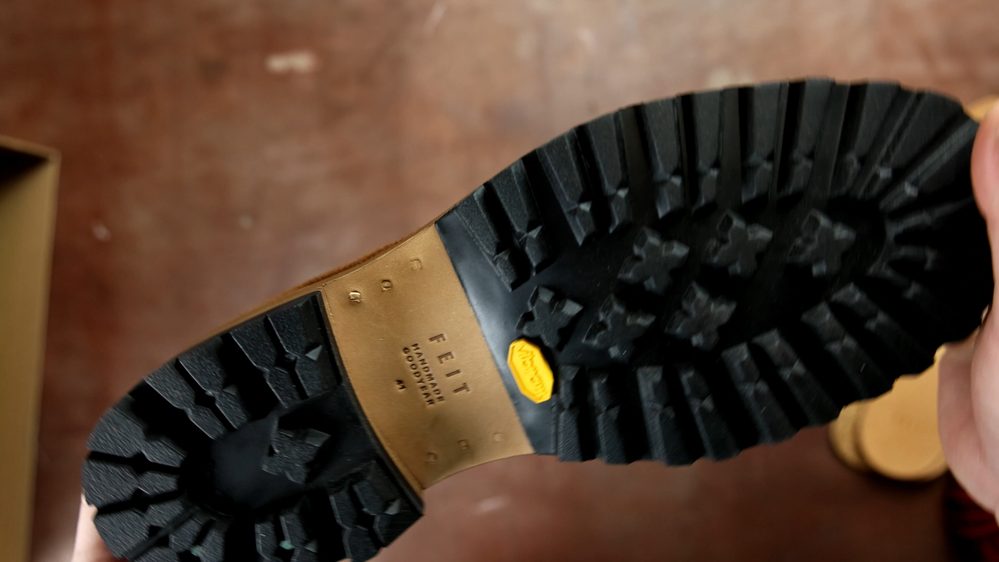
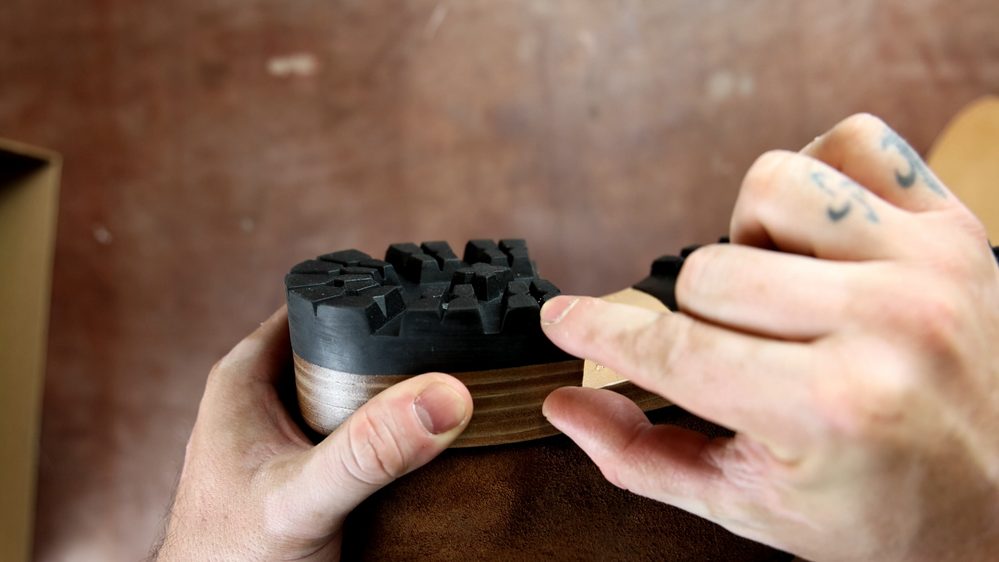
These boots are built on what I would describe as a triple sole, with the welt and substantial layers of stacked leather creating an enormous amount of depth beneath the foot. There is also an additional Vibram rubber component providing traction and protection.
The result is a sole unit that is extraordinarily substantial. The heel, in particular, is massive. It must add close to two inches of height, which is not something I would normally gravitate toward. I like my heels maxed out around 1.5 inches at the most. But to each his own.
There are also traditional shoemaking details that you might not expect to find on a boot with such a contemporary appearance. You can see the pegged waist, the nails securing the heel construction, and the widely spaced outsole stitching that appears consistent with the rugged nature of the boot.
This isn’t the kind of shoe where you need 12 or 15 stitches per inch. It is a substantial workwear-inspired boot, and the stitching suits that character.
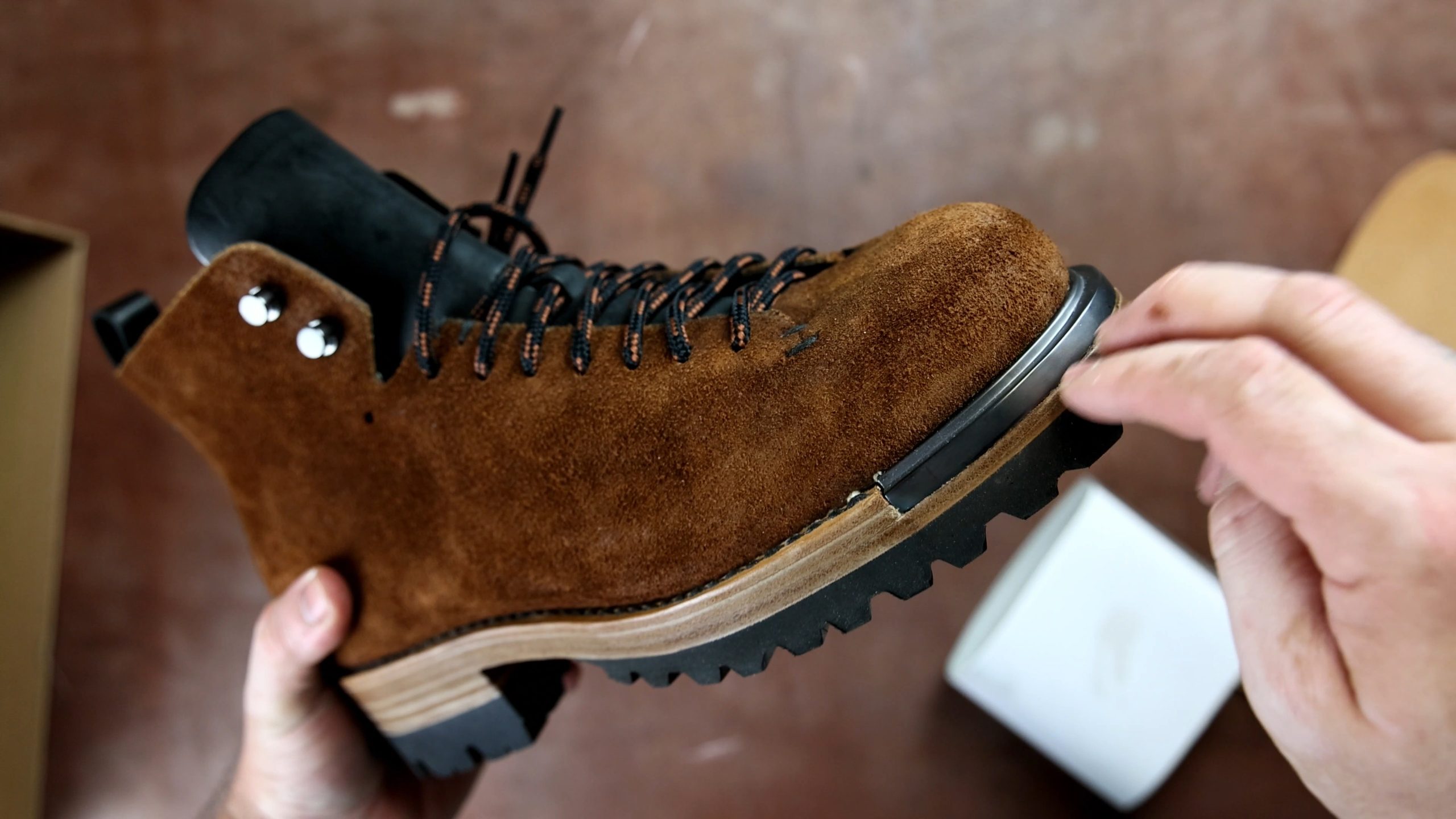
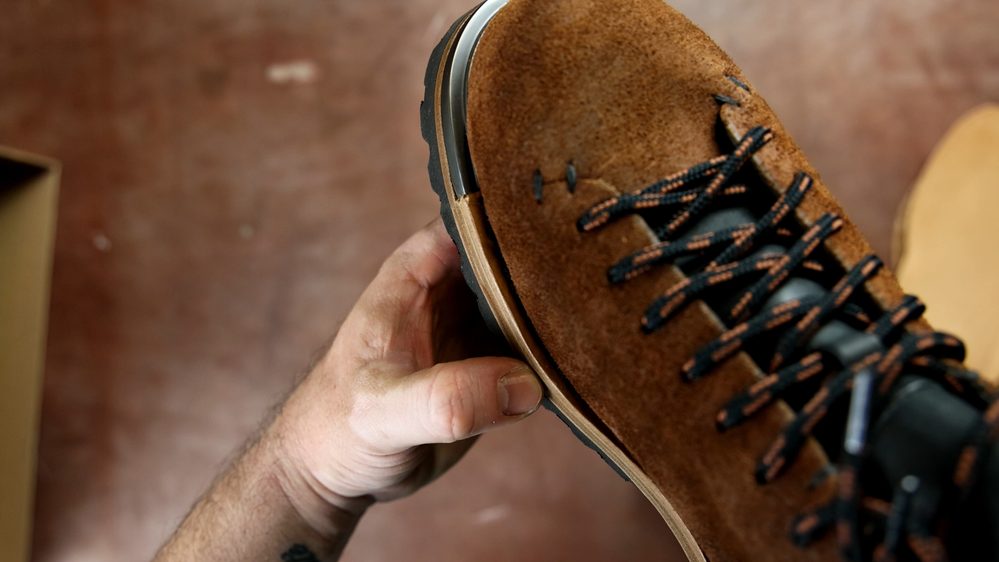
One particularly unusual element is the metal detailing around the toe and welt. It creates a distinctive industrial appearance while offering reinforcement to areas of the boot. However, it’s important to understand that this is not a traditional steel-toe safety boot. The external metal detailing shouldn’t be confused with a protective steel-toe cap designed to withstand heavy objects falling on your feet.
Personally, I’m not entirely sold on the metal toe treatment. It’s certainly interesting, but perhaps a little too industrial for my tastes. Then again, I’m predominantly a dress shoe guy, so this is hardly my usual territory anyway. But this same boot without the metal would have vastly improved it for me.
Still, you cannot deny the originality.
The Suede and Overall Design
Another interesting aspect of these boots is the suede itself.
This isn’t your typical fine, plush calf suede that you might find on a pair of elegant loafers. It is a much coarser, more rugged suede with a pronounced texture that feels entirely appropriate for the design. And that’s exactly how it should be for this type of style.
I wouldn’t want an incredibly fine, delicate suede on a boot that looks like it was intended for trekking through forests and mountainous terrain. That would almost defeat the purpose. The rougher texture complements the heavy sole construction and gives the boots a more authentic workwear character.
The overall silhouette is equally interesting. It has something of an Alpine hiking boot appearance, although it doesn’t follow all the traditional design conventions of that style. There is no elaborate system of D-rings or particularly technical-looking upper construction. Instead, FEIT has created something that blends the simplicity of a wholecut upper with an almost exaggerated, industrial sole.
The last shape is actually quite nice, too. Despite the bulk of the construction, the toe has a pleasing shape that prevents the boot from looking unnecessarily clumsy.
It’s an unusual balance, but one that I think works surprisingly well.
Fit and Sizing – A Very Generous Boot
Now, this is where things got particularly interesting for me. The pair I tried was a size EU 41, or approximately US 8, which is generally around my normal size. However, these boots are exceptionally generous in volume. And I don’t necessarily mean length.
I have relatively slender, shallow feet, and the amount of space inside these boots was substantial. Even when wearing thicker socks, I could feel quite a lot of additional depth throughout the shoe.
Someone with a higher instep or a more voluminous foot would probably appreciate this shape considerably more than I did.
Fortunately, FEIT appears to have considered this.
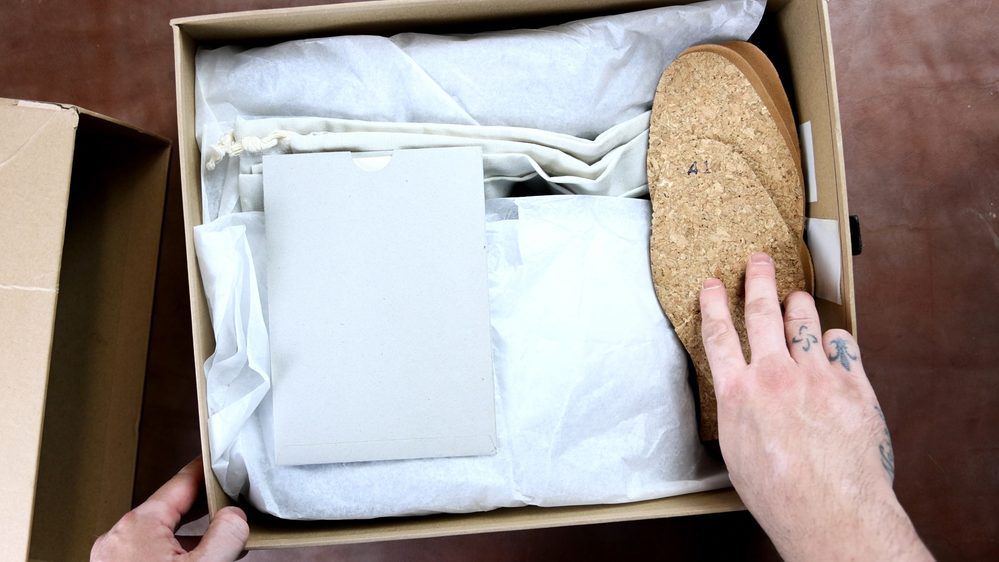
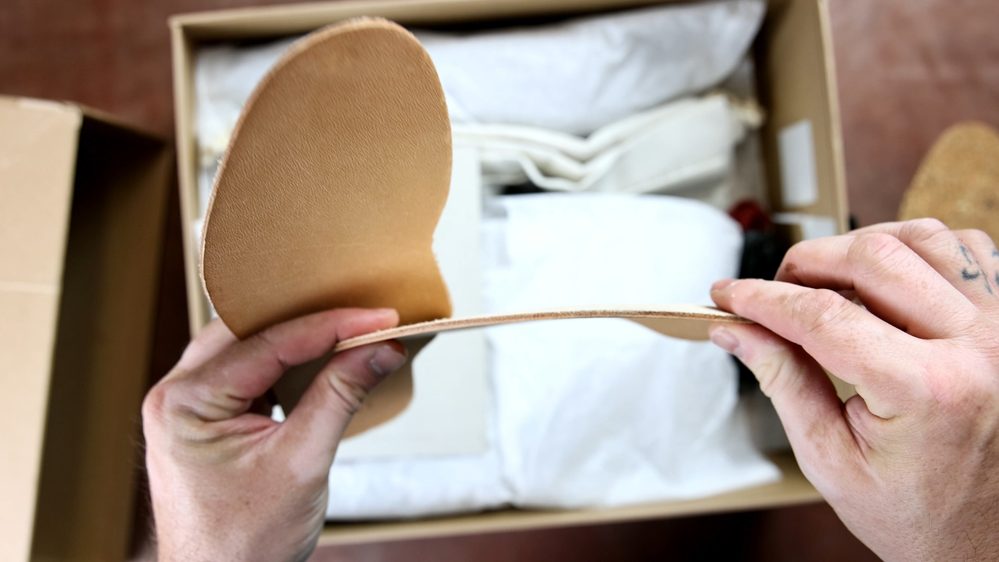
Included with the boots are additional buffalo leather footbeds and separate cork inserts. The leather inserts are wonderfully substantial, measuring approximately 3mm thick, and are made from proper, firm insole leather rather than some flimsy material that barely offers support.
The cork inserts can be placed beneath the leather footbeds to reduce volume further, allowing the wearer to adjust the fit to a degree. There is one word of warning here, however.
The cork inserts are quite delicate. In fact, I accidentally broke one while trying to place it inside the boot! So, if you ever encounter a pair with these inserts, handle them carefully. If you intend to use both the cork and leather inserts together, it might be worthwhile securing them to one another to avoid damaging the cork during removal or insertion.
For anyone considering FEIT footwear, I would definitely pay attention to the volume of this particular model. If you have narrow, shallow feet like mine, you may need the additional inserts or potentially a different size. I probably would have needed the EU 40 size in all likelihood.
Of course, that doesn’t necessarily mean every FEIT model will fit the same way. This is simply my observation from trying on this particular pair.
Packaging and the Little Details
One thing I always appreciate when examining high-end footwear is the thought that goes into the overall presentation.
FEIT certainly doesn’t disappoint here.
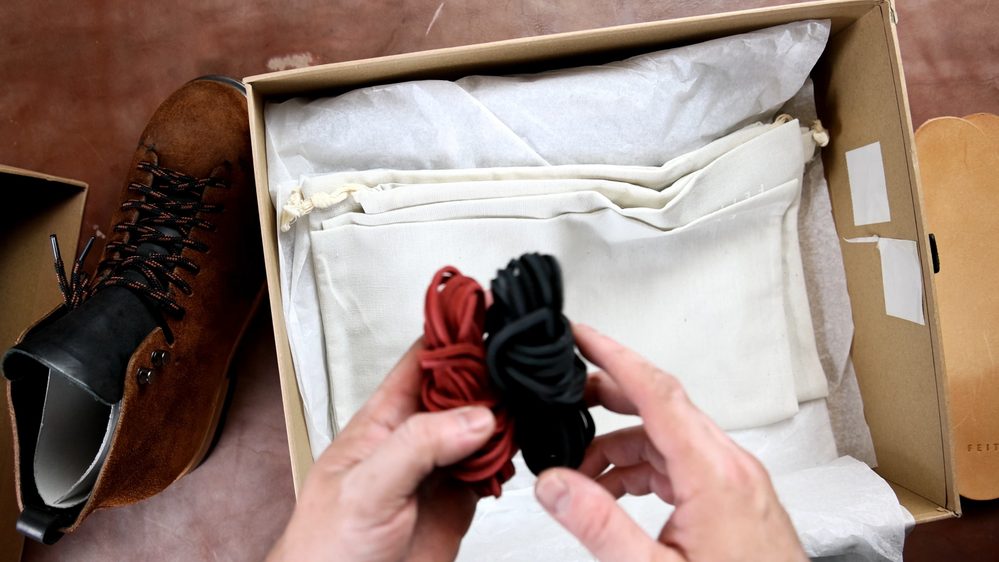
The boots arrive in an enormous, sturdy cardboard box that feels appropriate for the size and weight of what is inside. There are also two beautiful, generously sized fabric shoe bags that have a slightly rough linen or canvas-like texture.
I particularly liked these. They feel substantial and useful, rather than being the kind of thin shoe bags that some brands include simply to tick a box.
You also receive additional leather laces in black and red, offering alternatives to the multicolored round laces already fitted to the boots.
Then there is the care guide, the additional footbeds, and, of course, the certificate of authenticity bearing the maker’s signature. Taken together, it all feels thoughtfully considered.
FEIT has long emphasized natural materials, responsible production, and making footwear with longevity in mind. And while packaging alone doesn’t prove anything about sustainability, you do get a sense that they are trying to create a product where the details matter.
That is always refreshing to see.
Are These Boots Really Worthy of the Hype?
What I find most fascinating about FEIT is how relatively little the brand comes up in the traditional dress shoe and welted footwear circles. At least in my experience.
I’m constantly surrounded by people discussing handmade shoes, leather quality, Goodyear welting, hand welting, and the endless details that separate one shoemaker from another. Yet FEIT almost never seems to enter those conversations.
Perhaps that’s because the brand appeals to a different clientele. Maybe its audience comes more from the fashion and design world than the traditional menswear community. Whatever the reason, I feel that they deserve more recognition among people who appreciate good shoemaking.
Because these boots are the real deal. You can debate whether you like the design. You can question the enormous heel, the metal toe detailing, or whether the overall aesthetic is something you would actually wear. Those are all matters of personal taste.
But the craftsmanship is another conversation entirely.
There is a tremendous amount of work involved in creating something like this, especially when you consider the wholecut upper, handmade stitching, and substantial sole construction. The fact that the boots were made by a single craftsman only adds to their appeal.
They are certainly not perfect for everyone. And while I suspect that the sole construction could withstand an extraordinary amount of abuse, the suede upper would likely be the first area to show significant wear if these were subjected to particularly rough conditions.
I also haven’t put them through a proper hiking test, so I can’t speak to their long-term comfort, traction, or performance in challenging environments. But from a construction standpoint, there is an awful lot to admire.
Final Thoughts on FEIT
These boots have genuinely changed the way I look at FEIT.
Before examining them, I primarily associated the brand with extraordinarily expensive handmade sneakers and somewhat unconventional footwear that seemed to sit outside my usual shoemaking world.
Now, I see a company that is clearly passionate about making footwear properly, albeit with a very distinctive design philosophy. Would I personally wear these exact boots? I’m not entirely sure. The massive heel and metal toe detailing would take some getting used to. But I do love the wholecut suede upper, the handmade stitching, and the overall character.
And having recently moved to a part of the country where rugged boots make considerably more sense than they did in my old New York life, I can certainly see the appeal of something like this.
But I will definitely be keeping a closer eye on FEIT from now on.
It’s always exciting to discover a brand that reminds you just how much artistry still exists in the shoemaking world, particularly when it’s one that has been sitting under your nose for years.
If you’re not familiar with FEIT, I encourage you to have a look at their work. And if you already own a pair, I would love to hear about your experiences with their quality, fit, and long-term durability.
You can learn more about the brand at FEIT’s official website.
—Justin FitzPatrick, The Shoe Snob
Shop · Marketplace · Patreon


