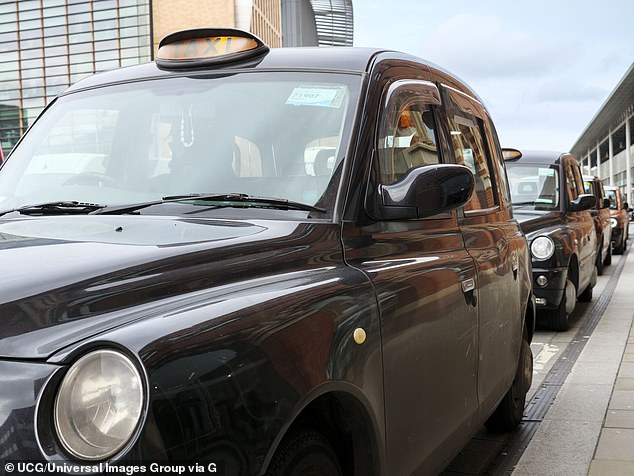
Train operators across Britain have spent more than £13million on hiring taxis for staff because of rail disruptions – including when an alternative rail service was ‘too cold’.
Over 395,000 taxi bookings – funded by ticket fares and the Department for Transport – were made by staff by train operators since January 2025, figures gathered from freedom of information requests have revealed.
Although commercial agreements are usually in place for the price and routes of pre-planned journeys, taxis are frequently used during emergencies – with there being no limit to the cost and distance of a cab ride.
Spending the most on taxis for their staff was South Western Railway (SWR) at over £4.9million since last year – with £147,439 of this sum accounting for delay charges due to taxi drivers waiting over 5,700 hours.
In fact, a waiting time of 4 hours and 48 minutes was documented by a taxi booked by SWR in June 2025, adding £135.36 in late fees to a four-mile journey normally costing £30.54.
Greater Anglia, operating from central London, was revealed as booking the most expensive taxi journey in January 2025 at £1,424.28, closely followed by another trip in April 2026 costing £1,343.76.
The figures also showed the longest distance covered by a single journey for staff was booked by TransPennine Express in February 2025, at a total of 368 miles.
The taxi – booked after a landslip blocked the railway – was used to shuttle people from Glasgow to Lockerbie, racking up the nearly four hundred miles.

Britain’s train operators have spent more than £13million on hiring taxis for staff because of rail disruptions

A member of staff on the Caledonian Sleeper was provided with a taxi after an alternative ScotRail service was deemed ‘very cold’
Another cab, booked by operating company c2c Railway Limited, took a whopping 10 hours to complete its journey as a result of roadworks near East Ham.
The taxi, booked at 3.45am, did not finish its journey until the following afternoon at 2pm.
Around 39 per cent of such journeys were disclosed as being booked during unsociable hours, between 11pm and 5am, when public transport is unavailable.
However, the data revealed some cabs were booked for more subjective purposes.
On March 5, 2026, a member of staff on the Caledonian Sleeper – an overnight sleeper service between London and Scotland – was provided with a taxi after an alternative ScotRail service was deemed ‘very cold’.
The ScotRail service between Oban and Glasgow, which operates on the West Highland line, has drawn complaints from passengers over below-zero temperatures during the winter, leading some to nickname it the ‘polar express’.
SWR, one of Britain’s busiest train operating companies, said taxis are an ‘important operational necessity,’ adding their purpose is to quickly transfer workers from place to place.
The Department for Transport said: ‘Overall, the use of taxis represent a tiny fraction of the total cost to run Britain’s railway, but we know how important it is that people are getting a service that represents good value for money.
‘Under Great British Railways, we’ll continually look at ways we can manage a reliable service for passengers while keeping staff safe and costs down.’
Since 2004, the cost of a single anytime rail ticket has increased by 137 per cent, but train drivers remain among the highest-paid employees in Britain.
Working weeks for train drivers typically total between 35 and 40 hours, with shifts lasting 7.5 to 10 hours. Their average annual salary is £73,000.
A spokesperson for Aslef, Britain’s primary trade union for train drivers, did not comment on the use of taxis for staff. They said: ‘If the operators deem taxis effective for operational efficiency, that’s their choice and not the concern of the employees.’