‘I wholeheartedly believe we’re sleepwalking towards a tragedy.’
The words are delivered quietly, calmly, but they hit home with the power of a sledgehammer. And Mikey Devlin couldn’t be better qualified to hand out the grim warning about what he sees as Scottish football’s head-in-the-sand attitude towards mental health issues.
The chair of the players’ union PFA Scotland can dig into his own painful experiences as he appeals to the game’s decision makers to take action before it’s too late.
‘We need to sit up and say something needs to change,’ implores Devlin. ‘The word “proactive” is crucial here because we have the opportunity, specifically within football, to do something. Are we waiting for that crisis moment where it’s irreversible and we can’t undo the damage that’s been done?
‘We have more information and more knowledge, more resources, than we’ve ever had around mental health. So what are we waiting for? Are we waiting for the worst case scenario to unfold and then we say something needs to change? That’s insanity to me. That’s beyond comprehension that we wait for our worst fears to become a reality in Scottish football before we do something about it.
‘Fortunately, I work for an organisation, PFA Scotland, that does so much work on this issue. We try to bring awareness, we deliver workshops, we talk to our members and our players at every club in the country about mental health.

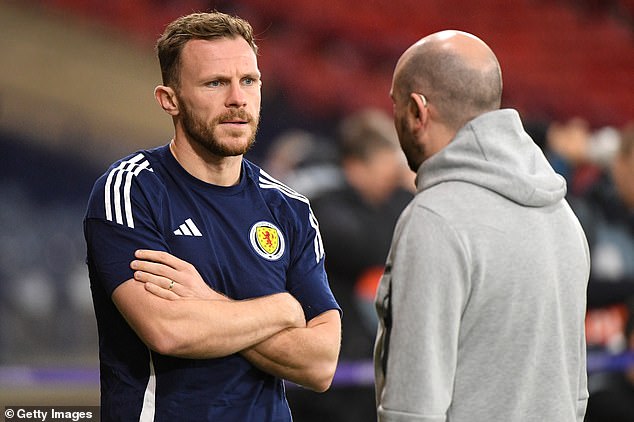
PFA Scotland chairman Mikey Devlin is concerned that tragedy is just around the corner
‘We have a full-time wellbeing officer, a player support officer, who wants to raise awareness on this, who wants to flag up what some of these symptoms are. We also have a 24/7 fully-funded confidential support service through Sporting Chance, the organisation former Arsenal skipper Tony Adams started when he was having his issues back in the day, and they have lots of mental health professionals who can put you in touch with the help you need.
‘Now, we would never shirk our responsibilities in this but we can’t be the only organisation and the only stakeholder in Scottish football that takes this seriously and tries to get the help to the players that they need.
‘It’s something that I’m extremely proud of as the chair of PFA Scotland and I’m so thankful that we’re giving this the importance it deserves. But we need others to step up to the plate.’
It could be 32-year-old Devlin’s specialist subject. His playing career hopped from Hamilton to Aberdeen, Hibs, briefly, Livingston and Ayr United. There were three caps for Scotland. But there was a recurring theme. He was plagued with injuries, all sorts of ailments. His body was constantly breaking down. Physical pain became mental torture. Eventually he had to bite the bullet and call it quits.
‘Football is challenging, mentally, with its ups and downs,’ says Devlin. ‘Playing, not playing, personal issues, relationships with the manager and inside the changing room, contract situations, unemployment, there are so many things that have an impact.
‘For me, it was injuries that were the catalyst for my downfall. It was a big downward spiral in my mental health. I got some good advice at Aberdeen but it took me a year of struggling to understand myself, noticing how I was changing, noticing how other people could see something was wrong but not realising it was depression or another mental health condition.

Devlin performed with distinction for a number of clubs including Livingston before retiring
‘At no point did anybody ask the question, and I don’t blame anyone else for that. It’s a systemic issue, but nobody’s checking in about how you are mentally, how’s the head, do you need any support, how are you coping, the type of questions you’d ask someone if you were assessing them physically.
‘My head became an unfriendly place for me. The rumination of thoughts I would have, the worry, the anxiety about my contract, about getting back to fitness, about self-worth, about my own value as a person, all the things that were a constant loop in my head became too much for me and I didn’t have the emotional capacity to deal with it.’
It’s a raw and emotional conversation as Devlin delves back into a time in his life when he wondered how much further he could possibly sink into the depths of despair.
‘I felt like I had no purpose,’ he confesses. ‘Life seemed meaningless. I can honestly say I never got to the point where I questioned the value of my own life but nothing made sense around me. Happiness or excitement about anything was non-existent. It was impossible.
‘I had a lot of pressure on me to be a version of myself that wasn’t the real one, for the sake of my team-mates, even for my family and my friends, I didn’t want them to see me struggling with this. Everything felt pointless. The world seemed empty and hollow. I couldn’t see the point. My feelings on a daily basis were a fluctuation between numbness and sadness.
‘I had a job so I still had to get up in the morning but that felt like the toughest thing to do. And I didn’t want anyone detecting there was anything wrong with me. But then when I went home came the crash after I dropped the act. I felt drained and the symptoms of that became quite intense for me. A lot of social isolation for someone who was pretty sociable.
‘I avoided answering the phone, responding to texts, going out anywhere and the only joy I could get was in escaping my own mind. And that generally involved drinking because it lightened the darkness I was living under. But for every up I could manufacture, there was a huge fall on the other side. It took a long time for me to recognise that something’s not right here.
‘I had a conversation with my sister Rachel, who I’m very close to, once I’d found a way of opening up a little bit and talking about it. She was supportive and reassuring, she just listened to what I was saying and told me there would be a time when I would feel excitement and optimism again.

Devlin won three Scotland caps under Steve Clarke in 2019 during his time with Aberdeen
‘She said you can’t see that at the moment but that’s depression, that’s an illness. She reframed things for me and told me it was perfectly normal to feel like I was feeling when you’re living with depression. That was a lightbulb moment for me. It was just a period of my life that I had to navigate my way through and get the help I needed.
‘I was doing some research the other day about the number of men who make up the total for suicides in Scotland since Covid. It’s around 75 per cent. And when you look at the current climate and whether men feel they can talk about these things, I think there’s a huge conversation around toxic masculinity and what that looks like now, how men need to behave, how men need to show up in society and there’s a direct contradiction with men being able to talk about how they feel.
‘Fortunately I got help when I needed it and it never got to the stage of self-harm or, certainly, suicidal thoughts, but that’s the path you can end up on and it can escalate really quickly.
‘I know where I grew up in Motherwell, we lost a lot of young men to suicide not so long ago. Boys, stereotypically, were unable to talk about how they were struggling and my worry is that they can resort to an irreversible outcome and that’s it. Once you take that step you can’t come back from that.
‘If, at that moment in time, the best route to get out of what someone once described as “brain pain” is to end it permanently then that surely gives us a window into how challenging a situation that is.
‘We know, when we’re in a healthy place, that what that person’s feeling is irrational because of the consequences and the pain that causes, both to the individual and the family, but that’s how difficult a moment they’re in that the only solution is to end their life.’
Devlin is genuinely worried that it’s going to take something seriously shocking to shake Scottish football into taking action.

Devlin tussles with Burnley striker Chris Wood during a Europa League qualifier in 2018
‘When it’s a physical injury we can see the issue,’ he adds. ‘There are physios, sports scientists, medical professionals to deal with it. When it’s someone’s mental health, it’s much easier to hide it and more difficult to detect.
‘Having specialists in that field is the route I’d like to see us going down. It seems utterly bizarre to me, and so far behind the times, that we don’t engage in that conversation about someone’s wellbeing.
‘It’s not my place to tell clubs how to spend their money but what we can advise from a PFA Scotland perspective, and on a human level, is that they prioritise the health of their employees.
‘How can we not see the importance of players’ mental health? Why do we not deal with it in the same way as physical health? Until we see them at the same level we’ll always be swimming against the tide.’