


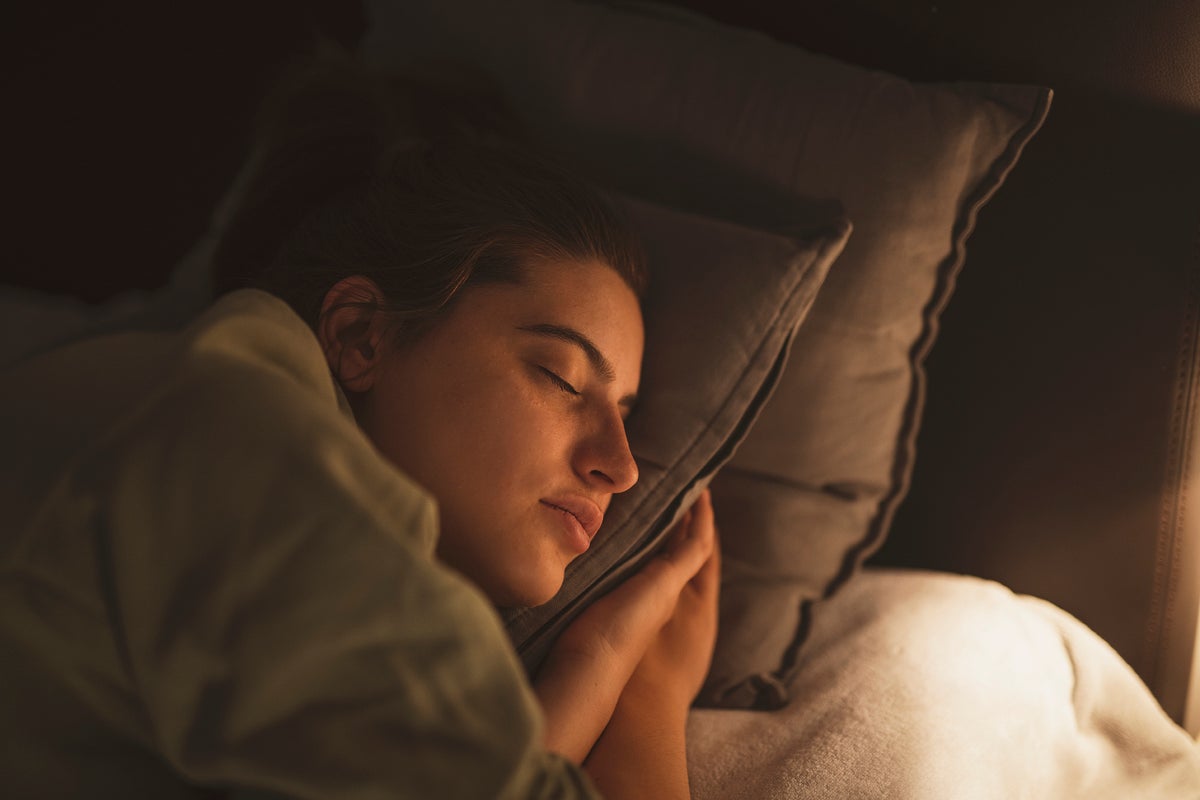
For decades, many scientists thought our sleeping habits fit neatly into two categories: we were either night owls or early birds, with the latter group considered healthier overall. New research, though, shows there’s more to it than that. In a study published in Nature Communications, researchers found five different sleeping pattern subtypes, each with its own distinct brain-imaging patterns, behaviors and health outcomes.
These findings could be useful for understanding how modern sleep patterns affect our health, says Sonja Schütz, a neurologist who studies sleep medicine at University of Michigan Health.
Researchers at McGill University trained a machine-learning algorithm to analyze neuroimaging data, questionnaire answers and health reports from 27,000 U.K. Biobank participants. The algorithm examined participants’ chronotypes, or typical sleep and wake patterns over 24-hour periods, and found patterns in brain imaging corresponding to five distinct groups. The marked differences piqued the interest of the study’s lead author, neuroscientist Le Zhou: The participants “actually have different biological patterns showing in their brain images.”
On supporting science journalism
If you’re enjoying this article, consider supporting our award-winning journalism by subscribing. By purchasing a subscription you are helping to ensure the future of impactful stories about the discoveries and ideas shaping our world today.
Three of the five subtypes were different flavors of night owls, and two were early birds—each with a grab bag of different properties. The first night owl subtype, which Zhou refers to as “high-performance night owls,” was more likely to engage in risky behaviors and have emotional regulation difficulties but also higher cognitive performance. In contrast, the second subtype, which he calls “vulnerable night owls,” demonstrated more laid-back tendencies, with less physical activity and a greater chance of smoking. This subtype was associated with the most health issues, including depression, heart disease and diabetes, consistent with preexisting ideas about the overall “night owl” group.
The final, “male-biased” night owl subtype skewed more toward men and was associated with higher cigarette and alcohol consumption, higher testosterone levels and higher cannabis use than other subtypes. This specific subtype could help to explain the traditional night owl chronotype’s commonness in men.
The “classical early bird” subtype, as Zhou puts it, matched traditional early bird traits, showing efficient brain networks, low alcohol and smoking rates, low risk-taking and more emotional stability. People in this group were the healthiest overall. The “female-biased” early bird subtype, however, which was skewed toward women, was linked to higher rates of depression symptoms, lower testosterone levels and more menstrual issues than the classical early bird.
These chronotypes likely come from complex interactions between people’s genetics, hormone fluctuations and environment, which includes aspects such as their work schedules or light exposure. But it’s unclear exactly how all those factors cause a specific sleep pattern. Johns Hopkins University School of Medicine neurologist Charlene Gamaldo, who also specializes in sleep and was not involved in the study, notes that the research highlights how machine learning and large datasets can help advance our understanding of sleep chronotypes. She also emphasizes that because the study relied on participants’ self-reported sleep information and associations instead of cause-and-effect relationships, more research is needed to determine whether the chronotype itself explains the brain differences found or whether other factors may be responsible.
“We cannot say from this data alone whether the brain differences or health outcomes are cause or the consequences,” Zhou adds. His team is now comparing the genetic data of people with different chronotypes to further investigate such factors.
It’s Time to Stand Up for Science
If you enjoyed this article, I’d like to ask for your support. Scientific American has served as an advocate for science and industry for 180 years, and right now may be the most critical moment in that two-century history.
I’ve been a Scientific American subscriber since I was 12 years old, and it helped shape the way I look at the world. SciAm always educates and delights me, and inspires a sense of awe for our vast, beautiful universe. I hope it does that for you, too.
If you subscribe to Scientific American, you help ensure that our coverage is centered on meaningful research and discovery; that we have the resources to report on the decisions that threaten labs across the U.S.; and that we support both budding and working scientists at a time when the value of science itself too often goes unrecognized.
In return, you get essential news, captivating podcasts, brilliant infographics, can’t-miss newsletters, must-watch videos, challenging games, and the science world’s best writing and reporting. You can even gift someone a subscription.
There has never been a more important time for us to stand up and show why science matters. I hope you’ll support us in that mission.