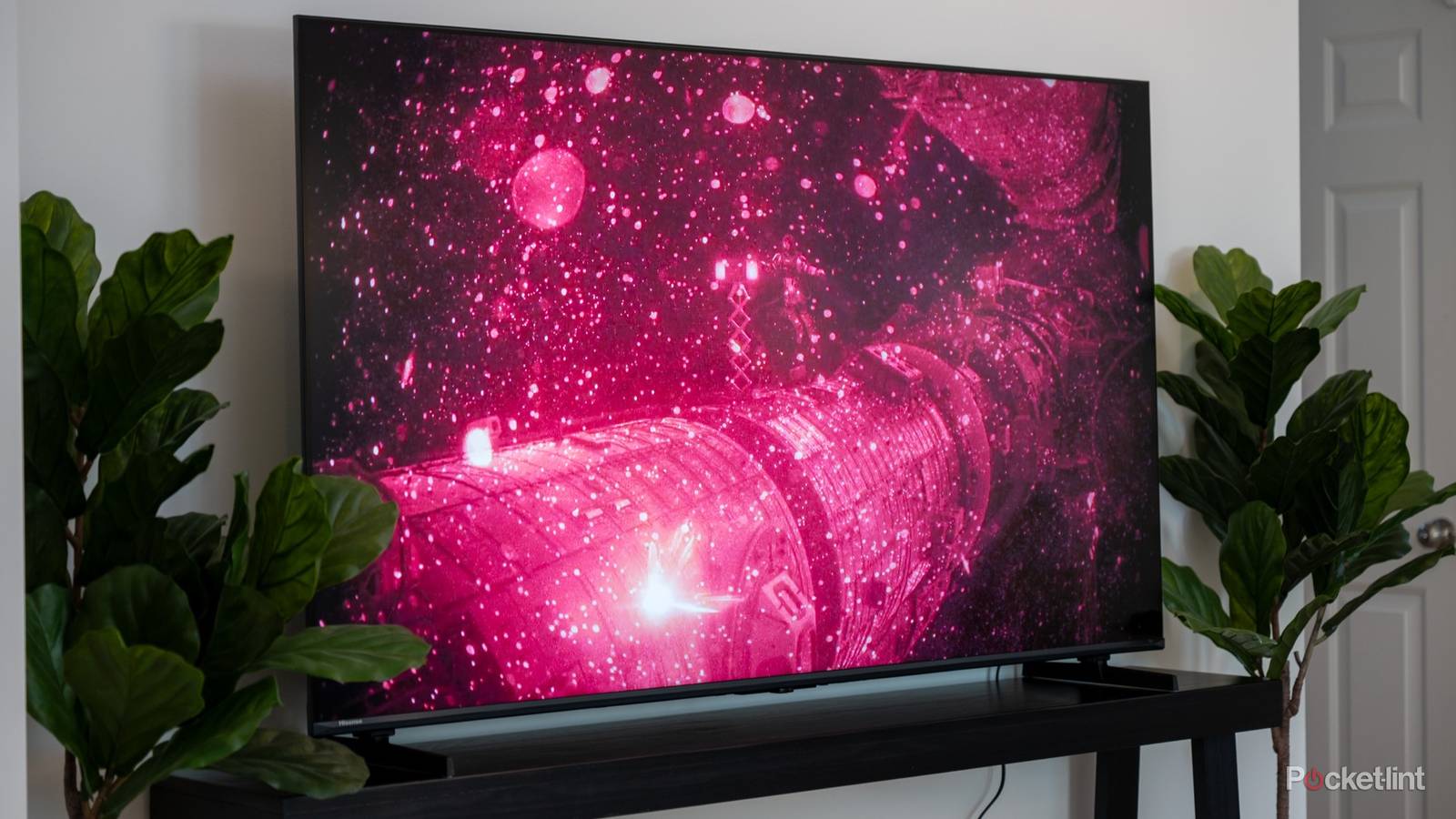
MiniLED has been one of the most talked-about developments in TV technology over the past few years, and for good reason. By packing thousands of tiny LEDs into the backlight and controlling them independently, it delivers a level of precision over light and shadow that older display technologies simply can’t match. The result is pictures that look more like the real world: deeper blacks, brighter highlights, and colors that feel genuinely vivid rather than artificially boosted.
The Hisense U6SF brings that technology to a wider audience than ever. Positioned as Hisense’s accessible MiniLED TV, it makes the kind of picture quality that was previously reserved for a much smaller group of buyers available to everyday viewers, whether they’re upgrading a main living room screen, setting up a dedicated viewing space, or just looking for a TV that does justice to the content they love.
Picture quality: What Hi-QLED MiniLED actually delivers

- Display Technology
-
Hi-QLED MiniLED with independent local dimming zones
- Brand
-
Hisense
- HDR?
-
Doldy Vision IQ, HDR10+ Adaptive, HDR10+ Gaming
- VRR (Variable Refresh Rate)
-
144Hz native
The Hisense U6SF makes MiniLED picture quality more accessible than ever. Hi-QLED MiniLED technology with precise independent zone control delivers deeper blacks, brighter highlights and vivid, lifelike color — while a native 144Hz refresh rate and VRR support keep gaming smooth and responsive. AI-powered features handle brightness, motion and upscaling automatically, and Dolby Vision and Dolby Atmos support ensure films and TV shows look and sound their best.
The Hisense U6SF is built around the brand’s Hi-QLED MiniLED technology, and independent zone control is the key to understanding why it matters.

Without it, the MiniLEDs in a TV’s backlight act as one; they all brighten or dim together, which largely defeats the purpose of having thousands of tiny LEDs in the first place. What makes MiniLED genuinely useful is the ability to control individual lighting zones, so one part of the screen can be bright while another stays dark. Picture a nature documentary, a sun-drenched savanna in one corner of the frame, deep shadow under the treeline in another. With precise per-zone dimming, both can render accurately and simultaneously. The result is deeper blacks, brighter highlights, stronger contrast, and colors that look richer and more vivid – the kind of picture that makes content feel alive rather than flat.
Precise per-zone dimming is what turns MiniLED from a buzzword into a genuine picture quality improvement, and it’s what the U6SF delivers as standard. Precise, zone-by-zone dimming is what turns MiniLED from a spec into a genuine picture-quality improvement.
MiniLED: Features that shape what you see every day
Apart from the MiniLED backlight, the U6SF covers the full HDR format range through Hisense’s Total HDR Solution. This includes Dolby Vision IQ, HDR10+ Adaptive, and HDR10+ Gaming; so whether you’re streaming a film, watching a Blu-ray, or playing a compatible game, the TV is applying the right tone mapping and brightness adjustments for that specific format. You don’t have to think about it; it just works.
The Anti-Reflection & Glare-Free panel also deserves a mention for practical reasons. Showroom TVs are always viewed in controlled lighting. Real living rooms have windows, overhead lights, and afternoon sun. The Hisense U6SF’s panel is designed to handle all of that, cutting surface reflections without sacrificing color accuracy or shadow detail.
Filmmaker Mode is a feature that appeals to anyone who cares about watching films the way they were meant to be seen. It disables the motion smoothing and other processing that TVs typically apply by default, restoring the original frame rate, color, and aspect ratio used by the director. It’s a small toggle with a noticeable effect on how cinematic content looks and feels.
Gaming: 144Hz and smoother performance than you’d expect from a living-room TV

The Hisense U6SF’s native 144Hz refresh rate makes it a capable gaming display in a way that goes beyond the spec sheet. Combined with VRR (Variable Refresh Rate) and a low-latency mode, it delivers the kind of responsive, tear-free performance you’d expect from a dedicated gaming monitor, just at living-room scale.
Until recently, that kind of smooth, responsive gaming experience was largely confined to a PC monitor; a smaller screen, usually in a separate room, and a solitary experience by design. The U6SF changes that equation. The same low-latency, high-refresh-rate performance is now available on a screen large enough to fill a living room, which opens up the experience in ways a monitor simply can’t. You can invite friends over and game together on a screen that everyone can see. You can catch details in open-world environments that a smaller display would compress into noise. And you can switch from a gaming session to a film or a live match without moving rooms or compromising on picture quality.
Screen tearing, stuttering, and input lag are the three things that make gaming on a TV feel worse than it should. The Hisense U6SF addresses all three. VRR keeps the frame rate in sync with what the console or PC is outputting, low-latency mode cuts the delay between controller input and on-screen response, and the 144Hz panel means there’s enough headroom to display smooth motion, even in fast-paced games.
HDR10+ Gaming and Dolby Vision Gaming support round things out, bringing the same high-dynamic-range picture quality to gaming that these formats already deliver for film and TV content. For casual players and mid-level gamers who want a big-screen setup without buying a separate gaming monitor, the U6SF makes a strong case.
AI features: The TV that adjusts itself

One of the Hisense U6SF’s most useful features is how much of the picture management it handles automatically. The AI feature suite isn’t just a list of branded names; each one has a specific responsibility.
AI Picture uses a neural engine to analyze each frame and adjust brightness, contrast, saturation, and noise in real time. The result is a picture that looks good across a wide content variety, not just the material it was tuned for in testing. AI Smooth Motion tackles blur and judder, which is particularly noticeable during live sports and action sequences. AI 4K Upscaler uses deep-learning models to sharpen textures and reconstruct detail in lower-resolution content, so older films and non-4K streams benefit from the full resolution of the panel.
AI Light Sensor adjusts the backlight based on the ambient light in the room (brighter during the day, easier on the eyes at night) without requiring any manual input. And AI Sports Mode automatically detects sports content and optimizes picture and sound, enhancing motion clarity and boosting crowd audio for a more immersive viewing experience.
Together, these features mean the Hisense U6SF does a lot of the calibration work that used to require manual adjustment or an expensive setup. It’s a TV that gets better at looking good the more it understands what you’re watching.
Sound, smart features, and everyday usability

The Hisense U6SF’s audio is handled through Dolby Atmos, bringing object-based surround sound to the built-in speakers for a more three-dimensional result. It’s not a substitute for a dedicated sound system, but it’s a step up from standard stereo output.
On the smart side, Amazon Alexa voice control is built in, handling content search, playback control, reminders, timers, and more through a simple press-and-talk interface. The broader smart home integration means the U6SF fits naturally into setups that already use voice assistants and connected devices.
The AI features also have a usability benefit worth noting: less time in settings menus. When the TV is handling brightness, motion, upscaling, and sports detection automatically, the setup experience becomes significantly simpler, which matters for viewers who just want to switch on and watch.
The Hisense U6SF: The bigger picture
The Hisense U6SF is a marker of where the TV market is heading: MiniLED picture quality, AI-assisted processing, high refresh rate gaming performance, and full HDR format support. These were, until recently, features associated with flagship-tier products.
Hisense has been building toward this position for a while, expanding its MiniLED lineup and bringing advanced display technology to more screen sizes and price points. The U6SF is a clear result of that approach; it prioritizes the things that actually matter about picture quality and makes them accessible to more homes. For anyone who’s been waiting for MiniLED to come down to earth, it just did.