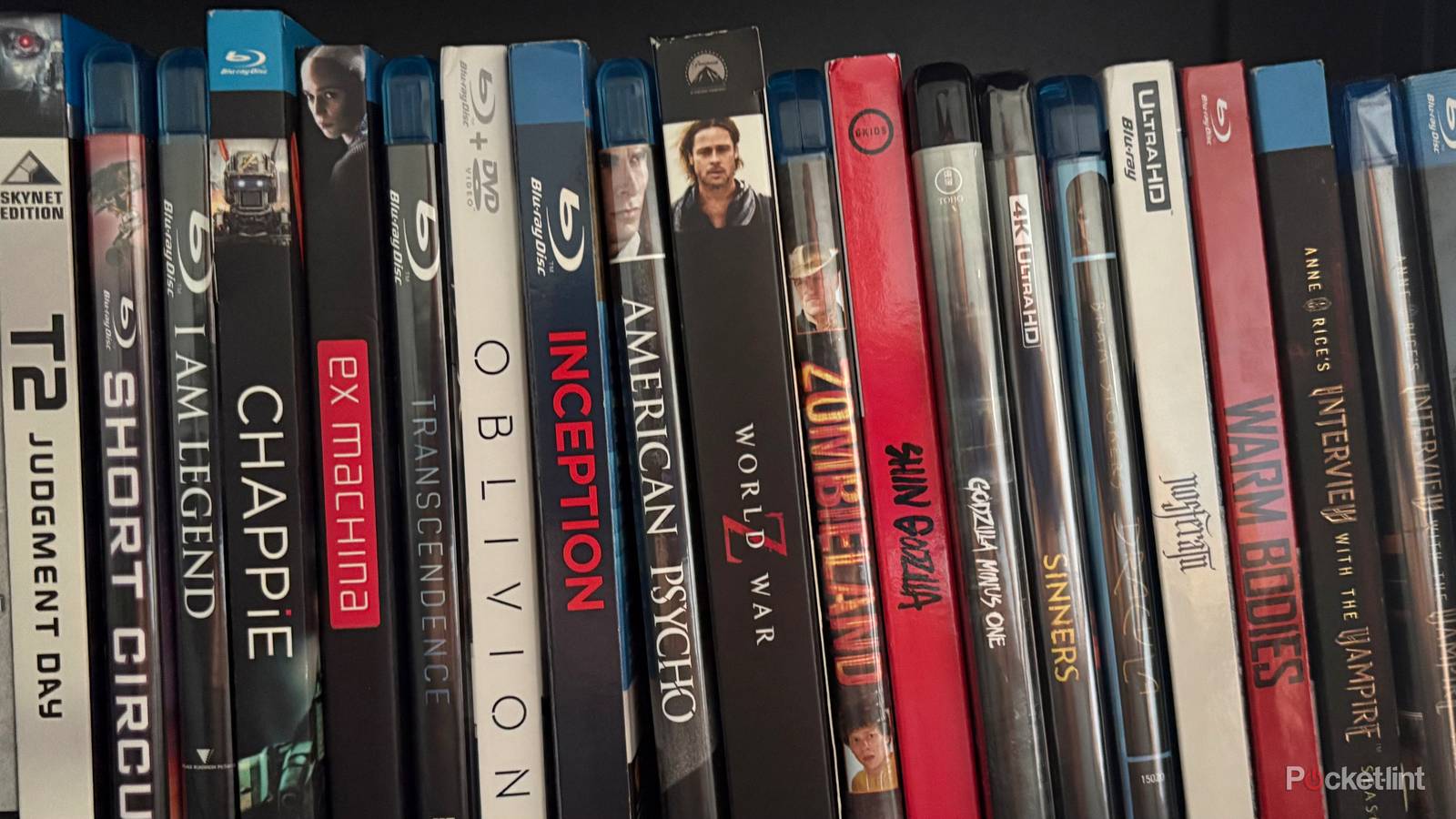
If you happen to be a collector of physical media — whether it be CDs, DVDs, Blu-rays or otherwise — then you’ll be all too familiar with the juggling act of trying to stay organized and on top of your content library.
If you’re like me, then there’s a solid enough chance that you’ve purchased an album or a film, only to have forgotten to actually sit down and consume its contents. Alternatively, you may have accidentally purchased the same piece of media a second time without realizing it, or you may have missed out on a particular limited-time release under the assumption that it was already in your backlog.
Thankfully, there are a variety of resources available to help streamline and take stock of your physical media collection, including purpose-built applications, social platforms like Letterboxd, and more. Likewise, you can keep tabs on the state of your digital library, too, via services like Movies Anywhere.
Personally, however, I supplement my media library in a decidedly lower-tech fashion: through the use of a good old-fashioned spreadsheet document. What I’ve learned over the years is that less is more, and that a basic list is often all it takes to stay adequately organized.
Keep tabs on what you own, what you’ve watched, and what you want to pick up

In my experience, formulating a list is the perfect antidote to the confusion that arises when actively collecting, consuming, and ordering physical media products. While it’s easy enough to craft a basic list via one of the many excellent note-taking applications out there, carving out a dedicated spreadsheet is my preferred method for keeping organized.
Opening up a blank Microsoft Excel or Google Sheets document is all it takes to get started. In my own case, I went ahead and formatted the document by adding columns for title, format, ownership, and consumption status, with separate tabbed pages for music, shows, movies, and video games.
…my spreadsheet effectively transformed into an all-encompassing and dynamically-adjusting media consumption diary.
Once set up (and appropriately color coded), my spreadsheet effectively transformed into an all-encompassing and dynamically-adjusting media consumption diary, allowing me to flag items in my backlog, gear up for new releases, and simply view my library from a bird’s-eye perspective.
Of course, a list of this nature requires a bit of elbow grease to stay on top of, but I find the process of adding in entries to be not only cathartic but also rather fulfilling. It allows me to appreciate the current scope of my physical media library with ease, and it incentivizes me to pick up forgotten titles that have laid dormant in my backlog for far too long.
Whether you’re actively partaking in physical media’s timely comeback, or you’re simply interested in getting started, formulating a list is an excellent way to manage your collection. If nothing else, it’s a suitably low-tech solution that fits the ethos of physical media ownership like a glove.