A vision to tackle global warming with socialism by halving working hours and not eating red meat has been revealed by academics.
A report by the World Inequality Lab (WIL) aims to be radical in its approach to fixing a world headed towards a climate breakdown and further economic fragility.
The review proposes substantial wealth taxes on billionaires, reductions in working hours, a change in consumption habits like diet and a greater priority on education and health.
It also concluded that neither decarbonisation or sufficiency can be financed and politically sustained without a drastic reduction in inequality of wealth and power.
The plan could see the majority of the population earn an average salary of €5,000 (£4,324) a month by the end of the century – with the exception of the mega rich.
If these actions were implemented, this could lead to 89 per cent of the population having their incomes doubled by 2100, while global heating would be kept below 2C above the preindustrial average.
The academics claim their vision aims to combat the future of increased fossil fuels and inequality in a world ruled by nationalists and billionaires.
‘The ideology, which we see with Trump and all the little Trumps that we have all across Europe and all across the world is simply not going to deliver,’ said Thomas Piketty, co-director of the WIL and professor at the Paris School of Economics.

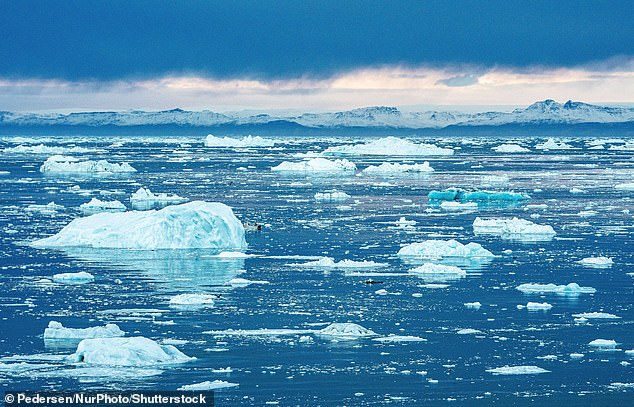
A vision to tackle global warming with socialism by halving working hours and not eating red meat has been revealed by academics (pictured: Greenland ice caps retreating)

Pictured: Thomas Piketty, co-director of the WIL and professor at the Paris School of Economics
‘At the end of the day we’ll have to come to this kind of cooperative redistribution of resources and power because the alternative will simply lead to disastrous outcomes both on the environment, on the climate, but also on social grounds.’
He added: ‘There’s a huge cultural, intellectual, political battle that is going on. And we all have a role to play,’
Mr Piketty is known for his best selling book Capital In The Twenty-First Century, where he writes extensively on progressive wealth taxes and argues that order will be threatened unless capitalism is reformed.
The authors want to halve working time from 2,100 hours a year to 1,000 hours – equivalent to a two-and-a-half-day working week.
Women and men would come together on equal pay and have an equal share of economic and domestic labour.
People would ideally eat less red meat as the production of it is the leading driver of deforestation globally.
The super wealthy would be significantly taxed because the researchers see them as the most responsible for the climate crisis due to their priority of profit over sustainability.
Global wealth by billionaires would drop from six per cent to 0.05 per cent, while the poorest 50 per cent would see their share increase from two per cent to 30%.

A report by the World Inequality Lab aims to be radical in its approach to fixing a world headed towards climate breakdown and further economic fragility. Pictured: California wildfire in May
The academics also wish to double education spending to €8,400 (£7,250) a person and healthcare spending to €14,400 (£12,453).
Mr Piketty said: ‘One extra euro of GDP in education and health has three to four times less material footprint and energy consumption than one extra euro of GDP in the manufacturing sector. So that’s why the sectoral shifts are hugely important.’
The report was written by 45 researchers; the cited ones include Mr Piketty alongside Lucas Chancel, Cornelia Mohren, Rowaida Moshrif, Moritz Ordesky.
The academics say that what is standing in the way isn’t logistical or financial impossibilities, but rather a lack of shared vision of radical social progress.
The group are economists and co-directors of the WIL who dedicate their work to wealth and climate inequality, linking climate policy to redistribution between richer and poorer countries.