



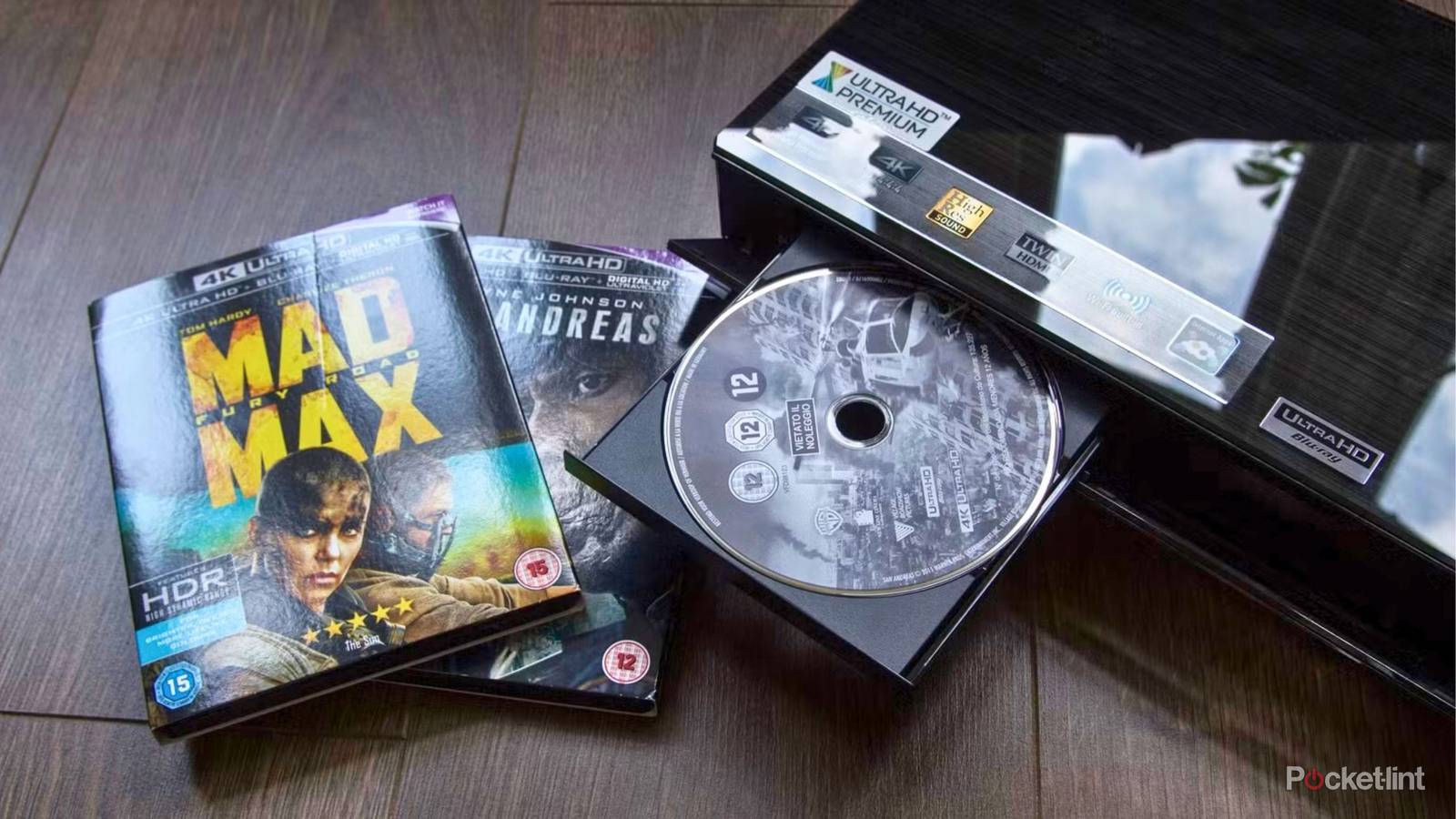
There’s a contingent of people out there stubbornly clinging to physical media, and I get it. As expensive as it is to collect Blu-rays and DVDs, going that route means you’re no longer chained to monthly subscriptions. In many cases, you can’t even count on streaming libraries providing what you want — titles can vanish without warning, and of course some releases may never appear on streaming in the first place, at least in your home country. Good luck finding a reliable place to stream ’80s Hong Kong action movies if you’re in the US or Canada.
There’s an inescapable problem with physical media in the long run: shelf life. While discs might look indestructible unless you snap, crush, or scratch them, the truth is that they’ll eventually become unplayable all on their own. Below, I’ll explain what you need to know about their longevity, which may be especially important if you like to hunt garage sales and flea markets. Let’s just say that you should be ripping discs to an offline movie server if at all possible.
What you need to know about Blu-rays
The toughest of the tough…usually

Blu-rays are, as a rule, pretty durable. They use coatings with materials like silicone and silicon dioxide resin that do a good job of resisting scratches, as well as common environmental threats like moisture. On top of this, their reflective layers use either aluminum or silver, not some flimsier material. Silver is preferable, and de facto in the dual-layer Blu-rays that are widespread these days.
There are still a variety of things that can go wrong, however, several of which fall under the label of “disc rot.” A reflective layer can become oxidized, for example, or one or more materials can react to outside contaminants. There’s also the possibility of damage from UV (ultraviolet) light, though that’s more likely with DVDs than Blu-rays. If anything, the greatest threat from UV exposure is that a Blu-ray’s art will fade.
No matter how rot happens, the long-term result is an unplayable disc. Much like a vinyl record, a Blu-ray’s information is encoded in pits and lands, so anything that erases them or prevents laser light from bouncing back is going to cause a problem. The situation is actually worse with Blu-rays and DVDs, since their grooves are translated into digital data — missing or corrupt segments could prevent a disc from playing at all, whereas a vinyl LP might just sound terrible for a moment.
Blu-rays also aren’t invincible against mold or heat. Either can contribute to rot, and extreme heat might allow a Blu-ray to bend, which is just as much a death sentence as if you’d pulled out a Bowie knife.
Given proper treatment, commercial read-only Blu-rays should last between 10 and 20 years. Since the first Blu-ray discs hit the market in 2006, there’s a chance that anything you pick up used might have one foot in the grave.
All this makes it important to store Blu-rays in a clean, dry place, ideally with temperatures between 39 and 73F (4 to 23C). That’s both cool enough to prevent warping and warm enough to prevent any ice crystals. You can slip Blu-rays into a binder if space is at a premium, but be warned that this will slightly increase environmental exposure, and risk friction damage if you’re a bit rough. The cases your Blu-rays shipped in will always, always be the safest option.
Given proper treatment, how long can you expect those copies of Apocalypse Now and Dr. Strangelove to last? According to the government-run Canadian Conservation Institute, read-only Blu-rays should last between 10 and 20 years. That’s a pretty long time on pape. But time flies — if you sometimes go years between watching the same movie, you might only get a handful of viewings in before a disc is done. Also, since the first Blu-ray discs hit the market way back in 2006, there’s a chance that anything you pick up used might have one foot in the grave, regardless of how careful the previous owner was.
One problem I haven’t touched on yet is adhesives. All Blu-rays rely on them to some degree, and this is another thing that can fall victim to rot or extreme heat. The concern is all the more serious with dual-layer discs, which are standard now given the prevalence of 4K HDR. You might hypothetically witness those layers split without the rest of the disc being damaged, so that’s all the more reason to baby your collection.
Are there any differences with DVDs?
Take care with your rare releases

Yes, very much so. While a lot of what I just said about Blu-rays applies here, the fact is that DVDs have less durable coating, which makes them more vulnerable to cracking, scratches, and UV effects. Also, the reflective layers in read-only discs are likely to be aluminum, which is more prone to oxidizing than silver. If you care about preserving your collection as long as possible, you have to be diligent.
The Canadian Conservation Institute does estimate a 10- to 20-year lifespan, just like Blu-rays, but the obvious complication is that DVDs are even older as a medium. The earliest releases reach back to 1996, so many have probably been lost to history. Heck, it’s possible that your Lord of the Rings Extended Edition set is already unplayable, no matter how much money you spent on it in the 2000s.
The good news is that DVDs are still being produced, owing to persistent demand and how cheap they are to manufacture. So while you might have a hard time finding a working copy of Blazing Saddles, it’s easy to find titles like Wuthering Heights or even It: Welcome to Derry, which you’d think HBO would be clinging onto for dear life as a reason to subscribe to HBO Max.
More than just preservation

Believe it or not, SSDs and platter-based hard drives can actually be more prone to failure than DVDs or Blu-rays. SSDs have a finite number of write cycles, and platter drives are subject not just to wear and rot, but issues like motor failure. Even an SSD could potentially give out in 5 to 10 years, according to SanDisk.
Media servers not only eliminate a lot of preservation concerns, but make it far easier to watch what you want, when you want.
The trick is that SSD and HDD data are easy to migrate. Whole libraries can be copied in a matter of minutes, if not seconds, and drives are still relatively cheap despite the inflation caused by AI datacenters. You can get a 1TB external SSD for less than $200, which is enough to hold over a dozen Blu-ray rips at maximum quality. If you’re willing to sacrifice fidelity a little, you can fit dozens of Blu-ray files, and an all-DVD collection is virtually unlimited.
Once you’ve got software and a migration strategy in place, media servers not only eliminate a lot of preservation concerns, but make it far easier to watch what you want, when you want. Whereas you probably only have one Blu-ray player, apps like Plex and Jellyfin make it possible to watch on multiple devices, or outside your home if you configure things properly (and/or pay the fee, in Plex’s case). Check out my guide for tips on getting started.