


Raise your hands if you’ve been hearing this for years: tablets will eventually replace laptops. And yet, we still see laptops like the MacBook Neo launching with great hardware, aggressive pricing, and strong productivity — exactly what tablets are supposed to replace. And the MacBook Neo continues to sell well, which clearly means something about that whole idea isn’t quite there yet.
I’ve been on that train as well. I never really believed I’d find a tablet good enough to replace my two-year-old MacBook Air M3. That was until I tried Huawei’s new MatePad Pro Max.

The iPad Air (M4) comes incredibly close to being the perfect tablet
There’s plenty to like about Apple’s newest iPad Air (M4), but it still lacks two key features.
The MatePad Pro Max convinced me to ditch my MacBook Air M3
This might be the first time a tablet has convinced me to ditch my laptop

I think for any tablet to truly replace a laptop, it needs to nail three core things: portability, input, and software. We’ve used laptops for years, and anything that tries to completely change how you interact with them is going to struggle. People don’t want to relearn the basics.
Take most tablets with keyboard cases, for example. You’re constantly switching between touch and typing, and since it doesn’t feel as natural as a laptop with a proper keyboard and trackpad, it ends up feeling like a compromise.
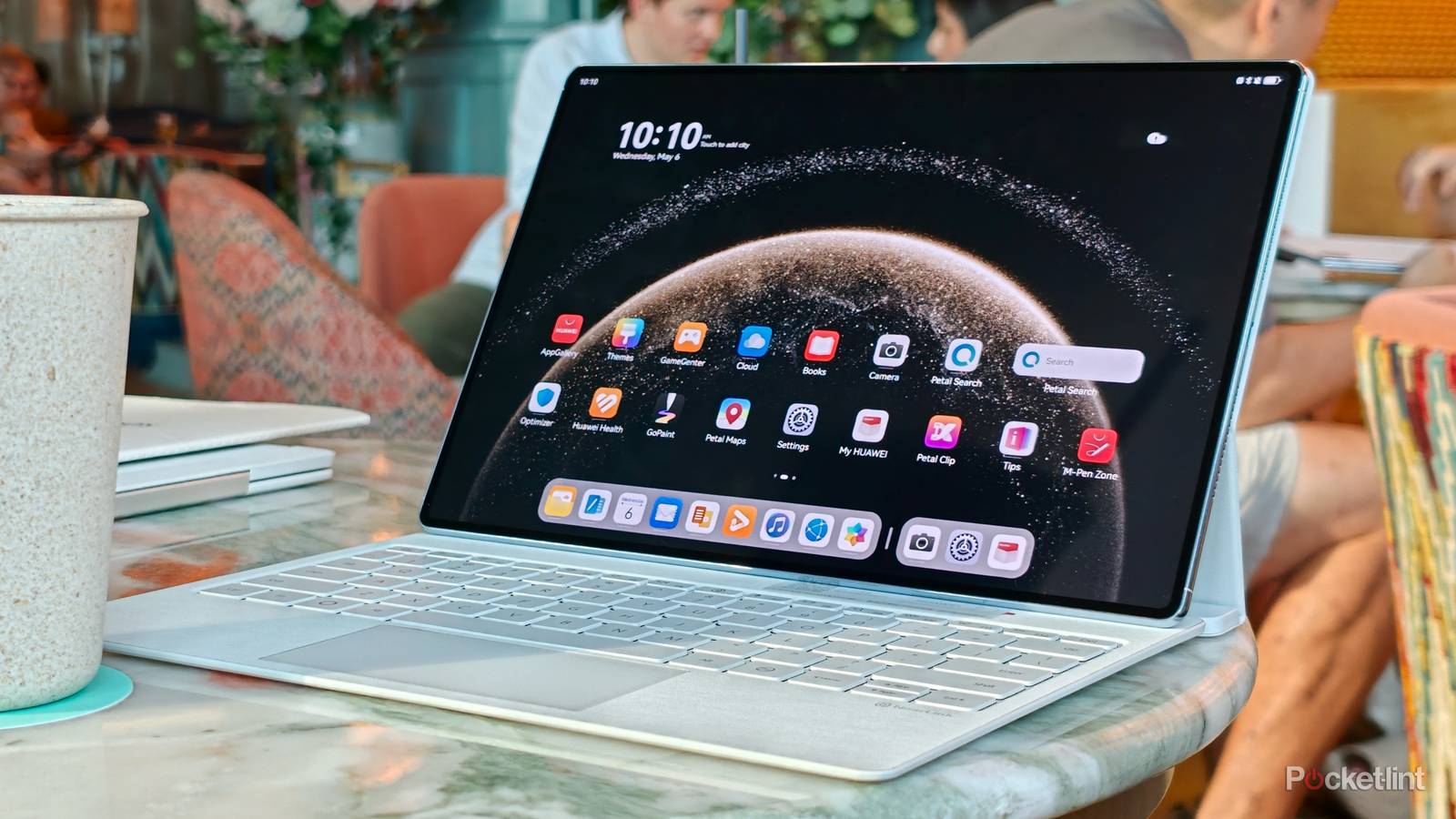
This is where I think the MatePad Pro Max gets it right. Huawei’s keyboard folio comes with a proper trackpad, and it feels surprisingly close to what you’d expect from a laptop. It supports all the gestures you’d normally use, like three-finger swipes and right-click, and it genuinely feels familiar coming from something like a MacBook.
On top of that, you still get full keyboard input, touch, and stylus support. The tablet works with Huawei’s M-Pencil Pro, which offers low latency and up to 16,384 levels of pressure sensitivity. That’s something most laptops still don’t offer, and it actually adds another layer of flexibility instead of feeling like a gimmick.
Portability is where this tablet completely won me over
The thin and lightweight design makes carrying it around incredibly easy

The second big factor is portability. A device like this needs to feel lighter and easier to carry than a laptop, otherwise there’s no real point. And this is where I think the MatePad Pro Max absolutely nails it.
It’s incredibly thin at just 4.7mm, even slimmer than the iPad Pro, and weighs only 499g. Even with the keyboard case and stylus attached, it still ends up being lighter than my MacBook Air M3.
What’s also impressive is how Huawei has handled the overall design. Despite the “Pro Max” name, the tablet doesn’t feel massive in hand. That’s largely because of the display and how efficiently it’s packed.

You get a 13.2-inch 3K flexible OLED panel with up to a 144Hz refresh rate and 1,600 nits of brightness, but thanks to super-thin 3.5mm bezels, it fits into a footprint closer to an 11- to 12-inch tablet.
The PaperMatte OLED display might be my favorite thing about this tablet
Another thing I absolutely love here is Huawei’s PaperMatte display. It’s essentially an anti-reflective coating, but this year it’s paired with an OLED panel, which looks fantastic. There’s almost no glare, even under direct light, which makes a noticeable difference compared to my MacBook Air’s glossy display.
The third factor, and probably the most important one, is software. This is where most tablets struggle, and to some extent, Huawei does as well. The MatePad Pro Max runs on HarmonyOS, which means it doesn’t come with Google services out of the box. I had to sideload apps like YouTube, Gmail, Google Drive, Sheets, Slack, and a few others to get my workflow going.

That said, once everything was set up, it became surprisingly easy to use. I rely heavily on Google Chrome for most of my work, and the browser experience here feels very close to a desktop. That alone made a big difference in how usable the tablet felt for everyday tasks.
Speaking of Google Chrome, the battery hasn’t really been an issue with the device. The MatePad Pro Max packs a massive 10,400mAh battery with support for 66W fast charging, and in my usage, it comfortably handled a full workday without becoming a problem.
Of course, all of this comes at a price. The MatePad Pro Max starts at €1,499, which is definitely on the expensive side for a tablet. I’m not saying this completely replaces a laptop for me — it’s still “worthy enough” — but I can easily see myself taking this as my only device on a trip, especially when I know my workload will be relatively light.
Although, honestly, after using this, the one feature that I wish Apple would bring to the MacBook lineup is the anti-reflective display.