



For the longest time, I relied on an external solid state drive (SSD) to back up all my important files, documents, photos, videos, and more. While not the cheapest form of storage, flash storage is speedy, robust against the elements, physically compact, and highly convenient.
Then, one day about two years ago, my SSD inexplicably stopped working. After coming to grips with the fact that I had lost gigabytes of archival data, I came away with two lessons learned: one is that it’s always smart to create secondary and tertiary data backups (redundancy is key), and the second is to not rely on SSDs for long-term file preservation.
As I found out the hard way, SSDs are far from an impregnable archival solution, even if they’re longer-lasting than the average USB stick or SD memory card. The flash storage of an SSD drive employs NAND memory cells, which have a limited lifespan. Worse yet, if these memory cells aren’t powered up on a regular basis (by inserting the drive into a host device), they can go dark for good without warning.
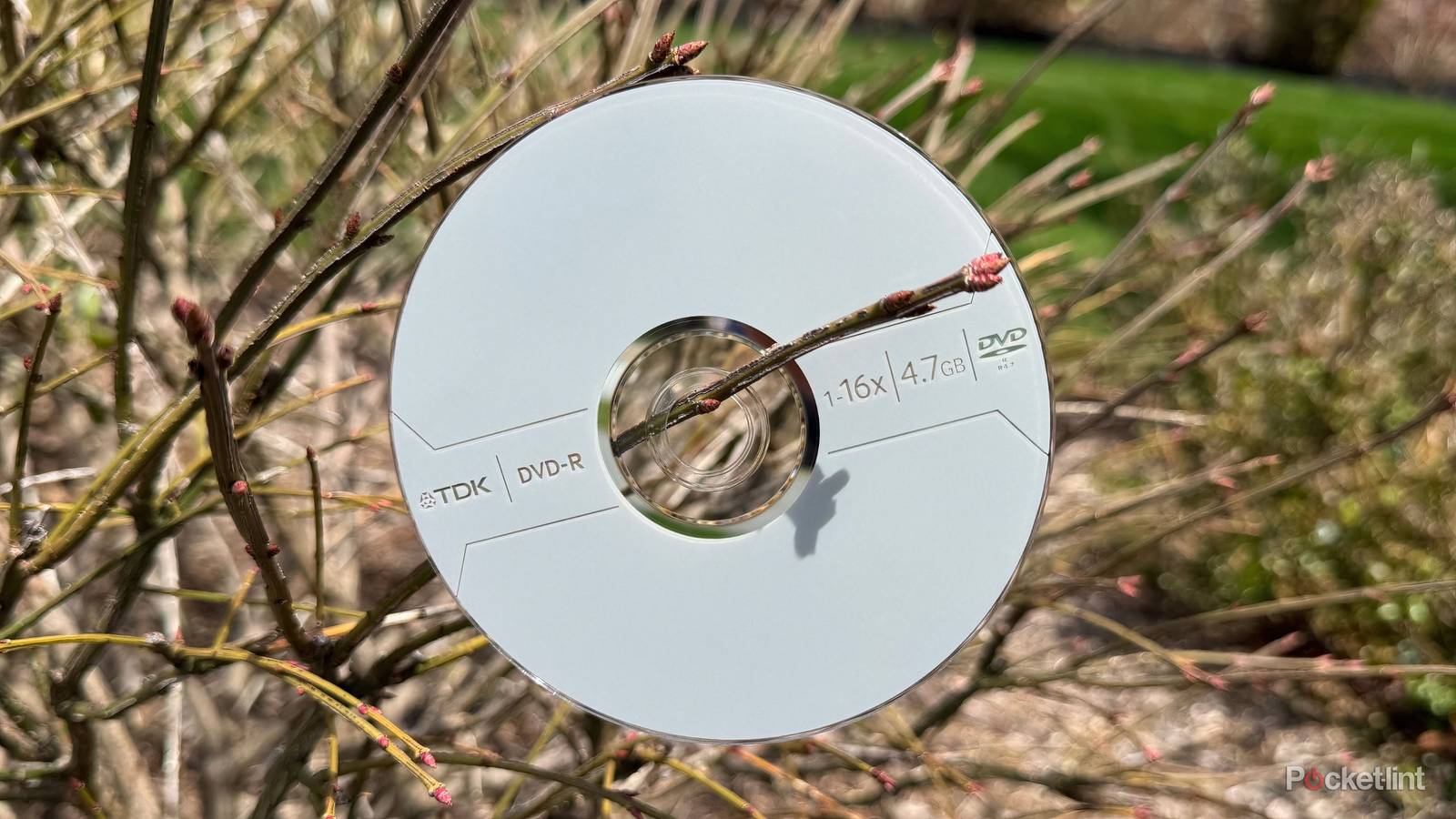
I considered switching back to a traditional hard disk drive (HDD) with a spinning platter, but, ultimately, I settled on an entirely different archival solution for retaining my data now and into the future: DVD discs. Here are three reasons why I decided to switch to DVD-R (Recordable) and DVD-RW (Rewritable) discs in particular.
They’re physically robust
Optical discs are an archive-friendly medium

Optical formats like CDs, DVDs, and Blu-ray discs get a bad rap for being fragile. While it’s true that older discs are highly scratch-prone, modern technological innovations make this less of a concern than in the past (especially when it comes to the Blu-ray format). Disc rot is also a very real concern, though it’s manageable by storing discs in an appropriately climate-controlled environment.
Even with these drawbacks in mind, DVDs are rather resilient, especially when compared to HDDs (which feature moving parts and can therefore be damaged when in transit or in storage). Putting aside the risks of scratches and disc rot, the sky is the limit when it comes to optical media — properly manufactured gold-layered discs and M-DISC DVDs are rated with a lifespan of between 50 and 100 years, thanks to the employment of inorganic recording layers (via Canada.ca).
It involves friction
Inconvenience as a genuine selling point

It might sound counter-intuitive, but I personally love the added friction required to archive data onto a DVD. It makes the process feel far more intentional, and I find myself being more selective about what I choose to preserve and what I scrap. As a digital pack rat, this has helped me reduce my virtual clutter in a big way. The average 4.7 GB of storage space per DVD also plays a role here, forcing me to weigh the pros and cons of saving files that I don’t really need.
While it’s true that higher-capacity dual-layer and triple-layer Blu-ray discs exist on the market, compatibility with PCs and mobile devices is rather limited when compared to the older DVD standard, especially when it comes to BD-R (recordable) and BD-RE (rewritable) discs. With that in mind, I’ve settled on DVD as the best middle-ground between the anemic capacity of a CD and the hassle of Blu-ray.
The process is nostolgic
Who doesn’t love the sound of a whirling disc?

Lastly, part of why I switched to DVDs as a primary archival format in 2026 is down to the nostalgia factor. I’m a sucker for optical-based physical media, and there’s just something cool about holding a shiny disc in my hand that a storage drive can’t quite replicate. The act of placing the disc onto its platter is also highly satisfying, as is listening to the mechanism boot up and begin to spin the disc in question.
I especially love disc drives that opt for an internal tray mechanism, thereby ‘sucking in’ your disc as opposed to ‘jutting out’ the platter. Such peripherals remind me of the days of the Nintendo Wii, the PlayStation 3, and Apple’s now-discontinued USB SuperDrive. Unfortunately, it’s harder than ever to come by external disc drives that feature the hardware necessary for this to work, but they do still exist.