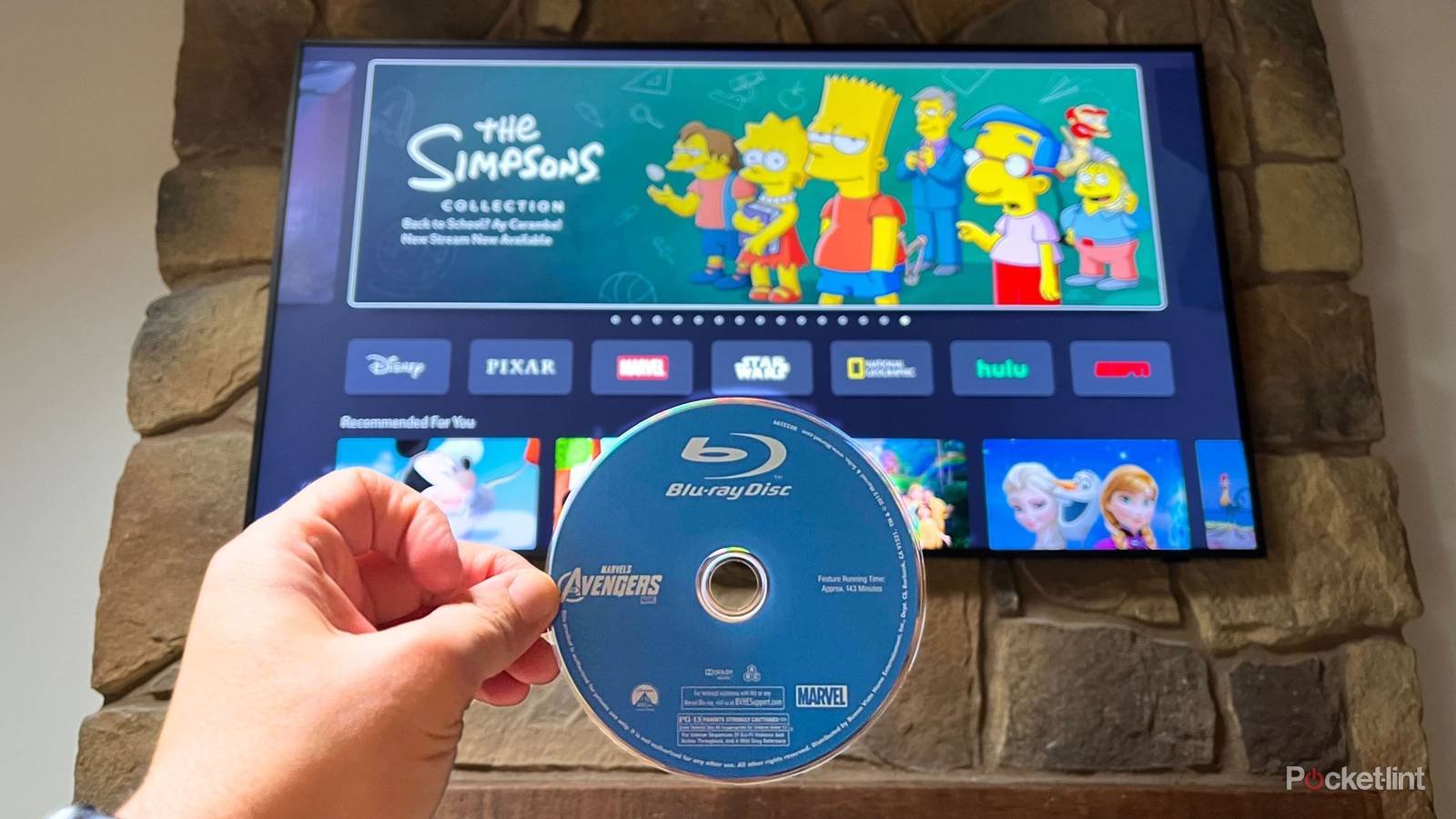
With streaming services ruling the media consumption roost in 2026, it’s easy to forget that just a few short years ago, optical discs were the de facto digital standard across film and TV. DVDs, and later Blu-rays, were the formats of choice when it came to physical media distribution and ownership, superseeding the older era of VHS home video cassette tapes.
This all changed with the rise of Netflix, Amazon Prime Video, Disney+, Apple TV, and others, which made on-demand internet streaming a here-and-now reality seemingly overnight. As ever in the tech space, convenience always wins out in the end, and optical discs were soon religated to the annals of history.
At least, that’s been the story up until recently. What we’ve seen most recently is a monumental shift in consumer preferences, owing to rising subscription costs, recurring payment fatigue, and more awareness over the lack of real, tangible ownership in the streaming age. The result is a physical media rennaisance that’s playing out in real time — a trend best summarized by the phrase “what’s old is new again.”
High quality digital media that’ll survive well into the future

Putting aside the never-ending price creep of streaming services, as well as the frustrations of trying to navigate which service offers the show or movie you’re looking to watch, physical ownership is arguably the most consequential factor of optical media’s timely comeback.
When you purchase a Blu-ray disc or a DVD, you’re purchasing a real, physical product — the digital ones and zeros of a given piece of media are lazer-etched right onto the optical disc, and it’s yours to hold, to place on a shelf, to let a friend borrow, or to sell after the fact.
When streaming content, this is of course not the case whatsoever. With Netflix et al., you’re simply paying a fee to temporarily access content that’s hosted on a server you don’t own or operate. Digital purchases aren’t the solution to this, either, as you’re really just buying a transient licence to download a product that can be revoked at any moment.
…I’ve returned to optical media with a veracity I’ve never previously experienced.
Yes, a digital product key is undoubtedly better than streaming from an ownership perspective, but this purchase model still keeps you reliant on servers from big tech companies, and the availability of the product in question is still subject to the dynamically changing whims of the industry, per-company licencing and distribution agreements, as well as the potential for censorship.
Now, Blu-ray discs and DVDs aren’t an entirely foolproof solution when it comes to media preservation — modern discs come with a hearty dose of digital rights management (DRM) software, and they can suffer from disc rot if not stored in the correct manner — but they’re still the best solution we have available at this point in digital media’s storied history.
With all this in mind, and with how wary I am about the long-term avaiability of third-party servers, I’ve returned to optical media with a veracity I’ve never previously experienced. I love holding a given movie or TV series in my hand, viewing its box art, and adding it to my shelf collection. Every time I have to get up off the couch to swap discs, I remind myself that the alternative, though more convenient, is entirely unssustainable in the long-term.