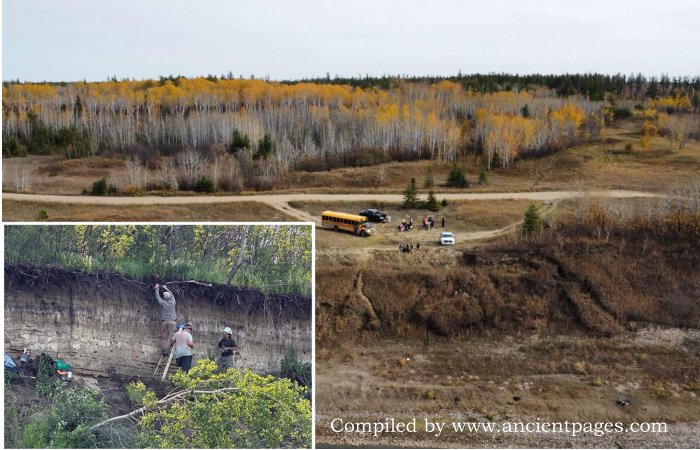
Conny Waters – AncientPages.com – A village near Sturgeon Lake in Canada, dating back 11,000 years, is changing what we know about North American history.
This major archaeological discovery challenges long-held ideas about early Indigenous civilizations in North America.
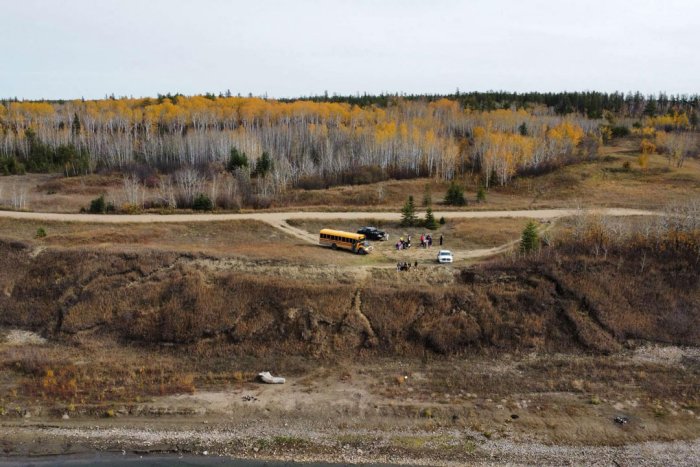
Credit: University of Saskatchewan
The discovery of an 11,000-year-old pre-contact settlement, one of the oldest Indigenous sites in North America, shows that highly organized societies lived in the region much earlier than once thought. This site now stands alongside some of the world’s most famous ancient sites, such as the Great Pyramids of Egypt, Stonehenge in England, and Göbekli Tepe in Turkey. Each of these sites is known for its historical importance and its influence on human civilization.
The Âsowanânihk Council, which means “A Place to Cross” in Cree, is leading efforts to protect and study the site with archaeologists from the University of Saskatchewan and the University of Calgary. The council includes Elders, Knowledge Keepers, educators, youth, and academics, and is dedicated to preserving the site.
The site is about five kilometers north of Prince Albert, along the North Saskatchewan River. Researcher and avocational archaeologist Dave Rondeau first identified it during a survey of the area. He noticed that erosion along the riverbank had exposed artifacts.
“The moment I saw the layers of history peeking through the soil, I felt the weight of generations staring back at me,” Rondeau said. “Now that the evidence has proven my first instincts, this site is shaking up everything we thought we knew and could change the narrative of early Indigenous civilizations in North America.”
An Ancient Settlement That Raises Questions About The Bering Strait Theory
On January 31, a group of academics met with the council at Sturgeon Lake’s Cultural Center. The team included Dr. Andrea Freeman from the University of Calgary, Dr. Glenn Stuart from the University of Saskatchewan, archaeologist Butch Amundson, and student Jayda Boux, who is leading research on the site’s lithic materials.
The evidence shows that the site was likely a long-term settlement, not just a temporary hunting camp. Researchers found stone tools, fire pits, and materials used for making tools. Layers of charcoal suggest that early Indigenous people managed fires, which matches their oral traditions. Finding large bison remains also helps us understand early hunting methods and how the species changed over time.
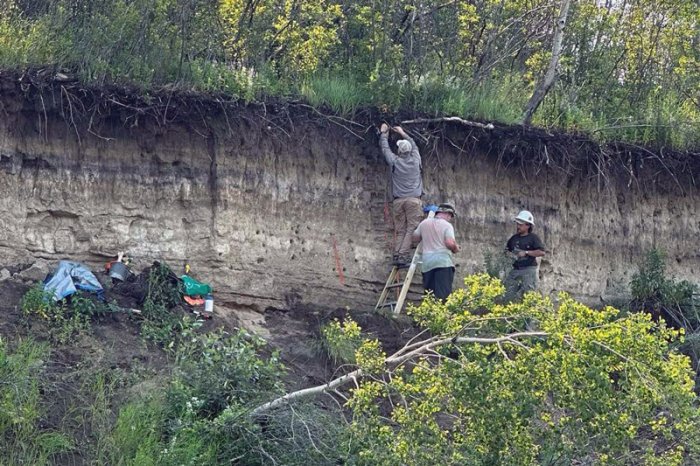
Credit: University of Saskatchewan
“This discovery challenges the outdated idea that early Indigenous peoples were solely nomadic,” Dr. Stuart said.
The Bering Strait theory, also known as the Bering Land Bridge theory, proposes that the earliest humans migrated to the Americas by traversing a land bridge called Beringia, which once connected Siberia and Alaska during the last Ice Age, approximately 13,000 to over 30,000 years ago.
The discovery near Sturgeon Lake is significant as it extends the timeline for organized community life in northern North America to a period immediately following the last Ice Age.
“The evidence of long-term settlement and land stewardship suggests a deep-rooted presence. It also raises questions about the Bering Strait Theory, supporting oral histories that Indigenous communities have lived here for countless generations.”
Over thousands of years, glaciers and major floods have dramatically changed the landscape. Today, the area looks like a buffalo jump, and researchers think it once held several bison pounds and kill sites. Evidence shows that early Indigenous hunters carefully harvested bison here, including the now-extinct Bison antiquus, which could weigh up to 2,000 kilograms.
This site clearly shows that Indigenous peoples have lived in this region for a very long time, supporting knowledge passed down through generations. Oral histories have described the area as a key center of culture and trade, and these findings now provide physical evidence to support those stories.
“This discovery is a powerful reminder that our ancestors were here, building, thriving, and shaping the land long before history books acknowledged us,” said Chief Christine Longjohn.
“For too long, our voices have been silenced, but this site speaks for us, proving that our roots run deep and unbroken. It carries the footsteps of our ancestors, their struggles, their triumphs, and their wisdom. Every stone, every artifact is a testament to their strength. We are not just reclaiming history—we are reclaiming our rightful place in it.”
The Âsowanânihk Council intends to collaborate with archaeologists to secure funding for ongoing research and preservation. Additionally, there are plans to establish a cultural interpretive center to promote education, tourism, and community engagement. The council remains committed to integrating youth into land-based learning initiatives to strengthen cultural knowledge and connections to the land.
See also: More Archaeology News
Although the site holds considerable significance, it is threatened by logging and industrial activity. The Âsowanânihk Council, including Elder Willie Ermine, has expressed concerns regarding potential destruction and is advocating for immediate protective measures. Sturgeon Lake First Nation and the council are urging local, provincial, and national stakeholders to support efforts to protect and study this historic site.
About Sturgeon Lake First Nation
Sturgeon Lake First Nation, a Treaty 6 Nation, is home to the Plains Cree, whose heritage is deeply connected to Saskatchewan’s boreal forests. Situated 30 km northwest of Prince Albert, Sturgeon Lake First Nation upholds its inherent and Treaty rights and is committed to preserving its land, language, and culture. With a membership exceeding 3,270 individuals, the Nation prioritizes self-determination, education, and economic development.
Source: University of Saskatchewan
Written by Conny Waters – AncientPages.com Staff Writer